
What Is Mange in Dogs?
Mange is a skin disease in dogs caused by microscopic mites. The term covers several distinct conditions that differ fundamentally in their cause, contagiousness, zoonotic risk and treatment. The two most clinically significant forms are sarcoptic mange and demodectic mange, and understanding the difference between them is essential for owners, as they require very different management approaches. A dog with intense, unrelenting itching and a dog with patchy hair loss but no apparent discomfort may both be described as having mange — yet they are dealing with entirely different mite species and circumstances.
Sarcoptic Mange (Scabies)
The Mite Responsible
Sarcoptic mange is caused by Sarcoptes scabiei var. canis, a microscopic mite that burrows into the superficial layers of the skin to lay its eggs. The mite's burrowing activity and the body's allergic response to mite proteins are responsible for the characteristic intense itching. Sarcoptic mange is found throughout Europe and remains one of the most common causes of severe, sudden-onset pruritus in dogs.
Contagiousness and Zoonotic Risk
Sarcoptic mange is highly contagious between dogs through direct contact, and can also be spread indirectly via contaminated bedding, grooming equipment and furniture. This is one of the most important practical points for owners: all dogs in the household that have been in contact with an affected animal must be treated, regardless of whether they are showing symptoms.
Critically, sarcoptic mange is zoonotic — it can be transmitted from dogs to humans. The human form of the disease causes intensely itchy, raised red spots, typically on the arms, torso and anywhere that has been in close contact with the affected dog. The mite cannot complete its life cycle on human skin, so the infestation in people is generally self-limiting once the source animal is treated. However, during the period of active contact, symptoms in humans can be significant. In some European Union member states, scabies in animals is a notifiable condition — owners in Europe should check the current regulations applicable in their country.
Symptoms in Dogs
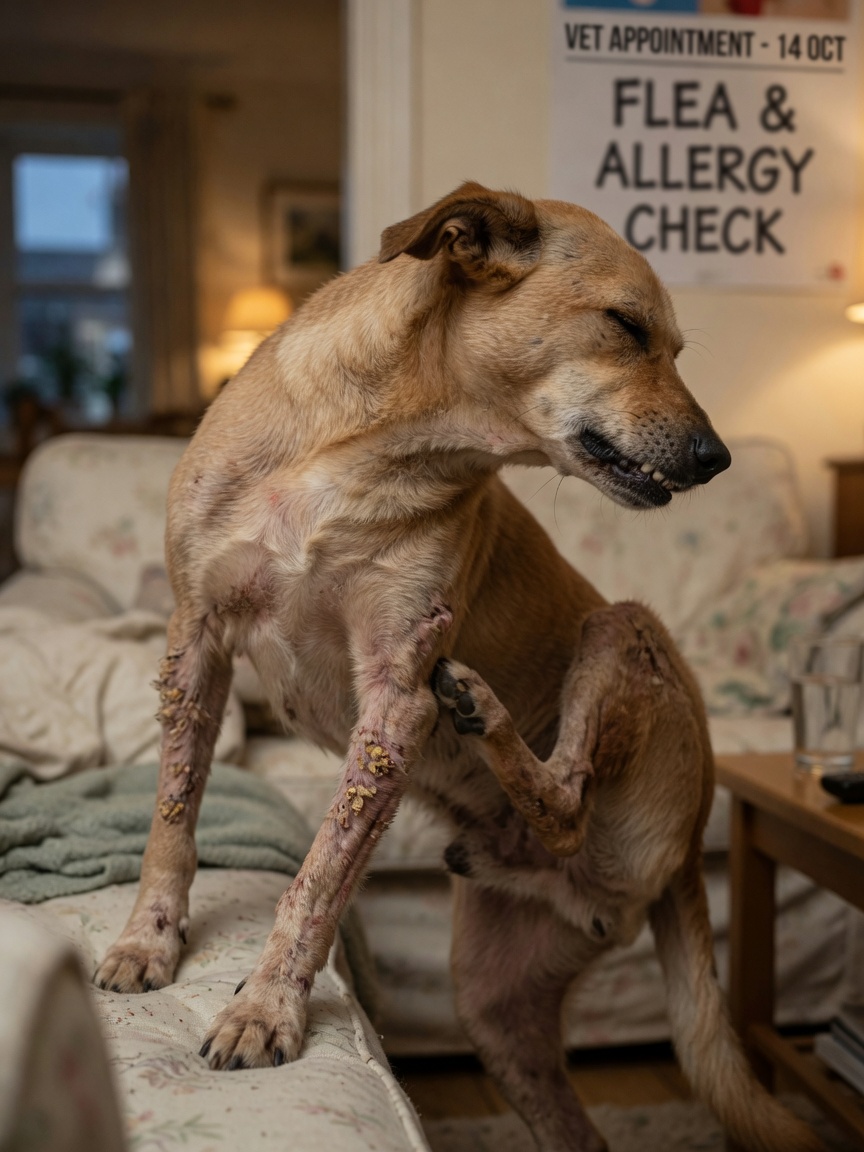
The hallmark of sarcoptic mange is intense, relentless itching that is often worse at night. The distribution of lesions typically follows a characteristic pattern:
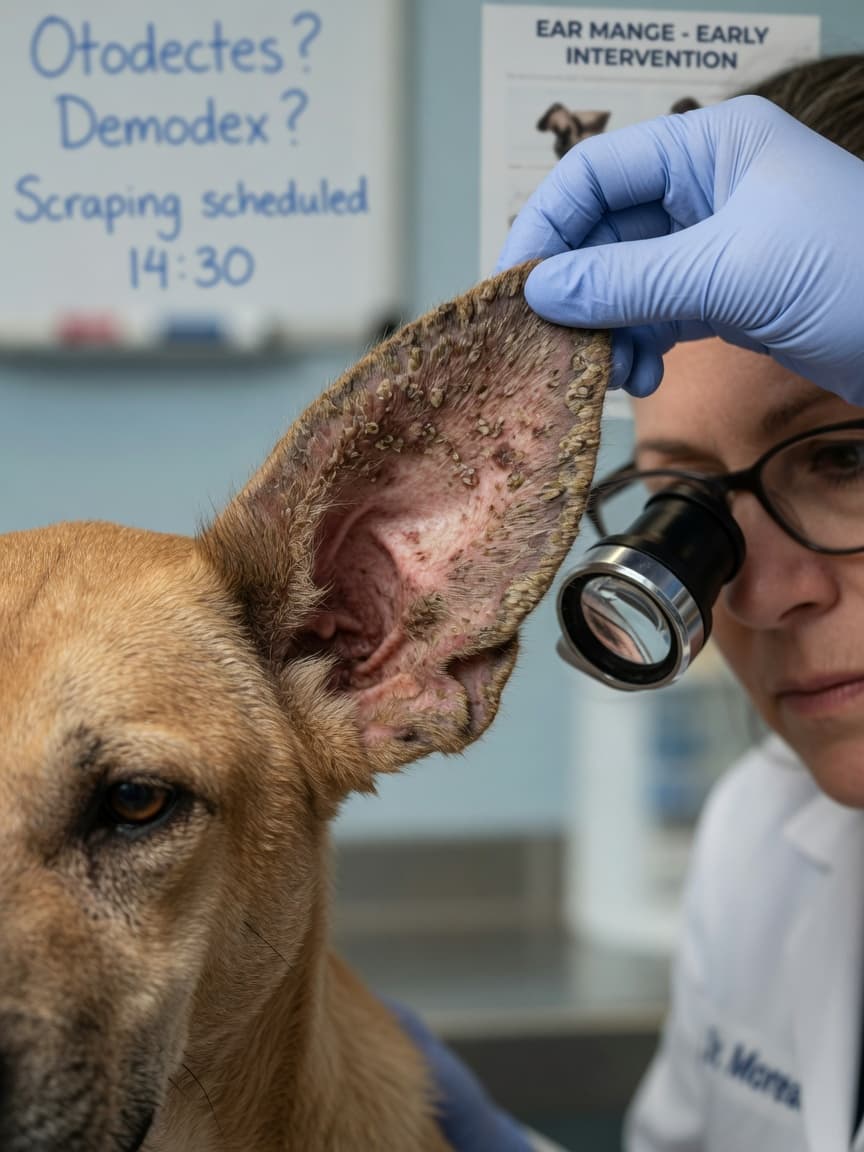
- Ear margins — crusting and thickening of the ear flap edges is a classic early sign, and scratching of the pinnae when the ear margin is rubbed (the pinnal-pedal reflex) is a useful diagnostic indicator.
- Elbows and hocks — bony prominences where the mites preferentially burrow.
- Abdomen and inner thighs — areas of thin skin.
- In severe or untreated cases, lesions spread to involve the entire body surface.
Hair loss, crusting, redness and self-inflicted trauma from scratching are all common. Affected dogs may be in considerable distress, and secondary skin infection from the self-trauma is a frequent complication.
Diagnosis and Treatment
Diagnosis can be challenging because the mite is not always found on skin scrape examination — studies suggest the mite is detected in fewer than half of confirmed cases. A clinical diagnosis based on the characteristic presentation, contact history and response to treatment is common. Veterinary surgeons will often treat presumptively when sarcoptic mange is suspected.
Treatment has evolved considerably in recent years. The isoxazoline class of drugs — including fluralaner and sarolaner — are now widely used across Europe and are highly effective against sarcoptic mange. Selamectin spot-on treatments and injectable ivermectin are also used. All in-contact dogs must be treated simultaneously, and the environment should be thoroughly cleaned, including washing all bedding at high temperature and vacuuming carpets and upholstery.
Demodectic Mange (Demodicosis)
The Mite Responsible
Demodectic mange is caused by Demodex canis, a cigar-shaped mite that lives within the hair follicles and sebaceous glands of the skin. This mite is a normal inhabitant of dog skin — small numbers are present on virtually all healthy dogs and are transferred from mother to puppy during the first days of life. Demodicosis develops when the mite population expands beyond normal levels, which occurs when the immune system is unable to keep numbers in check.
Key Differences From Sarcoptic Mange
Demodectic mange is neither contagious nor zoonotic. It cannot be passed between dogs in normal circumstances, and it poses no risk to human health. This makes it an entirely different disease from sarcoptic mange in terms of public health implications. The itching associated with demodicosis is also typically much less severe than that seen with sarcoptic mange — in localised cases, many dogs show no apparent discomfort at all.
Localised vs Generalised Demodicosis
Demodicosis presents in two distinct forms with different implications:
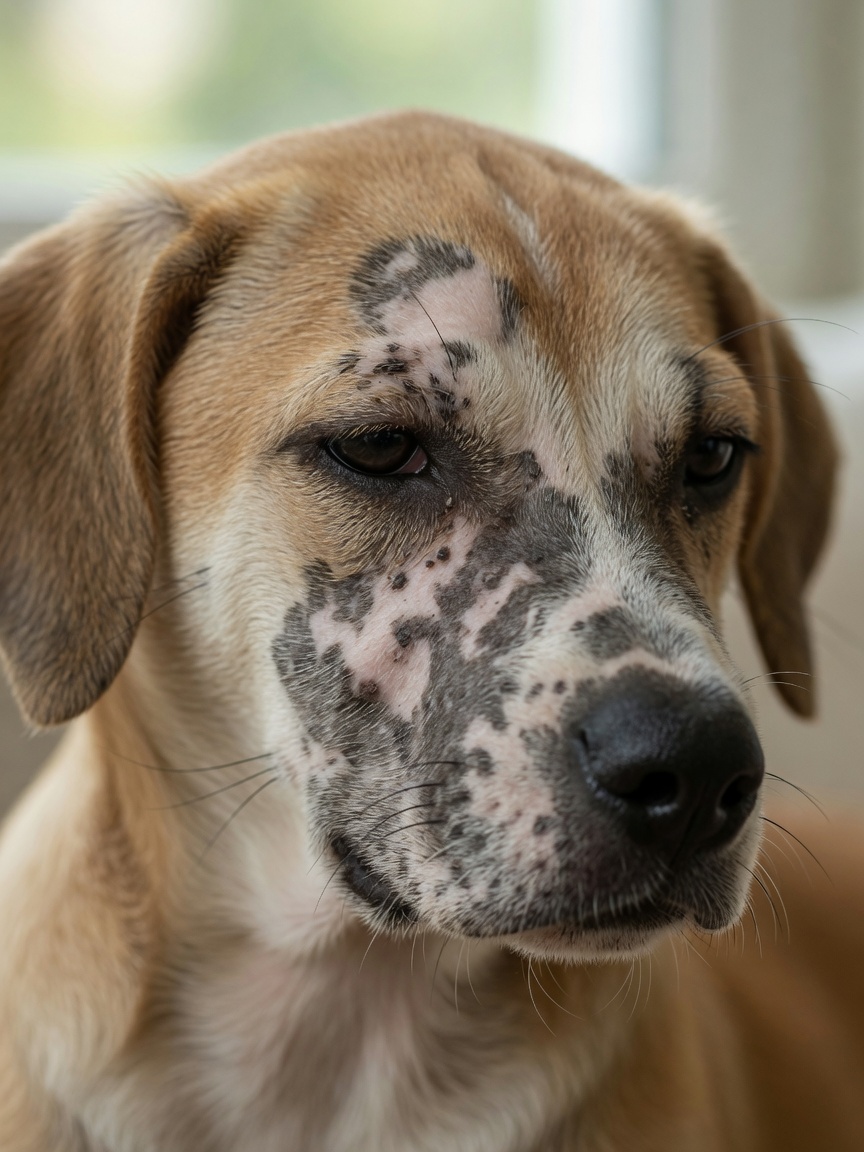
- Localised demodicosis: defined as five or fewer discrete patches of hair loss, typically affecting young dogs between three and eighteen months of age. The lesions most commonly appear on the face, around the eyes or muzzle. In the majority of cases, localised demodicosis in young dogs resolves spontaneously as the immune system matures, without requiring specific treatment.
- Generalised demodicosis: involves widespread lesions affecting large areas of the body, multiple body regions, or the feet (pododermatitis). Generalised demodicosis is a serious condition and almost always indicates underlying immune suppression. Possible causes include inherited immune dysregulation — certain breeds including Staffordshire Bull Terriers and Shar Peis are genetically predisposed — as well as underlying systemic disease, malnutrition, or treatment with immunosuppressive medications.
Secondary bacterial infection is common in generalised demodicosis and can lead to deep skin infections (furunculosis), which significantly complicate treatment and increase patient discomfort.
Diagnosis and Treatment of Demodicosis
Unlike sarcoptic mange, demodectic mange can usually be confirmed definitively by deep skin scrape examination — the mites are readily found in large numbers in affected hair follicles. Treatment of generalised demodicosis requires prolonged therapy. Isoxazoline drugs, including fluralaner and afoxolaner, are increasingly used off-label and have shown excellent efficacy. Amitraz dips, an older treatment, remain available but require careful handling due to toxicity concerns, particularly in small dogs and in households with young children. Identifying and addressing any underlying cause of immune suppression is an essential component of management for generalised cases.
Other Mite Conditions Worth Knowing
Two other mite-related conditions are occasionally encountered in European dogs. Cheyletiella — sometimes called walking dandruff due to the appearance of moving scale on the coat — is caused by a surface mite and is mildly zoonotic, capable of causing a transient, itchy rash in people. Otodectes cynotis, the ear mite, lives within the ear canal and causes intense irritation — it is common in cats and can transfer to dogs. Both conditions respond well to appropriate antiparasitic treatment.
If your dog is showing signs of mange in any form, early veterinary assessment is important both to determine the type of mite involved and to initiate appropriate treatment promptly.