
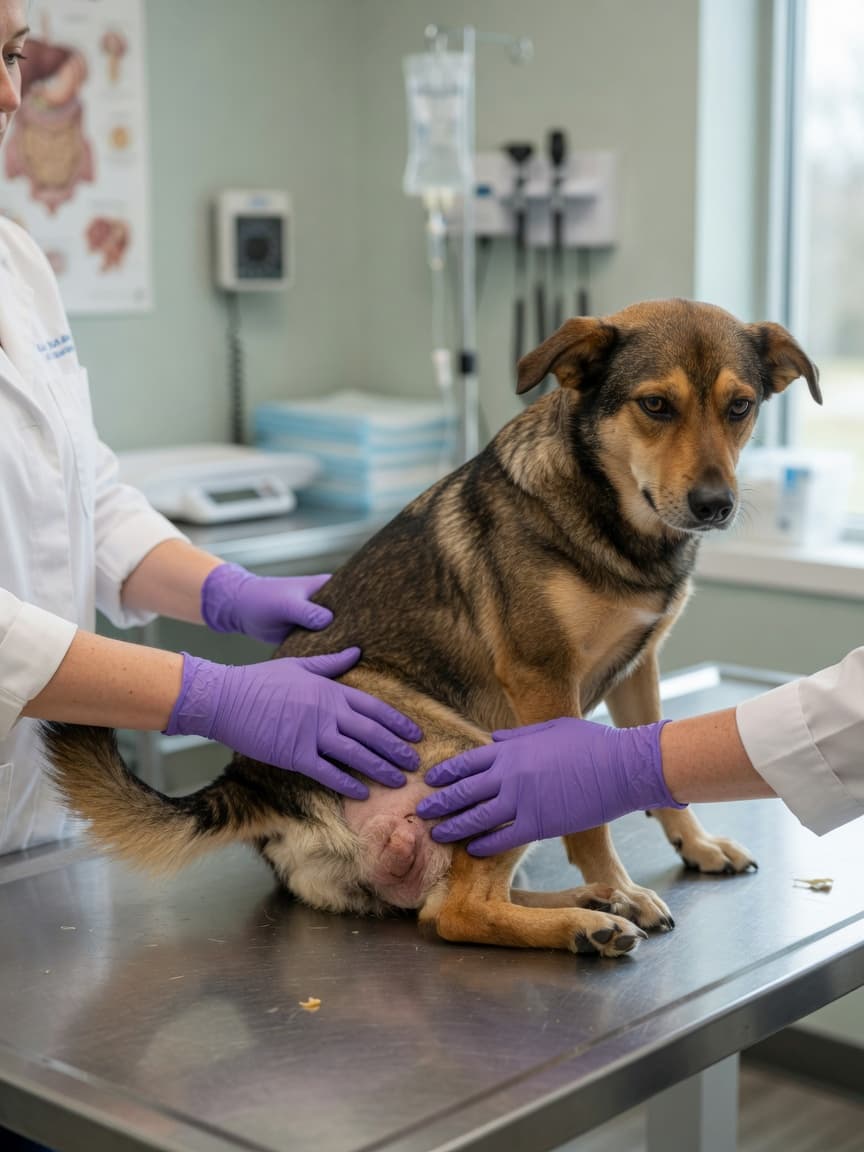
Why Your Dog Is Scooting Across the Floor
If your dog has been dragging their rear end along the carpet, biting at their tail base, or producing a distinctly fishy odour, the anal glands are almost certainly the culprit. Studies suggest that anal gland problems account for a significant proportion of veterinary dermatology and soft tissue consultations in dogs — and yet many owners have never heard of these tiny structures until something goes wrong.
What Are Anal Glands and What Do They Do?
Anal glands, more accurately called anal sacs, are two small pouches located on either side of a dog's anus, roughly at the four o'clock and eight o'clock positions. Each sac is lined with glands that produce a pungent, oily secretion. Under normal circumstances, this fluid is expressed during defecation, coating the stool and acting as a scent marker — an essential communication tool in the canine world.
The problem arises when this natural emptying process fails. If the secretion accumulates rather than expressing freely, the sac becomes impacted, swollen, and eventually infected or abscessed.
The Stages of Anal Gland Disease
Impaction
Impaction is the earliest and most common stage. The fluid inside the sac thickens and becomes too viscous to pass through the narrow duct. Affected dogs typically scoot, lick at the area excessively, or show discomfort when sitting. On examination, the sacs feel firm and are often painful to the touch.
Infection
If impaction is not resolved, bacteria proliferate within the stagnant secretion. The sacs become inflamed, the fluid turns cloudy or bloody, and the dog may show more obvious signs of pain — yelping when touched near the tail, reluctance to sit, and sometimes a low-grade fever. This stage requires veterinary treatment, typically including manual expression under gentle sedation if needed, followed by antibiotic therapy.
Abscessation
An abscess forms when infection reaches a critical point. The tissue around the anal sac swells visibly, often appearing as a painful red or purple lump to one side of the anus. Abscesses frequently rupture spontaneously, creating an open wound that drains bloody or purulent material. Whilst this may temporarily relieve pressure, veterinary attention is still essential to flush the area, administer appropriate antibiotics, and prevent recurrence.
Which Dogs Are Most at Risk?
Small and toy breeds — including Cocker Spaniels, Chihuahuas, Miniature Poodles, and Basset Hounds — are disproportionately affected. Obesity plays a role, as excess perianal fat can compress the ducts and impair natural emptying. Dogs with chronic soft stools or diarrhoea are also vulnerable, since firm faeces are partly responsible for the mechanical pressure that expresses the glands during defecation. Food intolerances and environmental allergies have also been associated with anal gland disease, likely through their effects on inflammation and stool consistency.
Home Care and Veterinary Management
Mild impaction can sometimes be addressed by your vet through manual external expression — a quick, if unglamorous, procedure. Internal expression, performed with a gloved finger inside the rectum, is more thorough and is reserved for cases where external expression is insufficient.
Dietary adjustments are frequently recommended alongside manual treatment. Increasing fibre intake — through a high-fibre diet or supplements such as plain canned pumpkin or psyllium husk — can firm up stools and encourage natural expression. Addressing any underlying allergy or food sensitivity is equally important for dogs with recurrent problems.
Omega-3 fatty acid supplementation may help reduce perianal inflammation, though this should be discussed with your vet in the context of your dog's overall health.
When Surgery Becomes Necessary
For dogs that suffer recurrent impactions despite dietary management, or those with chronic infections and scarring, surgical removal of the anal sacs — a procedure called anal sacculectomy — may be the most appropriate long-term solution.
The surgery involves careful dissection and removal of both sacs whilst preserving the surrounding sphincter musculature and nerve supply. In experienced hands, the procedure carries a good prognosis. The primary risk is damage to the external anal sphincter, which can lead to temporary or, in rare cases, permanent faecal incontinence. This is why the surgery is typically reserved for cases where conservative management has failed, or where neoplasia — anal sac adenocarcinoma being a particularly serious concern in older dogs — has been diagnosed.
Anal sac adenocarcinoma deserves special mention. This malignant tumour can be surprisingly small at the primary site whilst having already spread to regional lymph nodes. Any persistent swelling around the anal area in a middle-aged or older dog warrants prompt veterinary investigation, including fine needle aspiration or biopsy.
Key Takeaways for Dog Owners
- Scooting, licking at the tail base, and fishy odour are the classic warning signs of anal gland trouble.
- Prompt veterinary assessment prevents impaction from progressing to infection or abscess.
- Diet matters: firmer stools encourage natural expression and reduce recurrence.
- Recurrent problems in small breeds may warrant allergy investigation.
- Surgery is effective for chronic cases but carries a small risk of incontinence — always discuss the full picture with your vet.
- Any hard, persistent lump near the anus should be investigated for malignancy without delay.