

Why Home Grooming Is More Than Aesthetics
Regular grooming reduces the risk of matting, skin infections and parasite infestations, and provides an opportunity to identify lumps, wounds or coat changes before they become serious. A survey of UK veterinary nurses found that a substantial proportion of skin-related consultations involved conditions that had been developing undetected beneath an ungroomed coat. Learning to groom your dog at home is not about replicating a professional finish — it is about maintaining health between appointments and deepening your knowledge of your dog's body.
Understanding Coat Types Before Choosing Tools
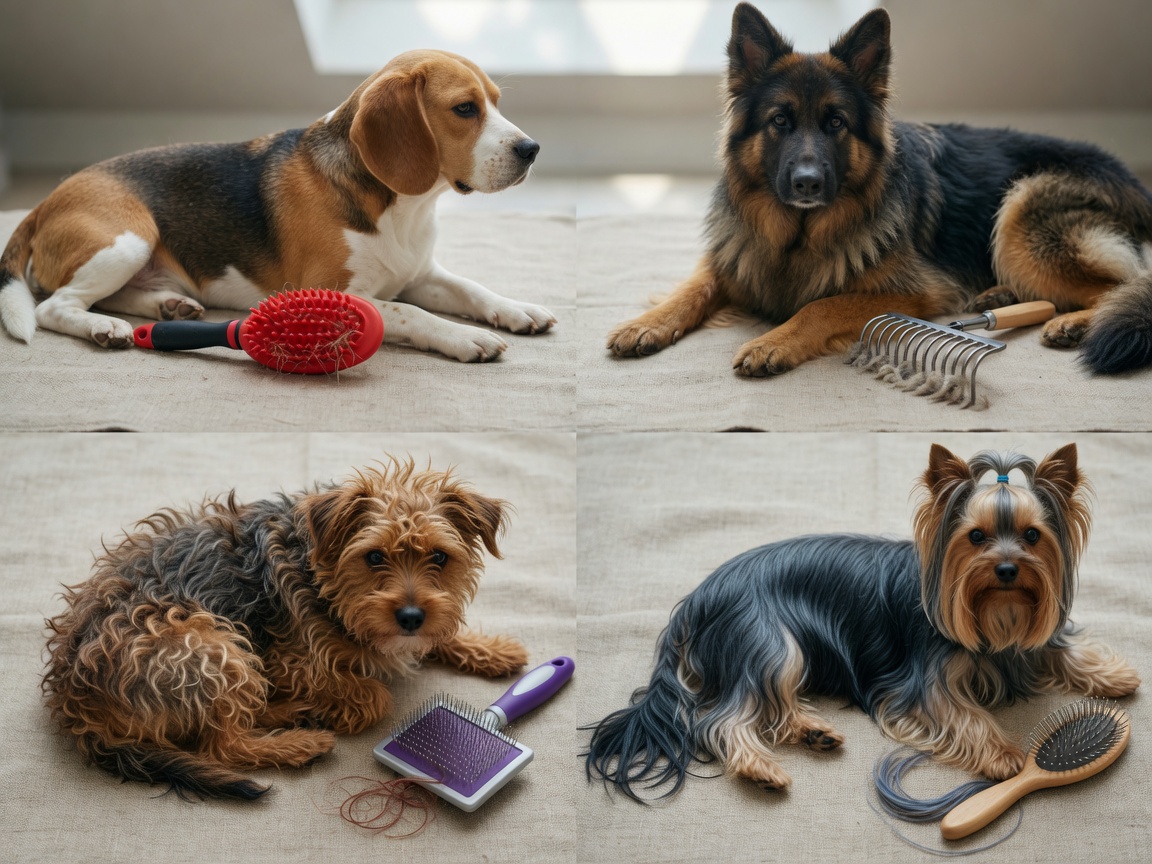
There is no universal grooming toolkit. The right tools depend almost entirely on coat type, and using the wrong implement can damage the coat or irritate the skin.
Short, Smooth Coats
Breeds such as Beagles, Greyhounds and Boxers have low-maintenance coats that benefit from a rubber curry brush or grooming mitt used once a week. This removes loose hair and stimulates circulation without the risk of skin abrasion. A soft-bristle brush finishes the coat and adds shine.
Double Coats
German Shepherds, Golden Retrievers and Siberian Huskies carry a dense undercoat beneath a protective topcoat. These breeds require an undercoat rake or slicker brush used two to three times per week, increasing to daily during seasonal shedding. Brushing with the grain of the coat first, then lifting through layers, prevents superficial work that leaves the undercoat compacted.
Wire and Curly Coats
Terriers with wire coats need a combination of slicker brushing and periodic hand-stripping to maintain texture. Stripping removes dead hair at the root and preserves the characteristic harsh feel; clipping changes coat texture permanently. Poodle-type curly coats matt rapidly and need combing through to the skin at least every other day, with professional scissoring every six to eight weeks to maintain a manageable length.
Long, Silky Coats
Breeds such as the Afghan Hound, Yorkshire Terrier and Maltese require daily brushing with a pin brush followed by a wide-toothed comb to confirm the brush reached the skin. Mat formation in these coats is rapid and mats tighten against the skin, causing pressure sores and harbouring moisture.
Essential Tools for a Home Kit
- Slicker brush: suitable for most medium and long coats; removes loose hair and minor tangles
- Undercoat rake or deshedding tool: for double-coated breeds during moulting periods
- Wide-toothed comb: the final check after brushing to confirm the coat is tangle-free at skin level
- Round-tipped scissors: for trimming around paws, ears and the sanitary areas
- Nail clippers or grinder: guillotine or scissor-style clippers suit most breeds; grinders work well for dogs anxious about clipping
- Ear cleaning solution: a veterinary-formulated product for breeds prone to wax accumulation
Invest in one good-quality version of each rather than a full collection of average tools. Cheap slicker brushes with sharp wire tips can scratch the skin, and poorly designed nail clippers crush rather than cut.
Grooming Frequency by Coat Type
As a general framework, the longer and denser the coat, the higher the maintenance frequency:
- Smooth, short coats: weekly brushing, bathing every four to six weeks or as needed
- Medium double coats: two to three times per week, daily during shedding season
- Long silky coats: daily brushing, professional trim every six to eight weeks
- Wire coats: two to three times per week, hand-stripping or professional grooming two to four times per year
- Curly coats: every other day combing, professional scissoring every six to eight weeks
Making Grooming a Positive Experience
Dogs that resist grooming are often reacting to past discomfort rather than the grooming itself. Introducing tools gradually, pairing each stage with calm praise and treats, and keeping early sessions short establishes a positive association. Never groom through a mat by force — this pulls the skin and teaches the dog that grooming is painful. Instead, work the mat from the tip inward using your fingers and a detangling spray, or clip it out if it is too close to the skin to separate safely.
When to Book a Professional
Home grooming maintains the coat between appointments but does not replace professional grooming entirely for many breeds. A groomer with breed-specific knowledge can hand-strip wire coats, scissor complex breed patterns and identify skin changes that benefit from veterinary follow-up. Aim to schedule a professional appointment every eight to twelve weeks for high-maintenance coats, and discuss with your groomer which tasks you can manage between visits.
Grooming Checklist for Every Session
- Brush or comb through the full coat, including under the armpits, behind the ears and around the collar
- Check ears for redness, odour or discharge
- Inspect eyes and wipe away any discharge with a damp cotton pad
- Examine the skin beneath the coat for redness, flaking, bumps or parasites
- Assess nail length and trim if the nail contacts the floor when the dog stands
- Note anything unusual and consult a vet if signs persist for more than a week