
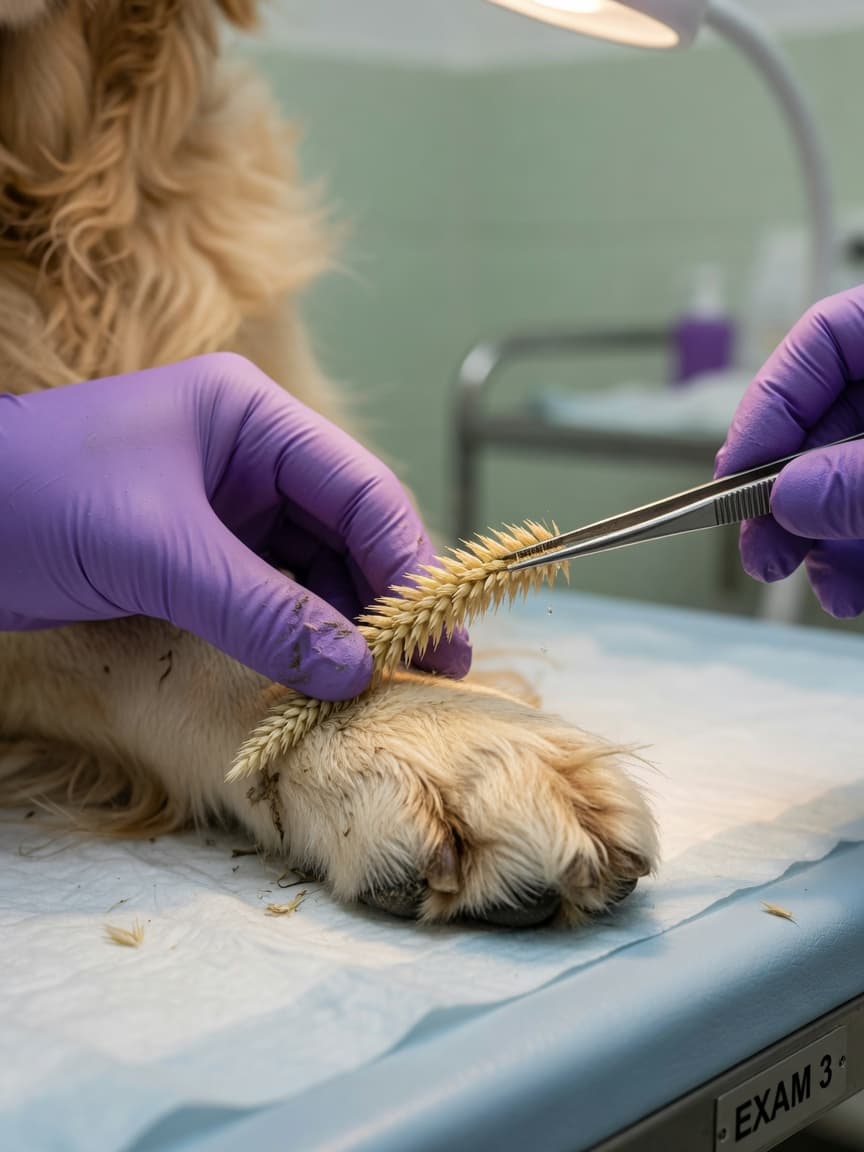
Why Grass Seeds Are a Serious Hazard for Dogs
Every summer, thousands of dogs across Europe are treated for injuries caused by grass seeds. What appears to be a minor irritant can, if left untreated, migrate deep into body tissues, penetrate internal organs, and cause life-threatening abscesses or infections. Unlike a thorn or splinter, grass seeds are specifically shaped by evolution to travel in one direction only — forward — making them uniquely dangerous once they enter the body.
The Most Dangerous Grass: Foxtail Barley
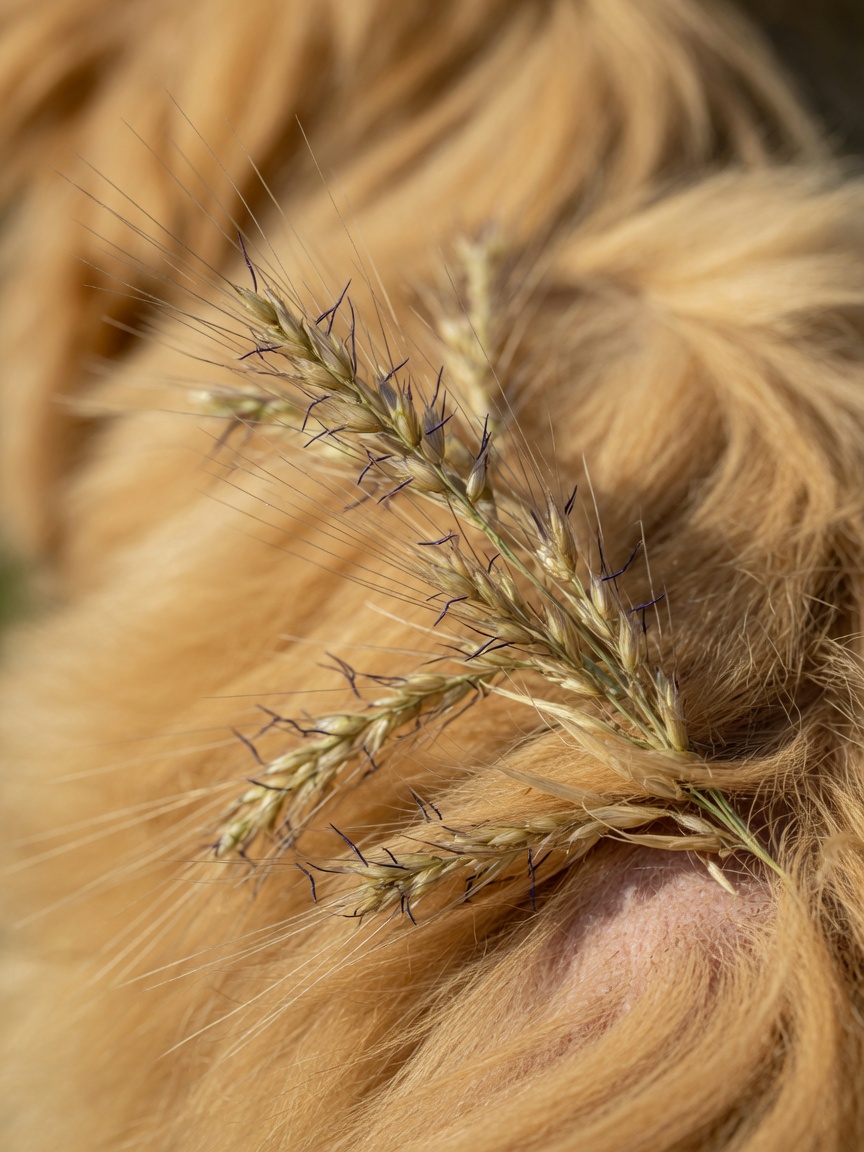
Hordeum murinum, commonly known as foxtail barley or wall barley, is the grass species most frequently implicated in veterinary grass seed cases. Its seed heads are covered in fine, backward-pointing barbs called awns that grip fur and skin and propel the seed forward with the movement of the animal. The seed cannot reverse direction, meaning once it has entered the skin, it continues migrating inward.
Foxtail barley is extremely prevalent across much of Western Europe. It thrives in dry, disturbed ground and is particularly abundant in the UK (especially southern and central England), Spain, France, and Italy, where the warm, dry conditions from June through September provide ideal growing conditions. Dog owners in these regions should be particularly vigilant during late spring and throughout the summer months.
Common Entry Sites on the Dog's Body
Paws — Interdigital Spaces
The most common entry point is between the toes (the interdigital spaces), where seeds become lodged as the dog walks through dry grassland. The seed quickly penetrates the thin, moist skin between the toes and begins migrating upward through the foot and into the leg. Signs include sudden, intense licking of one paw, swelling between the toes, and a small red entry wound or swelling that may develop into an abscess.
Ears
Seeds that enter the ear canal cause sudden, violent head shaking, tilting of the head to one side, and frantic pawing at the affected ear. If not removed promptly, the seed can rupture the eardrum and migrate into the middle or inner ear, causing serious neurological complications. Grass seed ear cases are among the most urgent in summer veterinary practice.
Eyes
Seeds that enter the eye cause immediate, intense discomfort — the dog squints, paws at the eye, and produces excessive watery or mucoid discharge. The seed may be visible under the eyelid or may already have penetrated behind the third eyelid (nictitating membrane). Eye grass seeds require urgent removal to prevent corneal ulceration or perforation.
Nose
Inhalation of grass seeds causes sudden, uncontrollable, repetitive sneezing — often so violent and persistent that it continues for hours. Seeds lodged in the nasal cavity can migrate further into the sinuses or, in severe cases, into the brain. Persistent unilateral (one-sided) nasal discharge, particularly if blood-tinged, is a strong indicator of a nasal grass seed.
Prepuce and Vulva
Seeds can enter the genital region, particularly in dogs that sit or roll in dry grass. Signs include excessive licking of the area, swelling, and discharge. These cases require prompt veterinary attention as the seed can migrate internally.
Veterinary Treatment — Removal Under Sedation or General Anaesthesia
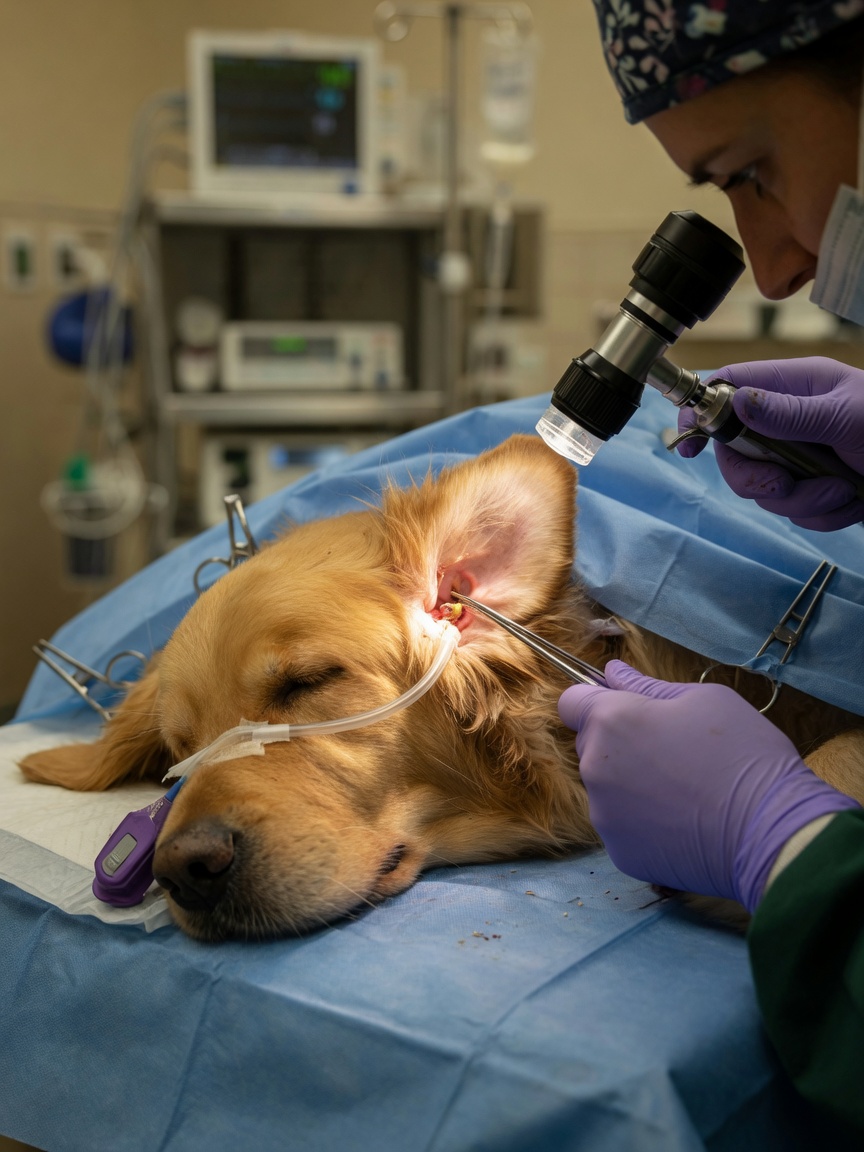
Grass seed removal typically requires sedation or general anaesthesia, particularly for seeds in the ear, nose, or eye, and for any seed that has begun to migrate beneath the skin. Your veterinarian will use specialised instruments — forceps, an otoscope for ear cases, or an endoscope for nasal or deeper cases — to locate and extract the seed.
Where a seed has already caused abscess formation, surgical drainage and flushing of the abscess cavity will be performed. In cases where the seed has migrated deeply into muscle or body cavities, advanced imaging such as ultrasound may be needed to locate it before removal.
Following removal, Amoxicillin-Clavulanate (Synulox) is commonly prescribed to treat or prevent bacterial infection associated with the wound tract left by the migrating seed. Pain relief is also provided, and the site is monitored for signs of further infection.
The Risk of Abscess Formation
If a grass seed is not found and removed promptly, the wound tract it creates becomes infected and a painful abscess develops. The abscess may appear days or even weeks after the initial exposure. The classic presentation is a draining sinus — a small hole in the skin that persistently discharges pus — often on the paw, neck, or flank, depending on where the seed entered. These sinuses do not heal until the foreign body is located and removed. Multiple surgical explorations are sometimes necessary.
Prevention — Checking Your Dog After Walks
Checking your dog thoroughly after every walk during the grass seed season is the single most effective preventive measure. Run your fingers through the coat, paying particular attention to the interdigital spaces, ear canals, armpits, groin, and around the eyes. Parting the fur and examining the skin surface directly is more effective than a superficial pat-down.
- Clip the coat between the toes and around the ears during summer — this reduces the surface area available for seeds to attach
- Avoid walking through tall, dry grassland during peak seed season (June to September), particularly after midday when the grass is at its driest
- Protective dog boots — available from Zooplus and other pet retailers — provide an effective barrier against interdigital grass seed entry and are particularly useful for breeds with feathered paws such as Spaniels, Retrievers, and Setters
- Brush or comb the coat immediately after walks to remove seeds before they can penetrate the skin
Breeds at Higher Risk
Long-coated and feather-coated breeds are at significantly higher risk of grass seed injuries. Spaniels, Retrievers, Irish Setters, and similar breeds have dense coat texture and feathering between the toes and around the ears that readily traps seeds. Sighthound breeds such as Greyhounds and Whippets, with their thin skin and minimal coat, are also vulnerable as seeds penetrate quickly. However, no breed is fully immune, and all dogs walked in grassland during summer should be checked routinely.