
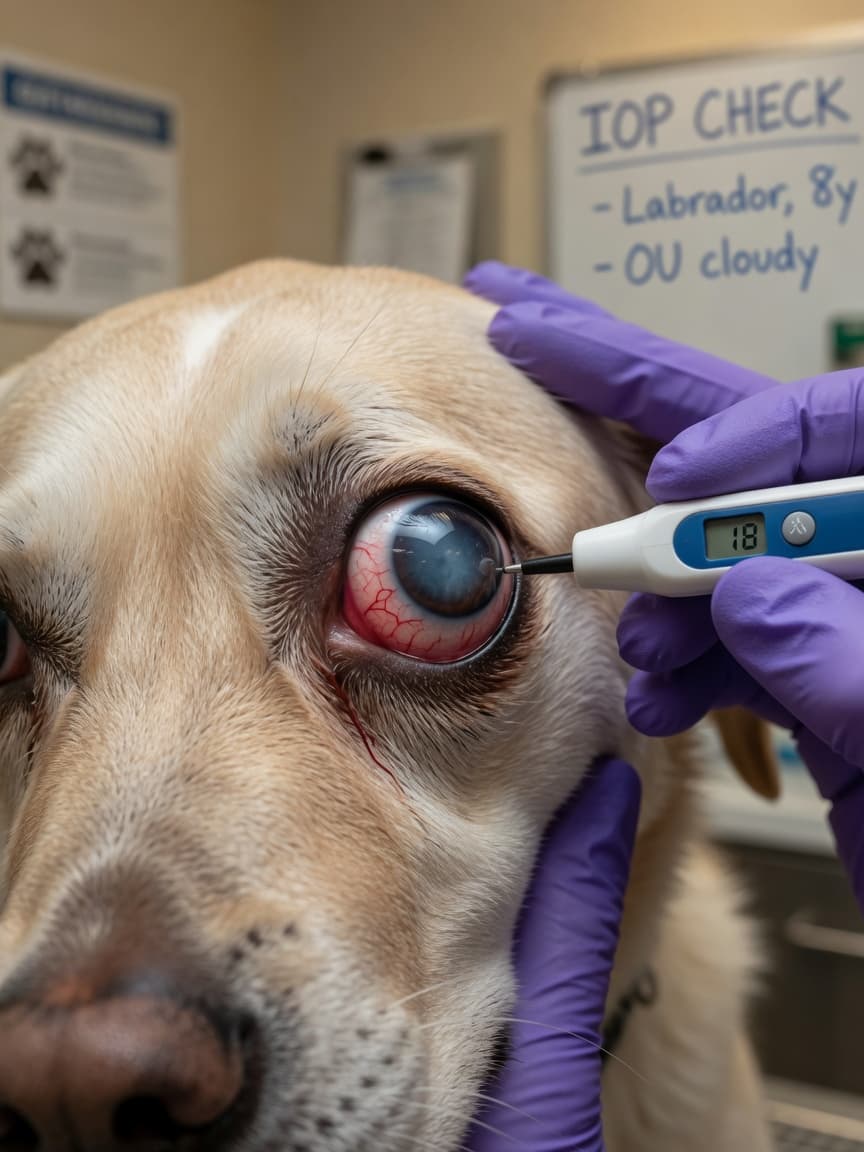
What Is Glaucoma in Dogs?
Glaucoma is a condition in which the pressure inside the eye — the intraocular pressure (IOP) — rises to a level that damages the optic nerve and retina. Because these structures cannot regenerate once destroyed, the vision loss caused by glaucoma is permanent. Acute glaucoma is one of the true emergencies in veterinary ophthalmology: without rapid treatment, a dog can lose all sight in the affected eye within 24 to 48 hours.
Normal IOP in dogs sits between 10 and 25 mmHg. Readings above 30 mmHg are considered diagnostic of glaucoma. A pressure above 50 mmHg constitutes an acute crisis requiring immediate intervention.
How Is Intraocular Pressure Measured?
Vets measure IOP using a tonometer. The Tonovet rebound tonometer is the preferred instrument in modern practice because it does not require anaesthetic drops and causes minimal discomfort. A tiny probe briefly touches the corneal surface and calculates pressure from the rebound. The Tono-Pen is another commonly used device. Both tools allow rapid, reliable readings that guide treatment decisions.
Primary Versus Secondary Glaucoma
Primary Glaucoma
Primary glaucoma arises from an inherited abnormality of the iridocorneal angle — the drainage system through which aqueous humour flows out of the eye. When drainage is impaired without any other underlying disease being present, the diagnosis is primary glaucoma. This form is strongly linked to breed.
Breeds with a recognised predisposition in the UK include Cocker Spaniels (the most commonly affected breed in Britain), Basset Hounds, Chow Chows, Shar Peis, Retrievers, Siberian Huskies, and Welsh Springer Spaniels. Screening programmes exist through organisations such as the British Veterinary Association and the American College of Veterinary Ophthalmologists, allowing at-risk breeding dogs to be assessed for goniodysgenesis (abnormal drainage angle development) before breeding.
Secondary Glaucoma
Secondary glaucoma develops as a consequence of another disease process within the eye. Common causes include:
- Uveitis — inflammation inside the eye is the most frequent cause of secondary glaucoma; protein, cells, and inflammatory debris can block the drainage angle
- Lens luxation — a dislocated lens can physically obstruct aqueous flow
- Intraocular tumours — masses can compress drainage structures
- Trauma and hyphaema (blood inside the eye)
Identifying and treating the underlying cause is central to managing secondary glaucoma.
Recognising the Symptoms

Acute glaucoma is painful and the signs are usually striking, though owners sometimes mistake them for conjunctivitis or a minor eye irritation. Key symptoms include:
- A painful, red eye — often with visible engorgement of the episcleral blood vessels
- Corneal oedema — a blue-grey cloudiness to the cornea caused by fluid accumulation
- A dilated, fixed pupil that does not respond normally to light
- Sudden or rapidly worsening vision loss
- Buphthalmos — enlargement of the globe, indicating prolonged or severe pressure elevation
- Lethargy and reduced appetite
- Vomiting, caused by pain
Chronic glaucoma may present more subtly — a gradually enlarging eye, mild visual deficits, or behavioural changes. By the time buphthalmos is visible, significant and usually irreversible damage has already occurred.
Emergency Treatment to Reduce Pressure

When acute glaucoma is confirmed, the priority is to reduce IOP as rapidly as possible. Every hour of elevated pressure causes further irreversible retinal and optic nerve damage.
- Intravenous mannitol — an osmotic agent administered at 2g per kilogram over approximately 20 minutes; draws fluid out of the eye quickly and is often the most effective emergency measure
- Topical dorzolamide — a carbonic anhydrase inhibitor that reduces the production of aqueous humour; applied directly to the eye
- Latanoprost — a prostaglandin analogue that dramatically increases aqueous drainage and causes pupillary constriction (miosis); often very effective in primary glaucoma
- Timolol — a topical beta-blocker that reduces aqueous production
- Oral methazolamide — a systemic carbonic anhydrase inhibitor used in some cases
Emergency pressure reduction buys time, but it is not a cure. Long-term management requires ongoing medication and, in many cases, surgery.
Surgical Options
When medical management fails to maintain acceptable IOP, or when the eye is already blind and painful, surgical intervention is considered. Options include:
- Laser cyclophotocoagulation (CPC) — a laser targets and partially destroys the ciliary body, the tissue responsible for producing aqueous humour, thereby reducing production at source
- Gonioimplant or drainage shunt — a small device implanted to create an alternative drainage route for aqueous humour
- Enucleation — surgical removal of the eye is recommended for end-stage glaucoma in a blind, painful eye; dogs adapt remarkably well to monocular vision
Protecting the Fellow Eye
One of the most important facts for owners of dogs with primary glaucoma to understand is the risk to the other eye. In dogs with inherited primary glaucoma, the fellow eye will develop glaucoma in approximately 50 per cent of cases within eight months of the first eye being diagnosed.
For this reason, vets typically prescribe prophylactic treatment for the unaffected eye immediately upon diagnosis of primary glaucoma in the first eye. A combination of dorzolamide and timolol drops applied daily to the healthy eye can significantly delay or reduce the severity of glaucoma developing there.
Prognosis: Honest Expectations
The prognosis for vision in the affected eye at presentation is often poor. Most dogs with acute glaucoma have already sustained significant retinal damage by the time they reach the vet. The realistic goal of treatment is frequently pain management, preservation of the globe's appearance, and — most importantly — protection of the remaining sighted eye.
Early detection through awareness, routine eye examinations in at-risk breeds, and immediate veterinary attention when symptoms appear give dogs the best chance of retaining some functional vision. Any sudden change in your dog's eye appearance should be treated as an emergency and assessed the same day.