
What Is a Corneal Ulcer in Dogs?
A corneal ulcer is a break in the epithelial surface of the cornea — the clear, dome-shaped tissue that covers the front of the eye. Even when an ulcer looks minor, it represents damage to one of the most sensitive and important structures in your dog's body. Every corneal ulcer in dogs should be treated as an urgent veterinary matter, not a wait-and-see situation.
The cornea has no blood vessels, which means it heals differently from other tissues and is particularly vulnerable to rapid deterioration when infection takes hold. Understanding the causes, recognising the symptoms, and knowing what treatments are available can make a significant difference to your dog's outcome.
What Causes Corneal Ulcers in Dogs?
Ulcers develop when the corneal surface is damaged or compromised. The most common causes include:
- Trauma — a cat scratch, foreign body such as a grass seed, or running through undergrowth are frequent culprits
- Dry eye (keratoconjunctivitis sicca, or KCS) — insufficient tear production leaves the cornea exposed and prone to breakdown
- Entropion — a condition where the eyelid rolls inward, causing lashes and skin to rub continuously against the corneal surface
- Chemical irritants — household cleaners, shampoos, or other substances splashed near the eye
- Bacterial or viral infection
- Self-trauma — dogs that rub or paw at an already-irritated eye can rapidly worsen the injury
Brachycephalic breeds such as Pugs, French Bulldogs, and Shih Tzus are at higher risk due to their prominent eyes and reduced blink reflex. However, any dog can develop a corneal ulcer at any age.
Symptoms to Watch For
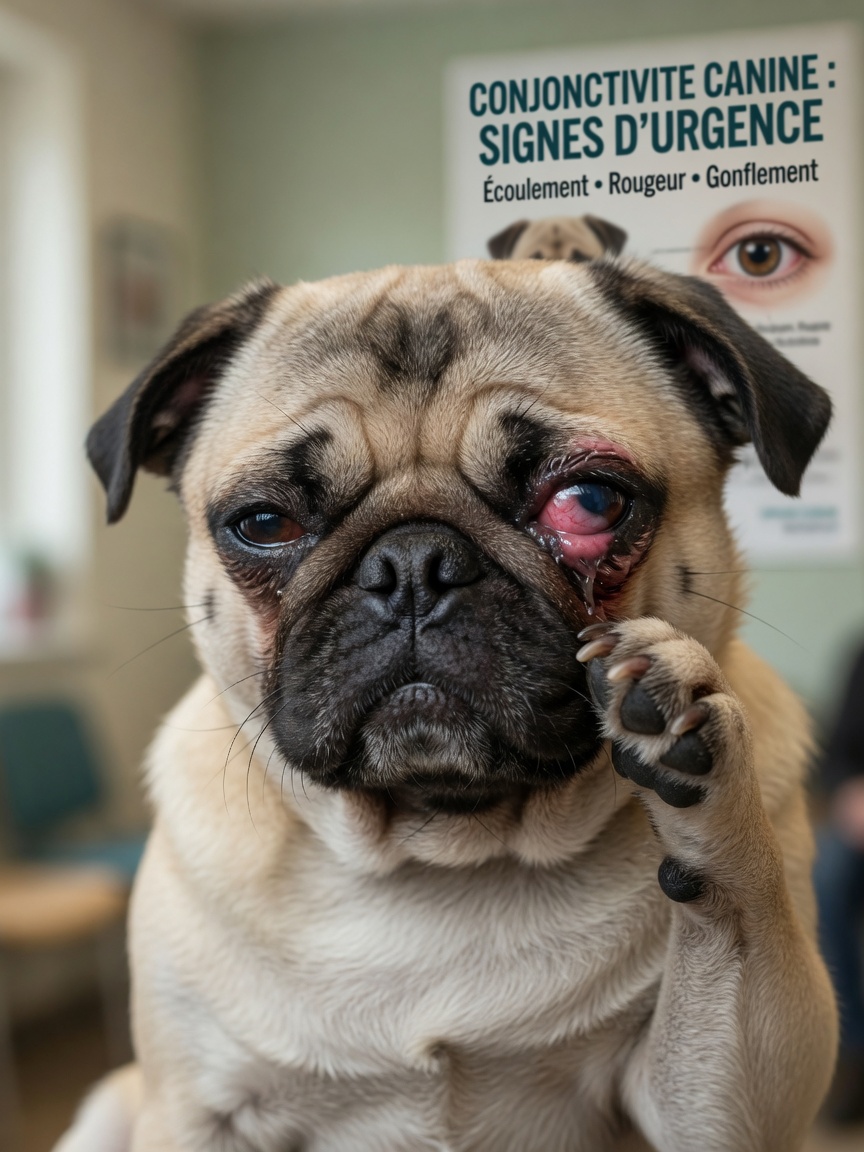
The signs of a corneal ulcer are usually obvious because the cornea is highly sensitive and pain triggers a strong response. Look out for:
- Squinting or holding the eye partially or fully closed (blepharospasm)
- Pawing or rubbing at the affected eye
- Watery or mucoid discharge
- A cloudy or bluish appearance to the eye
- Red or inflamed conjunctiva (the pink tissue around the eye)
- Sensitivity to light (photophobia)
If you notice any of these signs, contact your vet the same day. Do not apply any eye drops you have at home unless your vet has specifically instructed you to do so.
How Vets Diagnose Corneal Ulcers
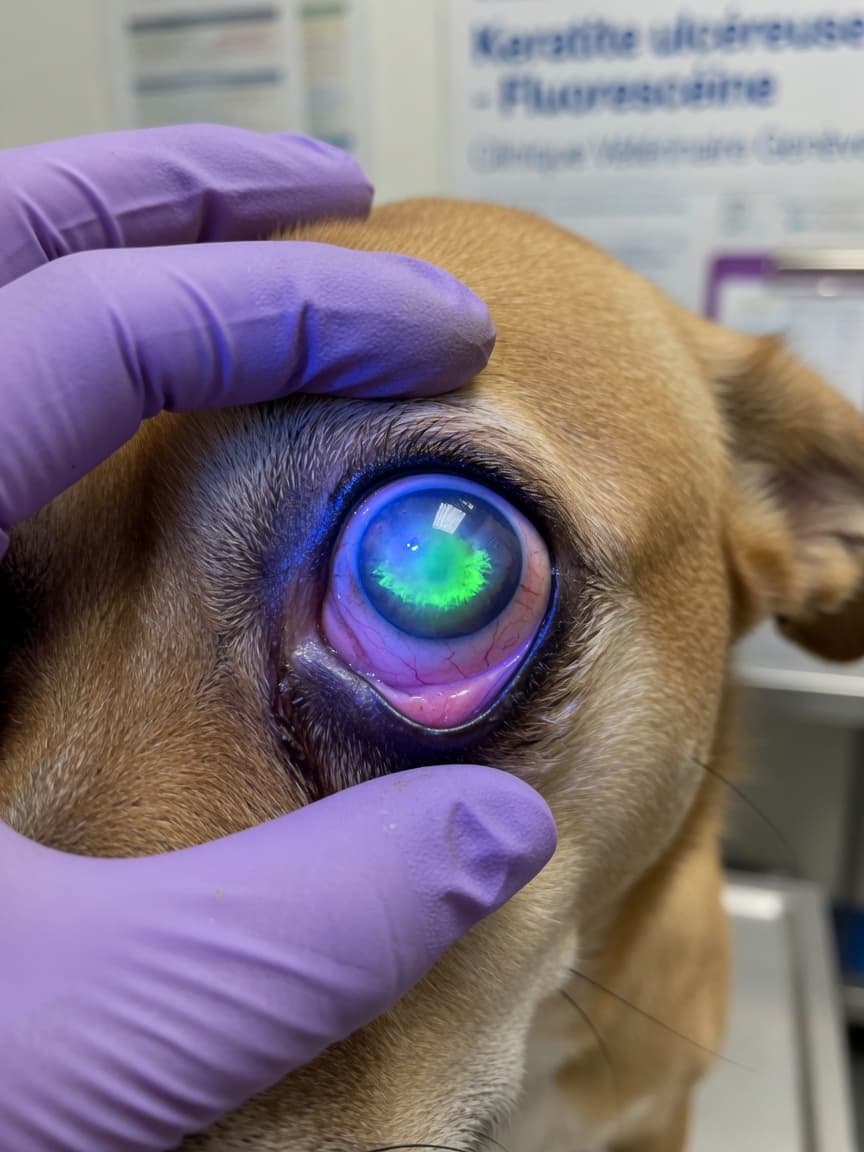
Diagnosis is confirmed using a fluorescein stain — a harmless orange dye that adheres to exposed stromal tissue but not to healthy epithelium. Under a cobalt blue light, ulcerated areas glow bright green, allowing the vet to map the size, depth, and location of the ulcer. This examination also helps identify any foreign bodies lodged under the eyelids.
Your vet will also assess tear production using a Schirmer tear test, and examine the eyelids carefully for entropion or other anatomical abnormalities.
The Critical Warning About Steroid Eye Drops
This point cannot be overstated: never use steroid-containing eye drops — such as those containing dexamethasone or prednisolone — on a dog with a corneal ulcer. Steroids inhibit corneal healing, stimulate the production of collagenase enzymes that actively break down corneal tissue, and can cause a superficial ulcer to perforate within 24 to 48 hours. Perforation means the contents of the eye may be lost entirely.
If your dog has been prescribed steroid drops for another eye condition and then develops signs of an ulcer, stop the drops and seek veterinary advice immediately.
Treatment: From Simple to Surgical
Superficial Ulcers
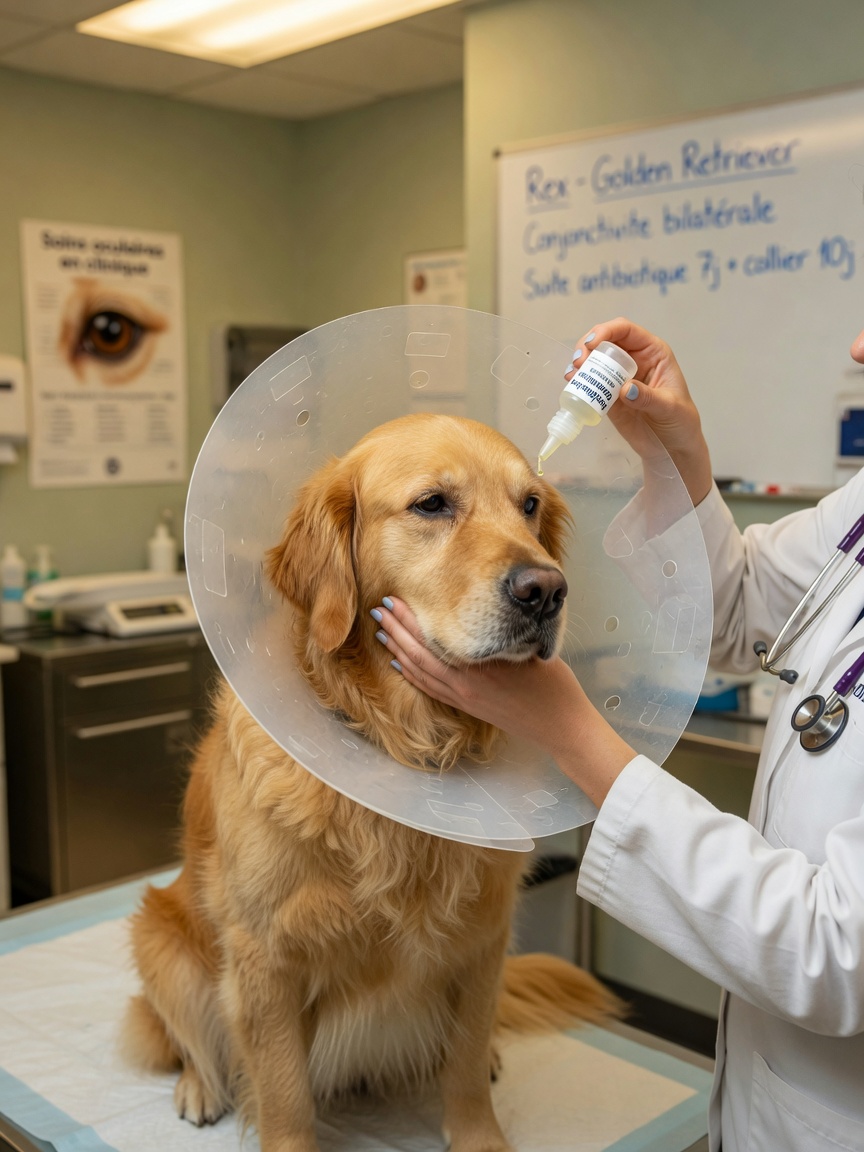
Straightforward, superficial ulcers typically heal within three to seven days with appropriate treatment. Your vet will prescribe antibiotic eye drops — commonly chloramphenicol or tobramycin — to prevent secondary infection. Pain relief is also important; atropine drops are sometimes used to reduce painful ciliary muscle spasm. An Elizabethan collar (the cone) is essential to prevent your dog from rubbing the eye and causing further damage.
Indolent Ulcers (SCCEDs)
Some dogs develop ulcers that simply refuse to heal despite correct treatment. These are known as spontaneous chronic corneal epithelial defects, or SCCEDs — sometimes called Boxer ulcers because Boxers are among the most commonly affected breeds. Others include Corgis, Labrador Retrievers, Golden Retrievers, and Samoyeds.
In SCCEDs, the epithelium fails to adhere properly to the underlying stroma. Standard antibiotic treatment makes no difference. Treatment requires a procedure called grid keratotomy — in which a fine needle is used to create a pattern of superficial scratches to encourage adhesion — or diamond burr debridement, which removes the loose epithelium mechanically. These cases are typically referred to a veterinary ophthalmologist.
Melting Ulcers
A melting ulcer is a veterinary emergency. Infection with Pseudomonas bacteria or other collagenase-producing organisms can cause the cornea to liquify and expand within hours. The eye takes on a gelatinous appearance. Immediate, intensive treatment with appropriate antibiotic drops — often given every one to two hours — plus serum drops (which contain natural anti-collagenase factors from the dog's own blood) is required. These cases must be seen urgently, typically at a specialist or emergency clinic.
Deep Ulcers and Descemetoceles
When an ulcer penetrates deeply into the cornea, or when Descemet's membrane (the deepest layer before the inner eye chamber) is exposed — a condition called a descemetocele — surgical intervention is required without delay. The risk of perforation and permanent loss of the eye is real and immediate.
Surgical options include conjunctival flaps (using adjacent tissue to cover and protect the ulcer), corneoconjunctival transposition, porcine small intestinal submucosa grafts, and in specialist centres, corneal transplantation. These procedures are performed by veterinary ophthalmologists under general anaesthesia.
Prognosis and Recovery
The outlook depends heavily on the type and depth of the ulcer. Superficial ulcers treated promptly carry an excellent prognosis for full recovery with normal vision. Deep ulcers treated surgically carry a good prognosis, though some scarring may remain. Perforated eyes carry a guarded prognosis, and enucleation (removal of the eye) may occasionally be necessary.
During recovery, keep the Elizabethan collar on at all times — even during sleep — and administer drops exactly as prescribed. Follow-up fluorescein staining will confirm healing. With prompt veterinary care, most dogs with corneal ulcers recover well and suffer no lasting visual impairment.