ForPetsHealthcare
Dogs

Why Dogs Dig and How to Manage It

By Julia WrenfieldUpdated August 4, 20261 min read
Evidence-based · Sources checked
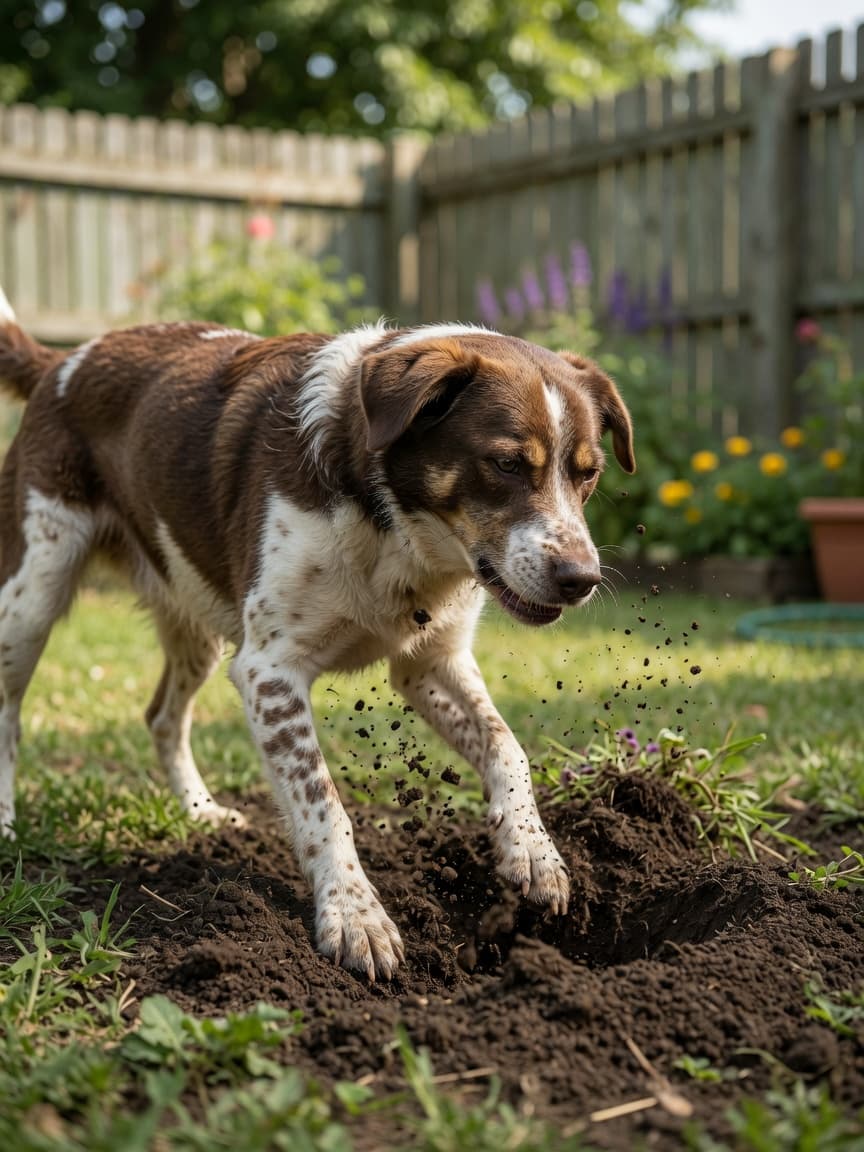
{"en": "Dog digging in dirt with front paws in a backyard hole", "es": "Perro cavando en la tierra con las patas delanteras en un agujero", "fr": "Chien creusant dans la terre avec ses pattes avant dans un trou", "de": "Hund gr\u00e4bt mit Vorderpfoten in einem Loch im Garten", "nl": "Hond graaft met voorpoten in een gat in de tuin", "pt": "Cachorro cavando na terra com as patas dianteiras em um buraco", "it": "Cane che scava nel terreno con le zampe anteriori in una buca"}

Digging is a natural dog behaviour — frustrating for owners, satisfying for dogs. Here's how to manage it.

Why Dogs Dig

  • Instinct — terriers and scent hounds bred to dig
  • Boredom or excess energy
  • Cooling down — dogs dig to reach cooler soil
  • Escaping — digging under fences
  • Hunting prey (rodents, insects)
  • Hiding food or toys

How to Reduce Digging

Dog happily playing in a designated sandy digging zone with partially buried toys
  • More exercise and mental stimulation
  • Provide a designated digging zone (sandpit) and bury toys there
  • Supervise outdoor time initially
  • Block access to favourite digging spots
  • Ensure adequate shade and water so cooling isn't a motivation

Escape Diggers

If your dog digs to escape, investigate why — anxiety, desire to roam, or boredom. Bury chicken wire or rocks along fence lines as a deterrent.

#dog digging how to stop#dog health#dog nutrition#forpetshealthcare

Sources & further reading

This article is based on peer-reviewed veterinary research and reputable animal-health sources. Explore the underlying science in our Research Library.

Related articles

The 19 Best Animal Shelters in the Netherlands (2026)

the Netherlands's animal shelters, rescue associations and refuges save thousands of dogs, cats and other animals every year, almost always on tiny budgets and volunteer power. To build the most objective ranking possible, we analysed public Google reviews across more than 56 registered animal-prote…

Read more →

The 25 Best Animal Shelters in Italy (2026)

Italy's animal shelters, rescue associations and refuges save thousands of dogs, cats and other animals every year, almost always on tiny budgets and volunteer power. To build the most objective ranking possible, we analysed public Google reviews across more than 121 registered animal-protection org…

Read more →

The 48 Best Animal Shelters in Germany (2026)

Germany's animal shelters, rescue associations and refuges save thousands of dogs, cats and other animals every year, almost always on tiny budgets and volunteer power. To build the most objective ranking possible, we analysed public Google reviews across more than 152 registered animal-protection o…

Read more →

The 32 Best Animal Shelters in France (2026)

France's animal shelters, rescue associations and refuges save thousands of dogs, cats and other animals every year, almost always on tiny budgets and volunteer power. To build the most objective ranking possible, we analysed public Google reviews across more than 89 registered animal-protection org…

Read more →

The 8 Best Animal Shelters in Portugal (2026)

Portugal's animal shelters, rescue associations and municipal centros de recolha save thousands of dogs, cats and other animals every year, almost always on tiny budgets and volunteer power. To build the most objective ranking possible, we analysed public Google reviews across more than 86 registere…

Read more →

Sphynx Cat Skin care and hygiene: Causes, Signs & Care

Sphynx cats have little to no coat, which means the skin itself takes on jobs that fur normally does — insulation, oil dispersal, and barrier protection — leaving it prone to greasiness, blocked pores, fungal infections, and sunburn. The single most important thing to know is that a Sphynx's skin ne…

Read more →
Disclaimer:This article is for informational purposes only and does not constitute veterinary advice. Always consult a qualified veterinarian for your pet's health concerns.

Free newsletter

Pet health tips, straight to your inbox

Weekly science-backed advice for dog & cat owners. No spam, unsubscribe anytime.