
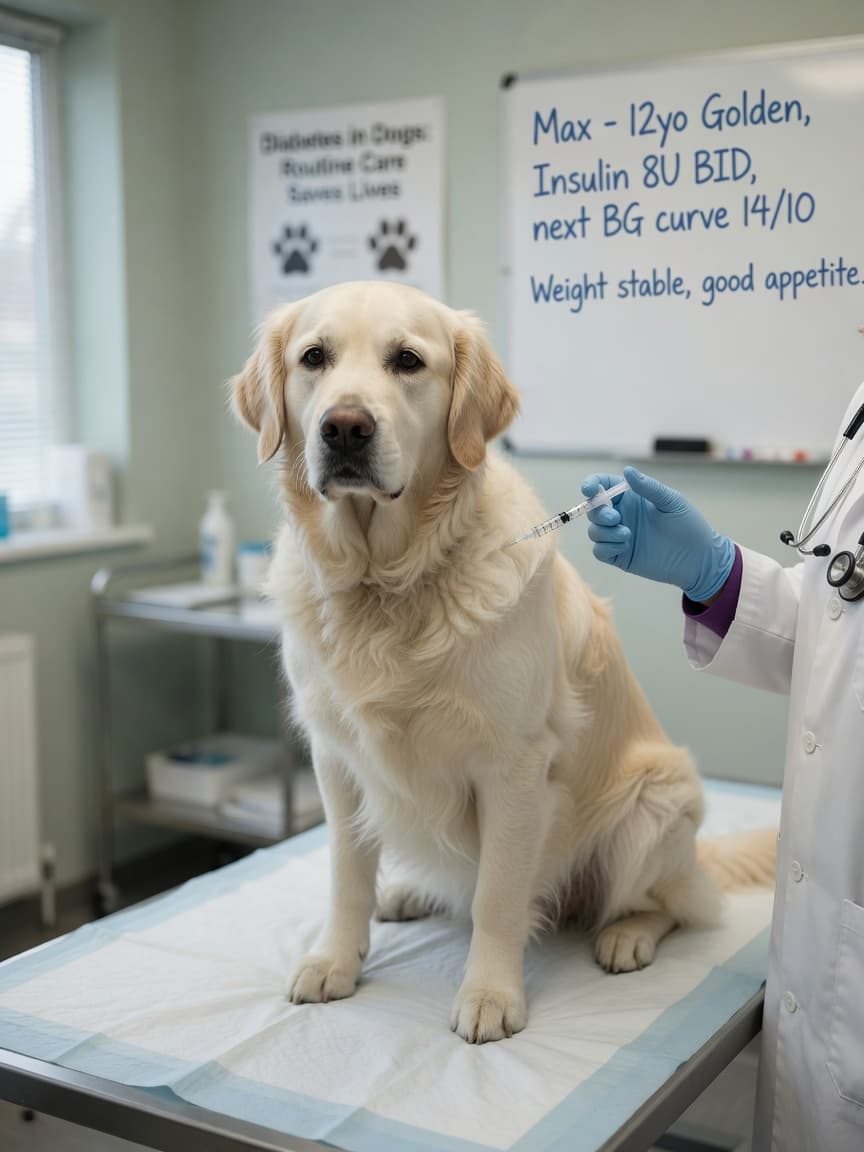
What Is Diabetes Mellitus in Dogs?
Diabetes mellitus is a chronic metabolic disorder in which the body either fails to produce sufficient insulin or cannot use insulin effectively. In dogs, the most common form is insulin-deficient diabetes, where the pancreatic beta cells are damaged or destroyed, leading to persistently elevated blood glucose levels. Without proper management, diabetes can cause serious secondary complications — including cataracts, urinary tract infections, and a life-threatening crisis known as diabetic ketoacidosis (DKA).
Middle-aged to older dogs are most commonly affected, and entire females are at significantly higher risk than males, largely because progesterone released during dioestrus antagonises insulin. Certain breeds — including Samoyeds, Australian Terriers, Miniature Schnauzers, and Pugs — carry a higher genetic predisposition.
Clinical Signs to Watch For

The four hallmark signs of diabetes in dogs are often remembered by the acronym PUPD-WL: polyuria (excessive urination), polydipsia (excessive drinking), polyphagia (increased appetite), and weight loss despite eating well. These signs develop because glucose accumulates in the bloodstream rather than entering cells, causing the kidneys to spill glucose into urine and drawing large volumes of water with it.
- Drinking significantly more water than usual
- Urinating frequently, sometimes indoors overnight
- Unexplained weight loss despite a good or increased appetite
- Lethargy and reduced exercise tolerance
- A dull, unkempt coat
- Cloudy or bluish eyes — a sign of diabetic cataracts, which develop rapidly in dogs
- Repeated urinary tract infections
Cataracts are particularly notable in dogs and can develop within weeks of onset. They form because excess glucose is converted to sorbitol inside the lens, causing osmotic swelling and disruption of lens fibres. Even well-regulated diabetic dogs may ultimately develop cataracts.
Diagnosis: How Vets Confirm Diabetes
A definitive diagnosis requires demonstrating persistent hyperglycaemia (high blood glucose) alongside glucosuria (glucose in the urine). A single elevated blood glucose reading is not sufficient, as stress can transiently elevate glucose in dogs — though typically not to the same extreme degree as in cats.
Your vet will typically run:
- Fasting blood glucose: values consistently above 11–14 mmol/L (200–250 mg/dL) alongside clinical signs are diagnostic
- Urine dipstick and urinalysis: to confirm glucosuria and screen for concurrent urinary tract infection
- Fructosamine: this test measures glycated serum proteins and reflects average blood glucose over the preceding two to three weeks, helping distinguish true diabetes from stress hyperglycaemia
- Full haematology and biochemistry panel: to assess organ function and screen for concurrent disease such as hyperadrenocorticism or pancreatitis, which can cause insulin resistance
WSAVA (World Small Animal Veterinary Association) guidelines emphasise thorough baseline diagnostics before starting insulin therapy, as concurrent conditions dramatically affect management outcomes.
Insulin Therapy in Europe

The mainstay of treatment in dogs is injectable insulin administered once or twice daily. In Europe, the most commonly used preparations include:
- Caninsulin (porcine lente insulin): a veterinary-licensed product authorised across the EU, typically started at 0.5 IU/kg once daily
- NPH insulin (isophane): used twice daily in some cases
- Glargine and detemir: occasionally used where intermediate-acting insulins do not achieve adequate control
ECVIM-CA (European College of Veterinary Internal Medicine — Companion Animals) consensus recommends that insulin dose adjustments be based on glucose curves performed at home or in the clinic, targeting a nadir (lowest point) glucose of 5–8 mmol/L and avoiding hypoglycaemia. Owners are usually trained to administer injections subcutaneously, most commonly into the scruff of the neck or flanks.
Dietary Management
Diet plays a crucial supporting role in diabetic dogs. A consistent feeding routine — same food, same amounts, at the same times each day — helps maintain predictable glucose excursions after meals. Key dietary principles include:
- High dietary fibre to slow glucose absorption and blunt post-meal spikes
- Moderate, consistent protein content
- Low fat, especially important if concurrent pancreatitis is present
- Avoiding simple sugars and sugary treats
Prescription diabetic diets are available through your vet. For everyday treats, Zooplus stocks a range of low-calorie, grain-free options that can be incorporated in small amounts without disrupting glycaemic control — always check the ingredients for added sugars before purchasing.
Home Monitoring
Many owners successfully monitor their dog's glucose at home using portable glucometers designed for pets, or continuous glucose monitoring systems. A daily log of water intake, urination frequency, appetite, and body weight provides your vet with invaluable information for dose adjustments. WSAVA guidelines support home monitoring as a key component of diabetic management.
When to Seek Emergency Veterinary Care
Diabetic ketoacidosis (DKA) is a life-threatening complication that requires immediate hospitalisation. It occurs when the body breaks down fat at an extreme rate in the absence of sufficient insulin, producing toxic ketone bodies.
Contact your vet immediately or go to an emergency clinic if your dog shows:
- Vomiting or refusing to eat, especially if insulin has already been given
- Lethargy, weakness, or collapse
- A sweet or fruity smell on the breath
- Rapid or laboured breathing
- Signs of hypoglycaemia after insulin: trembling, disorientation, seizures
If you suspect hypoglycaemia — caused by too much insulin, missed meals, or unusual exercise — rub a small amount of glucose gel or honey on the gums and seek veterinary attention immediately. Never give insulin if your dog has not eaten.
Long-Term Prognosis
With consistent insulin therapy, appropriate diet, and regular veterinary check-ups (typically every three to six months once stable), most diabetic dogs enjoy a good quality of life. Early diagnosis, owner commitment, and close communication with your vet are the most important factors in a positive outcome. Some entire females go into remission following neutering if diabetes was triggered by progesterone during dioestrus.
Written by Julia Wrenfield