
What Is Degenerative Myelopathy?
Degenerative myelopathy (DM) is a progressive, incurable disease of the spinal cord in dogs. It causes gradual degeneration of the white matter of the spinal cord, disrupting the communication between the brain and the limbs. The condition is not painful, but it is relentless — slowly stealing a dog's mobility over the course of months to a few years.
DM was once thought to be an immune-mediated condition, but research over the past two decades has linked it firmly to a mutation in the SOD1 gene. This gene encodes an enzyme called superoxide dismutase 1, which plays a role in protecting nerve cells from oxidative damage. Dogs carrying two copies of the mutated gene (homozygous) are at significant risk of developing the disease, though not all will do so — which suggests other genetic or environmental factors are also at play.
Which Breeds Are Affected?
DM is most commonly associated with German Shepherd Dogs, but the SOD1 mutation has been found in over 100 breeds. Among those most frequently diagnosed are:
- German Shepherd Dogs
- Pembroke Welsh Corgis
- Boxers
- Chesapeake Bay Retrievers
- Rhodesian Ridgebacks
- Bernese Mountain Dogs
Onset typically occurs at eight years of age or older, making it a condition of middle-aged to senior dogs.
How Does Degenerative Myelopathy Progress?
DM follows a characteristic course that owners need to understand so they can plan appropriate support at each stage.
Early Stage
The first signs are subtle and often mistaken for arthritis or general ageing. The hindlimbs become mildly weak and uncoordinated. Dogs may scuff their paws when walking, wear down their nails unevenly, or stumble on stairs. Owners sometimes notice their dog swaying slightly at the rear when standing still.
Intermediate Stage
Weakness in the hindlimbs worsens. The dog begins to struggle to rise from lying down and may fall when trying to turn quickly. Muscle wasting becomes noticeable along the hindquarters. At this stage, most dogs still manage to walk with some assistance, and this is when mobility aids such as harnesses become invaluable.
Advanced Stage
The hindlimbs become fully paralysed. The dog can no longer support its own weight at the rear and requires a wheelchair to remain mobile. Without intervention, pressure sores, urinary retention, and faecal incontinence can become serious concerns. With continued degeneration, the disease eventually progresses to involve the forelimbs and, ultimately, the muscles of breathing — though many owners choose humane euthanasia before this stage is reached.
It is important to reiterate that the condition is not believed to be painful. Dogs with DM often remain bright, alert, and eager to engage with life even as their mobility declines.
Diagnosis
There is no definitive in-life test for DM. Diagnosis is based on ruling out other causes of hindlimb weakness — most importantly intervertebral disc disease and spinal tumours — through MRI and cerebrospinal fluid (CSF) analysis. A presumptive diagnosis of DM is reached when imaging and CSF analysis are normal in a dog of a susceptible breed with appropriate clinical signs. Definitive confirmation requires post-mortem histopathology of the spinal cord.
DNA testing for the SOD1 mutation is available through several commercial laboratories. This test identifies whether a dog is clear, a carrier (one copy of the mutation), or at risk (two copies). At-risk dogs are more likely to develop DM, though a positive result is not a guarantee the disease will occur. The test is most useful for breeding decisions and for raising awareness in owners of susceptible breeds.
Management and Supportive Care
Although there is no cure and no treatment that halts the progression of DM, a number of interventions can slow its course, maintain muscle mass, and preserve quality of life.
Physiotherapy and Hydrotherapy
Exercise is the single most important factor in managing DM. Studies in dogs have shown that those who remain active retain function longer than those who become sedentary. Hydrotherapy — exercise in a warm-water pool or underwater treadmill — is particularly beneficial because it allows dogs to exercise muscle groups that would be too difficult to engage on land. The buoyancy of water supports the dog's weight, reducing strain on weakened limbs while still allowing meaningful movement.
Regular physiotherapy sessions, including passive range-of-motion exercises, massage, and targeted strengthening exercises, complement hydrotherapy well. Working with a qualified canine rehabilitation practitioner is strongly advised.
Mobility Aids
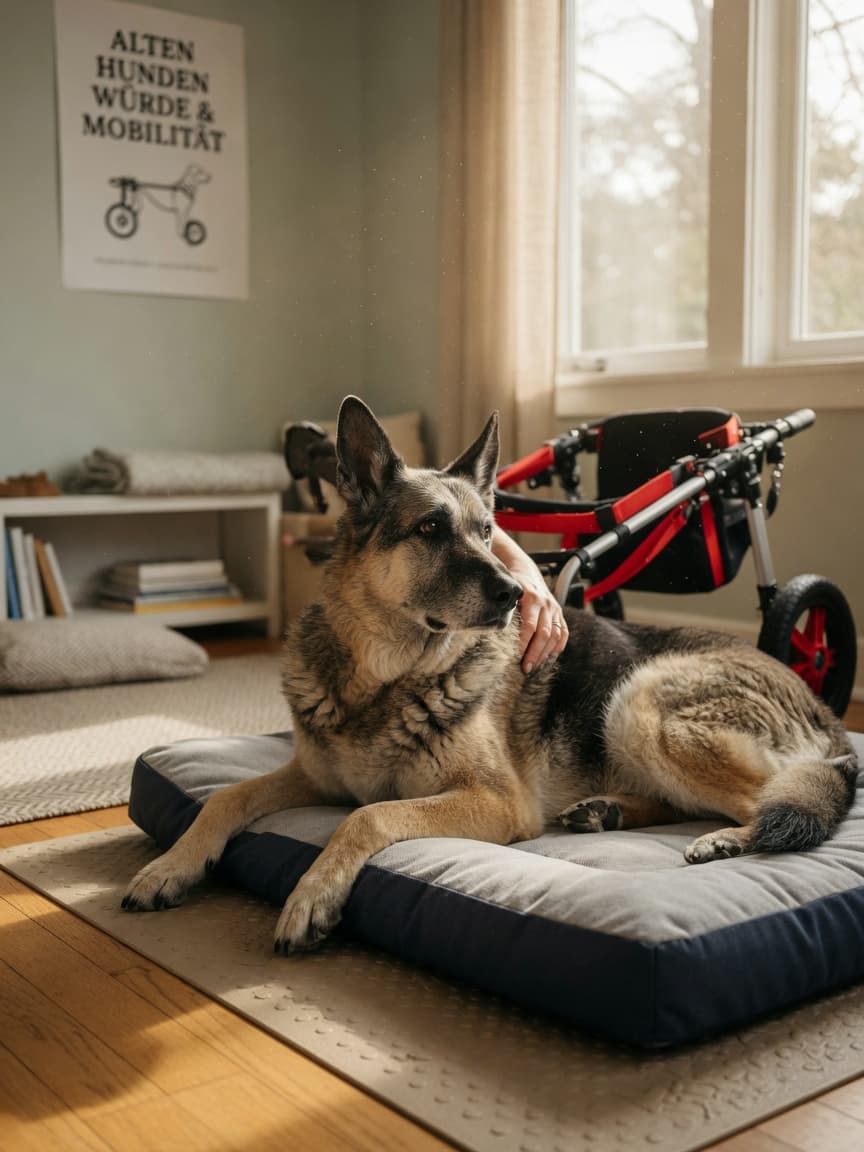
Rear-wheel wheelchairs (carts) allow dogs with hindlimb paralysis to move independently, explore their environment, and engage in social interaction. Many dogs adapt to carts with remarkable enthusiasm. Harnesses that support the hindquarters are useful at the intermediate stage, before a cart is needed.
Home Modifications
Non-slip matting throughout the home reduces the risk of falls. Raised food and water bowls help dogs that struggle to lower their heads. Orthopaedic beds with low sides ease the effort of lying down and getting up.
Nursing Care
As the disease advances, urinary and faecal management becomes necessary. Expressing the bladder manually or using a urinary catheter, combined with careful skin hygiene and regular turning to prevent pressure sores, requires dedication but is entirely manageable with guidance from a veterinary team.
Prognosis and Quality of Life
The prognosis for DM is guarded in terms of long-term mobility, but many dogs live happily for one to three years after diagnosis with attentive care. The key measure is not what a dog cannot do, but whether they retain joy, interest in food, social engagement, and freedom from distress. Owners should work closely with their vet to monitor quality of life and make end-of-life decisions with compassion and clear eyes.
Connecting with other owners of DM-affected dogs through online communities and breed clubs can provide practical advice, emotional support, and the reassurance that a meaningful life is possible even alongside this diagnosis.