
Dog Dandruff: Dry Skin vs Seborrhoea — What's the Difference
Flaky skin on dogs is one of those things that is easy to dismiss as a minor nuisance, but it can actually tell you quite a lot about what is happening beneath the surface. Whether you are noticing white flakes on your dog's dark fur or a greasy residue on their coat, there is an important distinction to understand between ordinary dry skin dandruff and a condition called seborrhoea. Getting the diagnosis right matters, because the two conditions require different approaches to management.
What Is Dandruff in Dogs?
Dandruff in dogs — medically referred to as seborrhoeic dermatitis when more severe — describes the excessive shedding of dead skin cells from the surface of the skin. A small amount of skin cell turnover is entirely normal; problems arise when this process accelerates or becomes disrupted, producing visible flakes, skin irritation, and sometimes an unpleasant odour.
There are two main presentations: dry dandruff and oily dandruff. Understanding which type your dog has is the first step towards effective treatment.
Dry Skin Dandruff (Seborrhoea Sicca)
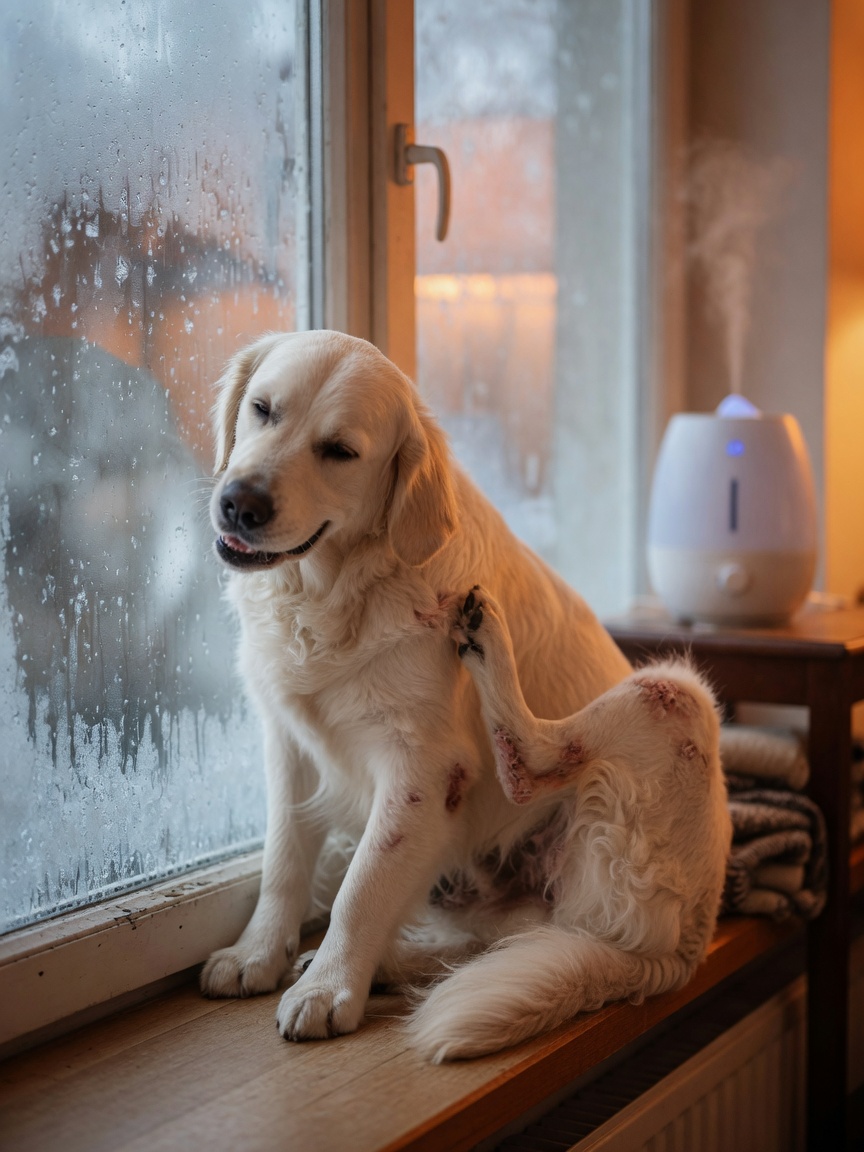
Dry skin dandruff, known as seborrhoea sicca, is characterised by small, white, powdery flakes distributed through the coat, often accompanied by dull, brittle fur. The skin itself may feel rough or tight, and dogs with this type of dandruff sometimes scratch more than usual due to the itching that dry skin can cause.
Common causes of dry skin dandruff include:
- Low environmental humidity, particularly during winter when central heating removes moisture from the air
- Over-bathing or the use of harsh shampoos that strip the skin of its natural oils
- Nutritional deficiencies, particularly inadequate levels of omega-3 and omega-6 fatty acids
- Dehydration from insufficient water intake
- Hypothyroidism and other hormonal imbalances that affect skin cell turnover
- Allergies to environmental triggers or food ingredients
Dry dandruff is more common in certain breeds, including Siberian Huskies, Alaskan Malamutes, and other northern breeds with dense double coats, as well as smaller breeds such as Basset Hounds and Cocker Spaniels.
Oily Dandruff (Seborrhoea Oleosa)
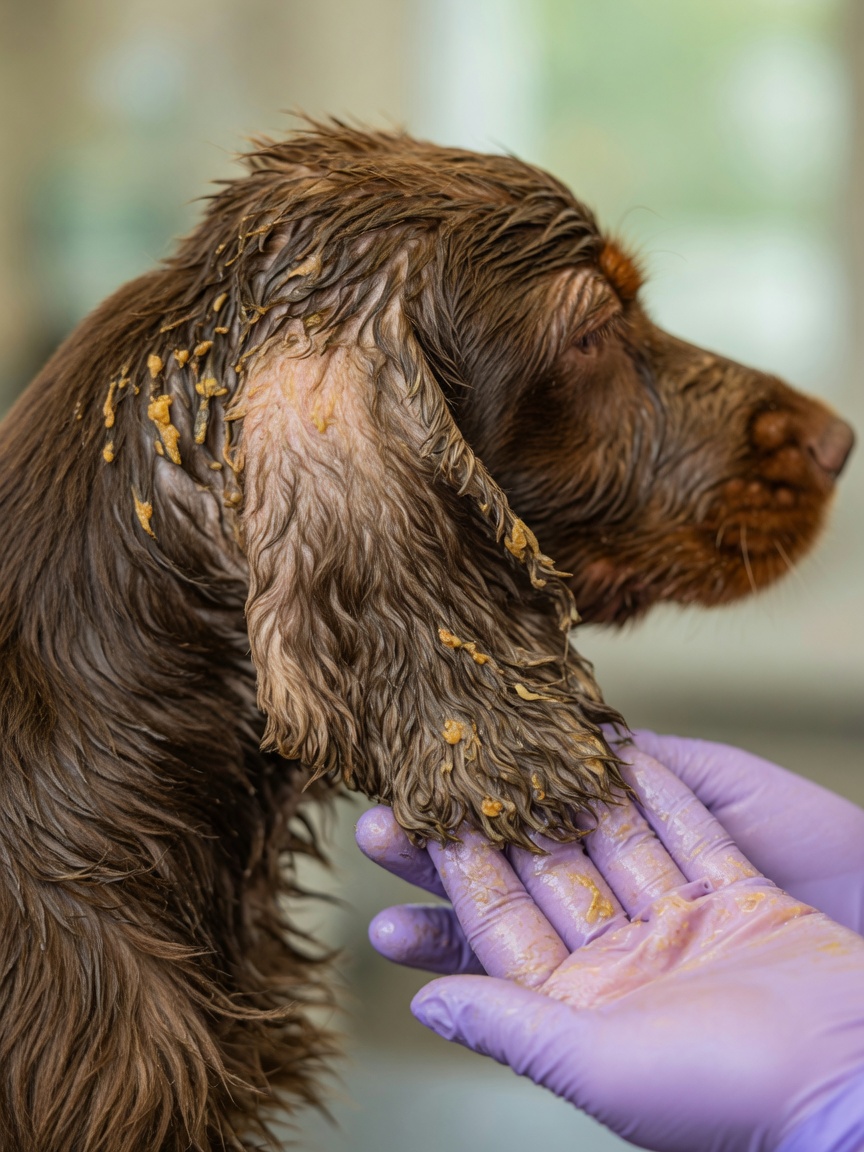
Oily seborrhoea presents rather differently. Instead of dry, powdery flakes, you will notice a greasy, yellowish or brownish waxy build-up on the skin and coat. The fur may appear clumped or dirty even shortly after bathing, and there is frequently a distinctive rancid or musty smell associated with the condition. The skin may feel greasy to the touch, and the flakes, where present, tend to be larger and more adherent than those seen with dry dandruff.
This type of seborrhoea involves the overproduction of sebum — the oily substance secreted by sebaceous glands to protect and moisturise the skin. When sebum production goes into overdrive, it creates ideal conditions for yeast overgrowth, particularly Malassezia pachydermatis, which contributes to the distinctive odour and can cause secondary inflammation.
Primary vs Secondary Seborrhoea
An important distinction in veterinary dermatology is between primary and secondary seborrhoea. Primary seborrhoea is a hereditary condition in which the skin simply produces cells or sebum at an abnormal rate from the outset. It is seen most commonly in breeds such as American Cocker Spaniels, West Highland White Terriers, Basset Hounds, and Labrador Retrievers. Primary seborrhoea is a lifelong condition that can be managed but not cured.
Secondary seborrhoea, which is far more common, develops as a result of another underlying condition disrupting normal skin function. Causes can include:
- Hypothyroidism or hyperadrenocorticism (Cushing's disease)
- Allergic skin disease, whether food-related or environmental
- Parasitic infections including mange or Cheyletiella mites
- Fungal infections such as ringworm
- Nutritional imbalances or malabsorption disorders
Because secondary seborrhoea is a symptom rather than a root cause, treating the flakiness without addressing the underlying condition will only ever provide temporary relief.
Diagnosing the Difference
A veterinarian will typically approach dandruff in dogs with a thorough clinical examination and a detailed history. Skin scrapes, fungal cultures, blood tests to check thyroid and adrenal function, and dietary elimination trials may all be used to identify or rule out underlying causes. In some cases, a skin biopsy is warranted to confirm a diagnosis of primary seborrhoea.
It is worth resisting the temptation to self-diagnose and reach for the nearest medicated shampoo without understanding what you are dealing with. The wrong treatment approach can mask symptoms and delay an accurate diagnosis.
Managing Dandruff at Home
Once any underlying condition has been identified and is being addressed, there are supportive measures that can help manage dandruff in the long term.
- Use a gentle, moisturising shampoo formulated for dogs with sensitive skin, and avoid bathing more frequently than necessary
- Add omega-3 fatty acids to your dog's diet through a fish oil supplement — these support the skin barrier and reduce inflammation
- Ensure your dog has constant access to fresh water to maintain hydration
- Use a humidifier in winter to counteract the drying effects of indoor heating
- Regular, gentle brushing helps distribute natural oils through the coat and removes loose flakes
- For oily seborrhoea, your vet may recommend keratolytic or antiseborrhoeic shampoos used on a specific schedule
Dandruff in dogs is rarely a standalone problem. Taking the time to investigate the underlying cause — rather than simply treating the flakes — is almost always the most effective path to a healthy, comfortable coat.