
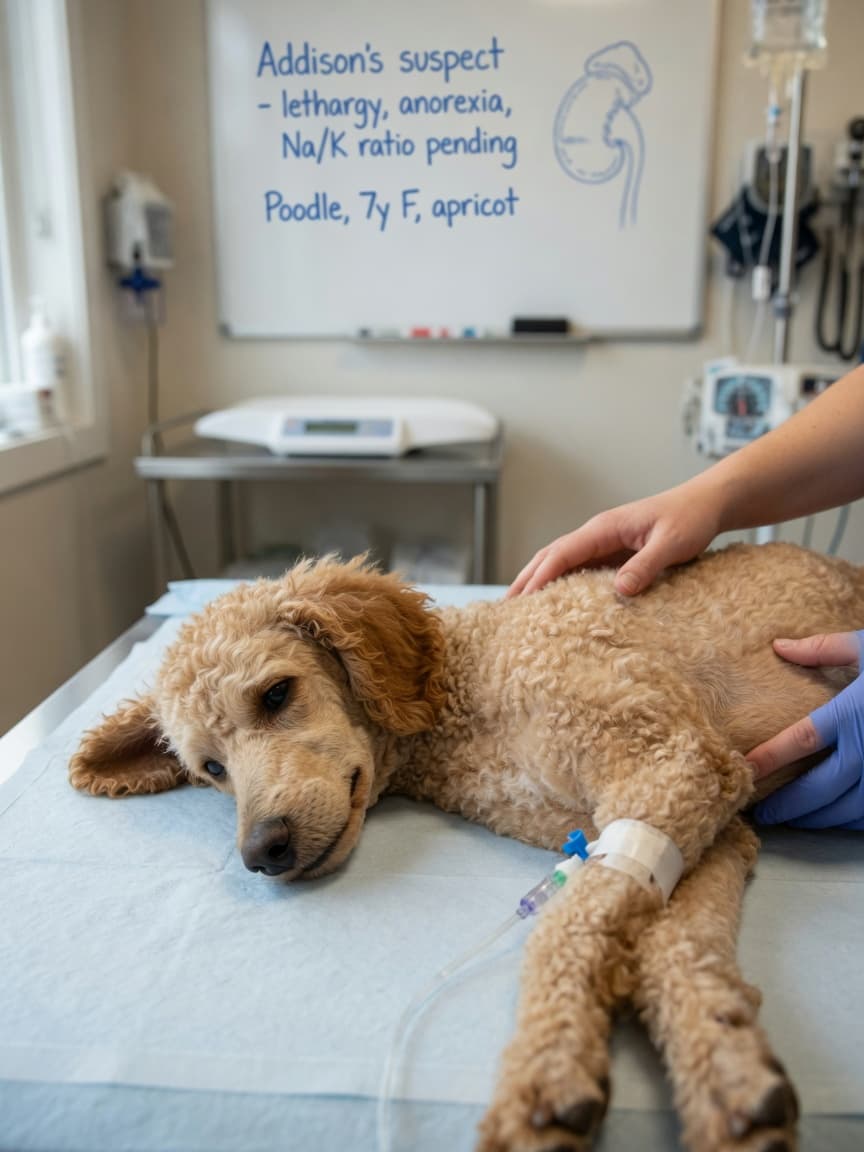
Addison's Disease in Dogs: The 'Great Pretender' Explained
Addison's disease — known medically as hypoadrenocorticism — earns its nickname "the great pretender" because its symptoms are vague, episodic, and easily mistaken for dozens of other conditions. Dogs with Addison's disease might see multiple veterinarians over months or even years before the diagnosis is made. Yet once identified and managed, most dogs with Addison's disease live completely normal lifespans.
Understanding this condition — what it is, how it presents, and how it's managed — helps owners advocate effectively for their dogs and recognize the crisis situations that demand immediate care.
What Is Addison's Disease?
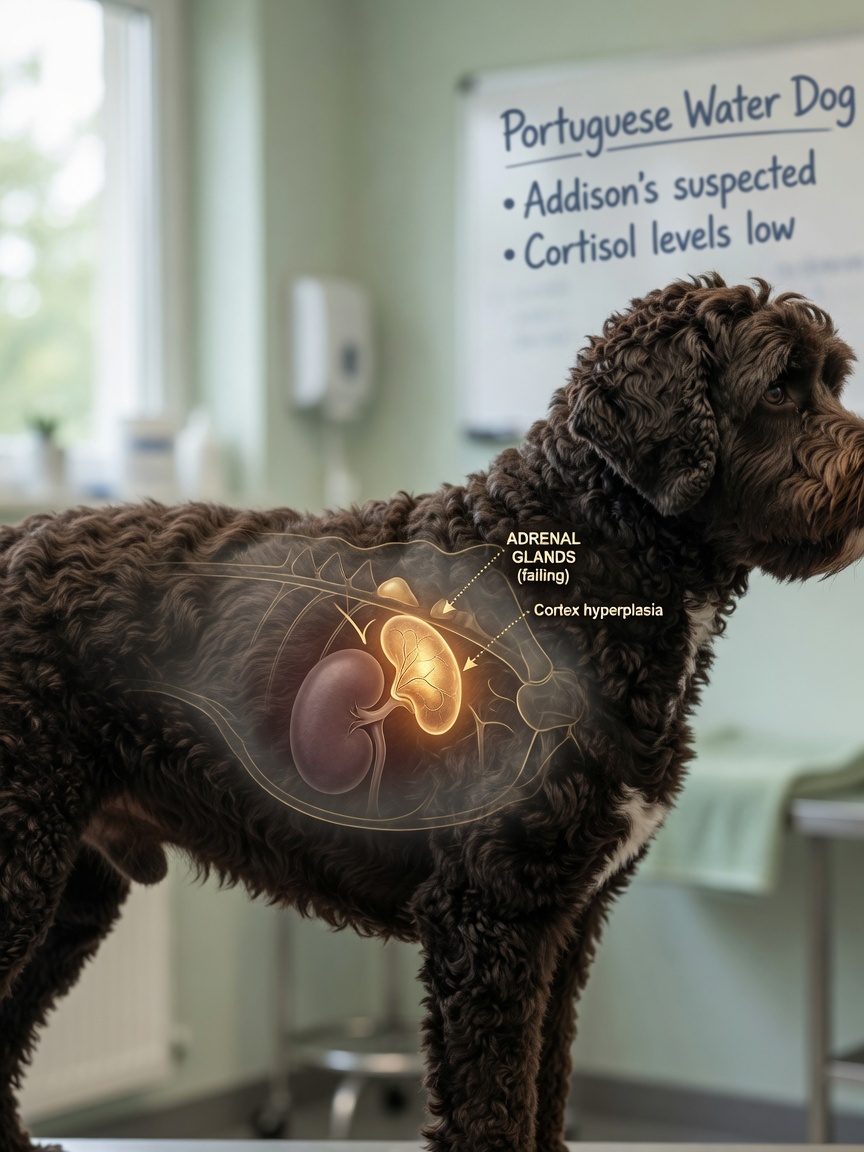
The adrenal glands, located near the kidneys, produce two critical categories of hormones: glucocorticoids (primarily cortisol, which governs the stress response, blood sugar regulation, and inflammation) and mineralocorticoids (primarily aldosterone, which regulates sodium, potassium, and fluid balance).
In Addison's disease, the adrenal glands fail to produce adequate amounts of one or both of these hormone groups. The most common form — primary hypoadrenocorticism — results from immune-mediated destruction of the adrenal cortex, meaning the dog's own immune system attacks the glands. Secondary hypoadrenocorticism occurs when the pituitary gland fails to send the ACTH signal that normally stimulates cortisol production; in this form, mineralocorticoid production is usually preserved.
Addison's disease can occur in any dog but is more common in young to middle-aged females. Breeds with elevated risk include Standard Poodles, Bearded Collies, Portuguese Water Dogs, Nova Scotia Duck Tolling Retrievers, and West Highland White Terriers.
Why It's Called "The Great Pretender"
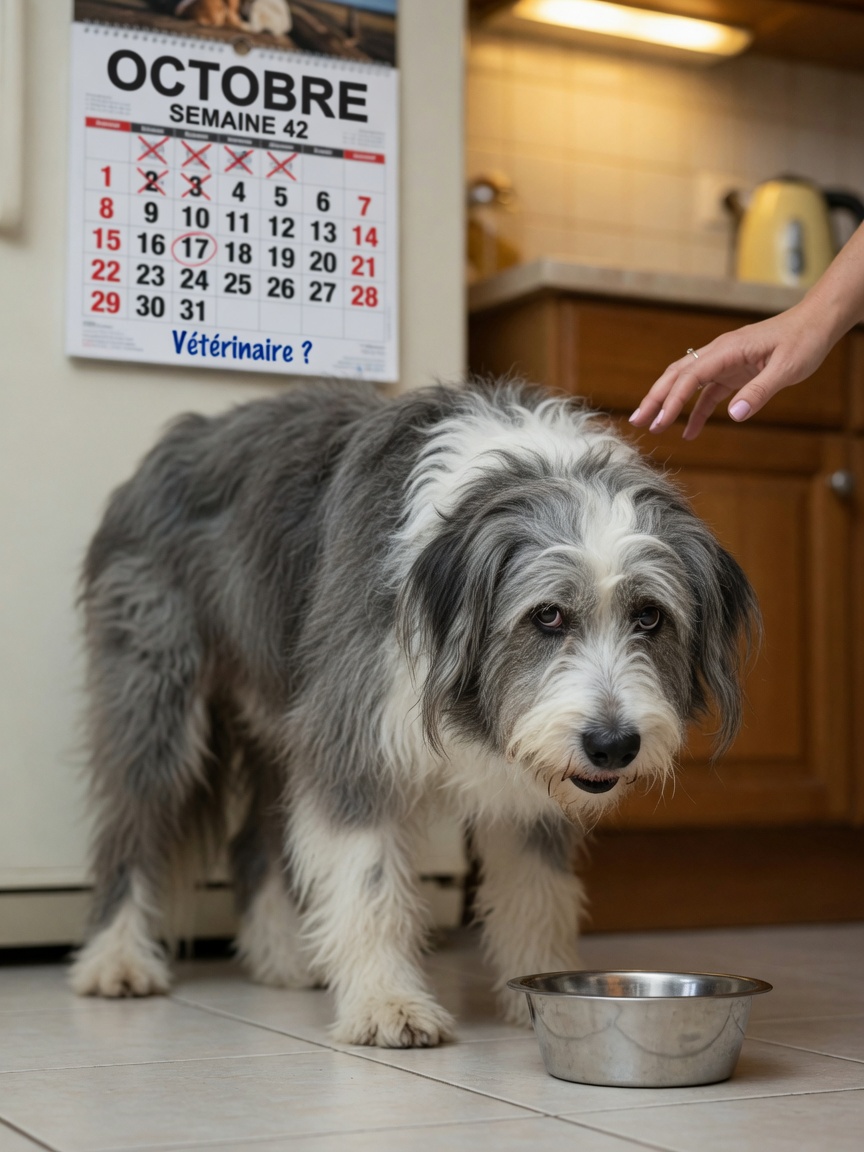
Addison's disease mimics an enormous range of other conditions. The symptoms wax and wane, often temporarily improving on their own (or with symptomatic treatment like IV fluids or anti-nausea medications), which delays diagnosis further.
Common presentations include:
- Episodic vomiting and diarrhea
- Lethargy and weakness that comes and goes
- Decreased appetite or complete anorexia
- Weight loss over time
- Shaking or trembling
- Increased urination and thirst (more common in secondary Addison's)
- Depression or apparent behavioral changes
- Abdominal pain
Because these signs overlap so heavily with gastrointestinal disease, kidney disease, liver disease, and even behavioral problems, Addison's disease is frequently on the bottom of a long differential diagnosis list. A key clinical clue is what veterinarians call a "waxing and waning" course — dogs who seem very unwell and then bounce back repeatedly, often after non-specific supportive care such as IV fluids, should be screened for Addison's. The Cornell University College of Veterinary Medicine notes that the episodic nature and improvement with fluid therapy are classic red flags that Addison's should be on the differential list.
Addisonian Crisis: The Emergency Presentation
Some dogs are first diagnosed with Addison's disease when they present in full Addisonian crisis — acute cardiovascular collapse triggered by the complete inability to mount a cortisol response to a stressor (illness, surgery, even emotional stress). During a crisis, electrolyte abnormalities (hyperkalemia — dangerously high potassium) can cause life-threatening heart arrhythmias.
Emergency treatment includes aggressive IV fluids (often isotonic saline to correct sodium and dilute potassium), injectable corticosteroids (dexamethasone), and cardiac monitoring. Once stabilized, the dog can be formally diagnosed and placed on long-term management.
Diagnosis
The gold standard diagnostic test for Addison's disease is the ACTH stimulation test. The dog's baseline cortisol is measured, synthetic ACTH is administered to stimulate the adrenals, and cortisol is measured again one hour later. In a dog with normal adrenal function, cortisol rises significantly. In Addison's disease, cortisol remains low or undetectable both before and after stimulation — the glands simply cannot respond.
Routine bloodwork can raise suspicion: low sodium and high potassium (a sodium:potassium ratio below 27:1 is a classic Addisonian finding), mild anemia, and low blood glucose. However, these findings are not always present, particularly in atypical (glucocorticoid-only deficient) cases. According to the AVMA, atypical Addison's — where only cortisol is deficient — is increasingly recognized and may not show the classic electrolyte changes.
Long-Term Treatment
Addison's disease is not curable, but it is highly manageable with lifelong hormone replacement.
Mineralocorticoid replacement: Most dogs receive DOCP (desoxycorticosterone pivalate, brand name Percorten-V or Zycortal) — an injectable mineralocorticoid given approximately every 25–28 days. Fludrocortisone (an oral tablet) is an alternative that provides both mineralocorticoid and some glucocorticoid activity.
Glucocorticoid replacement: Daily oral prednisone or prednisolone at physiologic (low) doses replaces the cortisol the adrenals can no longer produce. During periods of stress (illness, travel, surgery, boarding), the dose must be temporarily increased — this is called "stress dosing" and is an essential concept for owners to understand.
Stress dosing protocol: Your vet will provide specific instructions, but the general principle is to double or triple the daily prednisone dose for 3–5 days during any significant physical or emotional stressor. Owners of Addisonian dogs should keep injectable dexamethasone on hand for emergencies — ask your vet about this option.
Supporting your Addisonian dog's overall health: While medication is the cornerstone of Addison's management, supporting immune health and reducing inflammation through nutrition matters too. HolistaPet's omega-3 and adaptogen supplements are formulated for dogs with chronic conditions requiring ongoing support.
Browse HolistaPet Wellness Supplements →Diet and Lifestyle Considerations
Dogs with well-controlled Addison's disease can eat a standard balanced commercial diet. There are no specific dietary restrictions once the condition is managed, unlike with many other endocrine disorders. The focus is on consistency — a regular feeding schedule, stable portion sizes, and avoiding sudden food changes that could trigger gastrointestinal upset (which then triggers the need for stress dosing).
These dogs can exercise normally and live full, active lives. The primary lifestyle modification is owner vigilance: knowing the signs of crisis, having emergency supplies on hand, and ensuring that any veterinarian who treats your dog (including emergency vets) knows about the Addison's diagnosis. Many owners keep a medical alert card in their dog's collar or carrier.
Monitoring and Long-Term Follow-Up
Dogs on DOCP require electrolyte monitoring (typically 2 weeks after each injection initially, then every 3–6 months once stable) to ensure the dose is appropriate. Dogs on fludrocortisone require more frequent monitoring initially. Annual ACTH stimulation tests may be recommended to assess cortisol status over time.
Key Takeaways
- Addison's disease is caused by adrenal gland failure, resulting in insufficient cortisol and often aldosterone production.
- Its episodic, non-specific symptoms — vomiting, lethargy, weakness — explain why it is often diagnosed late.
- Addisonian crisis is a medical emergency requiring immediate IV fluids and corticosteroid injection.
- The ACTH stimulation test is the definitive diagnostic tool.
- With DOCP injections and daily prednisone, most dogs with Addison's live completely normal, full-length lives.
- Owners must understand stress dosing and keep emergency medications accessible.
References
- Scott-Moncrieff JC. "Hypoadrenocorticism." In: Feldman EC, Nelson RW, Reusch CE, Scott-Moncrieff JC, eds. Canine and Feline Endocrinology. 4th ed. Elsevier; 2015. PMID: 24467949
- Lathan P, Moore GE, Zambon S, Scott-Moncrieff JC. "Use of a low-dose ACTH stimulation test for diagnosis of hypoadrenocorticism in dogs." J Vet Intern Med. 2008;22(5):1070–1073. PMID: 18691366