
Behind the Elfin Ears and Curly Coat
If you have ever met a Devon Rex, you will understand why owners describe them as part cat, part monkey, part alien. The enormous ears, wide eyes, and tightly curled coat make them instantly recognisable. What is less visible is a set of health vulnerabilities that every Devon Rex owner deserves to understand clearly — particularly a form of hereditary muscle disease, a tendency toward skin and coat problems, and documented reactions to certain vaccines.
Devon Rex Myopathy: A Hereditary Muscle Disease
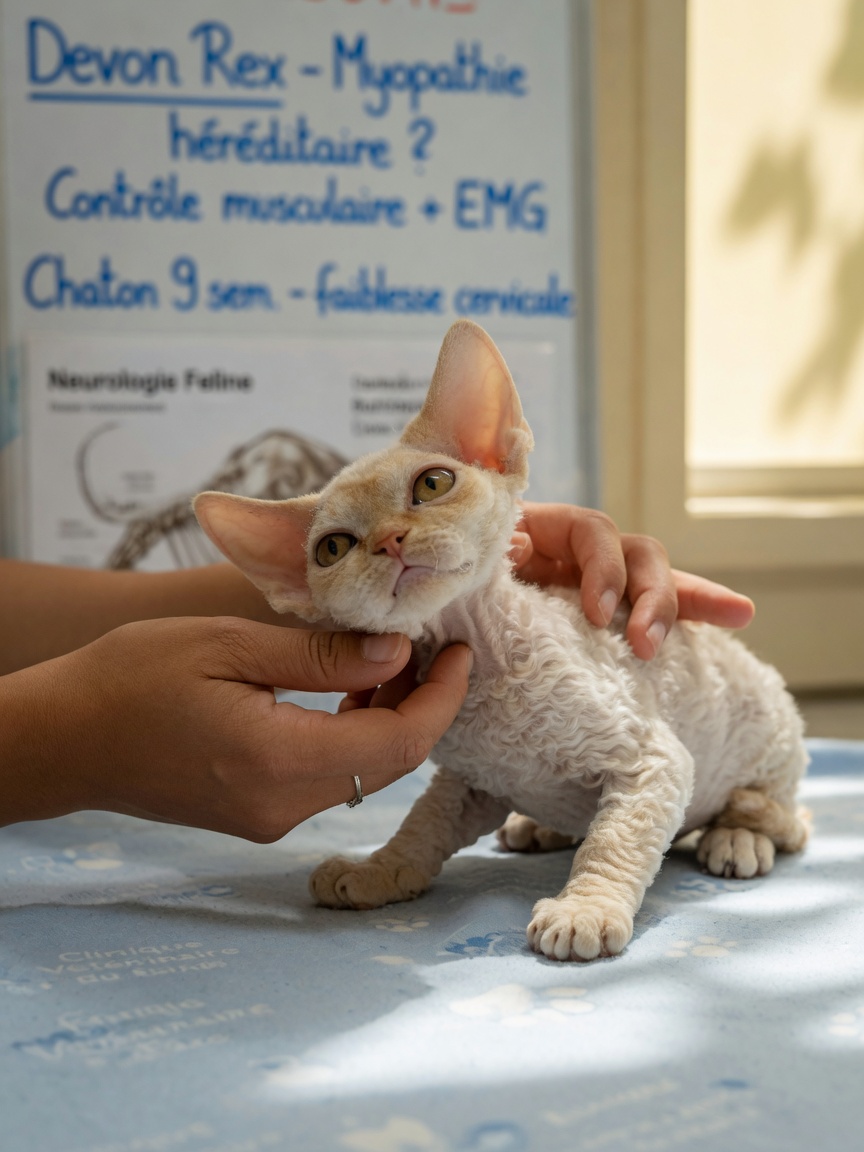
Devon Rex myopathy — also called hereditary myopathy of the Devon Rex or Devon Rex muscular dystrophy — is an autosomal recessive condition caused by a mutation in the COLQ gene. This gene encodes a protein essential for neuromuscular junction function. Without it, the transmission of nerve signals to muscle tissue is impaired, leading to progressive muscle weakness.
Clinical Signs and Progression
Affected kittens typically show signs between three weeks and six months of age. The earliest signs include generalised muscle weakness, difficulty holding the head up (ventroflexion, similar in appearance to the hypokalaemia seen in Burmese cats), exercise intolerance, and problems swallowing — a concern called megaoesophagus when the oesophagus itself loses motility. Affected cats may aspirate food into the lungs, making aspiration pneumonia a serious secondary risk. Symptoms often worsen with stress or excitement.
Genetic Testing and Breeding
A genetic test is available for the COLQ mutation. Responsible Devon Rex breeders now routinely screen breeding animals to avoid producing affected offspring. When enquiring about a Devon Rex kitten, ask specifically whether both parents have been tested clear. There is no cure for the condition itself; management is supportive and aimed at maintaining quality of life.
Skin and Coat Challenges
The Devon Rex's distinctive coat — short, soft, and wavy — is structurally fragile. The individual hair shafts are finer than in most breeds and curl in a way that makes them more prone to breaking. This means Devon Rex cats can develop areas of thinning or sparse fur that resemble alopecia even when no underlying disease is present; this is referred to as hereditary hypotrichosis in its more pronounced forms.
Seborrhoeic Skin
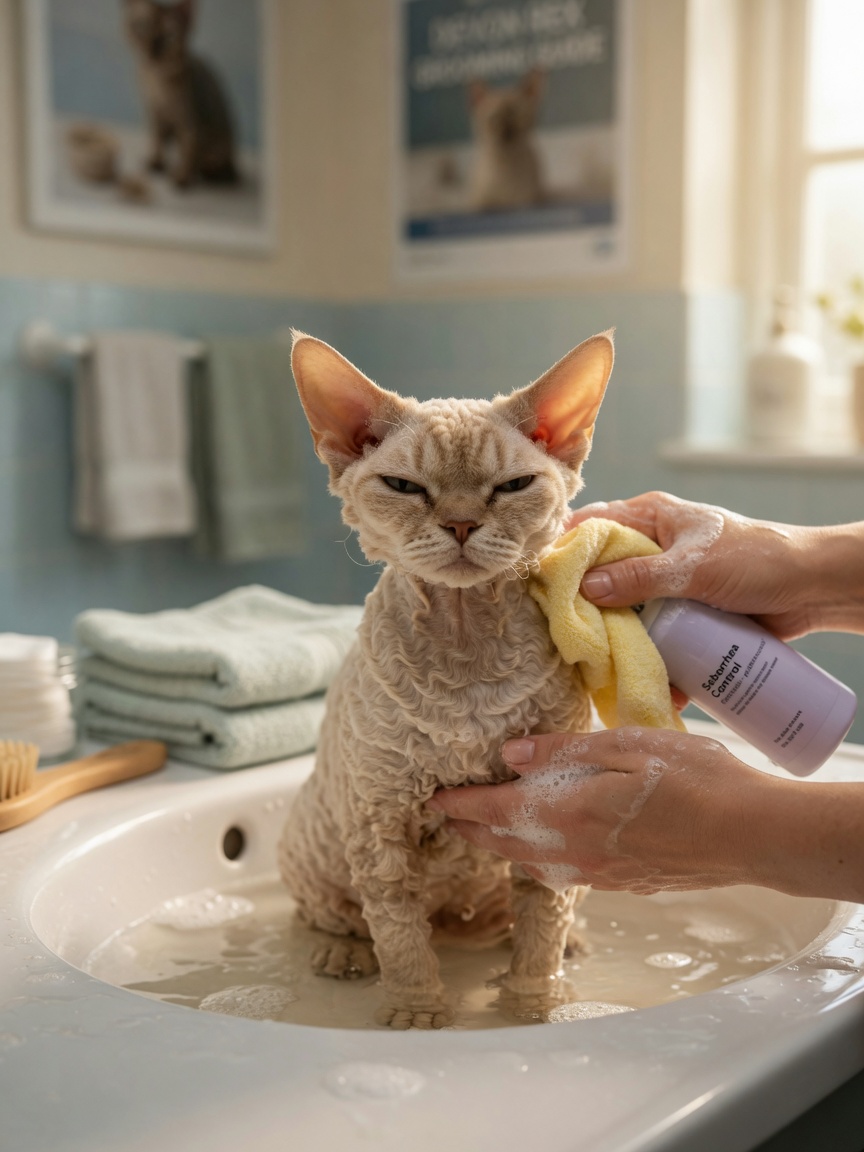
Devon Rex cats are prone to seborrhoea — a condition involving abnormal sebum production by the skin's oil glands. Because the coat does not distribute oils as effectively as a longer or denser coat might, sebum can accumulate on the skin surface, particularly around the ears, neck, and paws. This creates a waxy or greasy appearance and can lead to secondary yeast or bacterial skin infections if not managed.
Regular gentle cleaning of the ear canals, periodic wiping of skin folds if present, and occasional bathing with a veterinary-approved shampoo help manage seborrhoea. Devon Rex cats generally tolerate bathing better than many breeds, which makes this more practical than it sounds.
Malassezia and Secondary Infections
The yeast Malassezia pachydermatis can proliferate in the greasy skin environment that seborrhoea creates. Signs include itching, redness, odour, and dark waxy debris. A vet can confirm Malassezia involvement through cytology and recommend appropriate antifungal treatment. Recurrence is common, so ongoing skin hygiene is preferable to treating infections reactively.
Vaccination Sensitivities in the Devon Rex
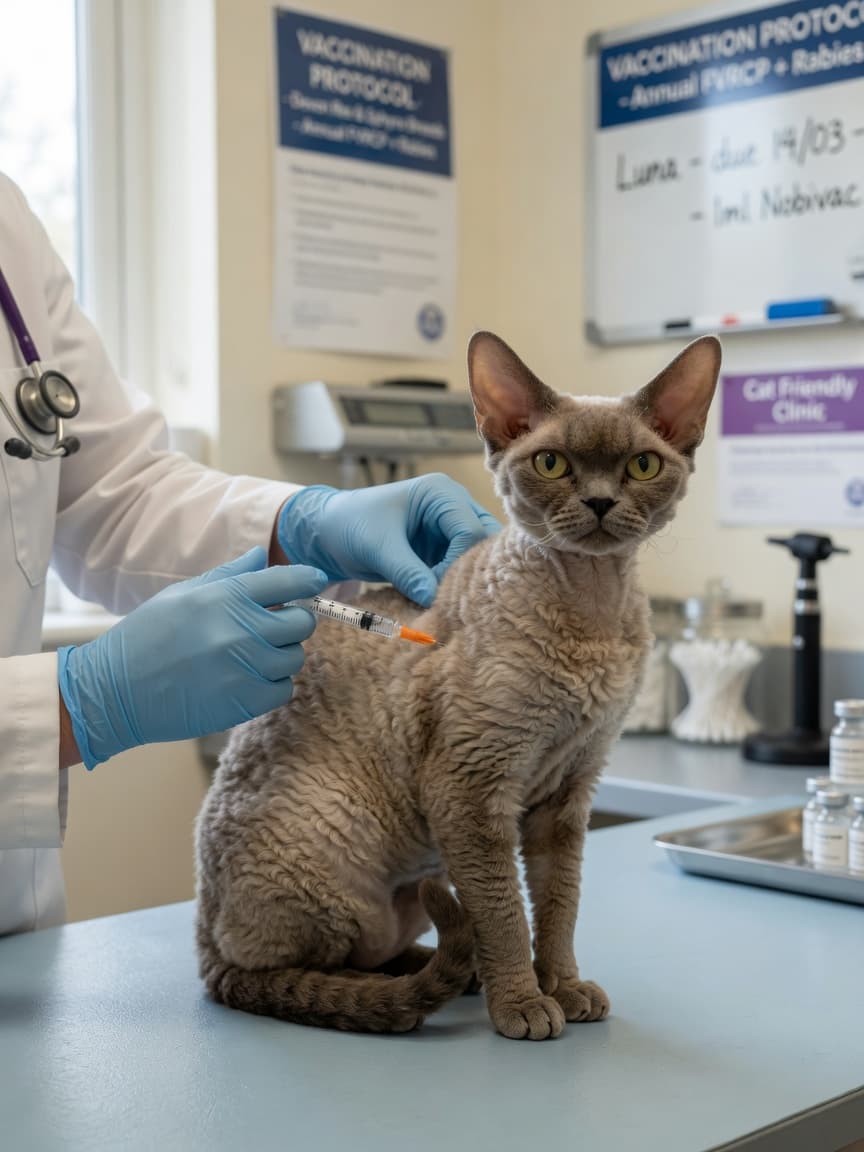
There is documented evidence within veterinary and breeding communities that Devon Rex cats show a higher-than-average rate of adverse reactions to certain vaccines — particularly those containing adjuvants. Reported reactions range from localised swelling and lethargy to more serious systemic responses. The precise immunological reason for this sensitivity is not fully characterised, but the pattern is well-enough established to inform clinical decisions.
This does not mean Devon Rex cats should not be vaccinated — vaccination remains essential for disease prevention. It does mean that the vaccination protocol should be discussed carefully with your vet. Non-adjuvanted vaccines are generally preferred where available. Post-vaccination monitoring for at least 30 minutes at the clinic is sensible, and owners should be alert to signs of delayed reaction — facial swelling, vomiting, difficulty breathing, or extreme lethargy — in the hours following vaccination.
Nutritional Support for a Devon Rex
A high-quality diet with adequate protein and omega-3 fatty acids supports skin barrier function and coat integrity. Some Devon Rex cats with chronic seborrhoea benefit from additional omega-3 supplementation, though this should be guided by a vet. Because the breed can be prone to weight gain despite its active nature — and because muscle health is a genuine concern — regular body condition scoring and maintaining lean weight are worthwhile habits.
Practical Steps for Devon Rex Owners
- Request COLQ genetic test certificates for both parents before purchasing a Devon Rex kitten.
- Monitor young kittens for muscle weakness, swallowing difficulties, or ventroflexion of the neck.
- Clean ears weekly and check for waxy buildup or odour that may signal Malassezia overgrowth.
- Bathe every four to six weeks with a gentle, vet-approved shampoo to manage seborrhoea.
- Discuss a non-adjuvanted vaccine protocol with your vet, and always observe your cat for at least 30 minutes post-vaccination.
- Feed a high-protein, omega-3-rich diet and maintain a lean body weight throughout life.
- Consult your vet before starting any supplement regimen.