
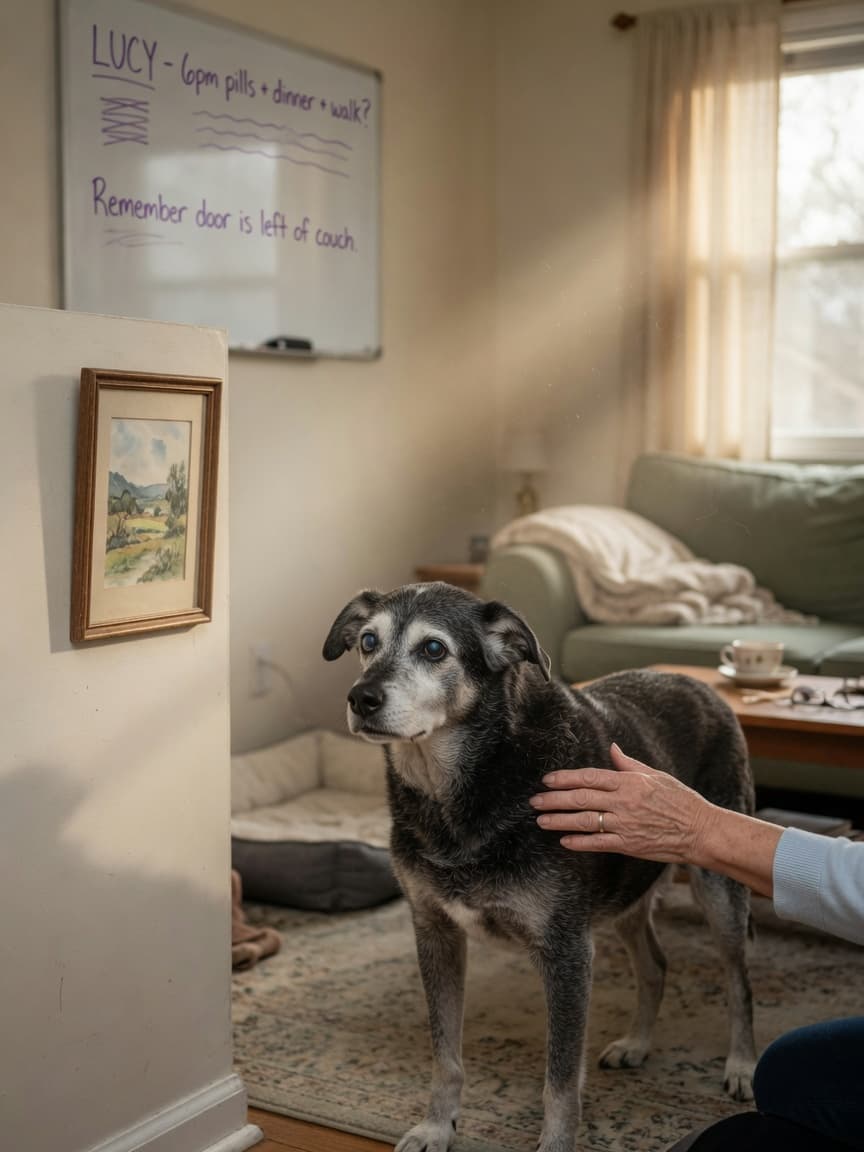
What Is Canine Cognitive Dysfunction Syndrome?
Canine Cognitive Dysfunction Syndrome (CDS), sometimes called CCDS or simply dog dementia, is a neurodegenerative disease that closely parallels Alzheimer's disease in humans. The underlying mechanism involves the accumulation of beta-amyloid plaques in the brain, along with changes in neurotransmitter function and reduced blood flow to brain tissue. Over time, these changes impair memory, learning, perception, and awareness.
CDS is far more common than many owners realise. Studies estimate that it affects approximately 14 to 35% of dogs over the age of 8, with prevalence increasing sharply with age. A dog that is 15 or older has a very high likelihood of showing at least some degree of cognitive decline. Despite this, the condition remains widely underdiagnosed, largely because its symptoms are easy to attribute to "normal old age" — a phrase that, in many cases, masks treatable suffering.
Recognising the Signs: The DISHAA Framework
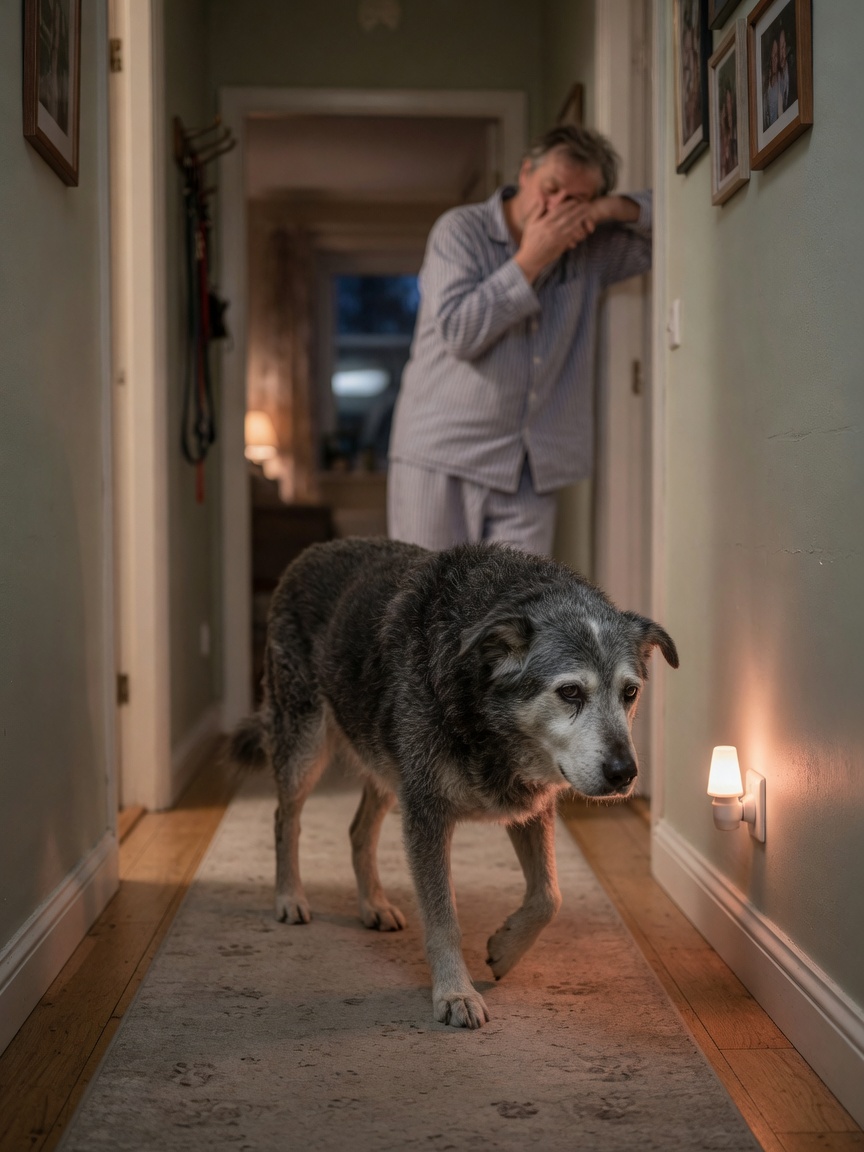
Veterinary professionals use a standardised framework called DISHAA to identify the behavioural changes associated with CDS. Each letter stands for a category of symptom, and together they provide a comprehensive picture of how the condition presents.
Disorientation
A dog with CDS may appear confused in familiar environments. They may get stuck in corners or behind furniture, stare blankly at walls, fail to recognise familiar people or other pets, or seem to forget where the door is. They may walk into rooms and appear to have no idea why they are there.
Interaction Changes
Social behaviour often shifts significantly. Some dogs become withdrawn and less interested in greeting family members, where once they were exuberantly affectionate. Others swing in the opposite direction, becoming unusually clingy and anxious when left alone. A dog who previously enjoyed being stroked may now seem indifferent or irritable.
Sleep-Wake Cycle Changes
Disrupted sleep is one of the most distressing features of CDS for owners. Affected dogs may pace or vocalise during the night, waking the entire household, while sleeping heavily during the day. This reversal of normal sleep patterns is driven by changes in the brain's regulation of circadian rhythms.
House-Soiling
A previously reliable dog may begin to urinate or defecate indoors, not because of a bladder or bowel problem, but because they have forgotten their training. They may seem unaware that they have soiled, or may go to the toilet immediately after coming inside. This symptom is particularly distressing for owners and should always be investigated medically before being attributed to CDS, as incontinence has many physical causes.
Activity Changes
Dogs with CDS frequently show reduced interest in play and interaction. They may engage in repetitive or purposeless behaviours — circling, pacing, or snapping at the air. They may become less responsive to commands they have known for years, or get "stuck" in repeated movements.
Anxiety and Phobias
New fears are common. A dog that was previously unbothered by thunderstorms may develop severe noise phobia. Generalised anxiety, restlessness, and a low threshold for stress are frequently observed, and may be among the earliest signs that something is changing in the brain.
How Is CDS Diagnosed?
There is no single test for CDS. Diagnosis is a process of exclusion — your vet will work through other potential causes of the same symptoms before arriving at a CDS diagnosis. Pain (especially from arthritis), sensory losses such as deafness or vision impairment, hypothyroidism, liver disease, urinary tract infections, and brain tumours can all produce behavioural changes that closely resemble CDS. Blood tests, urine analysis, blood pressure measurement, and sometimes imaging are typically recommended.
The DISHAA questionnaire is a validated owner-completed tool that helps structure the conversation with your vet. Completing it honestly and in detail before your appointment significantly improves the accuracy of assessment. Your vet may also use the Canine Cognitive Dysfunction Rating Scale or similar instruments.
Management: Slowing the Progression
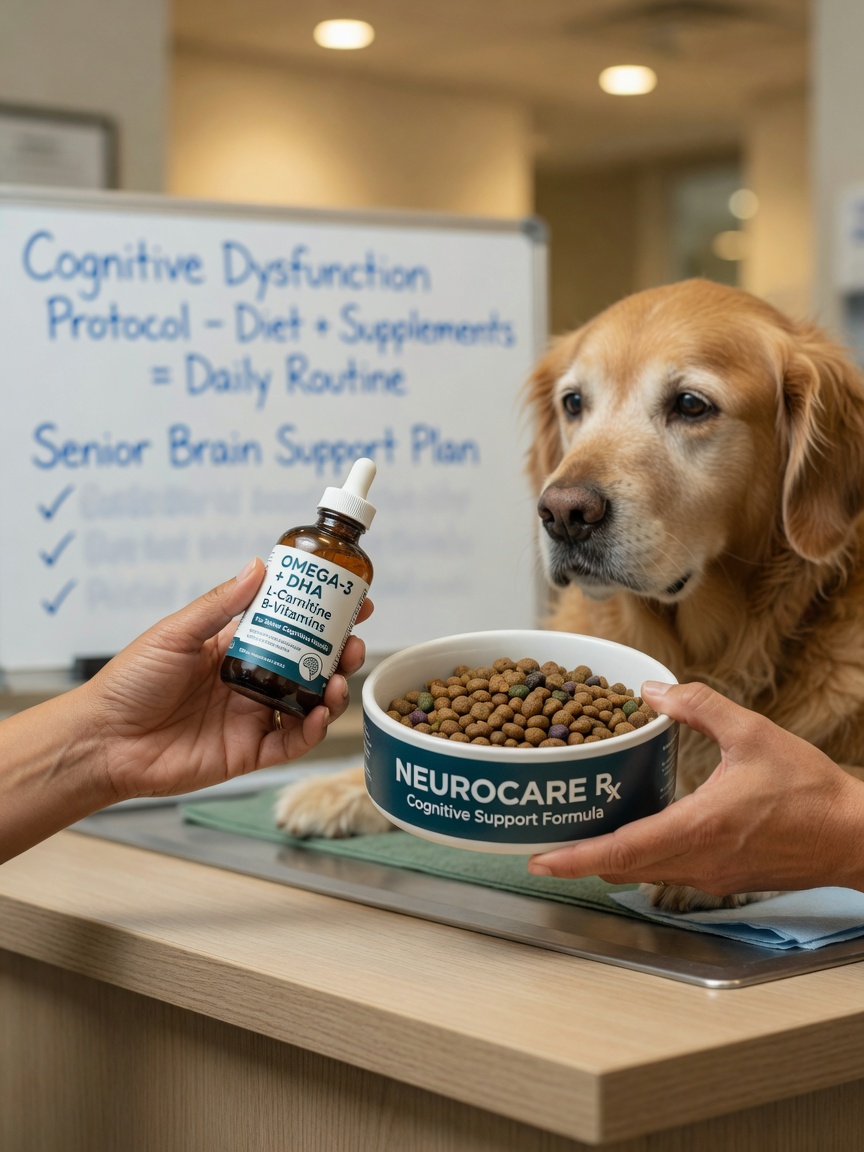
CDS cannot be cured, but its progression can be slowed, and quality of life can be meaningfully maintained with the right combination of environmental management, diet, and where appropriate, medication.
Environmental and Behavioural Support
Keeping your dog's routine as stable as possible is one of the most important things you can do. Changes to feeding times, walking routes, or sleeping arrangements can cause significant disorientation. Night lights help dogs navigate safely in the dark. Familiar smells — a worn piece of clothing near their bed, for instance — can be calming. Avoid rearranging furniture, as dogs with CDS rely heavily on spatial memory to move around confidently.
Continued mental enrichment has good evidence for slowing cognitive decline. Short, gentle training sessions, food puzzles, scent work, and varied social interactions all stimulate the brain in ways that may help preserve function.
Diet and Supplements
Hill's Prescription Diet b/d (Brain Ageing Care) is a clinically studied diet formulated with antioxidants, omega-3 fatty acids, and other nutrients that support brain health. Omega-3 supplementation independently has good supporting evidence. Several veterinary supplements, including Aktivait and Senilife, contain combinations of antioxidants, phosphatidylserine, and B vitamins aimed at supporting neurological function in older dogs.
Medication
Selegiline (sold under brand names including Selgian and Anipryl) is licensed in the EU and UK for the treatment of CDS. It works by increasing dopamine availability in the brain and reducing oxidative stress. Not all dogs respond dramatically, but for some it produces notable improvements in alertness and engagement. It is generally well tolerated. Other medications may be considered to manage specific symptoms such as anxiety or sleep disruption.
Supporting Yourself as a Carer
Caring for a dog with CDS is emotionally demanding. Watching a beloved companion become confused, anxious, or unrecognisable in personality is genuinely distressing, and the broken nights add physical exhaustion to the emotional weight. Connecting with others in the same situation — through veterinary support groups or online communities — can make a significant difference. Speak honestly with your vet about how you are coping, and do not hesitate to discuss quality-of-life assessment when the time comes. CDS is progressive, and knowing when to act in your dog's best interest is an act of love, not failure.