
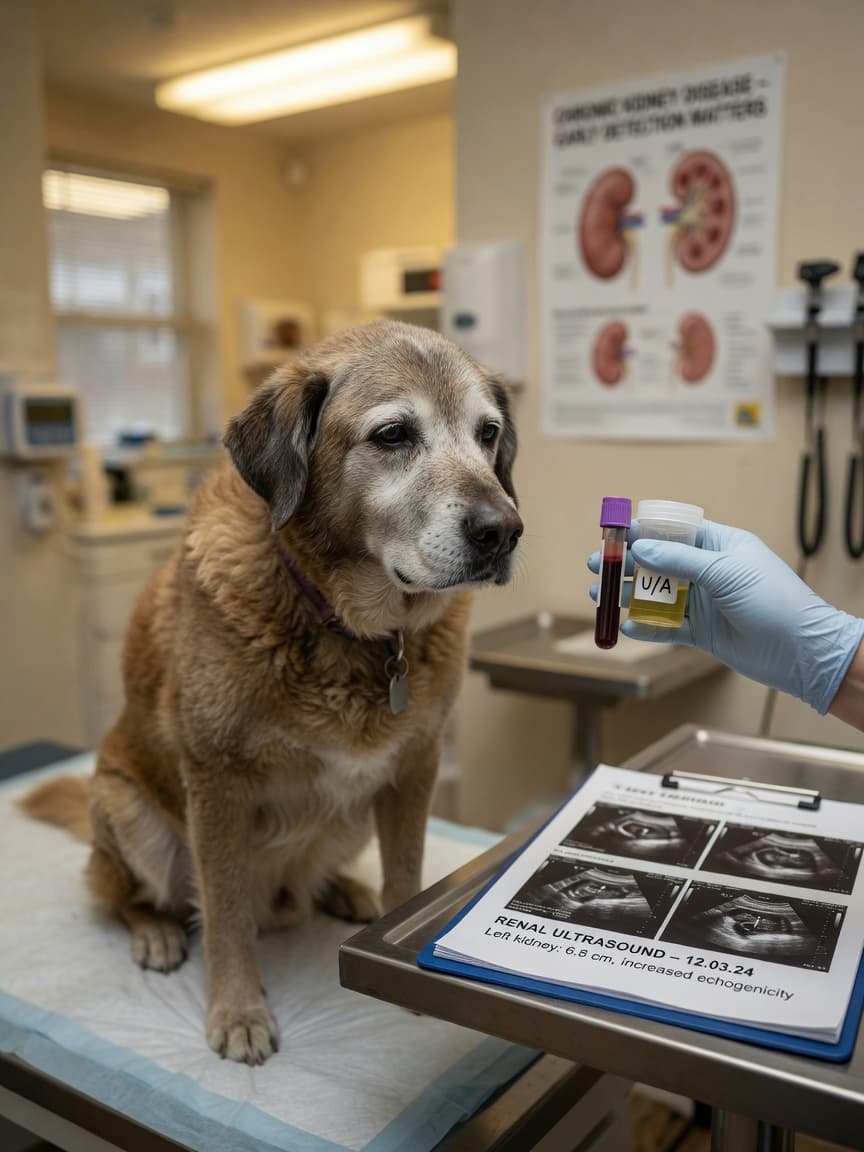
Understanding Chronic Kidney Disease
Chronic kidney disease (CKD) is one of the most common serious conditions affecting older dogs. The kidneys are responsible for filtering waste products from the blood, regulating fluid and electrolyte balance, controlling blood pressure, and stimulating red blood cell production. When kidney tissue is progressively lost — whether through age, infection, inflammation, or other causes — these functions deteriorate in ways that affect the whole body.
What makes CKD particularly challenging is that the kidneys have substantial reserve capacity. Clinical signs often do not appear until approximately 65 to 75 per cent of functional tissue has been lost. By that point, the disease is already well established, which is why monitoring kidney function in middle-aged and senior dogs through routine blood work is one of the most valuable things an owner can do.
Causes and Risk Factors
CKD in dogs can result from a range of underlying causes, though in many cases no single identifiable trigger is found — the kidneys have simply undergone age-related degeneration.
- Glomerulonephritis — immune-mediated inflammation of the kidney's filtering units
- Chronic pyelonephritis — recurrent or persistent bacterial infection
- Leptospirosis — a bacterial infection that can cause acute kidney injury progressing to CKD
- Amyloidosis — protein deposits in kidney tissue, seen in certain breeds including Shar-Peis and Beagles
- Renal dysplasia — abnormal kidney development, often genetically mediated
- Hypertension — both a cause and consequence of kidney disease
- Toxin exposure — particularly NSAIDs, aminoglycoside antibiotics, and certain plants such as grapes or raisins
The IRIS Staging System
The International Renal Interest Society (IRIS) has developed a widely used staging system for CKD in dogs based primarily on fasting serum creatinine and symmetric dimethylarginine (SDMA) levels. SDMA is a sensitive early marker of kidney function decline, often rising before creatinine becomes abnormal.
The four IRIS stages reflect progressive loss of kidney function, from mild impairment in Stage 1 to kidney failure requiring intensive management in Stage 4. Each stage is further sub-staged based on the presence and degree of proteinuria (protein in the urine) and hypertension, both of which significantly affect prognosis and treatment decisions.
Understanding staging matters because it guides therapy. A Stage 1 dog may need little more than dietary optimisation and regular monitoring, while a Stage 4 dog requires a comprehensive management plan addressing multiple complications simultaneously.
Recognising Clinical Signs
Early CKD is typically detected through blood and urine testing in the absence of obvious symptoms. As the disease advances, the following signs become apparent:
- Increased thirst and urination (polyuria/polydipsia) — the kidneys lose their ability to concentrate urine
- Reduced appetite and weight loss
- Vomiting and nausea — partly due to uraemic toxins and partly to gastrointestinal effects of CKD
- Lethargy and weakness
- Bad breath with an ammonia or metallic quality (uraemic breath)
- Pale gums — reflecting anaemia caused by reduced erythropoietin production
- Mouth sores or ulcers in advanced disease
Dietary Management: The Foundation of CKD Care

Nutrition is arguably the single most evidence-supported intervention in managing CKD. Multiple clinical studies in dogs have demonstrated that a renal diet extends survival time and improves quality of life compared with maintenance diets.
Phosphorus Restriction
Phosphorus restriction is the most critical dietary modification in CKD. Damaged kidneys cannot adequately excrete phosphorus, leading to elevated blood phosphorus levels (hyperphosphataemia). This triggers secondary hyperparathyroidism — a cascade in which the parathyroid gland releases excess hormone to pull calcium from bones, further damaging the kidneys and other organs.
Prescription renal diets achieve phosphorus restriction through ingredient selection and the exclusion of high-phosphorus foods such as organ meats, dairy products, and certain fish. In more advanced CKD, intestinal phosphate binders may be prescribed to reduce absorption from the diet.
Protein
Protein management in CKD is more nuanced than simple restriction. Protein metabolism generates nitrogenous waste products that declining kidneys struggle to excrete. However, dogs with CKD are also prone to muscle wasting, and insufficient protein accelerates this. The current approach focuses on using high-quality, highly digestible protein at levels appropriate to the stage of disease — typically modestly reduced compared with maintenance diets, rather than severely restricted, unless uraemia is severe.
Water Intake
Keeping a CKD dog well hydrated is critical. Wet food is significantly preferable to dry kibble for dogs with kidney disease, as it contributes to daily water intake and reduces the kidneys' concentrating burden. Some dogs benefit from subcutaneous fluid administration at home — a technique that many owners learn to perform themselves and find manageable with practice.
Omega-3 Fatty Acids
Supplementation with omega-3 fatty acids — particularly EPA and DHA from marine sources — has demonstrated anti-inflammatory effects within kidney tissue and modest improvements in glomerular filtration. Many prescription renal diets include omega-3 supplementation, though additional fish oil can be added under veterinary guidance.
Sodium
Moderate sodium restriction is recommended, particularly in dogs with concurrent hypertension. Dramatic restriction is not necessary in most cases and may reduce palatability — already a concern in dogs with reduced appetite.
Managing Complications
CKD rarely exists in isolation. Several associated conditions require their own management strategies.
- Hypertension is common in dogs with CKD and requires antihypertensive treatment, typically with amlodipine, to protect the kidneys and other target organs
- Proteinuria, when significant, is managed with ACE inhibitors or angiotensin receptor blockers to reduce pressure within the glomerulus
- Anaemia may require treatment with erythropoiesis-stimulating agents in advanced cases
- Nausea and reduced appetite can be addressed with anti-emetics and appetite stimulants such as mirtazapine
- Hypokalaemia (low potassium) is common in CKD and may require supplementation
Monitoring and Prognosis
Dogs with CKD benefit from regular monitoring — typically every three to six months in stable cases, more frequently if the disease is progressing or complications are present. Blood pressure, urine protein-to-creatinine ratio, creatinine, SDMA, phosphorus, and potassium are among the parameters followed over time.
Prognosis varies enormously. A dog in Stage 1 with no proteinuria and well-controlled blood pressure may live for years with a good quality of life. Stage 4 disease carries a far more guarded outlook, though many dogs can still be kept comfortable with attentive management. The key message for owners is that a CKD diagnosis is not an immediate end-of-life situation — it is the beginning of a management journey that, with commitment, can preserve quality of life for a meaningful period.