
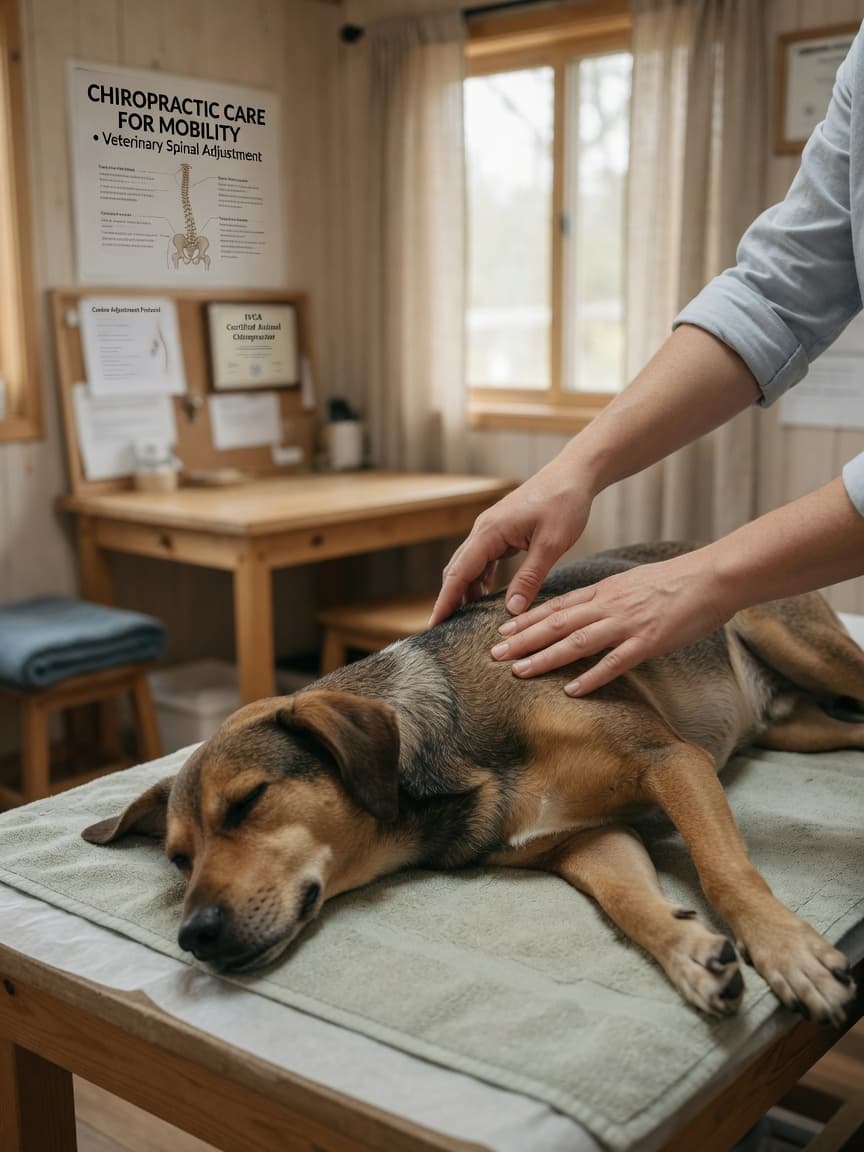
A Therapy With Passionate Advocates and Real Questions
Canine chiropractic — the application of manual spinal adjustments to dogs — has a devoted following among owners of working dogs, sporting dogs, and those with chronic musculoskeletal problems. Practitioners report impressive results. Sceptics note that the evidence base is thin and the risks, though uncommon, are real. The honest position sits somewhere between uncritical enthusiasm and blanket dismissal — and understanding where that is requires looking at the claims carefully.
What Chiropractic Practitioners Claim to Do
Veterinary chiropractic is based on the concept that restricted movement in spinal joints — termed subluxations or vertebral motion unit dysfunction — impairs nervous system function and causes pain, reduced mobility, and secondary health effects. Manual adjustment, or manipulation, aims to restore normal joint movement, reduce nerve interference, and allow the body to function and heal more effectively.
Practitioners treat conditions ranging from back and neck pain to gait abnormalities, performance issues in working or sporting dogs, and some internal organ problems claimed to have a spinal component. The scope of claimed applications is broad, which is itself a reason to examine the evidence carefully.
What the Evidence Actually Shows
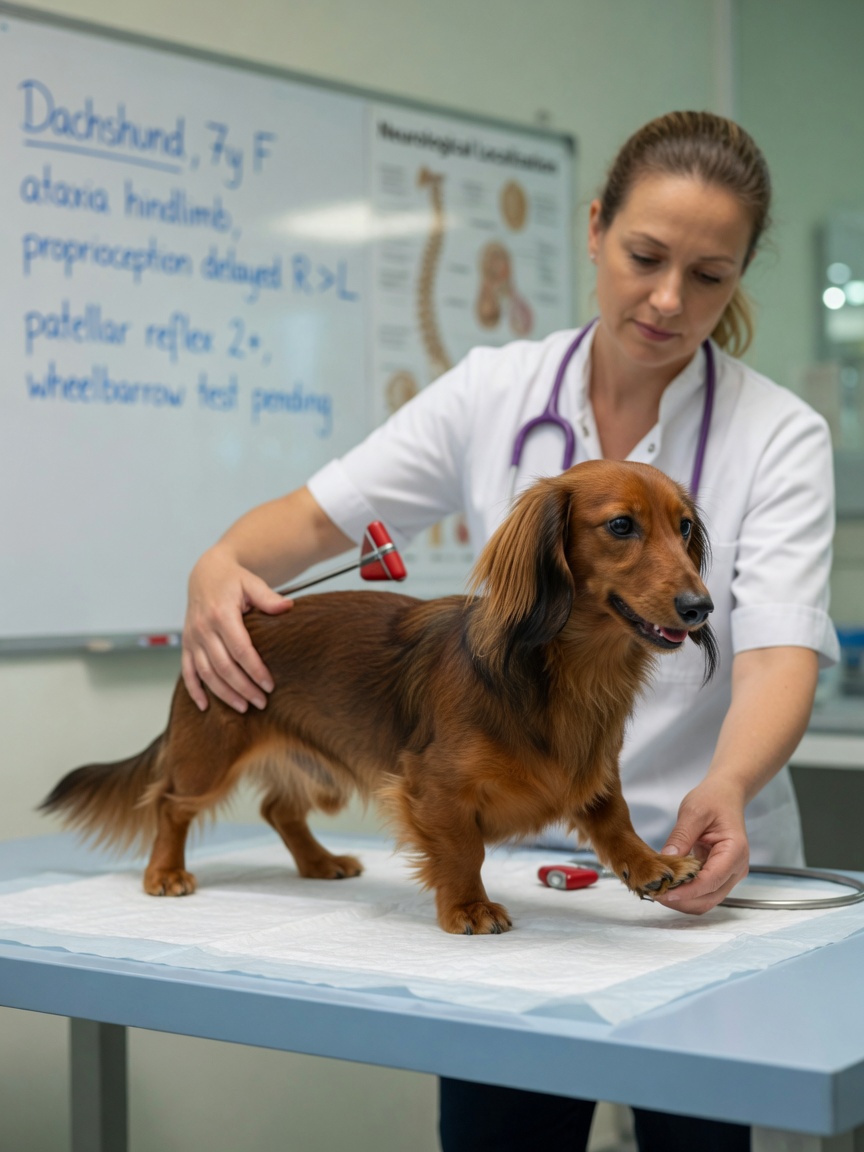
Spinal manipulation therapy has a more developed evidence base in human medicine than in veterinary medicine, and even there it is strongest for uncomplicated low back pain and weakest for the broader systemic claims sometimes made. In dogs, the evidence is substantially thinner.
Where There Is Reasonable Support
- Spinal pain and stiffness — several case series and small studies report improved range of motion and reduced pain in dogs with thoracolumbar stiffness or facet joint dysfunction
- Gait abnormalities related to spinal restriction — some working dog practitioners report consistent improvement in performance dogs with movement asymmetries not explained by structural pathology
- Neck pain without neurological deficits — manual therapy appears to help some dogs where imaging has ruled out disc protrusion or instability
Where Evidence Is Absent or Claims Are Implausible
- Claims that spinal adjustment treats organ disease, immune dysfunction, or chronic systemic illness are not supported by evidence and should be viewed with significant scepticism
- Maintenance adjustments for healthy dogs — the concept that routine manipulation prevents disease in neurologically and orthopaedically normal animals lacks scientific support
- Treatment of intervertebral disc disease with active neurological signs — this is not just unsupported but potentially dangerous
When to Be Cautious or Avoid It Entirely
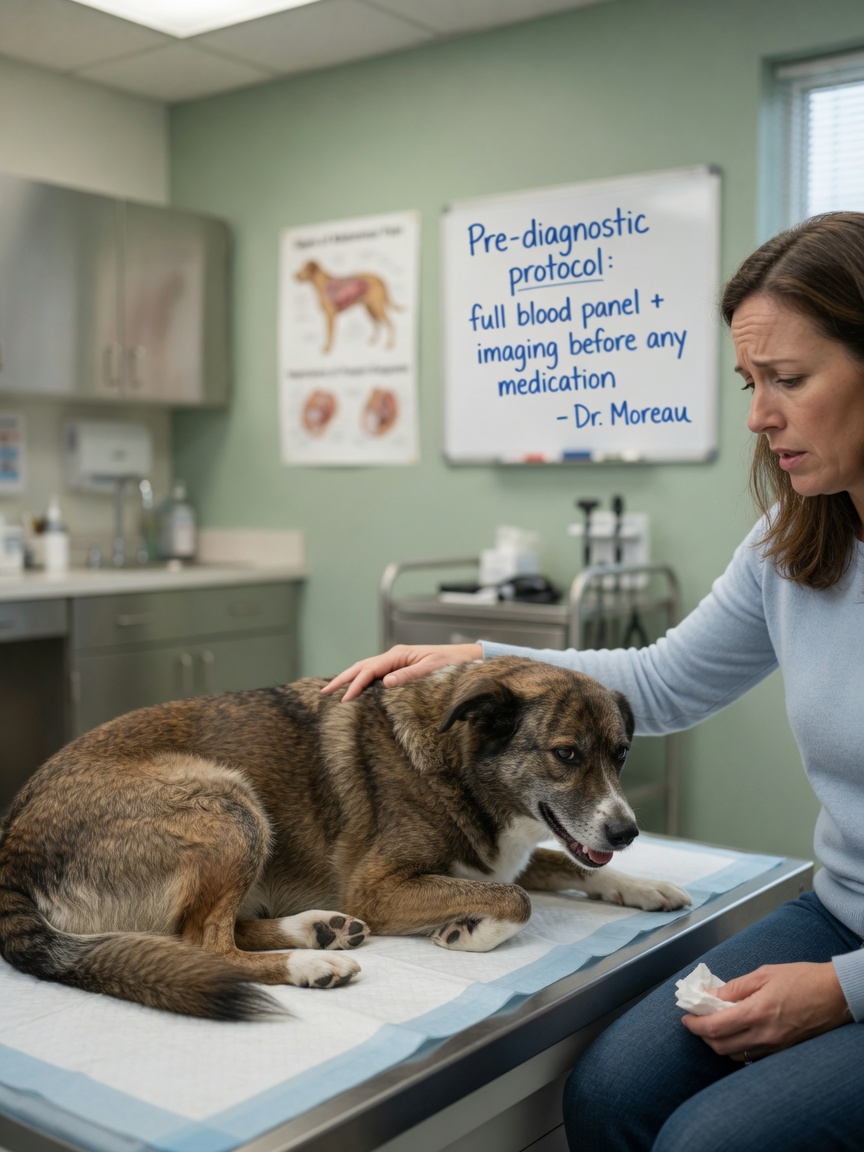
This is the most important section for any dog owner to read carefully. Chiropractic manipulation is not appropriate for all dogs, and applying it in the wrong situation can cause serious harm.
Absolute Contraindications
- Active intervertebral disc herniation with spinal cord compression — manipulation risks worsening the herniation and could convert a mild neurological deficit into paralysis
- Spinal fractures or luxations
- Bone tumours affecting the vertebrae
- Spinal instability from any cause
- Severe osteoporosis
Situations Requiring Extreme Caution
- Any dog with neurological signs — weakness, ataxia, knuckling, loss of deep pain sensation — must have imaging (MRI or CT) before any manual therapy is considered
- Dogs with undiagnosed pain where structural pathology has not been ruled out
- Breeds predisposed to intervertebral disc disease, including Dachshunds, Beagles, Cocker Spaniels, and French Bulldogs
Qualification Matters Enormously
In the UK, the law requires that anyone performing chiropractic on an animal must be either a veterinary surgeon or a human chiropractor working under veterinary referral and supervision. The International Veterinary Chiropractic Association (IVCA) and the American Veterinary Chiropractic Association (AVCA) certify practitioners who hold primary degrees in veterinary medicine or chiropractic plus specialist animal training.
Lay practitioners with weekend training certificates and no clinical degree are a serious concern. The forces involved in spinal manipulation are not trivial. Applied incorrectly to a spine with an undiagnosed disc herniation, the consequences can be severe and irreversible. This is not a therapy where qualification should be taken on trust — ask specifically about credentials before allowing anyone to treat your dog.
A Practical Approach for Dog Owners
If your dog has musculoskeletal pain, stiffness, or movement asymmetries that have not fully resolved with conventional treatment, chiropractic may be worth discussing with your vet. The appropriate pathway is:
- Full veterinary assessment including orthopaedic and neurological examination
- Imaging to rule out disc disease, tumours, or instability if there is any clinical suspicion
- Referral to a qualified veterinary chiropractor or certified animal chiropractor working under veterinary supervision
- Clear communication between the chiropractor and your primary vet throughout treatment
- Realistic expectation-setting — improvement in spinal mobility and pain, not resolution of systemic disease
Used appropriately, with a properly qualified practitioner, for the right conditions and in dogs where contraindications have been excluded, chiropractic can be a useful addition to a multimodal pain management plan. The key words are appropriately, qualified, and right conditions. Never skip the veterinary assessment first.