
What Is Ringworm in Cats?
Despite its name, ringworm has nothing to do with worms. It is a fungal infection of the skin, hair, and nails caused by a group of organisms known as dermatophytes. In cats, the most common culprit is Microsporum canis, which accounts for the vast majority of cases across Europe. The fungus colonises the outer layers of the skin and the hair shafts, causing the characteristic lesions that give the condition its name.
Ringworm is highly contagious between animals and from animals to humans, making it a significant concern for households with children, elderly individuals, or anyone with a weakened immune system. Understanding how to identify, diagnose, and treat ringworm is essential for any cat owner, particularly those living with multiple pets or recently adopted animals.
Signs of Ringworm in Cats
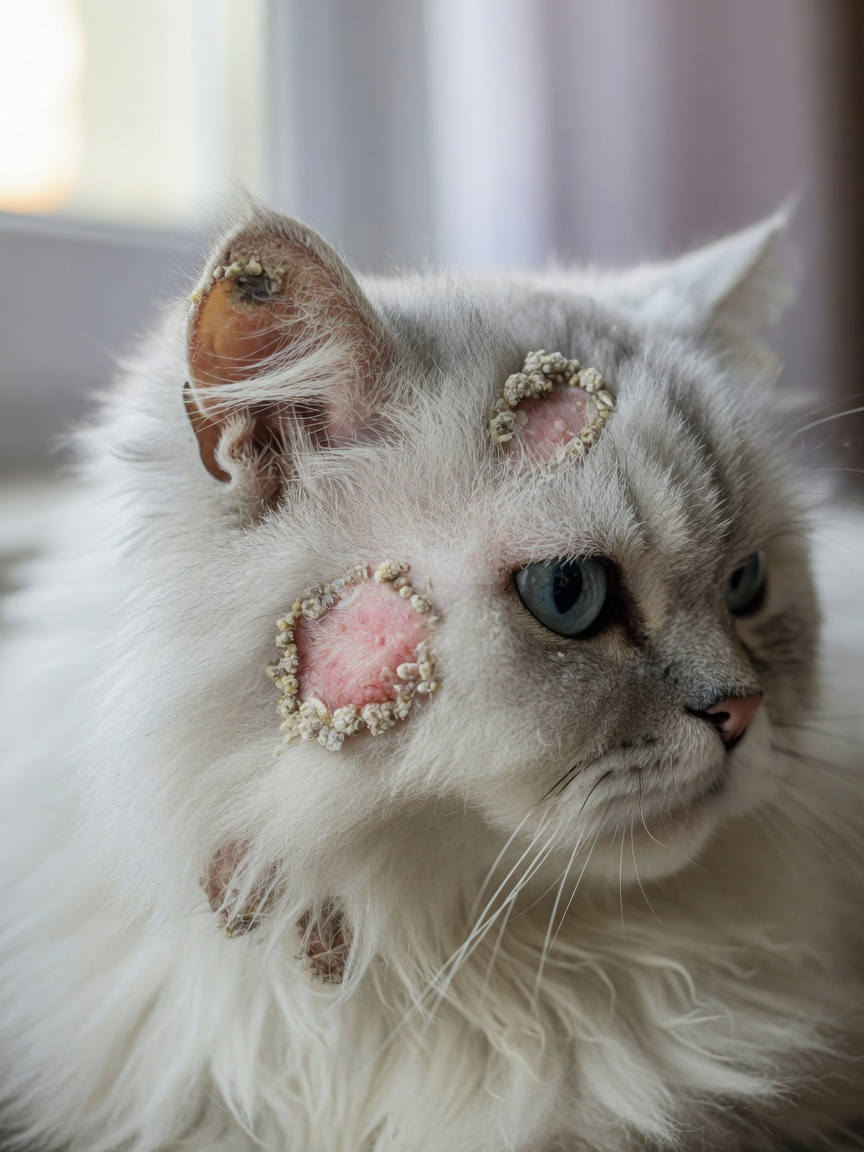
The clinical signs of ringworm in cats vary considerably from one animal to the next, which can make diagnosis challenging. Classic presentations include circular or irregular patches of hair loss, often with a scaly or crusty border. The skin beneath may appear reddened, inflamed, or thickened. Lesions most commonly appear on the head, ears, and forelimbs, though they can spread across the body if left untreated.
However, ringworm does not always produce obvious symptoms. Some cats, particularly longhaired breeds such as Persians, can be asymptomatic carriers. These animals harbour the fungus on their coat without showing any visible skin changes, yet they are fully capable of spreading the infection to other animals and people. This is one reason why ringworm can be so difficult to eliminate in multi-cat households and rescue shelters.
In mild cases, owners may notice nothing more than a small area of broken hairs or mild dandruff. In more severe cases, widespread hair loss and intense scaling can develop. Itching is variable; some cats scratch frequently while others appear unaffected.
Zoonotic Risk: Protecting Your Family
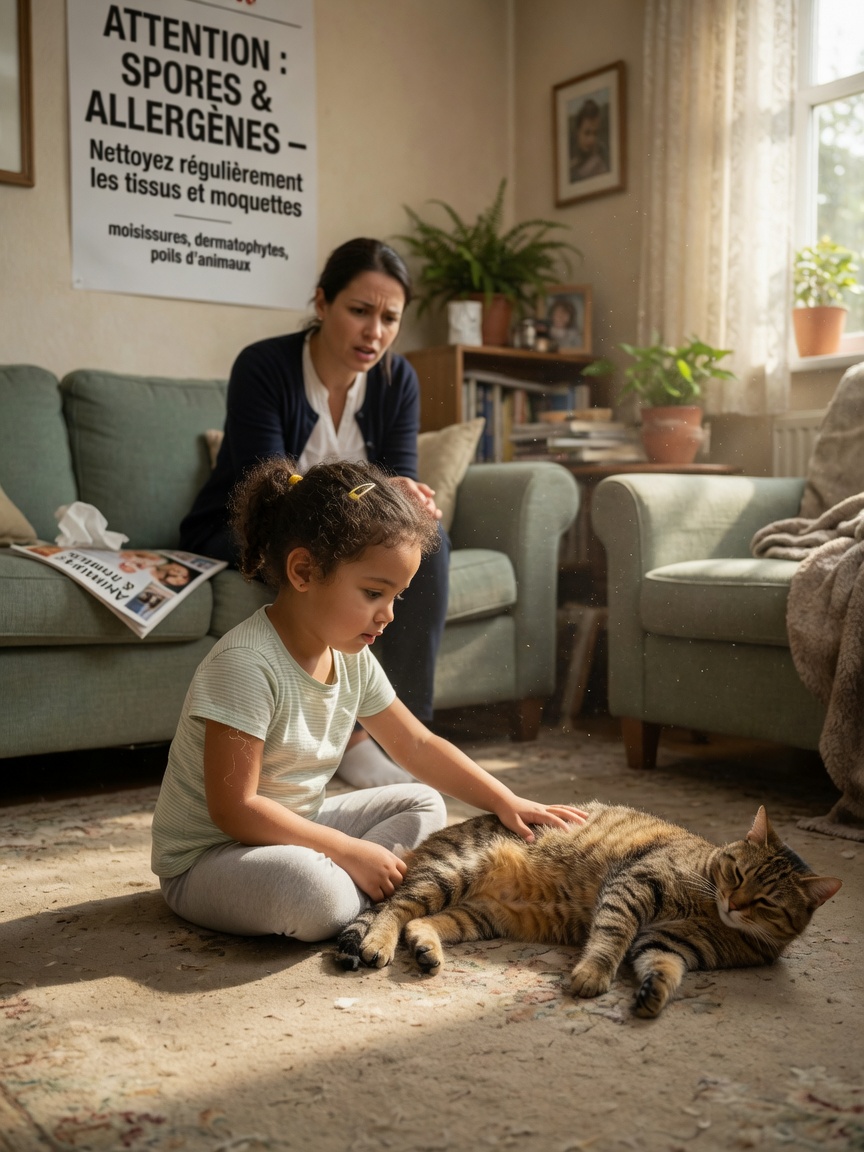
Ringworm is one of the most important zoonotic conditions transmitted from cats to humans. Direct contact with an infected cat or contaminated surfaces, bedding, or grooming tools is sufficient to transmit the fungus. In humans, the classic sign is a red, circular, itchy rash that gradually expands outward with a clearer centre.
Children are at particularly high risk because they tend to handle pets more closely and may be less consistent with hand hygiene. Immunocompromised individuals, including those undergoing chemotherapy, living with HIV, or taking immunosuppressive medication, can develop more severe and widespread infections. If a member of your household develops a suspicious skin rash while your cat is being investigated or treated for ringworm, they should consult a doctor promptly and mention the potential animal source.
Environmental contamination plays a significant role in transmission. Fungal spores from infected cats can persist on furniture, carpets, and soft furnishings for months, sustaining re-infection long after the cat itself has recovered.
Ringworm in Shelters and Multi-Cat Environments
Rescue centres and multi-cat households represent the highest-risk environments for ringworm transmission. Newly arrived cats of unknown origin, particularly kittens under twelve months of age, are far more susceptible to infection. Stress, malnutrition, and concurrent illness all compromise the immune system and increase vulnerability.
Responsible shelters in Europe screen incoming cats for dermatophytosis before mixing them with the resident population. Quarantine protocols, routine toothbrush cultures, and careful monitoring of new arrivals are standard practice in well-managed facilities. If you have adopted a cat from a shelter or rescue organisation, remain vigilant for skin changes in the weeks following adoption.
Diagnosis: Wood's Lamp, Culture, and PCR
Confirming a diagnosis of ringworm requires laboratory testing, as the clinical signs alone are not definitive. Several diagnostic tools are available, each with its own strengths and limitations.
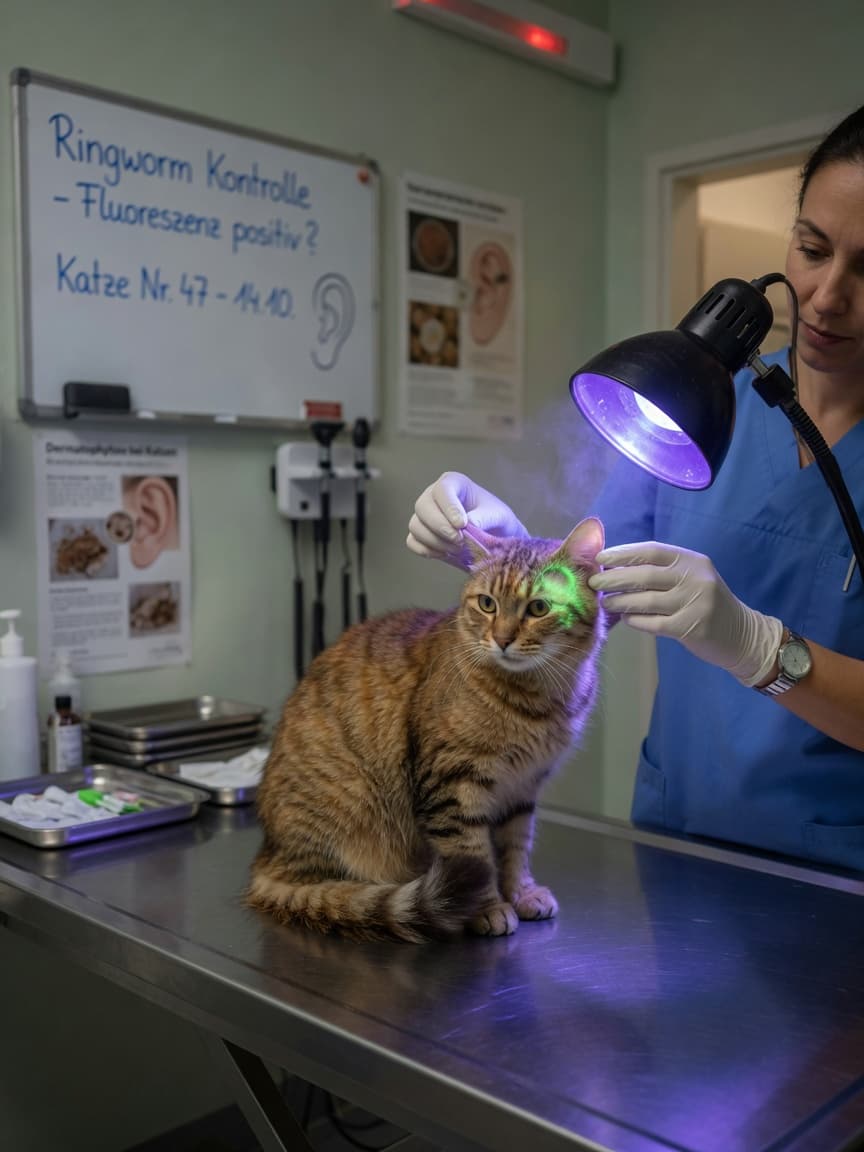
The Wood's lamp, which emits ultraviolet light, is frequently the first test performed. Microsporum canis fluoresces a characteristic apple-green colour under ultraviolet light. However, this tool has a significant limitation: only around 50 per cent of strains fluoresce, meaning a negative result does not rule out infection. False positives can also occur due to topical treatments or certain soaps.
Fungal culture remains the gold standard for diagnosis. Hair and scale samples are collected and placed on specialist growth media, then incubated for up to three weeks. This method reliably identifies the causative species but requires patience due to the time involved.
Polymerase chain reaction (PCR) testing is increasingly available through veterinary laboratories across Europe and offers rapid, highly sensitive results within one to two days. PCR is particularly useful for screening asymptomatic carrier cats in shelter settings.
Treatment: What to Expect
Treating ringworm in cats requires a combination of topical and systemic approaches, alongside rigorous environmental decontamination. Treatment is rarely a quick process; most cases require weeks to months before the cat achieves two consecutive negative cultures, which is the standard benchmark for cure.
Lime sulphur dips are a highly effective topical treatment widely used in Europe. The cat is dipped in a dilute solution every five to seven days. While effective, lime sulphur has a strong smell and can stain fabrics, so care is needed during application. Affected areas may also be treated with antifungal creams or mousse between dips.
Oral antifungal medication is usually required alongside topical treatment, particularly in widespread or persistent cases. Itraconazole is the preferred systemic agent in cats and is well tolerated at appropriate doses. Terbinafine is an alternative used in some cases. Treatment typically continues for a minimum of six weeks, with the endpoint determined by culture results rather than clinical appearance alone.
Environmental decontamination is equally important and is frequently overlooked. All soft furnishings, bedding, and fabrics should be laundered at high temperatures or disposed of. Hard surfaces should be cleaned with a sporicidal disinfectant; dilute bleach at 1:10 or products containing accelerated hydrogen peroxide are effective against Microsporum canis. Vacuuming should be performed thoroughly and frequently, with the vacuum bag disposed of after each use.
ESCCAP Europe Guidelines
The European Scientific Counsel Companion Animal Parasites (ESCCAP) publishes guidelines on the control and prevention of dermatophytosis in companion animals. These guidelines emphasise the importance of culture-confirmed cure before considering treatment complete, the use of combination topical and systemic therapy, and environmental decontamination as a core component of management. European cat owners and veterinary practitioners are encouraged to consult the current ESCCAP guidance, which is freely available on their website, for the most up-to-date recommendations.
How Long Does Treatment Take?
This is the question most owners ask, and the honest answer is that there is no fixed timeline. Mild cases in otherwise healthy adult cats may resolve within six to eight weeks of consistent treatment. More severe infections, cases in kittens or immunocompromised cats, and situations involving environmental contamination or multiple animals can take three to six months or longer. Patience and strict adherence to treatment protocols are essential. Stopping treatment early because the cat looks better is one of the most common reasons for relapse.
Regular recheck appointments with your veterinarian, including repeat cultures, are the only reliable way to confirm that treatment is working and to determine when it is safe to stop.