
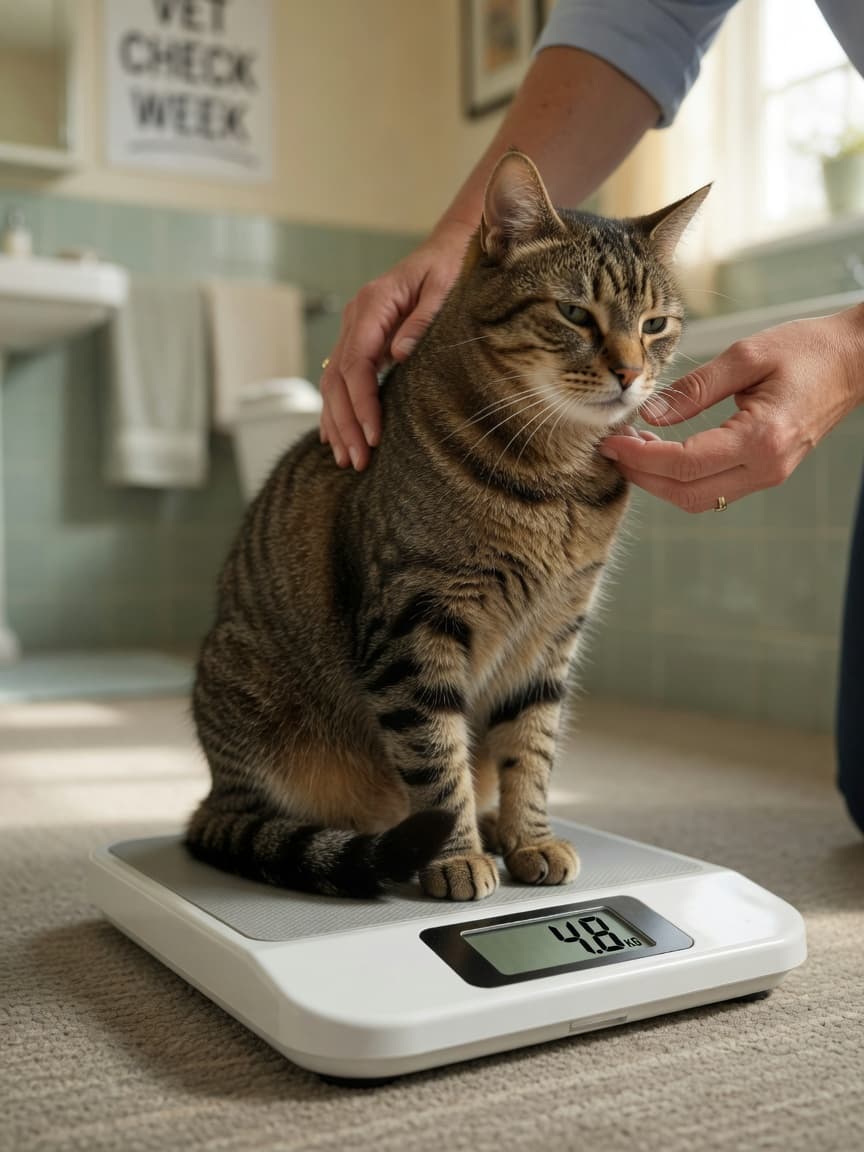
Why Your Cat's Weight Is a Vital Health Indicator
Weight is one of the most objective pieces of information you can gather about your cat's health at home. Unlike behaviour or coat quality, which require interpretation, weight provides a concrete number that can be tracked over time. Both weight loss and weight gain carry meaningful health implications in cats, and because feline bodies are relatively small, even modest changes represent a significant percentage of total body mass.
A loss of just 10% of body weight in a cat is considered clinically significant. For a 4 kg cat, that is only 400 g — a change that can easily go unnoticed without regular monitoring, particularly in long-haired breeds where body condition is harder to assess visually.
How to Weigh Your Cat at Home
Standard bathroom scales can be used with reasonable accuracy. Weigh yourself first, then pick up your cat and weigh again. Subtract the first reading from the second. The result is your cat's weight. For a more comfortable reading, try this when your cat is calm or sleepy.
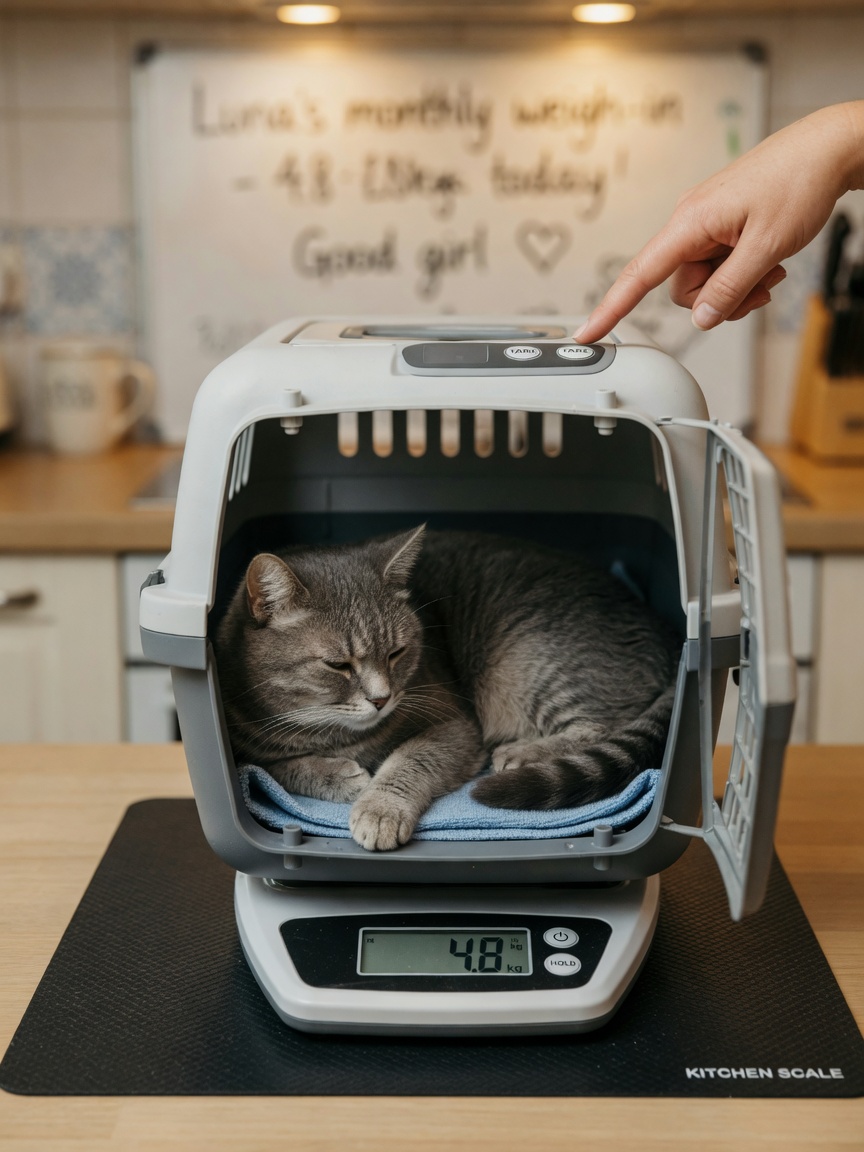
If your cat is uncooperative, a kitchen scale placed on a non-slip mat and set to zero with an empty carrier on top can work well for cats who tolerate their carrier. Many veterinary practices also allow clients to bring cats in simply for a weigh-in without an appointment charge — worth asking if home weighing proves difficult.
For accuracy, weigh at the same time of day, ideally before a meal, and use the same scales consistently. Different scales can vary slightly, which muddies your data over time.
How Often Should You Weigh Your Cat
For an adult cat in good health, monthly weighing is a reasonable frequency. This provides enough data points to identify trends without becoming burdensome. Kittens, senior cats over ten years of age, and cats with known chronic conditions such as hyperthyroidism, kidney disease, or diabetes benefit from fortnightly or even weekly monitoring.
It is worth noting the date alongside each weight in a simple log. Over several months, a consistent downward or upward trend becomes much more visible than any single reading would suggest.
Understanding Healthy Weight Ranges
There is no universal target weight for all cats, as breed, sex, and frame size all influence healthy ranges. A domestic shorthair female might be healthy at 3.5 kg, while a neutered male Maine Coon could appropriately weigh 7 kg or more.
Your veterinarian will assign a body condition score during wellness visits — typically on a scale of one to nine, where one is severely emaciated and nine is obese, with four to five representing ideal. Learning to assess body condition yourself is a useful complement to weight monitoring. At a healthy weight, you should be able to feel your cat's ribs easily without pressing hard, but not see them prominently. There should be a visible waist when viewed from above, and the abdomen should tuck up slightly when viewed from the side.
Weight Loss: When to Be Concerned
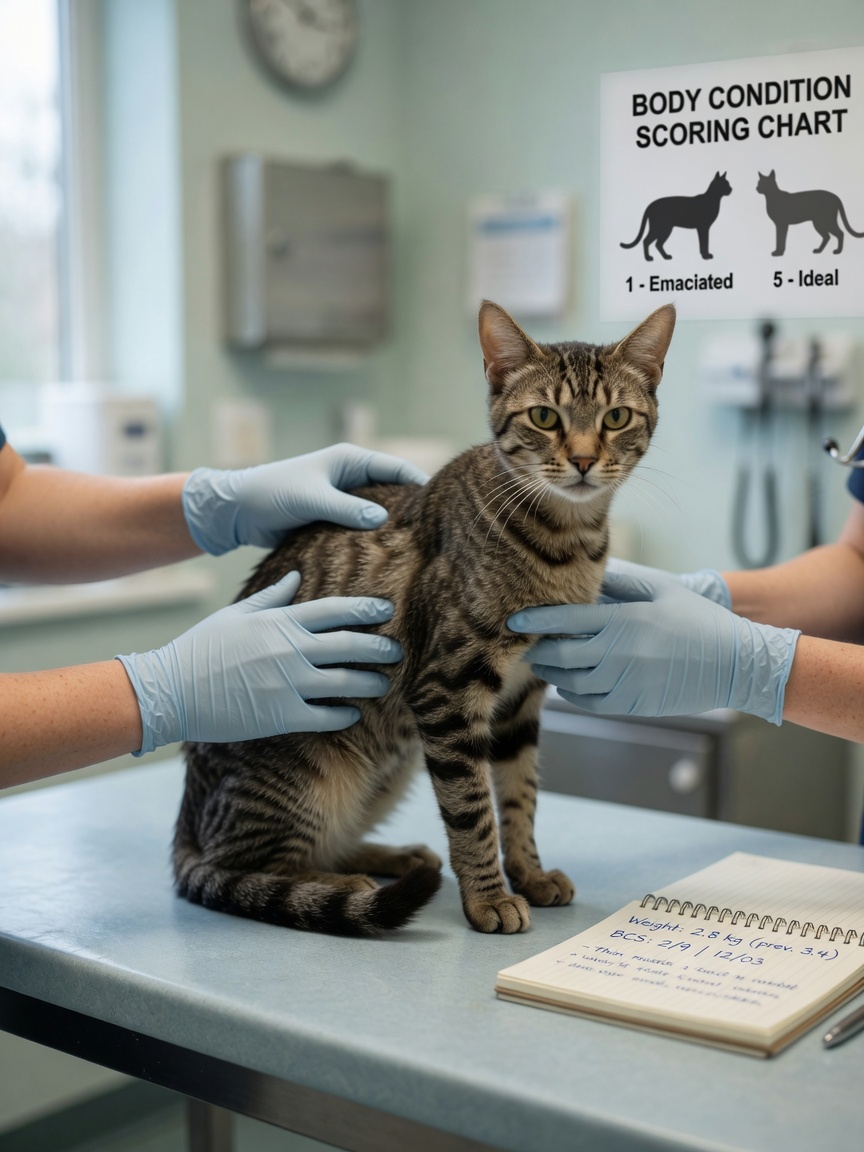
Unexplained weight loss in a cat — meaning loss that is not the result of an intentional dietary change — should always be investigated. Causes range from dental pain and intestinal parasites to hyperthyroidism, diabetes, inflammatory bowel disease, kidney disease, and cancer. Many of these conditions are highly manageable when caught early.
- Any loss of 5% or more of body weight over four weeks without a dietary explanation
- Rapid loss of 10% or more of body weight over any period
- Weight loss accompanied by increased thirst or urination
- Weight loss alongside changes in appetite, either increased or decreased
- Loss combined with vomiting, diarrhoea, or lethargy
Hyperthyroidism deserves particular mention, as it is one of the most common conditions affecting cats over ten years of age. It often presents as weight loss despite an increased or ravenous appetite. Cats with this condition frequently become more vocal and restless. A simple blood test diagnoses it, and treatment is effective — but only if the problem is identified.
Weight Gain: Not Simply a Lifestyle Issue
Obesity in cats is a genuine welfare concern linked to diabetes, joint disease, urinary problems, and reduced lifespan. Gradual weight gain following neutering or a shift to a less active indoor lifestyle is common, but that does not make it inconsequential.
Unexplained weight gain, particularly if accompanied by a pot-bellied appearance, lethargy, or skin changes, can occasionally indicate fluid accumulation in the abdomen rather than true fat gain. This requires veterinary assessment. Similarly, hypothyroidism — though far less common in cats than hyperthyroidism — can present with weight gain alongside lethargy and coat changes.
Reporting Changes to Your Vet
When you contact your vet about a weight change, having a written log with dates and weights is enormously helpful. It allows the clinician to see the rate of change, not just the current number, and contextualise it alongside other observations you have made.
Be prepared to describe accompanying signs: changes in appetite, thirst, litter box use, energy levels, vomiting, or coat condition. The more information you can offer, the more efficiently the right diagnostic pathway can be chosen. Weight monitoring at home is a low-effort habit that pays significant dividends in early detection — and earlier detection almost always means simpler treatment.