
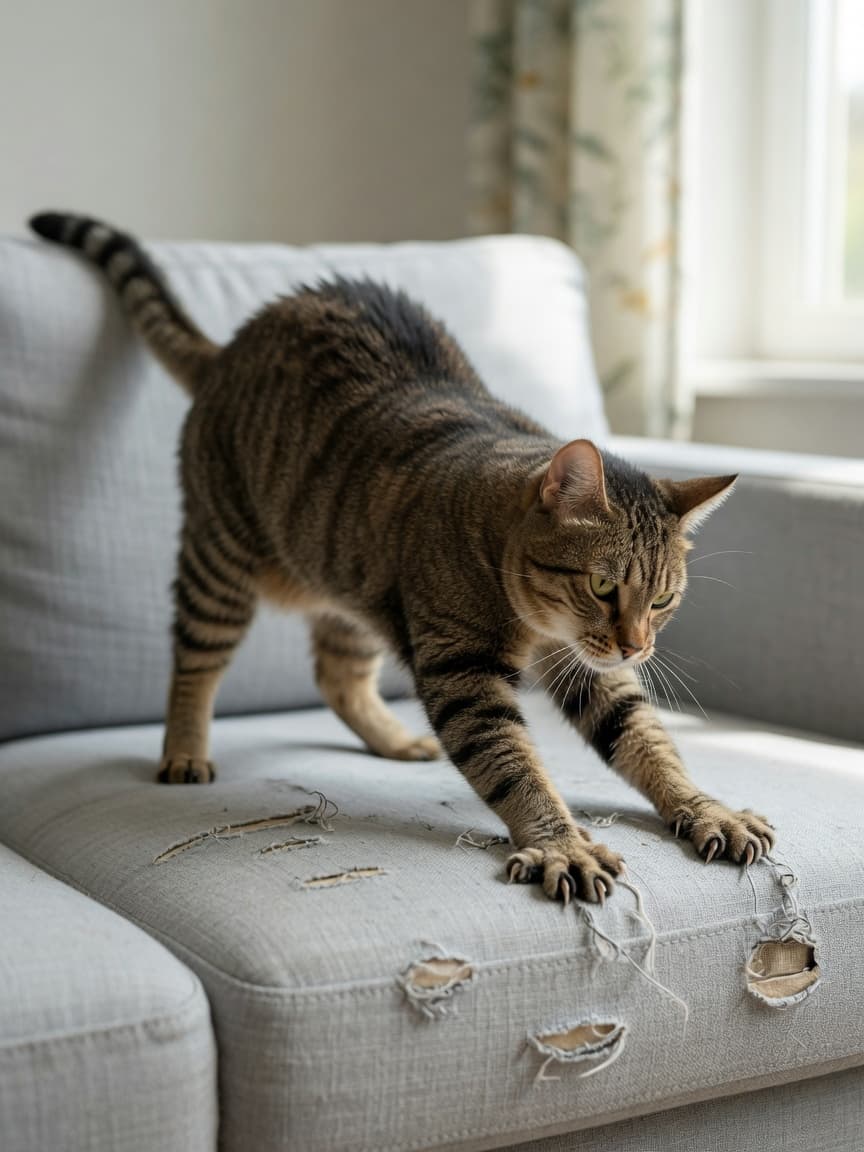
Your Sofa Is Not the Problem. Your Cat's Needs Are Not Being Met
Scratching is one of the most common reasons cats are surrendered to rescue centres or subjected to declawing — a procedure that is now illegal in the UK and widely condemned by feline welfare organisations for good reason. The behaviour is not destructive in the moral sense. It is a biological drive, as fundamental to a cat as grooming or hunting. Understanding why cats scratch is the fastest route to redirecting the behaviour effectively and permanently.
Why Cats Scratch: Four Functions, Not One
Claw Maintenance
The outermost layer of a cat's claw grows continuously. Scratching removes the dead outer sheath, exposing the sharper layer beneath. This is functional grooming, and no amount of training will or should eliminate it. The goal is to direct it to appropriate surfaces.
Muscle and Tendon Conditioning
Watch a cat scratch a vertical surface and you will notice the full extension of the fore-limbs, the engagement of the shoulders, and the stretch through the spine. Scratching is a physical conditioning behaviour that cats perform most intensively after waking. This is why the furniture nearest a cat's sleeping spot tends to bear the most damage.
Scent and Visual Marking
Cats have scent glands between the pads of their paws. Every scratch deposits a chemical signature that communicates the cat's presence and status. The visual mark — the torn or scored surface — serves a parallel function. Scratching is therefore also territorial communication, which explains why cats scratch most heavily in prominent, high-traffic areas of the home rather than hidden corners.
Stress Relief and Emotional Expression
Cats scratch more intensively during periods of excitement, anxiety, or social tension. In multi-cat households, scratching frequency often increases around territorial stress. Addressing the scratch sites alone without addressing the underlying stress is unlikely to produce lasting results.
Why Punishment Does Not Work
Shouting at, spraying water on, or physically interrupting a cat mid-scratch does not teach it not to scratch. It teaches it not to scratch when you are present. The behaviour continues when you are out of the room or out of the house. Worse, punishment increases anxiety, which — as noted above — increases scratching drive. It is a self-defeating approach that the evidence does not support.
Providing Appropriate Scratching Outlets
Surface Type Matters
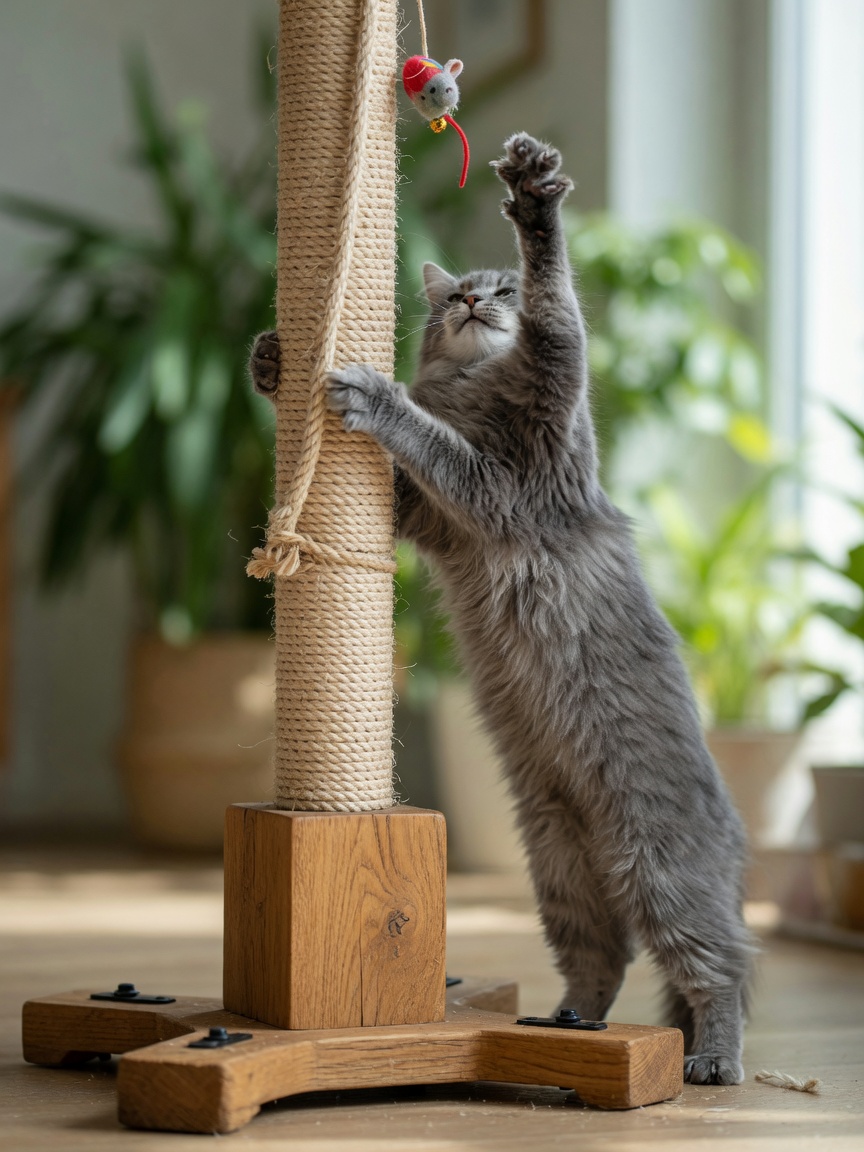
Cats have strong surface preferences that vary by individual. The most commonly preferred surfaces in research studies are sisal rope and corrugated cardboard, with carpet a close third. Smooth or tightly woven surfaces are generally less appealing. If your cat is scratching a specific item of furniture, note the material and choose a scratching post that more closely mimics it.
Orientation: Vertical Versus Horizontal
Some cats prefer to scratch vertically — reaching upward to full extension. Others prefer horizontal surfaces. Most commercially available scratching posts are vertical, but horizontal cardboard scratch pads are widely available and often more effective for cats that scratch carpets and flat surfaces. Providing both types and observing preference is the most reliable approach.
Stability and Height
This is where most scratching posts fail. A post that wobbles when pressure is applied will be avoided. A post that does not allow full vertical extension is inadequate for larger cats. A post for an adult cat should be at minimum 60–70cm tall. Heavy-base designs or wall-mounted posts that cannot move under force are significantly more effective than lightweight free-standing options.
Location is Everything
Placing a scratching post in a back room that the cat rarely uses and expecting it to displace scratching on the living room sofa is wishful thinking. Cats scratch in prominent locations because prominence is part of the function. Place scratching posts near the items being scratched, near sleeping areas, and near entry and exit points to rooms. Prominence should be matched, not avoided.
Redirecting Away From Furniture
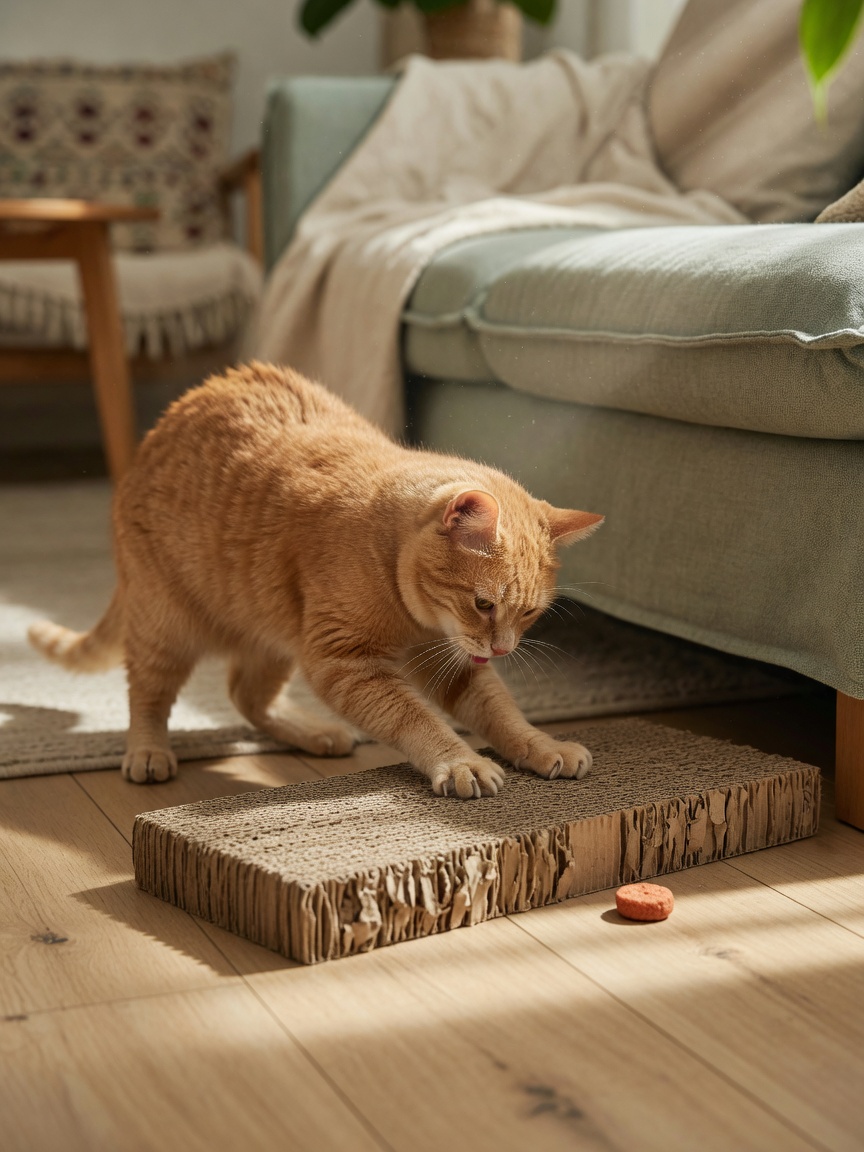
Once appropriate scratching surfaces are in place, the redirection process involves three steps. First, make the existing scratch site less appealing using double-sided tape, aluminium foil, or a commercial cat deterrent spray. These are temporary measures to interrupt the established habit while the cat develops a preference for the new surface. Second, make the new post more appealing by rubbing dried catnip or valerian into the sisal, or by hanging a toy from the top to attract the cat toward it. Third, when you observe the cat approaching the post or using it, offer calm, quiet positive reinforcement — a treat, a gentle word, or brief stroking if the cat enjoys it.
Most cats will begin using an appropriately placed, appropriately designed scratching post within one to two weeks. Once the new habit is established, the deterrents on the furniture can be gradually removed.
When Scratching Indicates a Welfare Problem
A sudden and significant increase in scratching intensity in a cat with previously manageable behaviour warrants attention. This can indicate stress from a new animal in the household, a change in routine, pain (particularly in the paws or joints), or anxiety-related conditions. If the behaviour escalates despite appropriate outlets being in place, or if it is accompanied by other changes such as altered appetite, hiding, or aggression, consult your vet to rule out medical or pain-related causes before pursuing any further behavioural intervention.
Practical Action List
- Observe where and on what surface the cat is currently scratching — this tells you what to replicate
- Provide at least one tall, stable, sisal-covered vertical post placed near the favoured scratch site
- Add a horizontal cardboard scratcher if the cat favours flat surfaces or carpets
- Apply temporary deterrents to furniture while the new post habit establishes
- Never punish scratching — redirect calmly and reward use of appropriate surfaces
- If behaviour escalates or changes suddenly, seek veterinary advice