
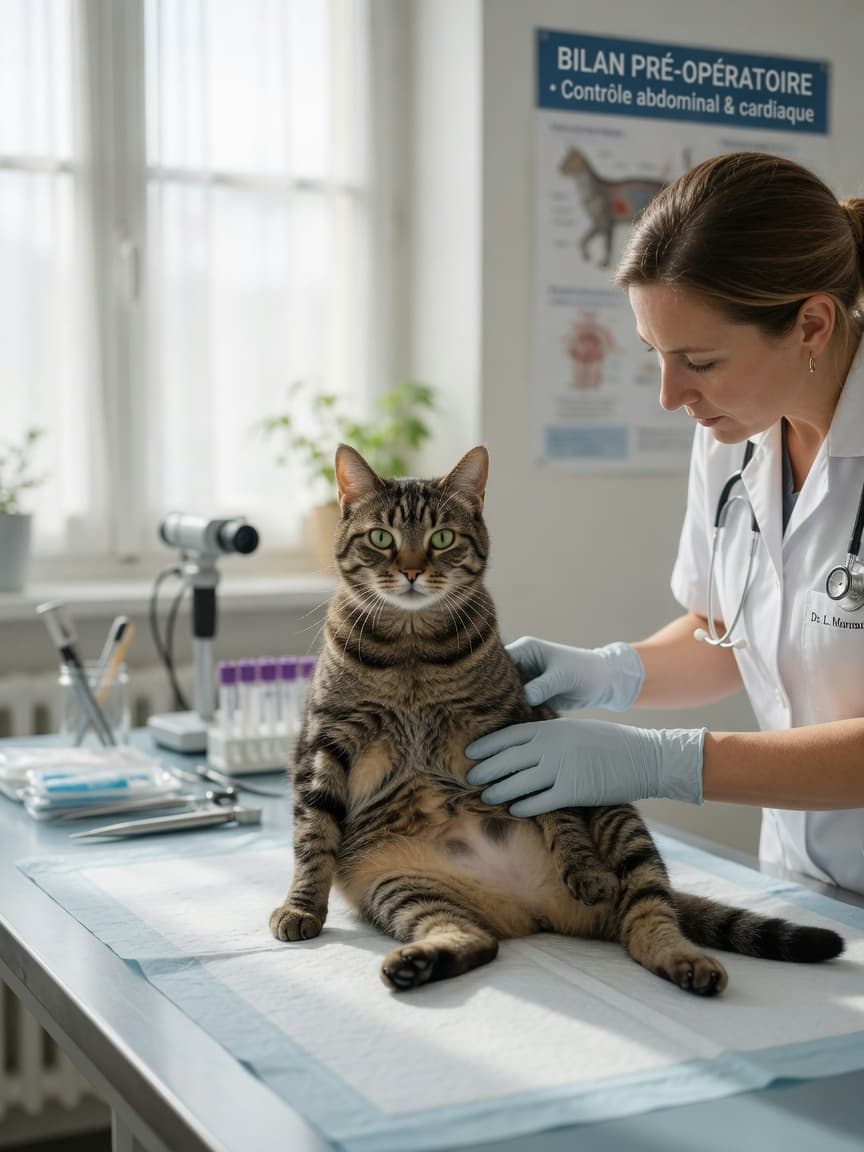
Why Neutering Matters for Cats
Neutering is one of the most impactful things you can do for your cat's long-term health and welfare. For female cats (queens), it prevents serious and life-threatening conditions. For male cats (toms), it reduces behaviours that lead to injury, disease transmission, and distress. With the UK's cat population placing ongoing pressure on rescue organisations and rehoming centres, neutering also plays an important role in preventing unplanned litters.
This guide covers what neutering involves for both sexes, the health benefits, and how to support your cat through recovery.
Neutering Female Cats (Queens)
The Procedure
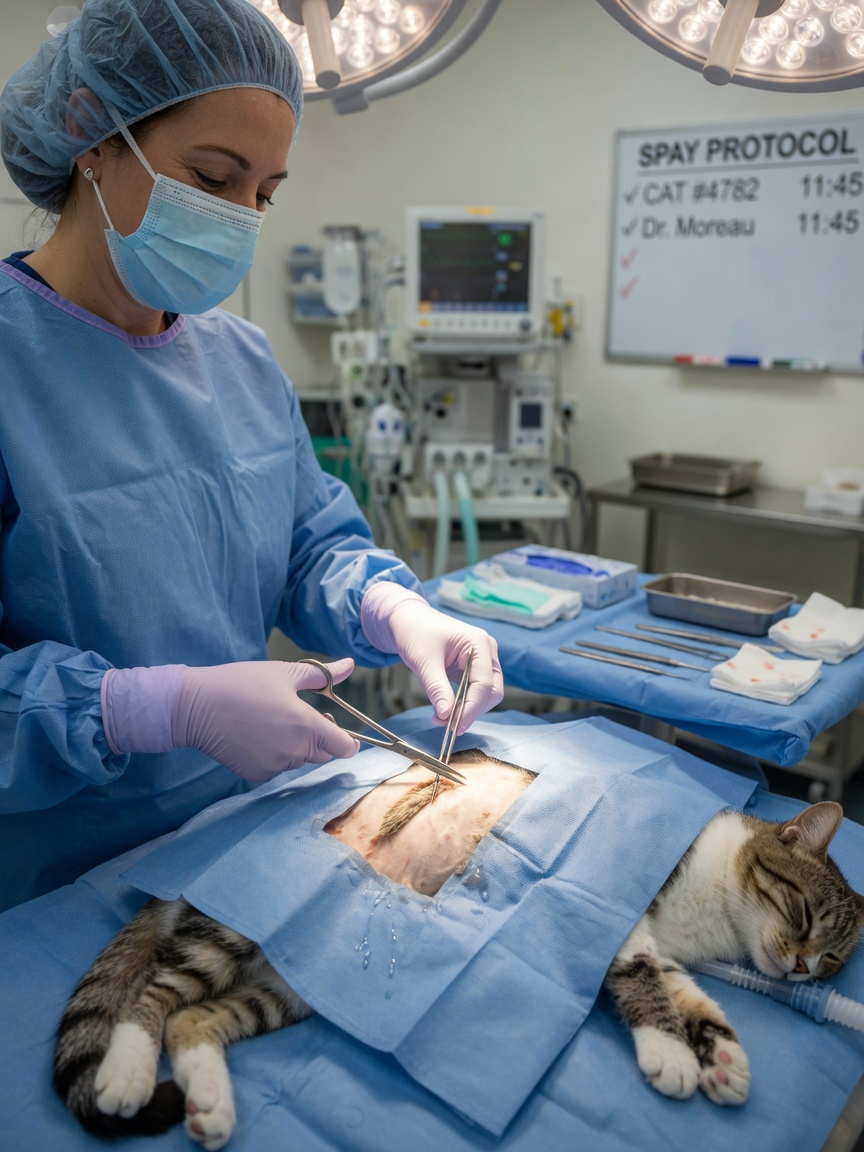
Spaying a queen typically involves either an ovariohysterectomy (removal of both the ovaries and the uterus) or an ovariectomy (removal of the ovaries alone). Both procedures are performed under general anaesthetic and are considered routine, though they involve abdominal surgery. Most queens are discharged on the same day or after one night's stay.
Eliminates Pyometra
Pyometra is a serious uterine infection that can develop in intact queens, particularly in the weeks following a heat cycle. It is a medical emergency that requires urgent surgical or medical intervention. Spaying completely removes the uterus, making pyometra impossible. Given that queens can come into season multiple times a year throughout most of their adult lives, the cumulative risk of pyometra in an intact female is significant.
Reduces the Risk of Mammary Cancer
Mammary tumours are the third most common type of tumour in cats, and around 85 to 90 per cent of feline mammary tumours are malignant — a much higher rate than in dogs. Spaying before the first season dramatically reduces the lifetime risk of mammary cancer. Research suggests that spaying before six months of age reduces the risk by approximately 91 per cent. The protective effect diminishes with each subsequent season, making early spaying the most beneficial option from a cancer prevention standpoint.
Ends Distressing Heat Cycles
Unlike dogs, which typically come into season twice a year, queens are seasonally polyoestrous — they can cycle continuously throughout the breeding season, which in the UK runs roughly from February to October. A queen in season will vocalise loudly (often described as yowling), adopt a crouching posture, roll on the floor, and attempt to escape the home. These behaviours are distressing for both cat and owner, and they recur every two to three weeks if the cat does not become pregnant. Spaying ends this cycle entirely.
Neutering Male Cats (Tom Cats)
The Procedure
Castration in male cats is a relatively quick procedure performed under general anaesthetic. Both testicles are removed through small incisions in the scrotum. The wounds are small and typically do not require stitches. Recovery is generally fast, and most cats are back to their normal selves within a day or two.
Reduces Roaming and Fighting
Intact tom cats have large territories that they patrol and defend, often travelling considerable distances. This roaming puts them at risk of road traffic accidents, exposure to disease, and conflict with other cats. Castration reduces testosterone-driven roaming behaviour significantly in most male cats, keeping them closer to home and reducing the risk of injury.
Reduces FIV Transmission
Feline Immunodeficiency Virus (FIV) is transmitted primarily through deep bite wounds — the type inflicted during territorial fights between tom cats. FIV is incurable and progressively impairs the immune system. By reducing fighting behaviour, castration is one of the most effective ways to lower the risk of FIV transmission in the cat population. Neutered males are far less likely to engage in the serious biting that passes the virus between cats.
Reduces Urine Spraying
Intact toms spray urine to mark territory. The scent is produced by a combination of urine and secretions from glands, and it is notably pungent. Castration reduces or eliminates spraying behaviour in most males, though cats that have been spraying for a long time before neutering may take longer to adjust, and some will continue to spray to a reduced degree.
When Should You Neuter Your Cat?
Most vets in the UK recommend neutering at around four months of age, in line with guidance from organisations including International Cat Care and the RSPCA. Cats can reach sexual maturity from around four months old, so waiting until six months — which was the traditional recommendation — carries a risk of unplanned pregnancy in queens who go outdoors. Many rescue organisations neuter kittens before rehoming, sometimes as early as eight weeks, which is considered safe when carried out by an experienced vet.
Post-Operative Care
The First 24 Hours
Your cat will likely be groggy when you bring them home following the anaesthetic. Keep them in a warm, quiet room away from other pets and children. Offer small amounts of water and food once they are alert — do not worry if they are not interested in eating immediately, as this is normal following a general anaesthetic.
Using an E-Collar
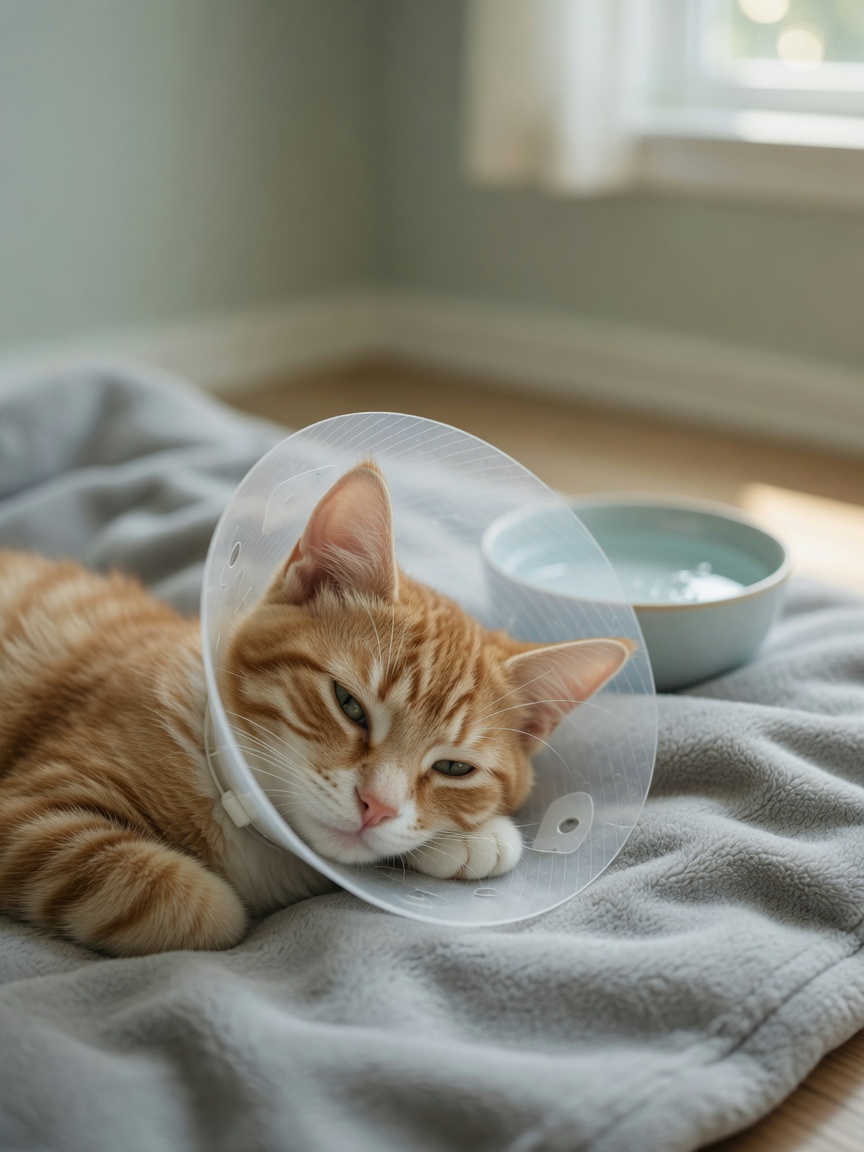
Your vet may send your cat home with an Elizabethan collar (e-collar or cone) to prevent them from licking or chewing at the surgical site. Licking introduces bacteria and can cause wound breakdown or infection. The e-collar should be worn at all times until the wound has fully healed. Some cats adapt quickly; others find the collar stressful. A softer fabric recovery collar can be a useful alternative for cats that are particularly distressed by the traditional plastic cone, though it is worth checking with your vet that it offers adequate protection.
Restricted Exercise for 7 to 10 Days
Your cat should be kept indoors and their activity restricted for at least seven to ten days following surgery. This means no jumping onto high surfaces, no rough play, and no access to outdoors. For female cats, who have had abdominal surgery, rest is especially important to allow the internal sutures to heal properly. Keep litter trays clean and accessible, and use non-clumping litter for the first few days if possible to reduce the risk of particles irritating the wound.
Monitoring the Wound
- Check the wound site daily for signs of redness, swelling, discharge, or opening
- A small amount of bruising or mild swelling in the first 24 to 48 hours is normal
- Contact your vet promptly if the wound looks infected or if your cat is persistently licking the area despite wearing a collar
- Return for a post-operative check as advised by your vet, typically five to seven days after the procedure
Long-Term Considerations
Neutered cats, particularly those kept entirely indoors, have a tendency to gain weight as their metabolic needs decrease. Switching to a neutered cat food formula — which is lower in calories — shortly after the procedure is advisable. Regular weight checks at your vet will help you catch any upward trend before it becomes a health issue.
Overall, neutering is strongly supported by veterinary organisations in the UK as a routine and beneficial procedure for the vast majority of cats. The combination of health benefits, welfare improvements, and population management advantages makes it one of the most straightforward preventive care decisions for most owners.