
Why Is My Cat Limping?
Cats are notoriously good at concealing discomfort, which makes a visible limp a symptom worth taking seriously. By the time a cat shows obvious lameness, it is often experiencing significant pain. Whether the limp came on suddenly after a fall or outdoor encounter, or has developed slowly over weeks or months, understanding the likely cause will help you decide how quickly your cat needs veterinary attention — and in some cases, whether it is an emergency.
This guide covers the most common causes of limping in cats, explains the critical difference between sudden and gradual-onset lameness, and outlines the red flags that mean your cat needs to see a vet immediately.
Common Causes of Limping in Cats
1. Paw Injuries
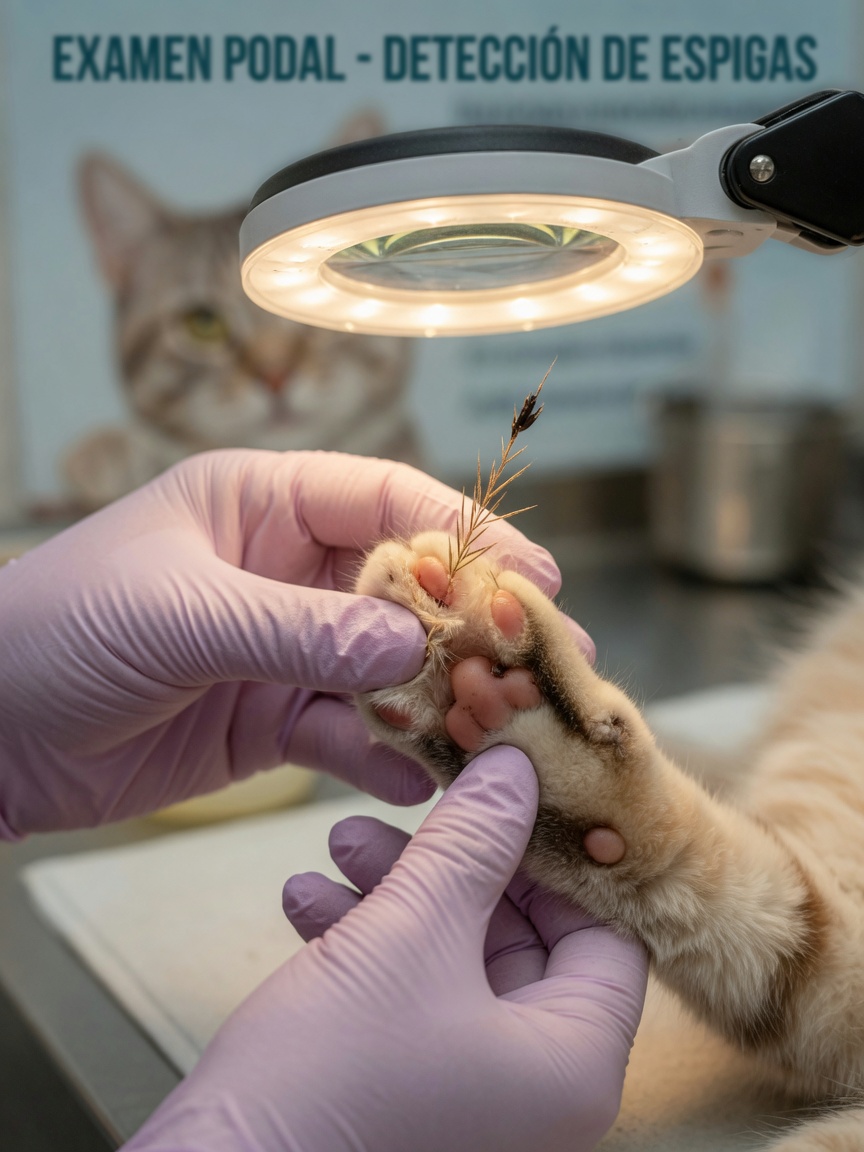
The first place to examine — carefully and gently — is the paw. Outdoor cats are vulnerable to cuts from glass and sharp stones, cracked or broken claws, thorns and grass awns embedded between the toes, and burns from hot summer pavements. Indoor cats can catch a claw in carpet or furniture, tearing it at the base, which is acutely painful.
Inspect each pad and between every toe. Look for swelling, redness, discharge, or a broken nail. If a grass seed (awn) has burrowed into the skin, you may see a small swollen puncture wound — these must be removed promptly, ideally by a vet, as they can migrate deep into tissue and cause serious infection. Grass awns are a particularly common hazard across Southern and Central European countries.
2. Abscesses from Cat Bite Wounds
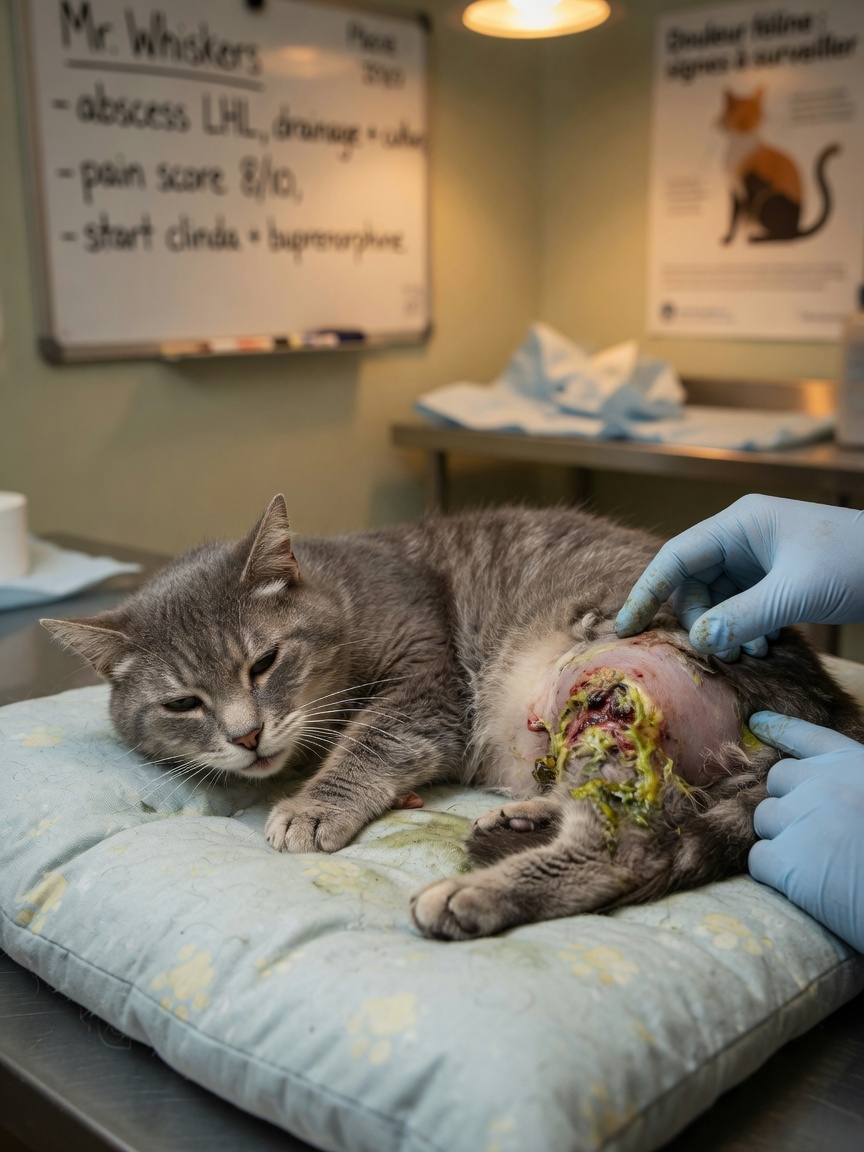
This is one of the most common causes of sudden lameness in outdoor, entire male cats, though any cat that goes outside can be affected. Cat bites introduce bacteria deep into tissue; the small puncture wounds seal over quickly while infection brews beneath the surface. Within two to five days, a painful abscess forms — a swollen, hot, sometimes ruptured pocket of pus, typically on the legs, tail base, or face.
Affected cats often run a fever, become lethargic, and stop grooming the affected area. Bite abscesses require veterinary treatment: drainage, thorough cleaning, and antibiotics. Cat bites also carry a risk of transmitting feline immunodeficiency virus (FIV), which is an additional reason for outdoor cats to be tested regularly and, ideally, neutered to reduce territorial fighting.
3. Fractures
Bone fractures in cats most commonly result from road traffic accidents, falls from height (high-rise syndrome), or being stepped on. They cause sudden, severe, non-weight-bearing lameness, often with obvious swelling, crepitus (a grating sensation), or visible deformity. Any suspected fracture is a veterinary emergency — keep the cat as still as possible, wrap it gently in a towel to reduce stress and movement, and transport it to the vet immediately without attempting to splint the limb yourself.
Internal injuries often accompany fractures sustained in trauma, including ruptured bladder, pneumothorax, and internal bleeding, making rapid professional assessment critical even if the visible damage appears isolated to a leg.
4. Arthritis and Joint Disease
Feline osteoarthritis is far more prevalent than historically recognised. Recent research using objective gait analysis suggests that up to 90% of cats over 12 years of age have radiographic evidence of joint changes. However, because cats rarely vocalise pain or limp dramatically, the condition is frequently under-detected by owners and even by vets during routine consultations.
Signs of feline arthritis tend to be subtle and behavioural rather than mechanical: reluctance to jump up or down from favourite spots, sleeping in lower locations, reduced grooming, stiffness when rising, and irritability when handled. A gradual, intermittent limp — particularly in one or both hind legs — in a middle-aged or older cat warrants an arthritic assessment. Diagnosis is confirmed by X-ray. Treatment includes prescription NSAIDs (never give human NSAIDs to cats — they are highly toxic), joint supplements, weight management, and environmental modifications such as ramps and lower-sided litter trays.
5. Sprains and Soft Tissue Injuries
Active young cats who jump, climb, and land awkwardly can sustain sprains and soft tissue strains that cause short-term lameness. These typically improve with 24–48 hours of enforced rest. If a mild limp from apparent soft tissue injury does not resolve within two days, a vet assessment is warranted — cats rarely show the full extent of their pain, so continued lameness suggests something more significant.
6. Aortic Thromboembolism (ATE)
Aortic thromboembolism — also called "saddle thrombus" — is one of the most dramatic and distressing emergencies in feline medicine. A blood clot, typically originating in the heart of a cat with underlying cardiac disease (most often hypertrophic cardiomyopathy, HCM), breaks free and lodges at the aortic trifurcation, cutting off blood supply to the hind legs.
The onset is sudden and devastating: the cat collapses, screams in pain, and one or both hind legs become cold, pale (the paw pads turn white or blue), and paralysed. The cat cannot use its back legs at all. This is an absolute emergency — call your vet immediately. Sadly, outcomes depend on the degree of obstruction, underlying heart disease, and how quickly treatment is initiated. Many cats with HCM show no prior symptoms, making ATE the first visible sign of cardiac disease.
Sudden vs Gradual Onset: What It Means
The speed of onset is one of the most important diagnostic clues. Sudden-onset severe lameness — particularly non-weight-bearing — almost always indicates trauma, fracture, abscess, dislocation, or a vascular emergency such as ATE. These require same-day or emergency veterinary attention.
Gradual-onset lameness that has worsened over weeks or months is more suggestive of chronic disease processes: arthritis, bone tumours, or a slowly worsening soft tissue injury. These are less acutely urgent but still require proper diagnosis — cats stoically tolerate considerable pain, so a gradual limp likely reflects significant ongoing discomfort.
Red Flags: See a Vet Immediately
- Complete inability to use one or both hind legs, especially with cold, pale paw pads — suspect ATE
- Screaming, crying out, or extreme distress
- Known or suspected trauma — road accident, fall from height
- Visible bone, open wound, or severe swelling with deformity
- High fever alongside lameness (rectal temperature above 39.5°C)
- Rapidly worsening lameness over a few hours
- Complete refusal to eat or drink alongside lameness
- Breathing difficulty alongside limb weakness — may indicate cardiac disease
Home Assessment: What to Check Before Calling the Vet
For mild, weight-bearing limps with no other concerning signs, a careful home examination is useful. Handle your cat gently and calmly. Inspect the paw pads and between each toe for wounds, swelling, or foreign material. Gently feel along the length of the affected leg for heat, swelling, or pain response. Observe your cat walking freely — note which leg is affected, whether weight is borne at all, and whether the limp is constant or intermittent.
Never administer human pain medications. Paracetamol (acetaminophen) is fatally toxic to cats even in very small doses. Ibuprofen and aspirin are also dangerous. Contact your vet for appropriate pain management.
See Your Vet If...
- Any limp that has not fully resolved within 24–48 hours of rest
- You find a puncture wound, swelling, or heat suggesting an abscess
- Your outdoor cat comes home lame after an overnight absence
- An older cat shows any change in mobility, willingness to jump, or gait
- Your cat is lethargic, not eating, or has a fever alongside the limp
- The affected limb feels cold compared to the other legs
Cats are masters at masking pain. Any visible limp is a clear enough signal that something is wrong — prompt veterinary assessment is always the right choice.