
Why Do Cats Get Eye Discharge?
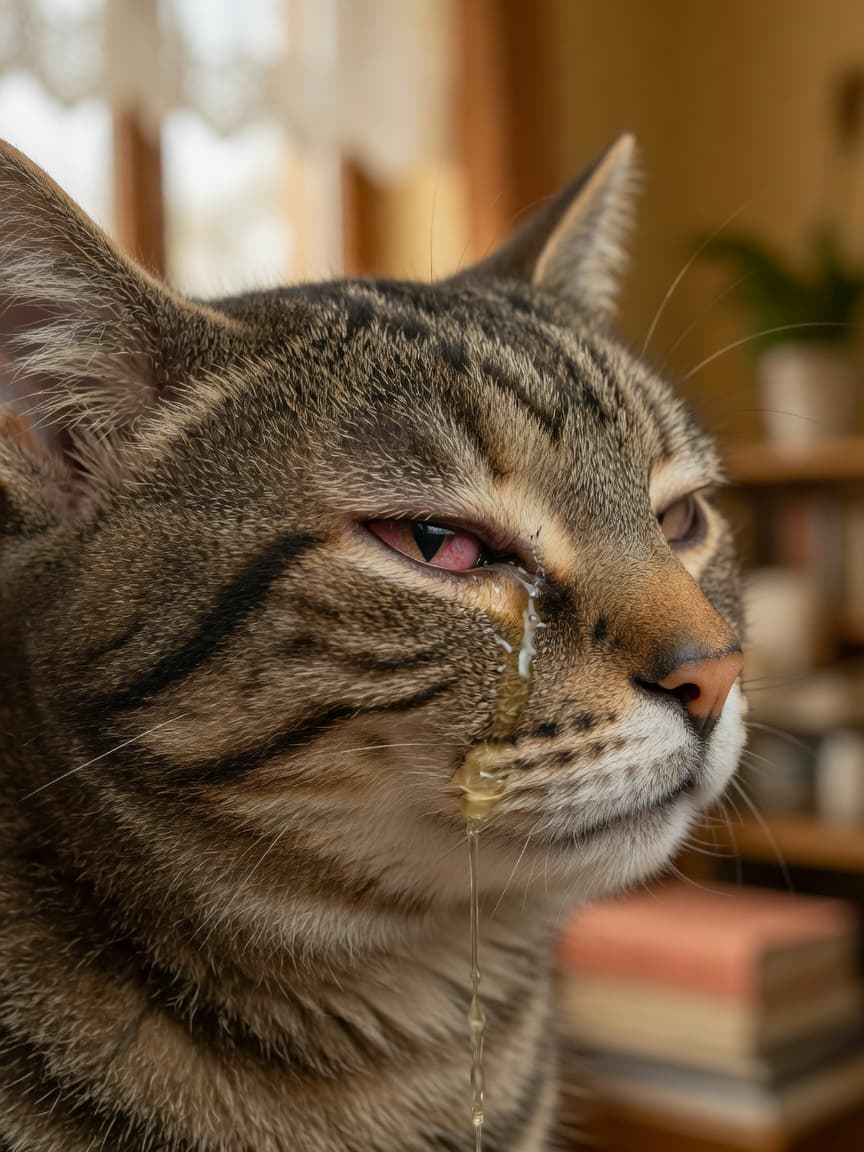
Eye discharge is one of the most common reasons cat owners seek veterinary advice, and unlike dogs, cats have a distinct set of underlying causes that reflect their particular infectious disease landscape. While a small amount of dry crustiness at the inner corner of the eye can be entirely normal, changes in the amount, colour, or consistency of discharge, or the presence of associated signs such as squinting or redness, indicate that something requires attention.
Cats are especially prone to eye problems related to infectious respiratory disease. Many of the pathogens that cause upper respiratory infections in cats also target the conjunctiva and, in some cases, the cornea. Because these infections can be chronic or recurrent, eye discharge in cats is not always a one-time issue that resolves with a single course of treatment.
Feline Herpesvirus: The Most Common Cause
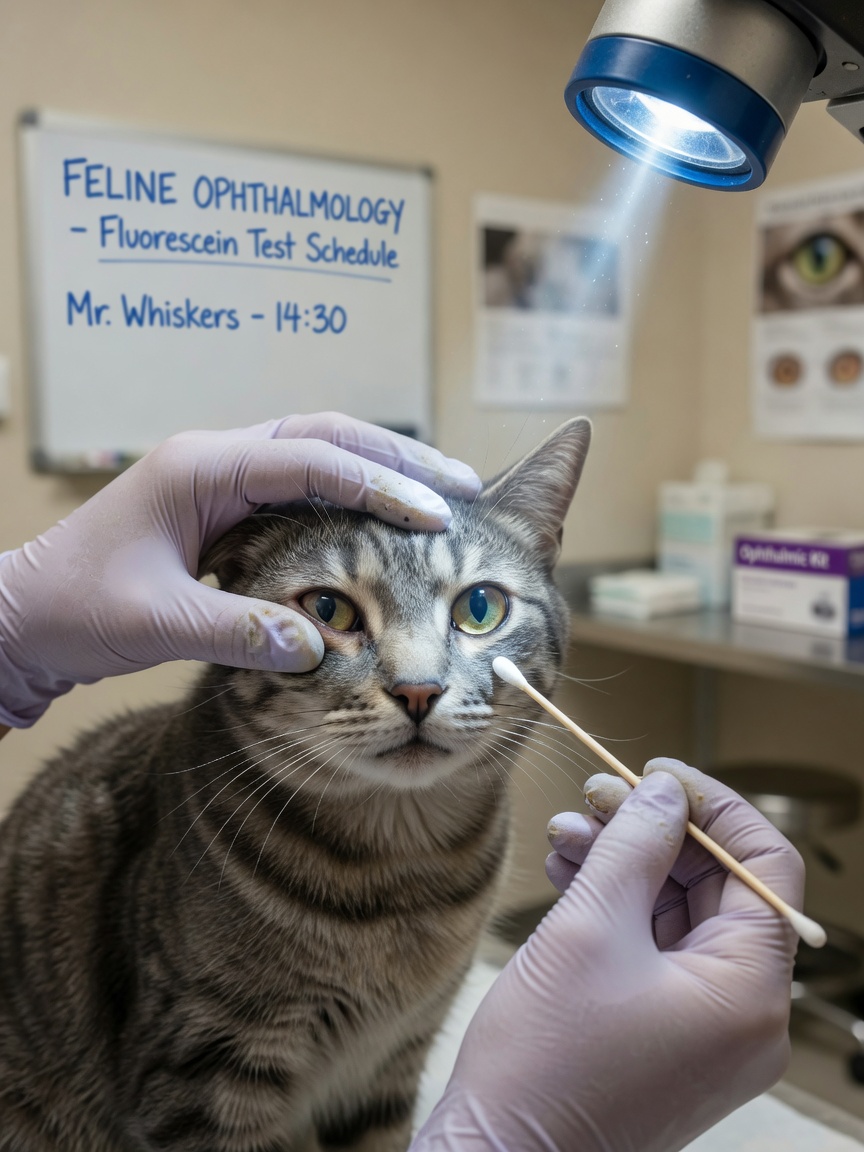
Feline herpesvirus type 1 (FHV-1) is the most frequently identified cause of eye discharge in cats across Europe and worldwide. This virus infects the conjunctiva and can penetrate the cornea, causing a condition known as feline viral rhinotracheitis. Primary infection typically occurs in kittens and is usually associated with signs of upper respiratory disease: sneezing, nasal discharge, and watery or mucoid eye discharge from one or both eyes.
Once a cat is infected with FHV-1, the virus establishes lifelong latency in nerve tissue. The cat may appear completely normal for months or years, but during periods of stress, concurrent illness, or immune suppression, the virus can reactivate and cause recurrent bouts of conjunctivitis or corneal disease. Common stressors that trigger reactivation include rehoming, the introduction of a new pet, illness, surgery, or even a change in routine.
In active herpes infections, the discharge is initially clear and watery, progressing to a thicker mucoid or mucopurulent consistency if secondary bacterial infection develops. The conjunctiva appears red and swollen. In severe cases, the virus can cause corneal ulceration, presenting with the cat squinting intensely and showing marked sensitivity to light. Dendritic ulcers, a branching pattern of corneal erosion characteristic of herpesvirus, may be visible with specialist staining at the vet clinic.
Chlamydophila Felis
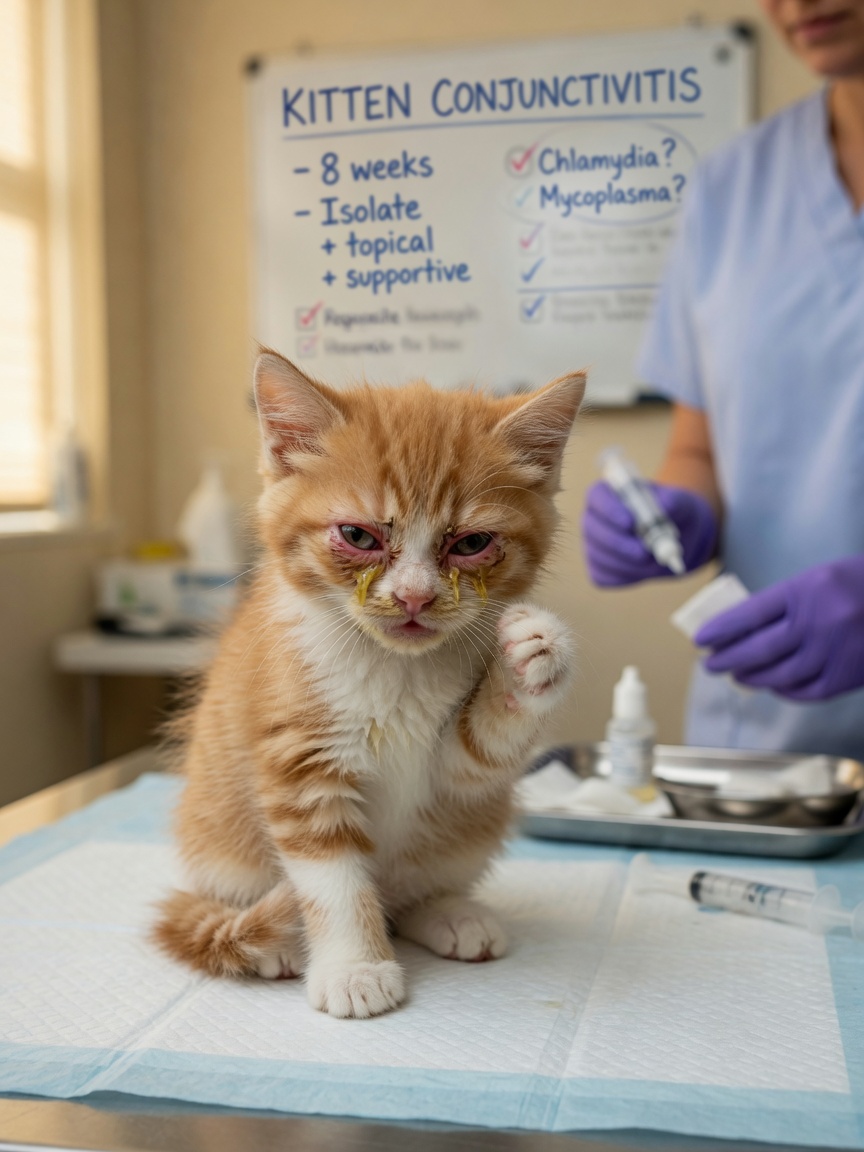
Chlamydophila felis is a bacterial pathogen (though it shares some characteristics with viruses in terms of its intracellular lifestyle) that is a significant cause of conjunctivitis in cats. It typically causes a persistent, unilateral or bilateral conjunctivitis with a pale yellowish discharge and marked redness and chemosis (swelling of the conjunctiva). Unlike herpesvirus, Chlamydophila rarely causes corneal disease, but it can cause prolonged discomfort if untreated.
Chlamydophila is most common in young cats and those living in multi-cat environments. It is mildly zoonotic, meaning there is a small risk of transmission to humans, most commonly causing a self-limiting conjunctivitis in people who handle infected cats and then touch their own eyes. Basic hygiene precautions, particularly hand washing, are sufficient to minimise this risk.
Calicivirus and Upper Respiratory Infections
Feline calicivirus (FCV) is the other major pathogen in the feline upper respiratory infection complex alongside FHV-1. While calicivirus primarily causes oral ulceration and respiratory signs, it can also cause conjunctivitis and eye discharge. Cats presenting with sneezing, nasal discharge, mouth ulcers, and eye discharge simultaneously are likely dealing with a calicivirus infection, though co-infection with herpesvirus is common and the two are often impossible to distinguish clinically without laboratory testing.
Cats in shelters, breeding catteries, and multi-cat households are at greatest risk of respiratory pathogen infections due to close contact and the stress of communal living.
Other Causes: Conjunctivitis, FIV, and FeLV
Not all feline eye discharge has an infectious cause. Simple conjunctivitis can be triggered by allergens, dust, smoke, or other environmental irritants. Cats that spend time outdoors may get debris or foreign material in the eye that causes transient irritation and discharge.
Immunosuppressive conditions such as feline immunodeficiency virus (FIV) and feline leukaemia virus (FeLV) can predispose cats to more frequent and more severe ocular infections by compromising the immune system's ability to control opportunistic pathogens. Cats known to be FIV or FeLV positive should have any eye discharge investigated promptly, as they are less able to mount an effective response to infection.
Blocked or narrow tear ducts, eyelid abnormalities, and corneal disease can all produce discharge in cats, though these structural causes are less common than infectious ones.
Signs of Different Discharge Types
Clear, watery discharge is often the earliest sign of herpesvirus reactivation or mild irritation. If it resolves within a day or two without other signs, it may be insignificant.
Thick, yellowish, or greenish discharge indicates bacterial involvement, either as the primary cause (Chlamydophila) or as a secondary infection overlying a viral problem. This type of discharge is unlikely to resolve without treatment.
Crusty discharge that glues the eyelids together, particularly in the morning, is common in active upper respiratory infections and requires veterinary assessment to identify the cause and prescribe appropriate treatment.
When to Seek Urgent Veterinary Attention
Some eye problems in cats are urgent and should not be left for a routine appointment. A cat that is squinting intensely with one eye nearly or fully closed is likely experiencing significant pain, which often indicates a corneal ulcer. Herpetic corneal ulcers can deepen rapidly if untreated, threatening vision.
Any sudden cloudiness, opacity, or change in colour of the normally clear front surface of the eye (cornea) warrants same-day assessment, as does any visible trauma to the eye or surrounding area. A cat that has sustained an injury to the face and develops even mild discharge should be examined to exclude internal eye damage.
Neurological signs such as a dilated or unresponsive pupil, a visible third eyelid, or loss of vision in one eye are emergency signs requiring immediate veterinary attention.
Treatment Options
Treatment depends entirely on the underlying cause. For FHV-1, antiviral eye drops containing cidofovir or trifluridine are available through veterinary practices and are used in active cases with corneal involvement. Oral famciclovir, an antiviral medication, is increasingly used in cats with recurrent or severe herpes-related eye disease and has shown efficacy in reducing the severity and duration of flares.
L-lysine supplementation has historically been recommended to suppress herpesvirus replication in cats, but the current evidence base for its effectiveness is limited and contested. While it is considered safe, it should not be relied upon as a primary treatment for active disease. Veterinary guidance on its use continues to evolve.
Chlamydophila felis responds well to antibiotic treatment, typically with doxycycline given orally for a minimum of four weeks. Topical tetracycline eye ointment is an alternative but is less convenient for owners and more stressful for cats to administer. Treatment must be given for the full course even after signs resolve, as the organism can persist and cause relapse if treatment stops early.
Secondary bacterial infections associated with viral conjunctivitis are treated with broad-spectrum antibiotic eye drops. Anti-inflammatory eye drops may also be prescribed to reduce discomfort and swelling, though corticosteroid-containing preparations must be used with caution and are contraindicated if corneal ulceration is present.
Prevention: The Role of Vaccination
Vaccination is the most effective preventive measure available for the infectious causes of eye discharge in cats. Core feline vaccines available across Europe provide protection against FHV-1, calicivirus, and Chlamydophila felis. Vaccination does not guarantee that a cat will never develop signs of these infections, as herpesvirus in particular establishes lifelong latency before vaccination is possible, but it significantly reduces the severity of disease and the frequency of recurrence.
Keeping vaccinations up to date, minimising stress where possible, and maintaining good general health through appropriate nutrition and parasite prevention all contribute to a cat's ability to resist and recover from the infections that most commonly cause eye discharge.