
Cancer in Cats: A Difficult but Important Topic
A cancer diagnosis in your cat is one of the most frightening things an owner can face. Yet understanding the disease — its types, its signs, and the options available — can help you navigate this journey with greater confidence and compassion. The reality is that cancer is not rare in cats. After dogs, cats have the highest rates of cancer among domestic animals, and the risk increases significantly with age. Many cats over ten years old will develop some form of cancer during their lifetime.
The good news is that veterinary oncology has advanced enormously in recent years. With early detection, appropriate treatment, and a strong focus on quality of life, many cats with cancer can live comfortably for months or even years after diagnosis. This guide is here to help you recognise the warning signs, understand the most common types, and know what to expect from the journey ahead.
The Most Common Types of Cancer in Cats

Lymphoma
Lymphoma is the most frequently diagnosed cancer in cats, accounting for a significant proportion of all feline cancer cases. It is a cancer of the lymphocytes — white blood cells that form part of the immune system — and it can develop in many locations throughout the body.
The two most common forms are gastrointestinal (GI) lymphoma, which affects the intestines and causes symptoms such as weight loss, vomiting, and diarrhoea, and mediastinal lymphoma, which develops in the chest cavity and can cause breathing difficulties. There is a well-established link between feline leukaemia virus (FeLV) and certain forms of lymphoma, particularly the mediastinal type. Cats infected with FeLV have a significantly higher risk of developing lymphoma, which is one of the strongest arguments for vaccination against FeLV in cats with outdoor access or exposure to other cats.
The relatively good news about lymphoma is that cats often respond well to chemotherapy, particularly for the small-cell (low-grade) gastrointestinal form, which carries a better prognosis than many other feline cancers.
Squamous Cell Carcinoma
Squamous cell carcinoma (SCC) is an aggressive cancer of the skin's surface cells. In cats, it most commonly develops in the mouth, on the nose, and on the ears — particularly in white cats or those with pale-coloured skin in these areas. Chronic sun exposure is a significant risk factor, as ultraviolet radiation damages skin cells over time. White cats living in sunny climates are at notably higher risk.
Oral SCC is particularly serious because it is often diagnosed at an advanced stage, by which point the tumour may have invaded the jaw. Signs include difficulty eating, drooling, weight loss, and bad breath. Early changes such as red or crusty lesions on the ears or nose should prompt a veterinary visit promptly, as early intervention offers the best outcomes.
Mammary Tumours
Mammary tumours are the third most common cancer in cats, and unlike in dogs, the vast majority — approximately 85 per cent — are malignant. They are most commonly seen in unspayed female cats, and the risk is dramatically reduced by early spaying. Cats spayed before their first heat cycle have the lowest risk. As cats age and go through multiple reproductive cycles, the risk increases substantially.
Mammary tumours typically present as firm lumps along the mammary chain. They can grow rapidly and spread to the lymph nodes and lungs. Any lump discovered near the mammary glands should be assessed by a vet without delay.
Warning Signs That Should Never Be Ignored
Cats are instinctively good at hiding illness, which means that by the time signs become apparent, a disease may already be at an intermediate or advanced stage. The following signs warrant a veterinary assessment, particularly in middle-aged or older cats:
- Unexplained or progressive weight loss
- A lump or swelling anywhere on the body, including along the mammary glands
- Difficulty eating, chewing, or swallowing
- Bad breath or visible changes inside the mouth
- A bloated or distended abdomen
- Persistent lethargy or reduced interest in usual activities
- Changes in litter box habits, including diarrhoea or constipation
- Difficulty breathing or an unusual posture when resting
None of these signs necessarily means cancer, but they all warrant investigation. The sooner a diagnosis is made, the more options are available.
Diagnosis and Staging
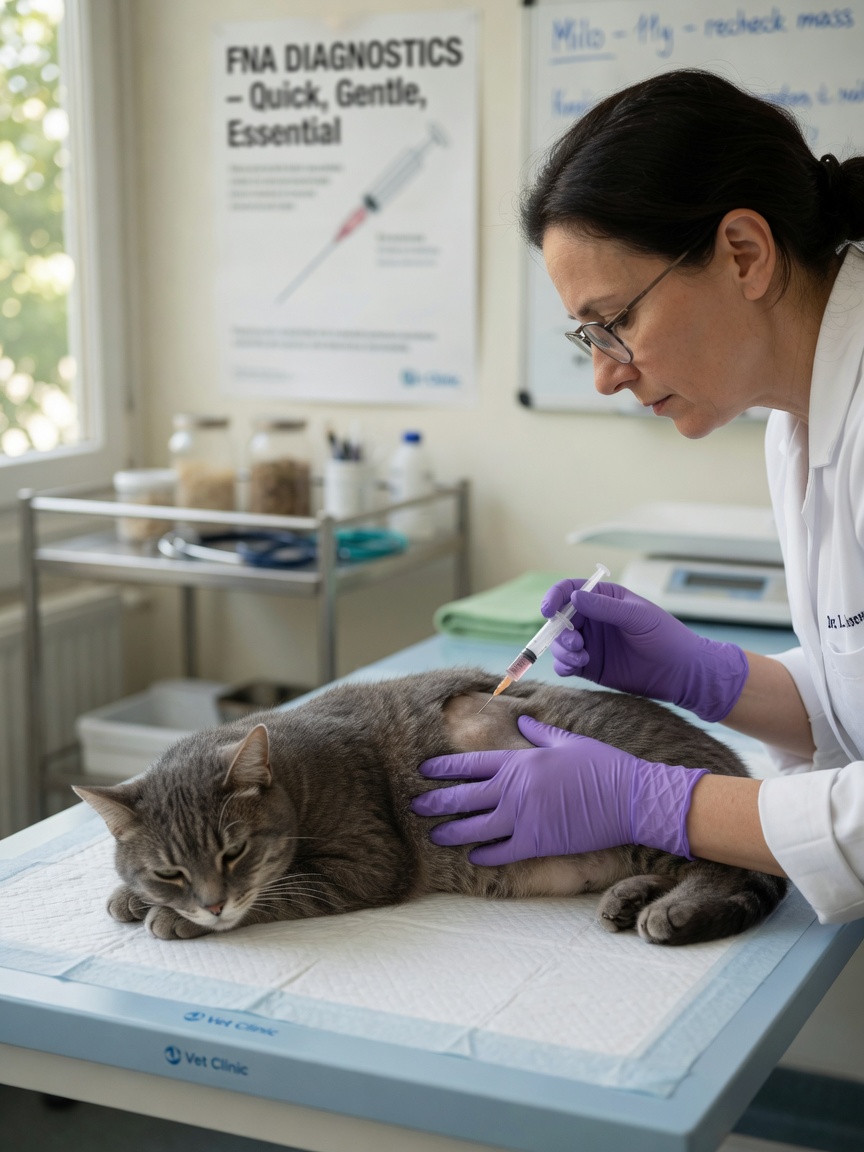
When cancer is suspected, your vet will begin with a thorough physical examination and discuss your cat's history and symptoms. From there, the diagnostic process may involve several steps:
- Fine needle aspirate: a minimally invasive procedure in which a small sample of cells is collected from a mass using a needle and syringe. This is often the first step and can provide useful information quickly.
- Biopsy: a small tissue sample is removed for detailed examination under a microscope. This provides a definitive diagnosis and helps determine the tumour type and grade.
- Blood tests: to assess organ function and the cat's overall health, and to look for signs of systemic disease.
- X-rays and ultrasound: to check whether cancer has spread to the lungs, lymph nodes, or other organs — a process called staging.
Staging helps your vet and oncologist understand how advanced the disease is and which treatment options are most appropriate.
Treatment Options
Treatment will depend on the type, location, and stage of the cancer, as well as your cat's overall health and your own circumstances and wishes. The main options include:
- Surgery: the most effective option for localised solid tumours. When a tumour can be completely removed with clear margins, surgery alone can be curative. It is often the first-line treatment for mammary tumours and localised SCC.
- Chemotherapy: cats generally tolerate chemotherapy much better than humans do. Side effects are usually mild, and the focus is always on maintaining quality of life. Lymphoma responds particularly well to chemotherapy protocols, and many cats achieve remission.
- Radiation therapy: available at specialist veterinary centres, this is used for certain tumour types that cannot be fully removed surgically.
- Palliative and supportive care: when cure is not possible or is not the chosen path, the focus shifts to keeping your cat comfortable. This may include pain management, anti-nausea medication, appetite stimulants, and nutritional support.
Quality of Life: The Heart of the Matter
Perhaps the most important thing to understand about feline cancer is that a diagnosis does not mean the end. Many cats with cancer — especially those with well-managed lymphoma or successfully resected tumours — can have an excellent quality of life for a considerable time. Veterinary palliative care has become increasingly sophisticated, and keeping your cat comfortable, happy, and pain-free is always a central goal of treatment.
Monitoring your cat's quality of life is something you, as their owner, are uniquely placed to do. Watch for whether they are eating, grooming, interacting with the family, and showing interest in their surroundings. Your veterinary team can guide you on what to watch for and when to reassess.
When to Seek Urgent Veterinary Care
Some situations require prompt attention rather than a routine appointment. Seek urgent veterinary advice if your cat shows rapid weight loss over a short period, any difficulty breathing or open-mouth breathing, a rapidly growing mass, or collapse and extreme weakness. These may indicate that a cancer is progressing quickly or that a complication has developed.
A cancer diagnosis is emotionally overwhelming, and it is entirely normal to feel grief, uncertainty, and fear. Working closely with a veterinary team you trust, asking questions, and focusing on your cat's comfort and happiness will help you navigate this difficult time with as much clarity and compassion as possible.