ForPetsHealthcare
Dogs

Canine Partners Spotlight Winter 2022

By Julia WrenfieldUpdated August 4, 20264 min read
Evidence-based · Sources checked
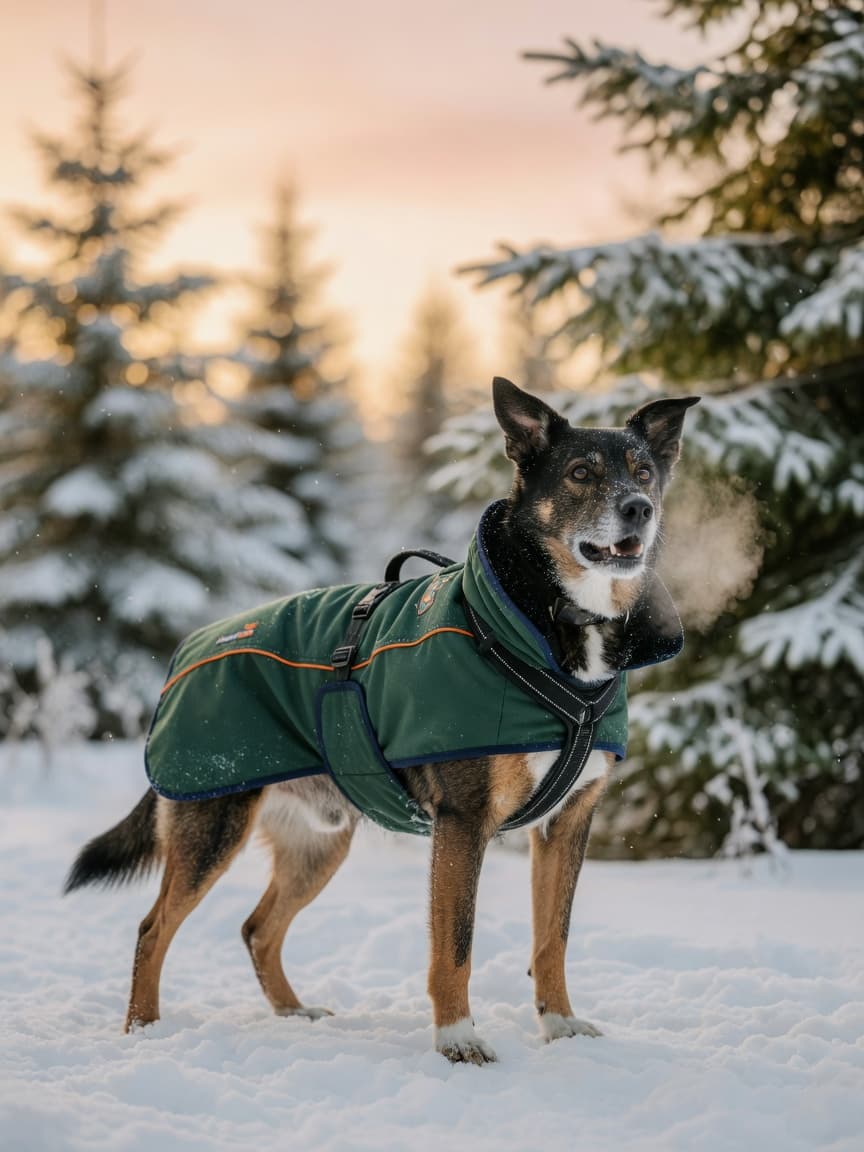
{"en": "Working dog in winter coat standing outdoors during snowy season, highlighting cold-weather care needs", "es": "Perro de trabajo con abrigo invernal de pie al aire libre durante la temporada de nieve, destacando cuidados en clima fr\u00edo", "fr": "Chien de travail portant un manteau d'hiver debout \u00e0 l'ext\u00e9rieur pendant la saison des neiges, mettant en \u00e9vidence les soins par temps froid", "de": "Arbeitshund mit Wintermantel steht drau\u00dfen in der Schneezeit und zeigt die Bed\u00fcrfnisse der K\u00e4ltepflege", "nl": "Werkende hond in winterjas buiten in sneeuwseizoen, highlights voor zorgen in koud weer", "pt": "C\u00e3o de trabalho com casaco de inverno em p\u00e9 ao ar livre durante esta\u00e7\u00e3o de neve, destacando cuidados em clima frio", "it": "Cane da lavoro in cappotto invernale in piedi all'aperto durante la stagione nevosa, evidenziando le esigenze di cura al freddo"}

As winter settles across Europe, our canine companions face unique health challenges that require thoughtful attention and proactive care. Whether your dog is a working partner, a beloved family pet, or an assistance dog, the colder months demand adjustments to their routine, nutrition, and healthcare. This comprehensive guide explores essential winter wellness strategies to keep your dog thriving throughout the season.

Understanding Winter's Impact on Canine Health

Winter presents distinct physiological challenges for dogs. Cold temperatures reduce circulation to extremities, increase caloric requirements, and create environmental hazards like ice, salt, and reduced daylight. Dogs with arthritis or joint conditions often experience increased discomfort, whilst senior dogs may struggle with reduced mobility on slippery surfaces. Understanding these risks allows you to implement preventative measures that maintain your dog's wellbeing.

Nutritional Adjustments for Winter Months

Winter nutrition plays a crucial role in maintaining your dog's health during colder weather. Dogs expend more energy maintaining body temperature, particularly those with shorter coats or naturally lean builds.

  • Increase caloric intake by 10-15% for outdoor working dogs and those exposed to prolonged cold
  • Provide high-quality protein sources to support muscle maintenance and immune function
  • Ensure adequate omega-3 fatty acids to support skin health and reduce winter dryness
  • Maintain consistent access to fresh water—dehydration is common in winter when dogs drink less
  • Consider adding warming foods like bone broth or sweet potato to winter meals

Paw Care and Surface Safety
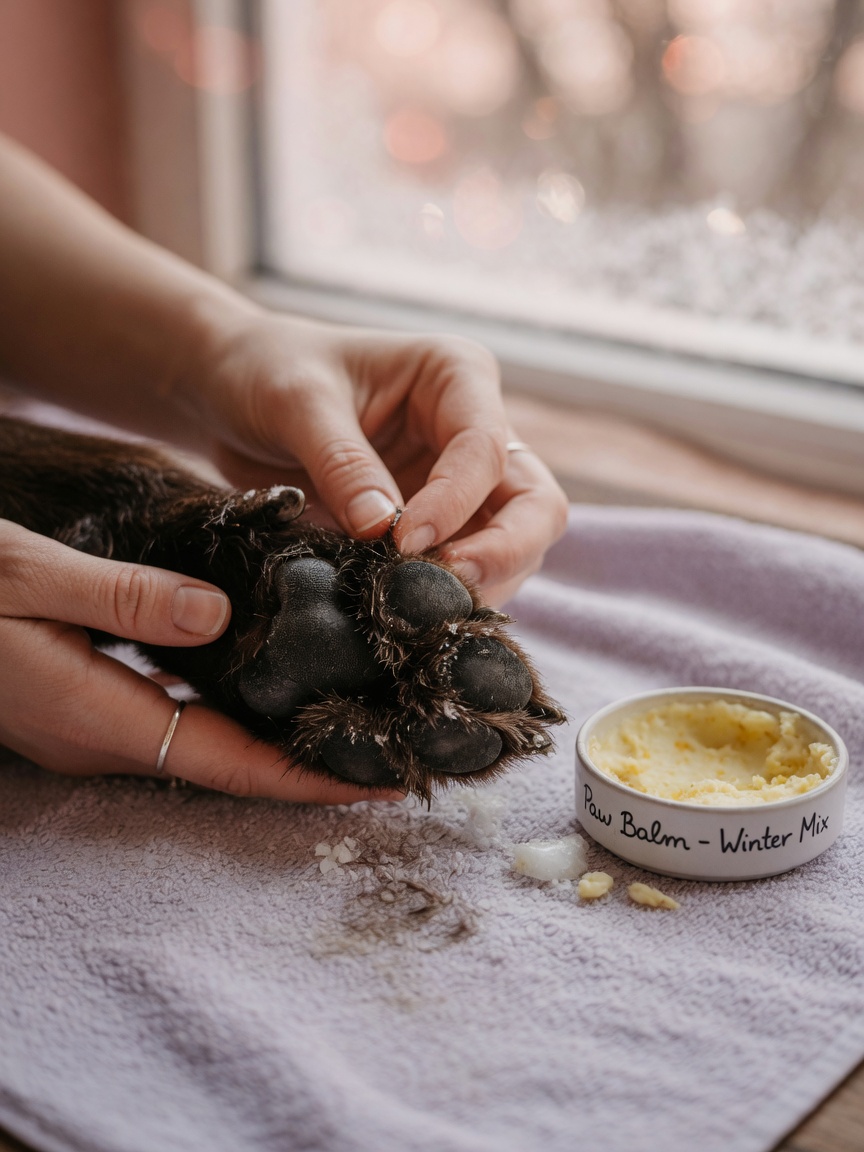
Owner inspecting dog's paw for winter damage with paw balm nearby, demonstrating post-walk paw care routine

Your dog's paws endure significant stress during winter. Ice, snow, and salt-based de-icers can cause irritation, cracking, and chemical burns. Implement these protective measures:

  1. Trim paw hair between toe pads to prevent ice ball formation
  2. Apply pet-safe paw balms before outdoor activities
  3. Wash paws thoroughly after walks to remove salt and chemical residues
  4. Consider protective dog boots for extended outdoor exposure
  5. Inspect paws daily for cuts, cracks, or signs of irritation

Exercise and Mental Stimulation in Winter
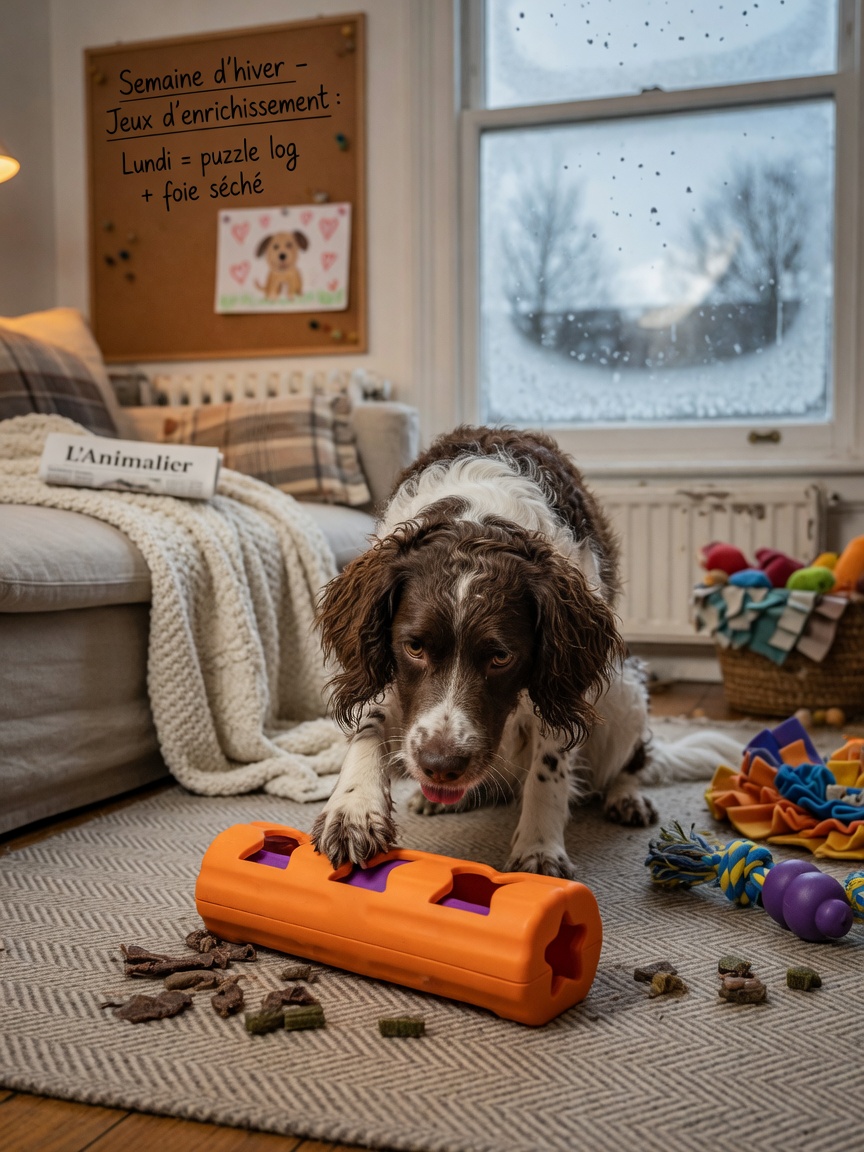
Dog playing with puzzle toys indoors during winter, showing mental enrichment and indoor exercise alternatives

Reduced daylight and harsh weather can tempt owners to skip outdoor exercise, but dogs still require regular physical activity and mental engagement. Winter presents opportunities for adapted activities that maintain fitness whilst protecting your dog from extreme conditions.

  • Schedule shorter, more frequent outdoor sessions rather than single lengthy walks
  • Explore indoor activities: scent work, puzzle toys, and training sessions
  • Utilise undercover spaces like parks with sheltered areas
  • Engage in swimming or hydrotherapy if available—excellent low-impact exercise
  • Maintain training routines indoors to preserve mental sharpness

Health Monitoring and Preventative Care

Winter increases the risk of several health conditions requiring vigilant monitoring. Watch for signs of discomfort, behavioural changes, or physical symptoms indicating underlying issues. Ensure your dog's vaccinations remain current, as cold-stressed dogs may experience reduced immune function. Schedule a winter health check with your veterinary surgeon, particularly if your dog is senior, has existing joint problems, or works outdoors regularly.

Key Winter Wellness Takeaways

Successful winter care combines nutritional optimisation, environmental protection, and consistent health monitoring. By adjusting your dog's diet, protecting their paws, maintaining appropriate exercise, and prioritising veterinary oversight, you'll ensure your canine partner remains healthy, comfortable, and content throughout the winter season. Every dog's needs are individual—consult your veterinary surgeon about specific recommendations for your dog's age, breed, and lifestyle. With these evidence-based strategies in place, your dog can enjoy a safe and thriving winter.

#canine partners spotlight winter 2022#forpetshealthcare

Sources & further reading

This article is based on peer-reviewed veterinary research and reputable animal-health sources. Explore the underlying science in our Research Library.

Related articles

The 19 Best Animal Shelters in the Netherlands (2026)

the Netherlands's animal shelters, rescue associations and refuges save thousands of dogs, cats and other animals every year, almost always on tiny budgets and volunteer power. To build the most objective ranking possible, we analysed public Google reviews across more than 56 registered animal-prote…

Read more →

The 25 Best Animal Shelters in Italy (2026)

Italy's animal shelters, rescue associations and refuges save thousands of dogs, cats and other animals every year, almost always on tiny budgets and volunteer power. To build the most objective ranking possible, we analysed public Google reviews across more than 121 registered animal-protection org…

Read more →

The 48 Best Animal Shelters in Germany (2026)

Germany's animal shelters, rescue associations and refuges save thousands of dogs, cats and other animals every year, almost always on tiny budgets and volunteer power. To build the most objective ranking possible, we analysed public Google reviews across more than 152 registered animal-protection o…

Read more →

The 32 Best Animal Shelters in France (2026)

France's animal shelters, rescue associations and refuges save thousands of dogs, cats and other animals every year, almost always on tiny budgets and volunteer power. To build the most objective ranking possible, we analysed public Google reviews across more than 89 registered animal-protection org…

Read more →

The 8 Best Animal Shelters in Portugal (2026)

Portugal's animal shelters, rescue associations and municipal centros de recolha save thousands of dogs, cats and other animals every year, almost always on tiny budgets and volunteer power. To build the most objective ranking possible, we analysed public Google reviews across more than 86 registere…

Read more →

Sphynx Cat Skin care and hygiene: Causes, Signs & Care

Sphynx cats have little to no coat, which means the skin itself takes on jobs that fur normally does — insulation, oil dispersal, and barrier protection — leaving it prone to greasiness, blocked pores, fungal infections, and sunburn. The single most important thing to know is that a Sphynx's skin ne…

Read more →
Disclaimer:This article is for informational purposes only and does not constitute veterinary advice. Always consult a qualified veterinarian for your pet's health concerns.

Free newsletter

Pet health tips, straight to your inbox

Weekly science-backed advice for dog & cat owners. No spam, unsubscribe anytime.