
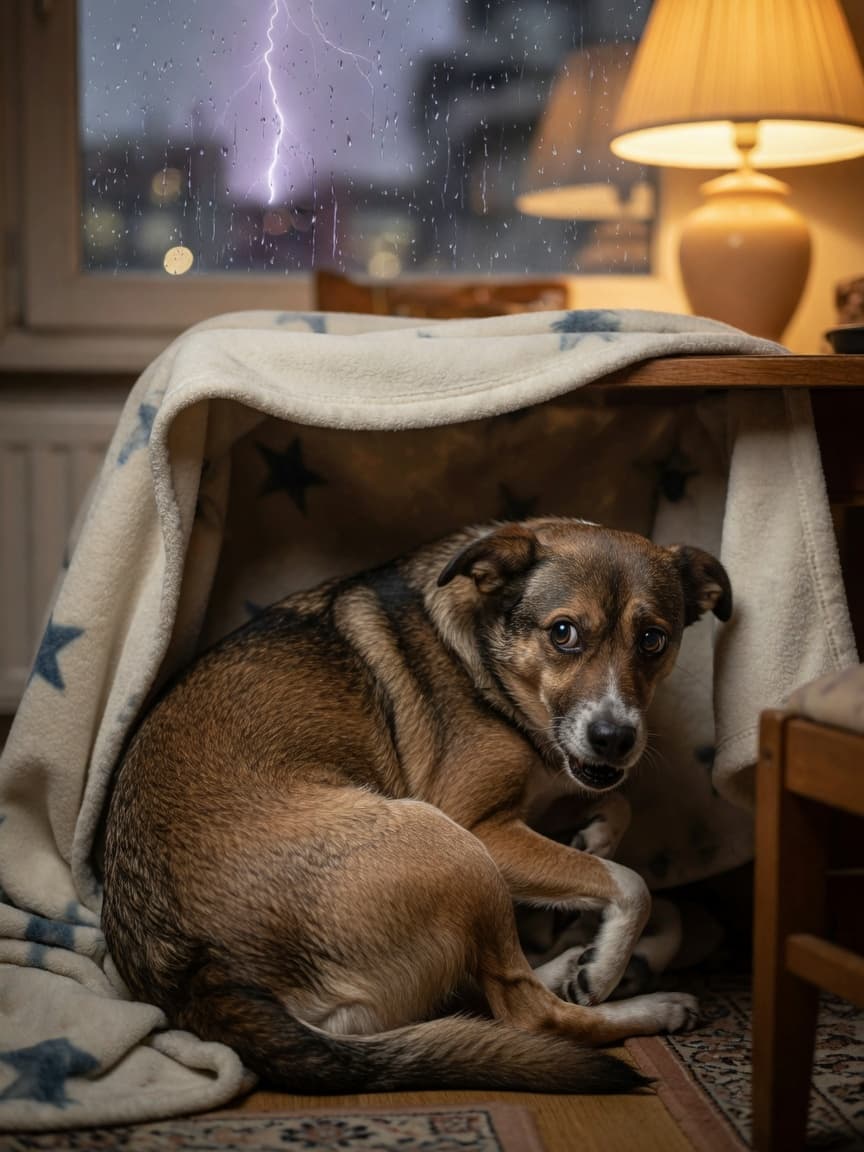
When Loud Noises Become a Serious Problem
Most dog owners have seen it: the trembling, the panting, the desperate attempt to squeeze behind the washing machine during a thunderstorm. Noise phobia is one of the most common behavioural problems in dogs, affecting an estimated 25 to 49 per cent of the pet dog population according to various European studies. Yet it remains chronically underreported, largely because owners assume fear of loud noises is normal and untreatable.
It is normal to a degree — a mild startle response to sudden sounds is entirely appropriate. But noise phobia is something different. It is a disproportionate, persistent fear response that causes genuine suffering and can worsen significantly over time without intervention.
What Is Actually Happening in a Noise-Phobic Dog
When a dog perceives a threatening sound, the amygdala — the brain's fear processing centre — triggers the hypothalamic-pituitary-adrenal axis, flooding the body with cortisol and adrenaline. Heart rate increases, muscles tense, and the dog enters a fight-or-flight state.
In noise-phobic dogs, this response is triggered at a lower threshold and is far more intense. The recovery period — the time it takes for cortisol to return to baseline — can be several hours. This means that even after the fireworks stop, your dog's nervous system may remain in a heightened state well into the night.
Studies published in veterinary behavioural journals have also noted that noise phobia rarely exists in isolation. Dogs with thunderstorm or fireworks phobia are significantly more likely to also show separation anxiety and generalised anxiety, suggesting a shared underlying vulnerability in the stress-response system.
Recognising the Signs
Noise phobia can manifest across a wide spectrum. Some dogs are visibly dramatic — shaking, howling, attempting to escape. Others show subtler signs that are easily missed:
- Yawning or lip-licking during or after a loud event
- Refusing food in the hours following exposure
- Clinginess or restlessness without obvious cause
- Destructive behaviour during storms or celebrations
- Self-directed behaviours such as excessive licking or scratching
It is also worth noting that some dogs become sensitised to pre-storm cues — changes in barometric pressure, static electricity, or even darkening skies — and begin showing fear responses well before a storm arrives. This is not imaginary; dogs have sensory capabilities that allow them to detect environmental changes humans cannot.
What Actually Helps: Environmental Management
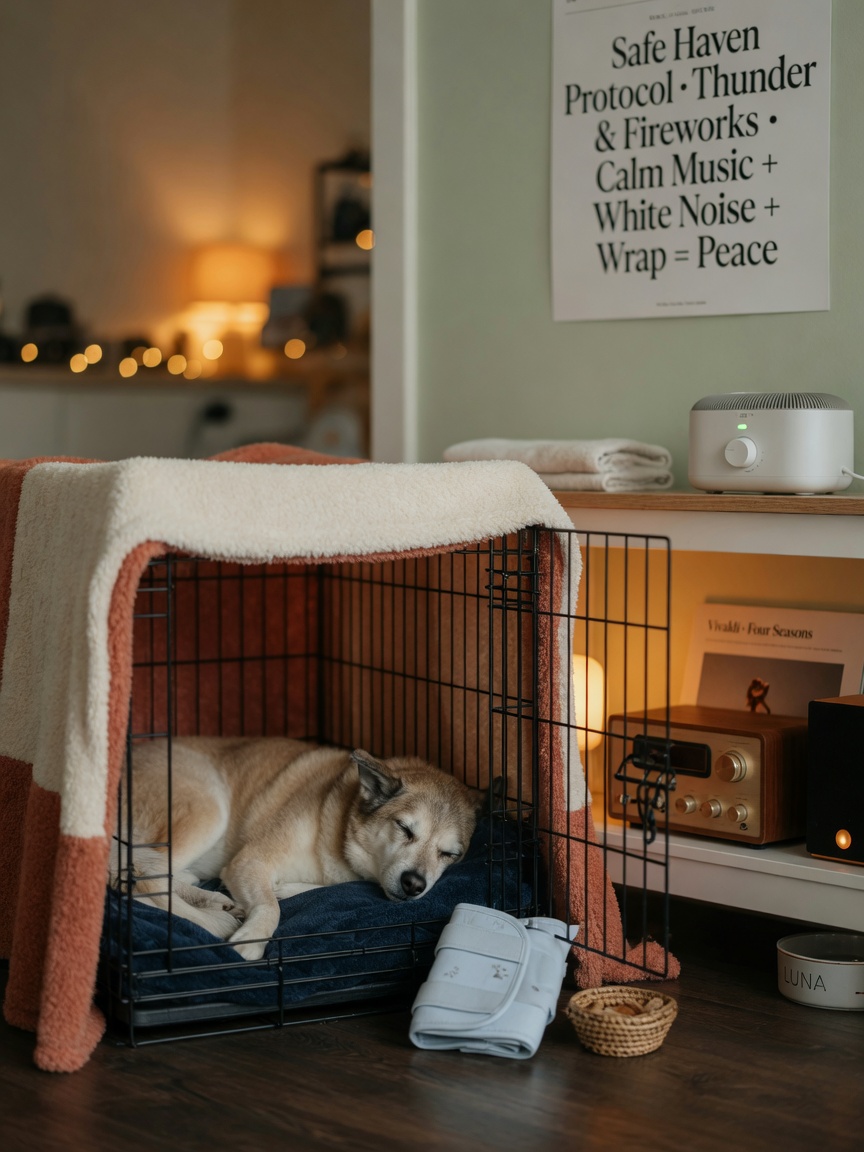
During a noise event, environmental management can reduce the intensity of the response. Create a safe space — a crate covered with a blanket, a quiet interior room, or a spot the dog has chosen naturally. Do not force them into it, but make it available and comfortable.
White noise or classical music can help mask the sound of fireworks or thunder. Research from the University of Glasgow found that dogs in kennels showed reduced stress behaviours when exposed to soft classical music compared to silence or other genres.
Pressure wraps such as anxiety vests work on the principle of deep touch pressure, similar to swaddling in infants. The evidence base is mixed, but some dogs respond well, and they carry no risk of harm. They work best when introduced before a fear event rather than during one.
Behavioural Approaches
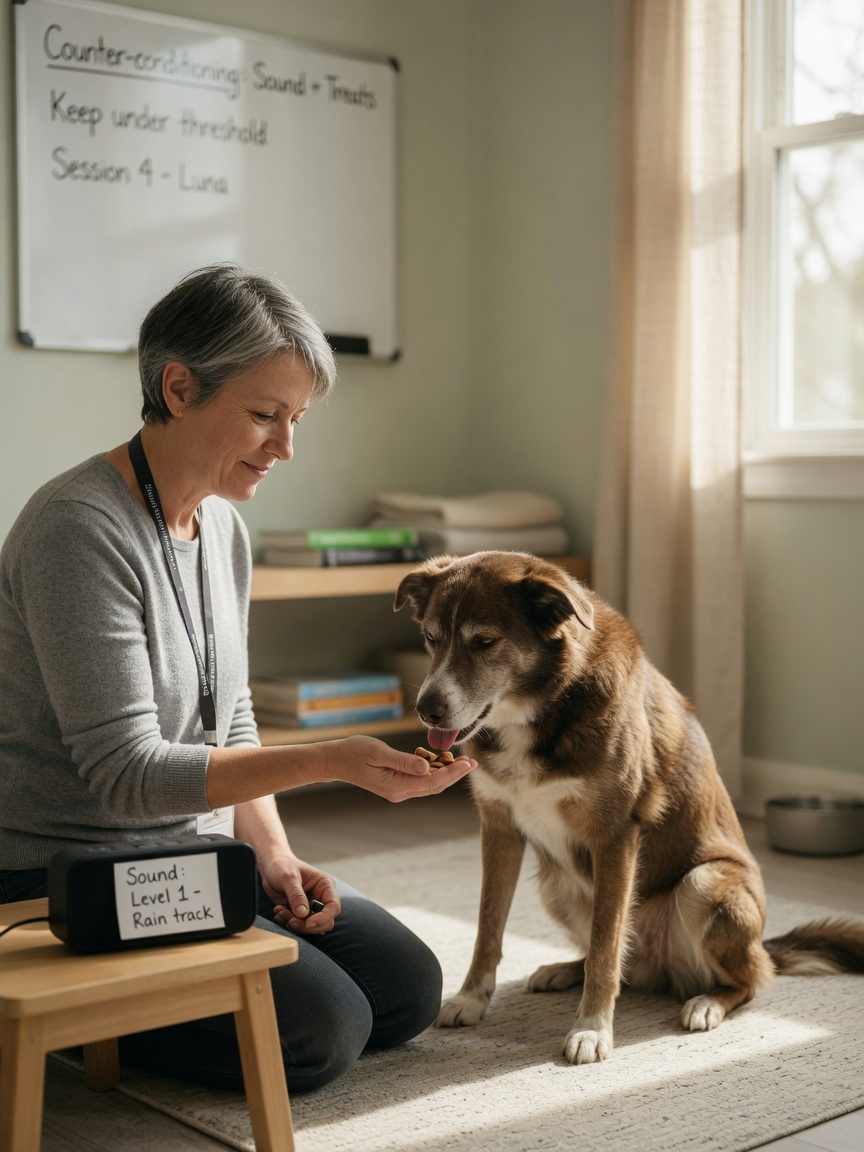
The most evidence-based long-term treatment for noise phobia is desensitisation and counter-conditioning, ideally carried out with a qualified behaviourist. This involves gradually exposing the dog to recordings of the feared sound at very low volumes — below the threshold that triggers a stress response — while simultaneously pairing the sound with something the dog finds genuinely rewarding.
Over weeks and months, the volume is incrementally increased. The goal is to change the dog's emotional association with the sound from threat to neutral or even positive. This is not a quick fix, and it requires consistency and patience, but it is the most durable solution available.
Crucially, this work must happen outside of fireworks season. Attempting desensitisation when the real events are imminent or ongoing is counterproductive — the intensity of live exposure undoes the gradual progress made in training sessions.
Veterinary and Nutraceutical Support
For dogs with severe noise phobia, behavioural intervention alone may be insufficient. Veterinary assessment is important in these cases. Options your vet may discuss include:
- Short-term anxiolytics prescribed for use on specific high-risk evenings
- Longer-term medication to reduce baseline anxiety while behavioural work is ongoing
- Nutraceuticals such as L-theanine, casein hydrolysate, or alpha-casozepine, which have modest but genuine supporting evidence
Pheromone diffusers containing synthetic versions of the dog appeasing pheromone (DAP) can also be useful when used consistently and proactively in the weeks before anticipated events.
What Not to Do
One persistent myth is that comforting a frightened dog reinforces the fear. This has been largely debunked. You cannot reinforce an emotional state through attention — you can only reinforce behaviours. Comforting your dog during a storm does not make the phobia worse, and withholding comfort may increase distress.
Equally, forced exposure — putting a dog outside during fireworks or playing recordings at full volume — is not only ineffective but can cause lasting psychological harm. Flooding, as this approach is called, is considered inappropriate for treating phobias in veterinary behavioural medicine.
Noise phobia is a welfare issue, not a character flaw. With the right support, most dogs can be helped to cope significantly better — and many can achieve a genuine reduction in fear over time.