
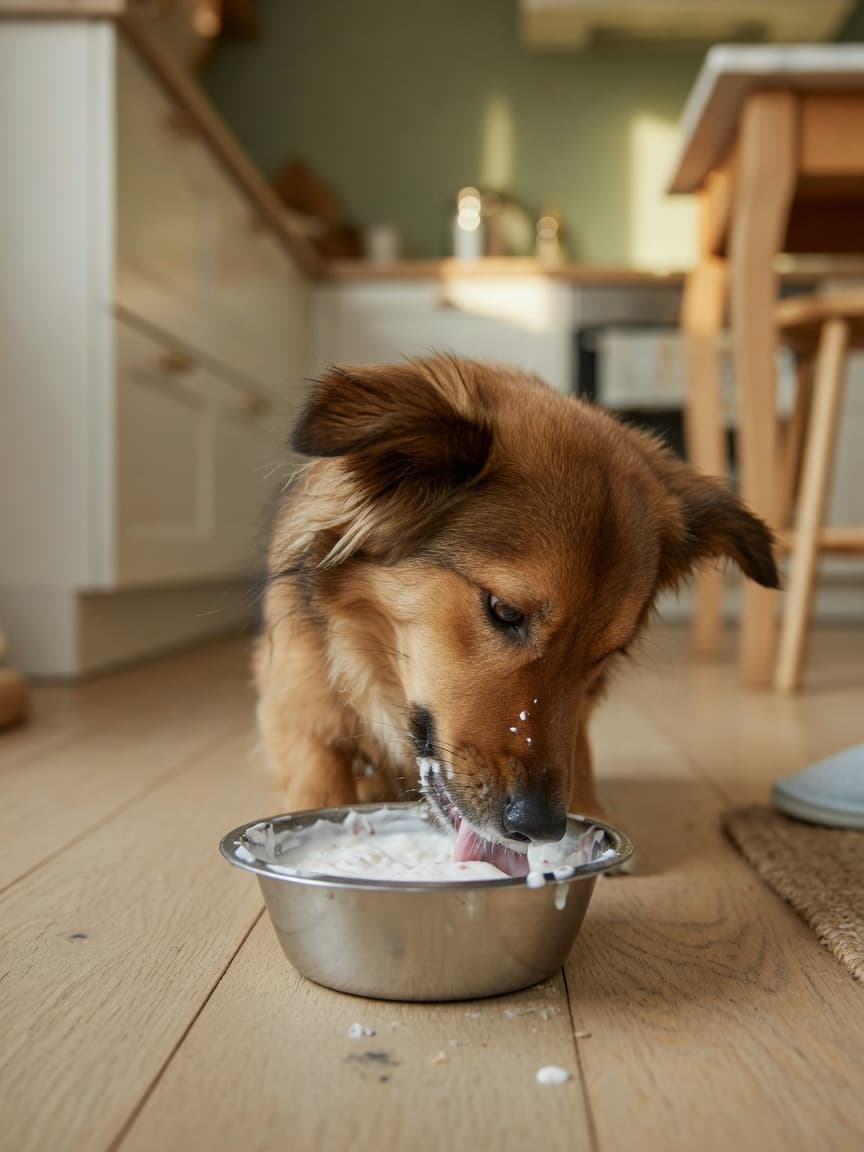
Can Dogs Eat Yoghurt? The Verdict
Plain, unsweetened yoghurt is generally safe for dogs in small quantities and is a reasonable occasional treat for most healthy adults. The live bacterial cultures found in natural yoghurt may offer modest digestive benefits. However, flavoured yoghurts, fruit yoghurts, and — most critically — any product sweetened with xylitol are completely off the table. The type of yoghurt you choose makes all the difference between a harmless snack and a veterinary emergency.
What Makes Plain Yoghurt Safe?
Plain, unsweetened yoghurt contains protein, calcium, and live probiotic cultures such as Lactobacillus acidophilus and Bifidobacterium. These live cultures are the bacteria responsible for fermenting the milk into yoghurt, and in doing so they consume a significant portion of the lactose present in the original milk. This makes yoghurt considerably lower in lactose than plain milk — good news for dogs, who produce less of the lactase enzyme needed to break lactose down efficiently.
Probiotics have a well-established role in human gut health, and there is growing interest in their potential benefits for dogs too. While the evidence base specific to dogs remains limited, the theory is that live cultures may help maintain a healthy balance of gut bacteria, particularly after antibiotic treatment or a bout of digestive upset. Many vets and nutritionists consider a small amount of plain yoghurt a reasonable occasional addition to a dog's diet.
Greek Yoghurt: A Better Option
Greek yoghurt is strained to remove much of the liquid whey, which also removes a proportion of the lactose. The result is a thicker, creamier product that is lower in lactose and higher in protein than standard yoghurt. For dogs — particularly those with mild dairy sensitivity — Greek yoghurt is generally better tolerated than regular varieties.
Choose full-fat or low-fat plain Greek yoghurt with no added flavourings, sweeteners, or fruit. The ingredient list should be short: milk, live cultures. Nothing else.
The Xylitol Warning: This Is Serious
Some flavoured and low-calorie yoghurts are sweetened with xylitol — an artificial sweetener that is completely harmless to humans but highly toxic to dogs. Xylitol triggers a rapid and dangerous release of insulin in dogs, causing severe hypoglycaemia (low blood sugar) within 30 to 60 minutes of ingestion. In larger doses, it can cause acute liver failure.
Symptoms of xylitol poisoning include weakness, wobbling, vomiting, tremors, collapse, and seizures. If you suspect your dog has eaten any product containing xylitol, contact your vet or an emergency animal poison line immediately — do not wait for symptoms to develop.
Always read the ingredient list before giving any yoghurt product to your dog. Xylitol may also be listed as "birch sugar" or "E967" on some packaging.
Yoghurts to Avoid
Beyond xylitol-sweetened varieties, several other types of yoghurt are unsuitable for dogs:
- Fruit yoghurts: typically contain high levels of added sugar, artificial flavourings, and fruit pieces that are not appropriate for dogs. Some fruits used — such as grapes — are toxic to dogs
- Flavoured yoghurts: vanilla, toffee, chocolate, and similar varieties contain sweeteners and flavourings, and chocolate is toxic to dogs
- Low-fat diet yoghurts: often compensate for reduced fat with artificial sweeteners including xylitol
- Frozen yoghurt desserts sold for human consumption: frequently contain sugars, sweeteners, and other additives
Lactose Intolerance in Dogs
While yoghurt is lower in lactose than milk, it still contains some. Dogs vary considerably in their ability to tolerate dairy. Some handle small amounts of yoghurt without any issue whatsoever; others will develop gas, bloating, loose stools, or diarrhoea even after a modest quantity.
If your dog has never had yoghurt before, start with a very small amount — a teaspoon or less — and observe their reaction over the next 12 to 24 hours. Signs of lactose intolerance typically appear within a few hours of eating and include:
- Loose stools or diarrhoea
- Flatulence and abdominal gurgling
- Bloating or signs of stomach discomfort
- Vomiting in more sensitive individuals
If your dog shows any of these signs, dairy is not suitable for them and yoghurt should not be offered again.
How Much Yoghurt Can Dogs Have?
Treat yoghurt as an occasional addition, not a daily staple. As a rough guide:
- Small dogs (under 10 kg): one teaspoon of plain yoghurt occasionally
- Medium dogs (10–25 kg): one to two tablespoons at most
- Large dogs (over 25 kg): up to three tablespoons, again as an occasional treat rather than a daily offering
As with all treats, yoghurt should make up no more than 10 per cent of your dog's total daily calorie intake.
Frozen Yoghurt as a Summer Treat
One of the more popular uses for plain yoghurt in the pet world is as a frozen summer treat. Spooning plain yoghurt into an ice cube tray and freezing it produces small, cool morsels that many dogs enjoy enormously on hot days. You can also mix in dog-safe ingredients such as mashed banana, blueberries, or a little peanut butter (ensure it contains no xylitol) before freezing.
Frozen plain yoghurt is perfectly safe in reasonable quantities and a far better choice than commercial frozen dog treats that may contain artificial additives.
When to Avoid Yoghurt
Some dogs should not have yoghurt at all:
- Dogs with confirmed lactose intolerance
- Overweight dogs on a calorie-restricted plan, unless factored into their daily allowance
- Dogs with pancreatitis history, for whom even moderate-fat dairy can be a trigger
- Dogs with a milk protein allergy (distinct from lactose intolerance — the immune system reacts to casein or whey proteins in the milk)
The Bottom Line
Plain, unsweetened yoghurt — and especially Greek yoghurt — is a safe, enjoyable treat for most dogs in sensible amounts. The live cultures may offer minor digestive benefits, the lactose content is lower than in milk, and a frozen cube on a hot day makes for a simple, wholesome reward. The golden rule is simple: read the label, avoid anything sweetened or flavoured, and never give a dog any yoghurt that contains xylitol.