
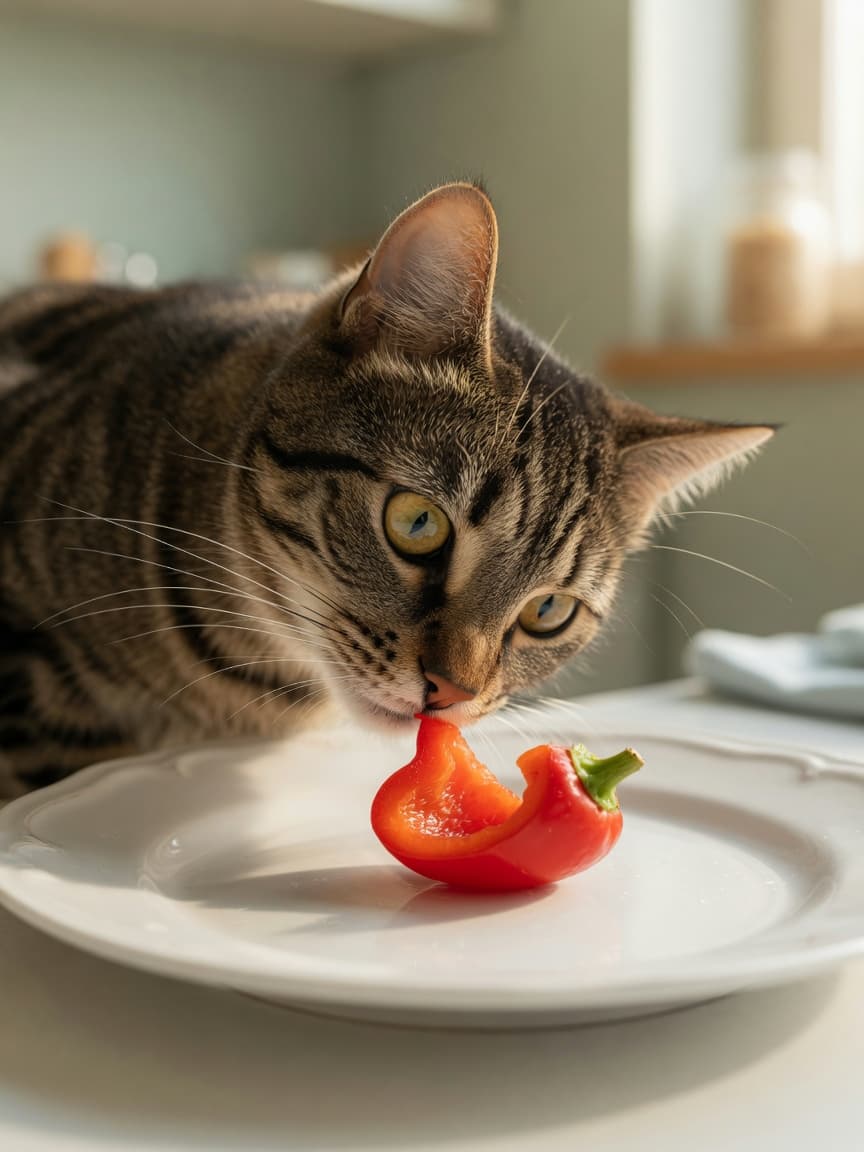
Can cats eat bell peppers?
Yes, cats can eat bell peppers in moderation as an occasional treat. Bell peppers are generally safe for cats and don't contain any toxic compounds that would harm them. However, they're not essential to a cat's diet, and they should never replace a proper feline meal. If you'd like to offer your cat a small piece of bell pepper now and then, it's perfectly fine to do so.
Are bell peppers nutritious for cats?
Bell peppers do contain some nutrients that could theoretically benefit cats, including vitamin C, vitamin A, and fibre. However, it's important to remember that cats are obligate carnivores. This means their bodies are designed to thrive on meat-based proteins, not plant matter. Cats have very different nutritional requirements from humans and dogs, and they cannot synthesise certain essential nutrients from plant sources the way other animals can.
Whilst the vitamins and minerals in bell peppers are harmless, cats don't actually need them from vegetables. A high-quality, balanced cat food already provides everything your cat requires nutritionally. Any nutrients from bell peppers would be minimal and largely unnecessary for your pet's health.
How much bell pepper can you give your cat?
If you decide to offer bell pepper as a treat, keep portions very small. A piece no larger than your cat's paw is appropriate. This should only be given occasionally—perhaps once or twice a week at most—not as part of their regular diet. The vast majority of your cat's daily calorie intake should come from proper feline nutrition, not vegetables.
It's also a good idea to introduce bell pepper gradually if your cat hasn't had it before. Start with a tiny amount and watch for any digestive upset over the next 24 hours. Some cats may have sensitive stomachs and could experience mild digestive discomfort from unfamiliar foods.
How to serve bell peppers safely
Always wash the bell pepper thoroughly under running water to remove any pesticide residues. Remove all seeds and the white pith inside, as these can be choking hazards for cats. Cut the pepper into very small, manageable pieces that your cat cannot choke on.
Serve the bell pepper raw rather than cooked. Cooked peppers can sometimes become softer and stickier, which increases choking risk. Raw pepper is firmer and easier for your cat to handle. Never season the pepper with salt, garlic, onion powder, or any other human seasonings, as some of these can be harmful to cats. Garlic and onions, in particular, are toxic to felines and should always be avoided.
Are there any risks?
Bell peppers themselves are not toxic to cats. However, there are a few practical considerations. Some cats simply don't enjoy eating vegetables and may show no interest in bell pepper at all. This is perfectly normal and nothing to worry about. There's no need to force your cat to eat something they don't like.
Another consideration is digestive sensitivity. Whilst most cats tolerate small amounts of raw bell pepper without issue, some cats may experience mild stomach upset, including vomiting or diarrhoea, particularly if they eat too much. If this happens, simply discontinue offering bell pepper and stick to their regular diet.
Always ensure that any bell pepper you offer is fresh and not part of a prepared dish containing other ingredients. Never give your cat bell pepper that's been cooked with garlic, onion, oil, salt, or spices.
The bottom line
Bell peppers are safe for cats to eat in small, occasional amounts. However, they offer little nutritional benefit for an obligate carnivore and should never be considered part of a cat's essential diet. If your cat shows interest in bell pepper and tolerates it well, offering a tiny piece occasionally is harmless. However, your cat's health and nutrition depend primarily on high-quality cat food formulated to meet their unique dietary needs. When in doubt about introducing any new food, speak with your veterinary surgeon.