
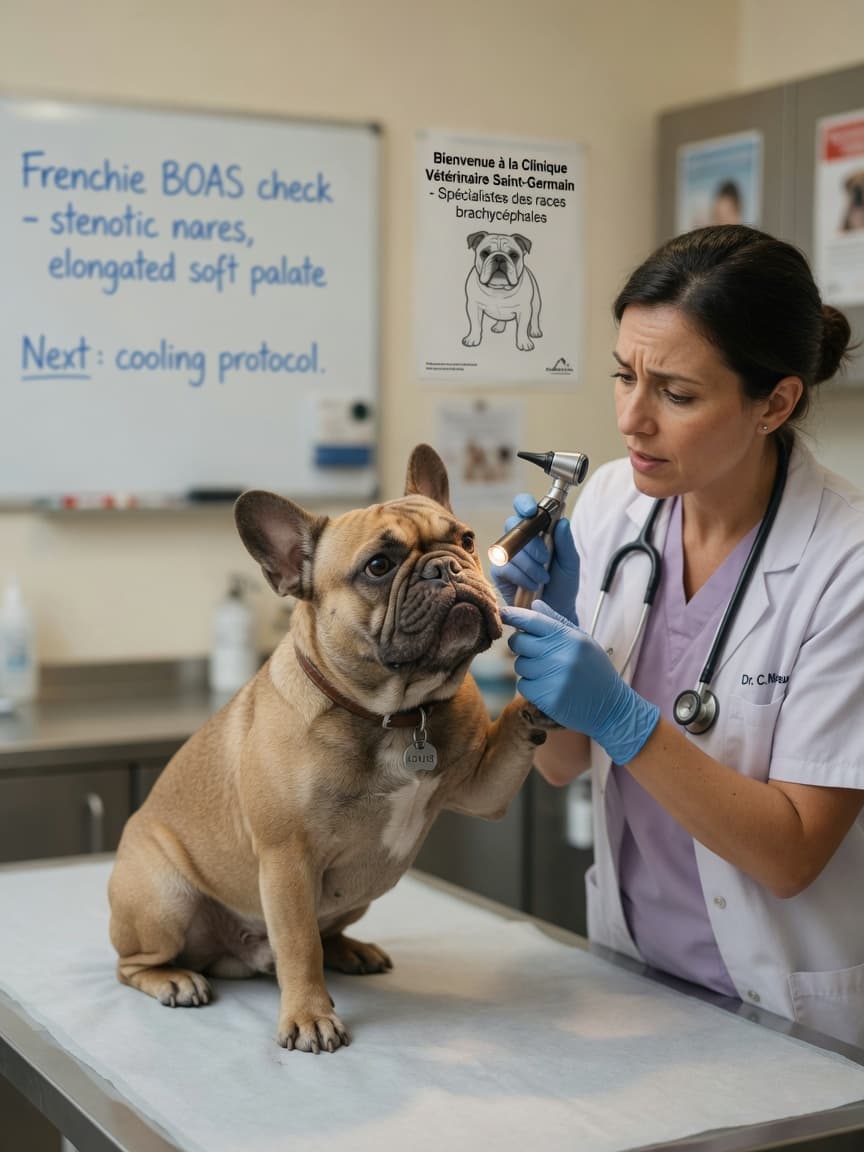
What Is Brachycephalic Obstructive Airway Syndrome?
Brachycephalic obstructive airway syndrome, commonly known as BOAS, is a collection of anatomical abnormalities that restrict airflow in dogs bred to have shortened, flattened skulls. The term "brachycephalic" comes from the Greek for "short head," and while that distinctive flat face has made breeds like the French Bulldog and Pug enormously popular, it comes with serious health consequences that every prospective owner should understand before bringing one of these dogs home.
BOAS is not a single condition but rather a combination of structural problems that work together to obstruct the upper airway. Many affected dogs struggle to breathe throughout their entire lives, and what owners often interpret as endearing snoring or snuffling is frequently a sign of genuine respiratory distress.
The Four Components of BOAS
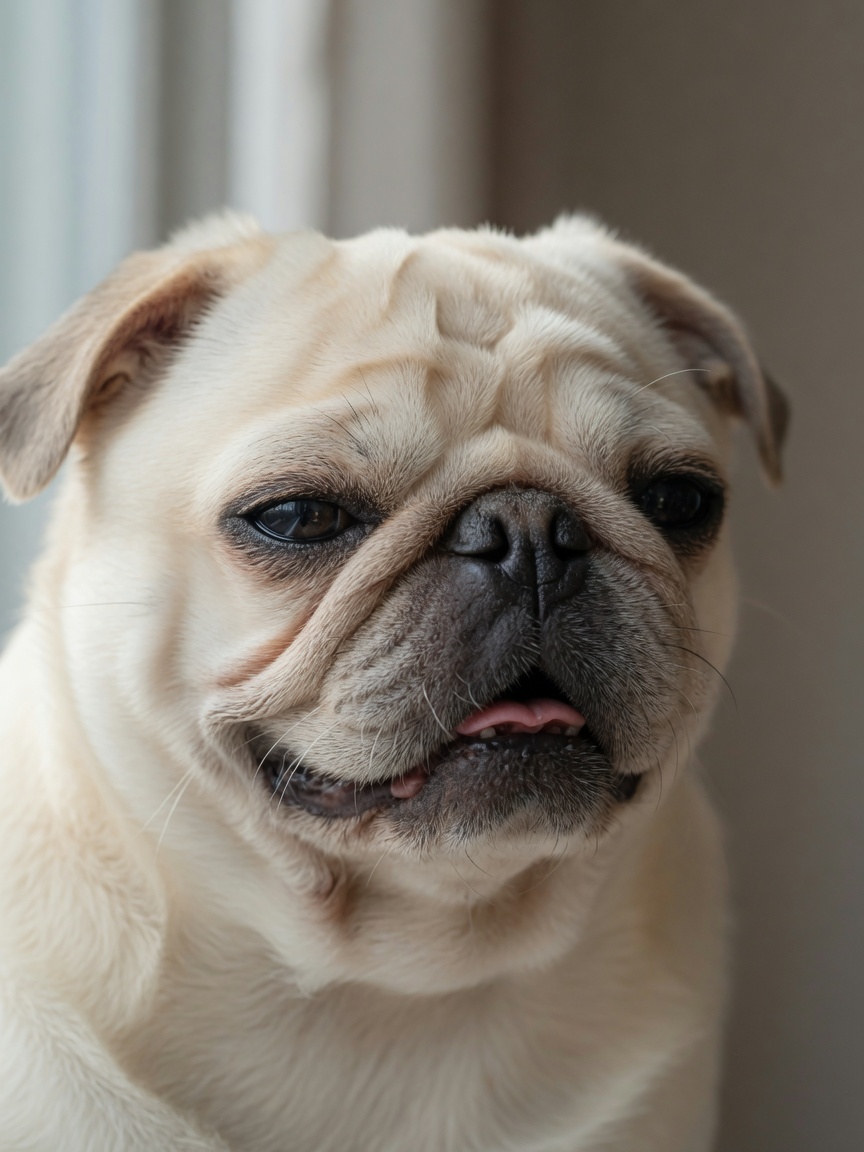
A dog can be affected by one or more of the following anatomical abnormalities, and the greater the number and severity of components present, the more serious the overall obstruction.
Stenotic Nares
Stenotic nares are abnormally narrow nostrils that restrict the amount of air a dog can inhale through its nose. In severely affected dogs, the nostril openings are little more than slits, forcing the animal to breathe through its mouth — an inefficient and exhausting alternative. This is often one of the most visible signs of BOAS and can be assessed even in young puppies.
Elongated Soft Palate
The soft palate is the fleshy tissue at the back of the mouth that separates the nasal passage from the throat. In brachycephalic dogs, the soft palate is frequently too long relative to the shortened skull, meaning it hangs down and partially blocks the entrance to the trachea (windpipe). This causes the characteristic snoring, gurgling, and laboured breathing that owners of flat-faced breeds know well.
Hypoplastic Trachea
Some brachycephalic dogs, particularly British Bulldogs, have a trachea that is narrower than normal for their body size. A hypoplastic (underdeveloped) trachea means that even if the upper airway problems are corrected surgically, the dog's overall breathing capacity remains limited. This is the one component of BOAS that cannot be corrected through surgery.
Everted Laryngeal Saccules
The laryngeal saccules are small pouches located just inside the larynx. In dogs with chronic BOAS, the constant effort of breathing against resistance causes these saccules to be drawn outward (everted) into the airway, creating an additional obstruction. Everted saccules are considered a secondary change caused by the chronic strain of the other components and are a sign that BOAS has been present and untreated for some time.
BOAS Grading: 0 to 3
Veterinary researchers, including teams at the Royal Veterinary College (RVC), have developed standardised grading systems to assess the severity of BOAS. The RVC uses respiratory function grading based on exercise testing and clinical assessment, assigning each dog a grade from 0 to 3.
- Grade 0: No clinically relevant signs. The dog breathes normally and shows no evidence of respiratory compromise.
- Grade 1: Mild signs. Minor noise or slight exercise intolerance, but the dog's quality of life is not significantly affected.
- Grade 2: Moderate signs. Regular respiratory noise, clear exercise intolerance, and disrupted sleep. Quality of life is noticeably impaired.
- Grade 3: Severe signs. Significant respiratory distress even at rest. Episodes of cyanosis (bluish gums due to lack of oxygen), collapse, or syncope may occur. These dogs require prompt veterinary attention.
Grading is important because it guides treatment decisions and helps breeders identify which dogs should not be used for breeding. Dogs with Grade 2 or 3 BOAS should not be bred from.
Surgical Treatment and Quality of Life
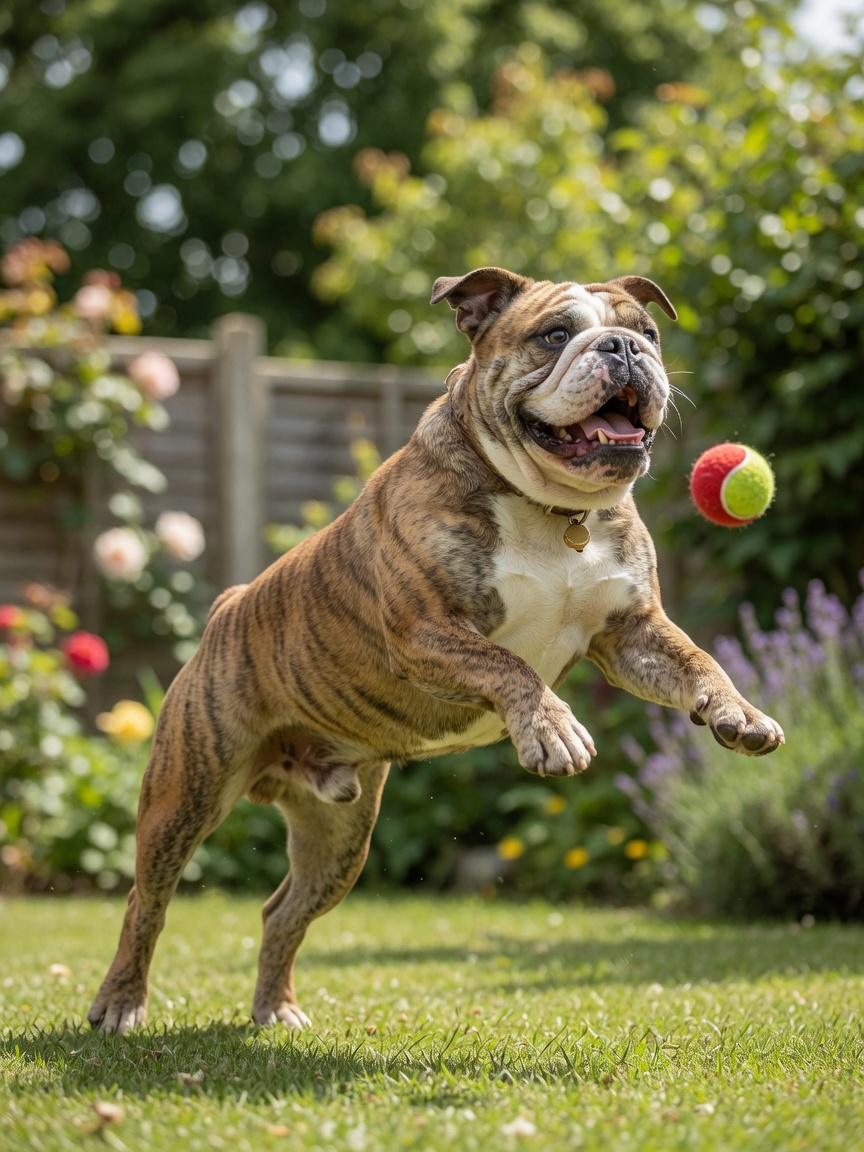
The good news is that surgery can significantly improve quality of life for many BOAS-affected dogs. Surgical options include widening the nostrils (rhinoplasty), shortening the soft palate (staphylectomy or palatoplasty), and removing everted laryngeal saccules. These procedures are most effective when performed early — ideally before secondary changes like everted saccules have occurred.
Research from the RVC and other institutions has consistently shown that operated dogs show measurable improvements in exercise tolerance, sleep quality, and overall respiratory function. Owners frequently report that their dog is livelier, less noisy at rest, and more able to enjoy walks after surgery. However, surgery is not a cure — it reduces the obstruction but cannot give a brachycephalic dog the airway of a longer-nosed breed.
Post-operative care includes keeping the dog calm during recovery, monitoring for swelling, and avoiding exercise for several weeks. Most dogs are discharged within 24 hours of surgery.
Breeds Most Commonly Affected
Any dog with a significantly shortened skull can be affected by BOAS, but the breeds seen most frequently in veterinary practice include the French Bulldog, British Bulldog, and Pug. The French Bulldog is now the most registered breed with the Kennel Club in the UK, overtaking the Labrador Retriever — a remarkable shift that has brought the welfare implications of brachycephalic conformation into sharp focus for vets, researchers, and the public alike.
Other affected breeds include the Cavalier King Charles Spaniel, Boston Terrier, Shih Tzu, Lhasa Apso, and Boxer, as well as brachycephalic cat breeds such as the Persian and Exotic Shorthair.
Buying Responsibly
If you are considering buying a brachycephalic dog, there are several steps you can take to reduce the risk of choosing a severely affected animal and to avoid supporting irresponsible breeding practices.
- Ask to see health test results for both parents. Reputable breeders of French Bulldogs, Bulldogs, and Pugs should be able to provide BOAS grading certificates.
- Look for puppies whose parents have open, wide nostrils. Nostrils that are nearly shut at rest are a clear warning sign.
- Avoid puppies advertised as having "extreme" features — very flat faces, very large eyes, and very wrinkled skin are associated with more severe health problems.
- Never buy from a seller who cannot show you the mother of the puppies in her home environment.
- Consider adopting an adult dog whose health status and temperament are already known.
The Kennel Club and the British Veterinary Association have both published guidance encouraging breeders to select away from extreme conformation. Choosing a breeder who prioritises health over appearance is the single most impactful decision a prospective owner can make.
When to See a Vet
If your brachycephalic dog is regularly snoring loudly at rest, struggles on warm days, tires quickly on short walks, sleeps with its neck extended to help it breathe, or has ever shown blue or pale gums, book a veterinary assessment promptly. Many owners accept these signs as normal for the breed, but early intervention leads to significantly better outcomes. Your vet can carry out an initial assessment and refer to a specialist if surgery is indicated.