
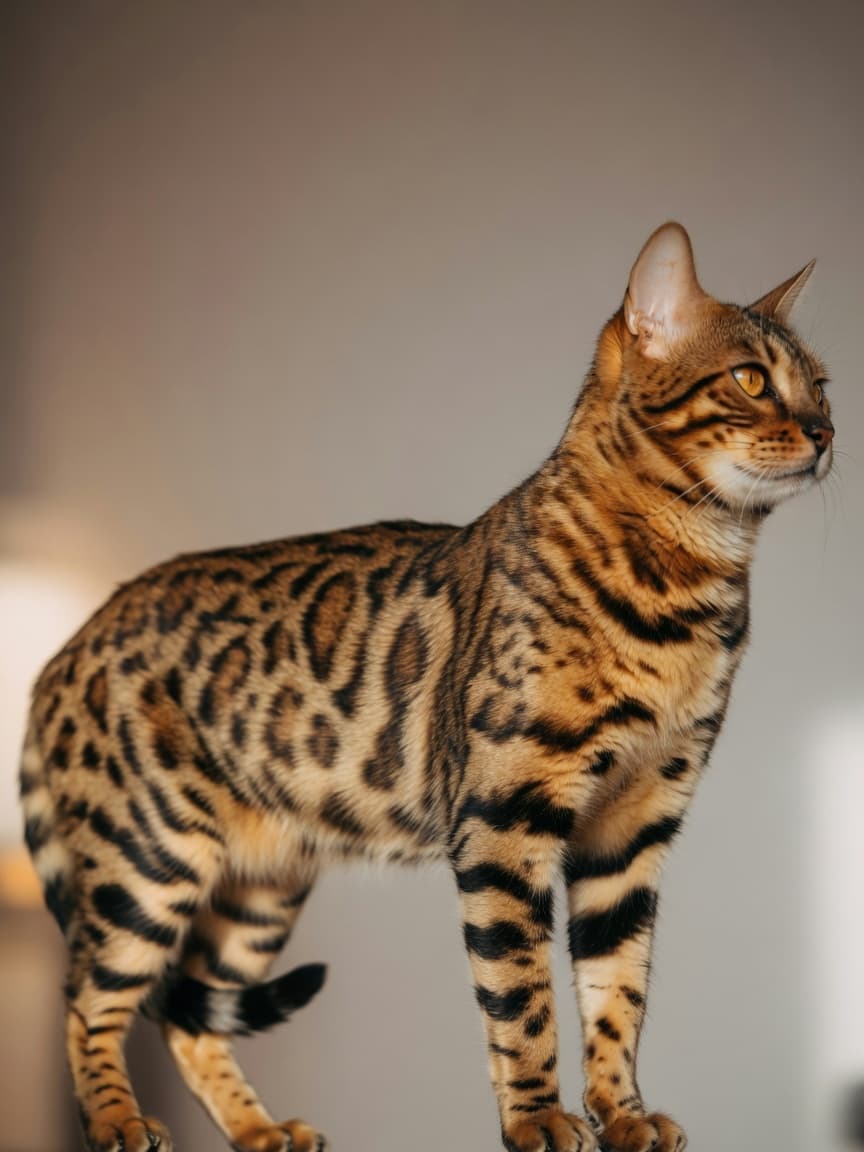
Bengal Cats: Wild Heritage, Specific Health Profile
A Bengal cat sitting still is a rare sight. Bred from crosses with the Asian leopard cat, Bengals carry a restless energy and physical athleticism that sets them apart from most domestic breeds. They also carry a distinct health profile that every owner should understand — including a predisposition to heart disease, inherited eye conditions, and the particular challenges that come with managing a high-drive animal in a domestic setting.
Hypertrophic Cardiomyopathy in Bengals
Hypertrophic cardiomyopathy — the thickening of the heart's muscular walls — affects Bengals as it does several other pedigree breeds. The genetic basis in Bengals is not as clearly defined as the MYBPC3 mutation in Maine Coons, which complicates DNA-based screening. No single validated test currently exists that reliably predicts HCM risk in Bengals.
Why Echocardiographic Screening Matters
Because genetic testing has limited utility in this breed, echocardiography — a cardiac ultrasound — remains the primary tool for early detection. Regular cardiac screening, typically recommended every one to two years from around two years of age, gives a real-time picture of heart structure that a DNA test cannot. Some Bengal breeders are beginning to incorporate screening programmes for breeding animals, and this should be viewed as a mark of responsible practice.
Warning Signs
- Increased resting respiratory rate — monitor regularly and know your individual cat's baseline
- Reduced activity or reluctance to jump in a normally active cat
- Any episode of laboured breathing, especially if sudden in onset
- Unexplained weight loss or appetite reduction
Progressive Retinal Atrophy: The Bengal-Specific Variant
Bengals are predisposed to a specific form of PRA called Bengal PRA or b-PRA, caused by a mutation in the KIF3B gene. This variant is distinct from the rdAc-PRA found in Siamese cats. Critically, b-PRA in Bengals tends to present earlier — affected cats may show signs of visual impairment from as young as one to two years of age, progressing to significant vision loss or complete blindness by three to five years.
DNA testing for the b-PRA mutation is commercially available and represents a clear, actionable step. Responsible breeders test their breeding cats and can provide documentation. A heterozygous cat (one copy of the mutation) is a carrier but will not develop the disease; a homozygous cat (two copies) will be affected.
Living with a Visually Impaired Bengal
Bengals' intelligence and adaptability mean that many navigate vision loss better than might be expected. Practical adjustments include keeping furniture arrangements consistent, using auditory cues during interaction, and ensuring the cat does not have unsupervised access to heights or hazards. Outdoor access should be reassessed as vision deteriorates.
Behaviour as a Health Consideration
Bengal behaviour is not incidental to their health — it is integral to it. These are high-intelligence, high-energy animals with substantial needs for mental and physical stimulation. When those needs are unmet, the consequences manifest both behaviourally and medically.
Stress and Its Physical Consequences
Under-stimulated Bengals are prone to anxiety-driven behaviours: destructive activity, compulsive vocalisation, over-grooming, and inappropriate elimination. Chronic stress has measurable physiological effects — elevated cortisol, immune suppression, and increased susceptibility to feline idiopathic cystitis. Managing a Bengal's environment well is preventive medicine, not simply owner convenience.
Enrichment Requirements
- Minimum of two dedicated interactive play sessions daily, using wand toys that mimic prey movement
- Climbing structures tall enough to allow genuine aerial vantage points
- Food puzzle feeders to engage foraging instincts during feeding
- Where possible, a securely enclosed outdoor space or supervised garden access
- Consistent human interaction — Bengals do not do well as secondary pets in low-engagement households
Digestive Sensitivity
Some Bengal lines show a higher incidence of gastrointestinal sensitivity, including chronic loose stools or sensitivity to dietary changes. A high-quality, protein-led diet with minimal artificial additives tends to suit the breed well. Abrupt food transitions should always be avoided; gradual change over seven to ten days is good practice for all cats, but particularly so for Bengals.
Practical Summary for Bengal Owners
- Arrange regular echocardiographic screening from age two; do not rely on genetic testing alone for HCM
- Request b-PRA test results for both parents before acquiring a kitten; test adult cats if provenance is unknown
- Build a genuinely enriched home environment — this is not optional for this breed
- Monitor resting respiratory rate as a baseline cardiac health indicator
- Seek veterinary advice if digestive issues persist beyond a few days
- Discuss your Bengal's overall health trajectory with your vet annually, even when the cat appears well
Bengals are extraordinary companions for owners equipped to meet their needs. Their health management is equally demanding — but the reward is a deeply engaged, long-lived, and genuinely remarkable animal.