
Beagle Health Guide: Common Conditions, DNA Tests, and Care Tips
The Beagle is classified under FCI Group 6 (Scent Hounds and Related Breeds), Section 1.3, Standard No. 161. Originally bred as a pack hunting dog, the Beagle is prized for its endurance, cheerful temperament, and exceptional nose. With a typical lifespan of 12 to 15 years, Beagles are considered a relatively robust breed, but they do carry several hereditary health risks that every EU owner and prospective buyer should understand before choosing this breed.
Common Health Conditions in Beagles
Epilepsy
Idiopathic epilepsy is one of the most serious concerns in the Beagle breed. Seizures can begin between one and five years of age and may range from mild focal episodes to full tonic-clonic events. While epilepsy can often be managed with lifelong medication, it is a significant welfare concern and affected dogs should not be bred. Ask breeders whether there is any history of seizures in the pedigree before purchasing a puppy.
Intervertebral Disc Disease (IVDD)
Beagles have a moderate risk of intervertebral disc disease due to their chondrodystrophic tendencies. IVDD occurs when the cushioning discs between vertebrae degenerate or herniate, pressing on the spinal cord. Signs include reluctance to climb stairs, neck or back pain, and in severe cases, paralysis. Keeping your Beagle at a healthy weight and discouraging excessive jumping from heights can reduce the risk.
Hip Dysplasia
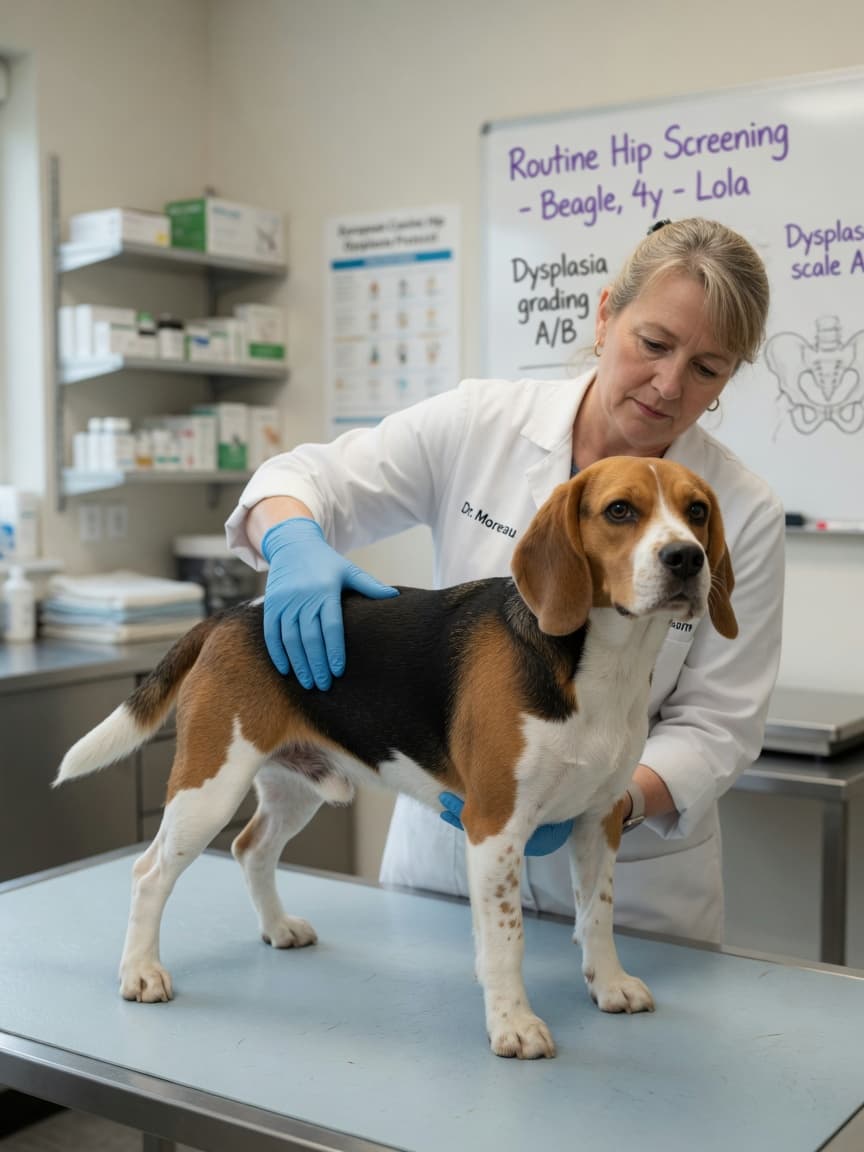
Hip dysplasia is a malformation of the hip joint that can cause pain and arthritis over time. The Kennel Club and British Veterinary Association (BVA) run a Hip Dysplasia Scheme under which dogs are X-rayed and their hips scored. Responsible breeders submit their breeding stock for hip scoring, and buyers should ask to see the results. The breed mean score for Beagles should be used as a reference when evaluating results.
Cherry Eye
Cherry eye is the prolapse of the third eyelid gland, causing a red, fleshy mass to appear in the corner of the eye. It is relatively common in Beagles and usually requires surgical correction. Left untreated, it can lead to chronic eye irritation and dry eye syndrome (keratoconjunctivitis sicca).
Primary Open Angle Glaucoma (POAG)
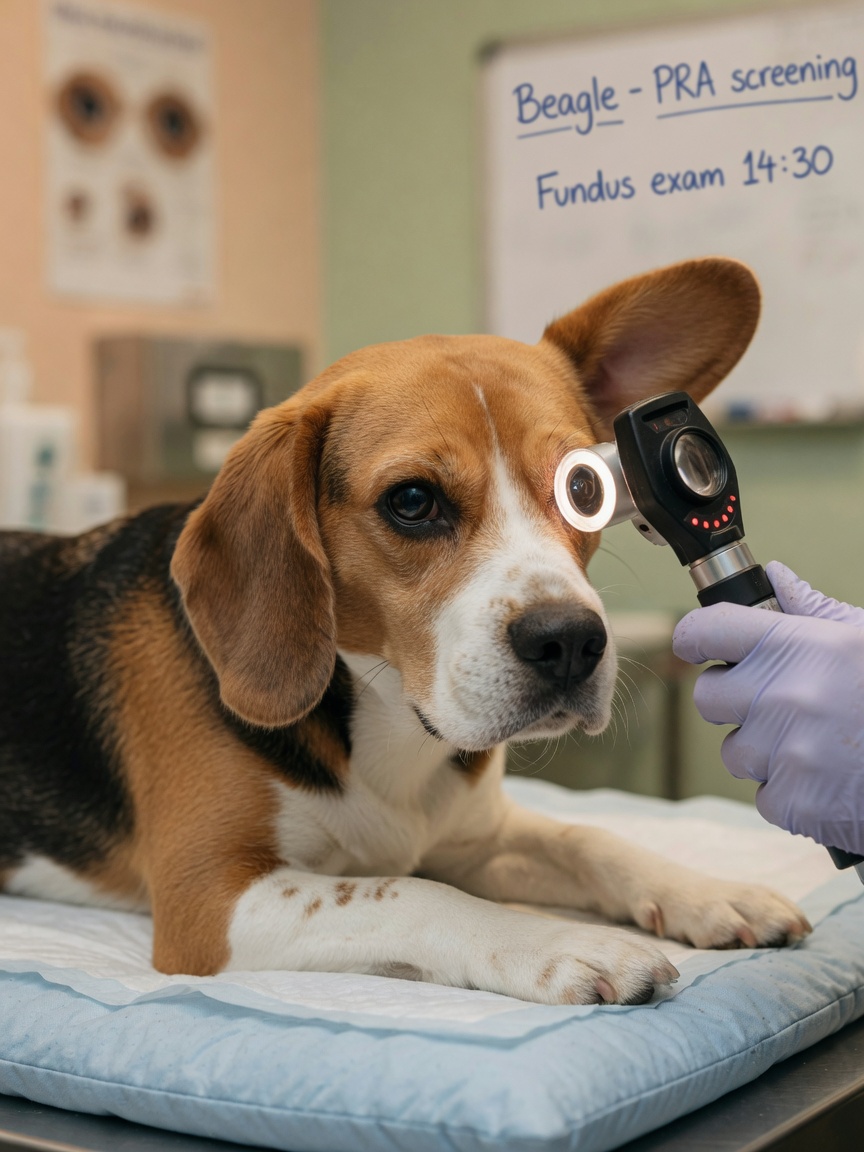
POAG is an inherited eye condition in Beagles in which fluid drainage from the eye is impaired, leading to increased intraocular pressure and eventual blindness. This condition can develop slowly and painlessly in its early stages, making routine eye examinations essential. The BVA and Kennel Club Eye Scheme provides annual eye testing for breeding dogs.
Factor VII Deficiency
Factor VII deficiency is a hereditary bleeding disorder in which the blood lacks sufficient clotting factor VII. Affected dogs may experience prolonged bleeding after injury or surgery. This is typically mild in Beagles, but it is important to inform your veterinarian before any surgical procedure.
Musladin-Lueke Syndrome (MLS)
MLS is a genetic connective tissue disorder unique to the Beagle breed. Affected dogs have tight, thickened skin and may walk on their toes due to joint stiffness. There is no treatment, but it is fully preventable through DNA testing of breeding stock.
BVA and Kennel Club Health Schemes
For Beagles bred or purchased in the UK or through KC-registered breeders, the following official schemes are relevant:
- BVA/KC Hip Dysplasia Scheme — hip scoring via X-ray for breeding dogs
- BVA/KC/ISDS Eye Scheme — annual eye examination by a specialist panellist to screen for inherited eye diseases including POAG
EU buyers should look for breeders affiliated with their national kennel club who follow equivalent protocols. Many European breeders also submit their dogs to the OFA (Orthopedic Foundation for Animals) database for additional transparency.
DNA Tests for Beagles
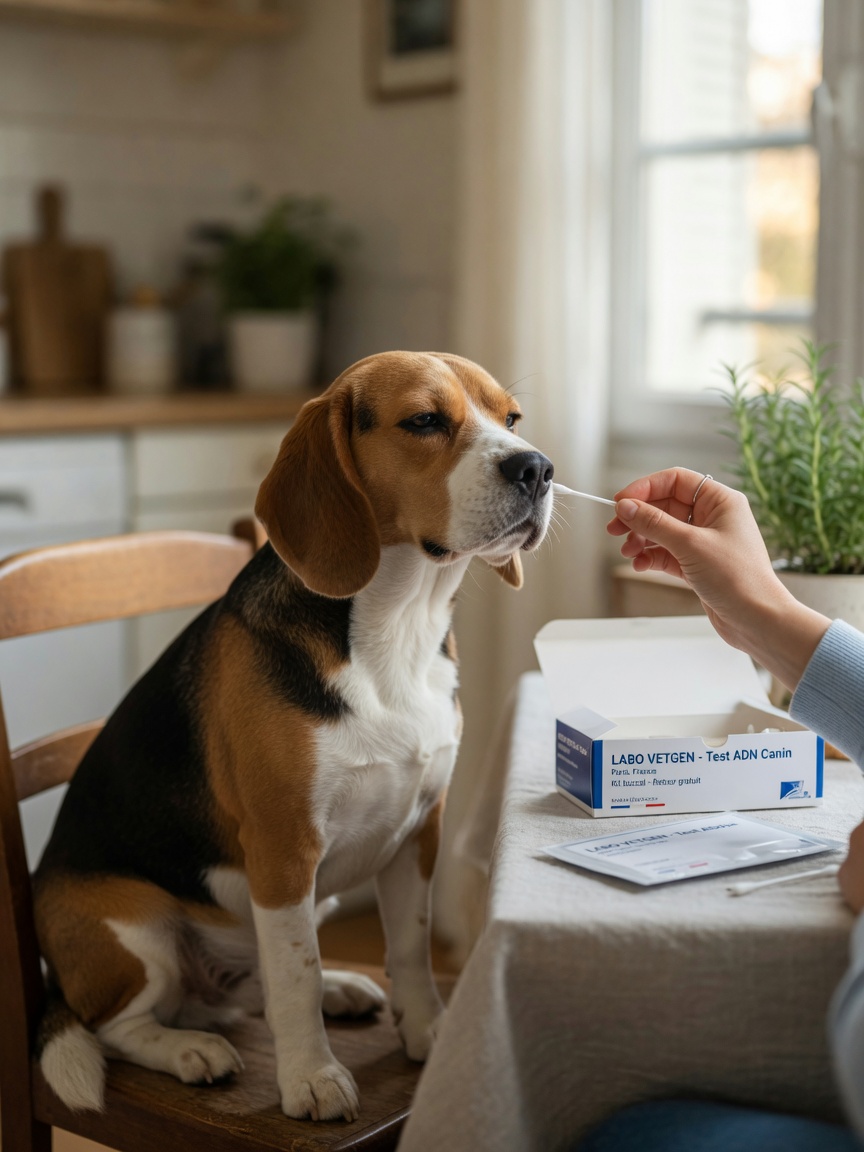
DNA testing allows breeders to identify carriers of genetic diseases before breeding, preventing affected puppies from being born. For Beagles, the following DNA tests are recommended:
- Musladin-Lueke Syndrome (MLS) — identifies clear, carrier, and affected status
- Factor VII Deficiency — identifies dogs at risk of bleeding disorder
- Primary Open Angle Glaucoma (POAG) — screens for the inherited form of glaucoma
Two reputable EU-based laboratories offering these tests are Laboklin (Germany) and Antagene (France). Both provide postal testing kits and are widely used by European breeders. When purchasing a puppy, ask to see DNA test certificates for both parents, confirming that at least one parent is clear for each condition.
Parasite Prevention: ESCCAP Guidelines
The European Scientific Counsel Companion Animal Parasites (ESCCAP) publishes evidence-based guidelines for parasite control across Europe. For Beagles, the key recommendations include:
- Tick prevention year-round, particularly in forested or rural areas where Beagles are commonly exercised
- Regular treatment for intestinal worms (roundworm, tapeworm, hookworm) — frequency depends on lifestyle and local risk
- Heartworm (Dirofilaria immitis) prevention if residing in or travelling to southern European regions
- Lungworm (Angiostrongylus vasorum) risk assessment, particularly for dogs that eat grass or molluscs
- Flea and louse control as part of a year-round integrated prevention programme
Always consult your EU vet for a parasite prevention plan tailored to your region and your dog's lifestyle.
Nutrition and Weight Management
Beagles are notoriously food-motivated and prone to obesity. Excess weight worsens joint conditions such as hip dysplasia and IVDD and shortens lifespan. Feed measured portions of a complete, life-stage-appropriate diet and resist the urge to overfeed. Zooplus stocks a wide range of dry and wet foods suitable for Beagles, with options for weight management and joint support formulas. Treats should make up no more than ten per cent of daily calorie intake.
Exercise and Mental Stimulation
As a scent hound, the Beagle requires both physical exercise and mental stimulation. At least one hour of off-lead exercise per day in a secure area is recommended. Beagles are escape artists and should never be walked off-lead in unsecured environments. Scent-based games, puzzle feeders, and nose work activities are excellent ways to satisfy their natural instincts and reduce problem behaviours such as howling and destructive chewing.
Routine Veterinary Care
Beagles benefit from annual health checks, routine dental care (tooth brushing two to three times per week), and regular ear inspections. Their long, floppy ears restrict airflow and create a warm, moist environment ideal for yeast and bacterial infections. Cleaning ears gently with a vet-approved solution every one to two weeks helps prevent chronic ear disease.
With the right preventive care, a health-tested lineage, and an active lifestyle, the Beagle is a wonderful long-lived companion capable of thriving well into its teens.