
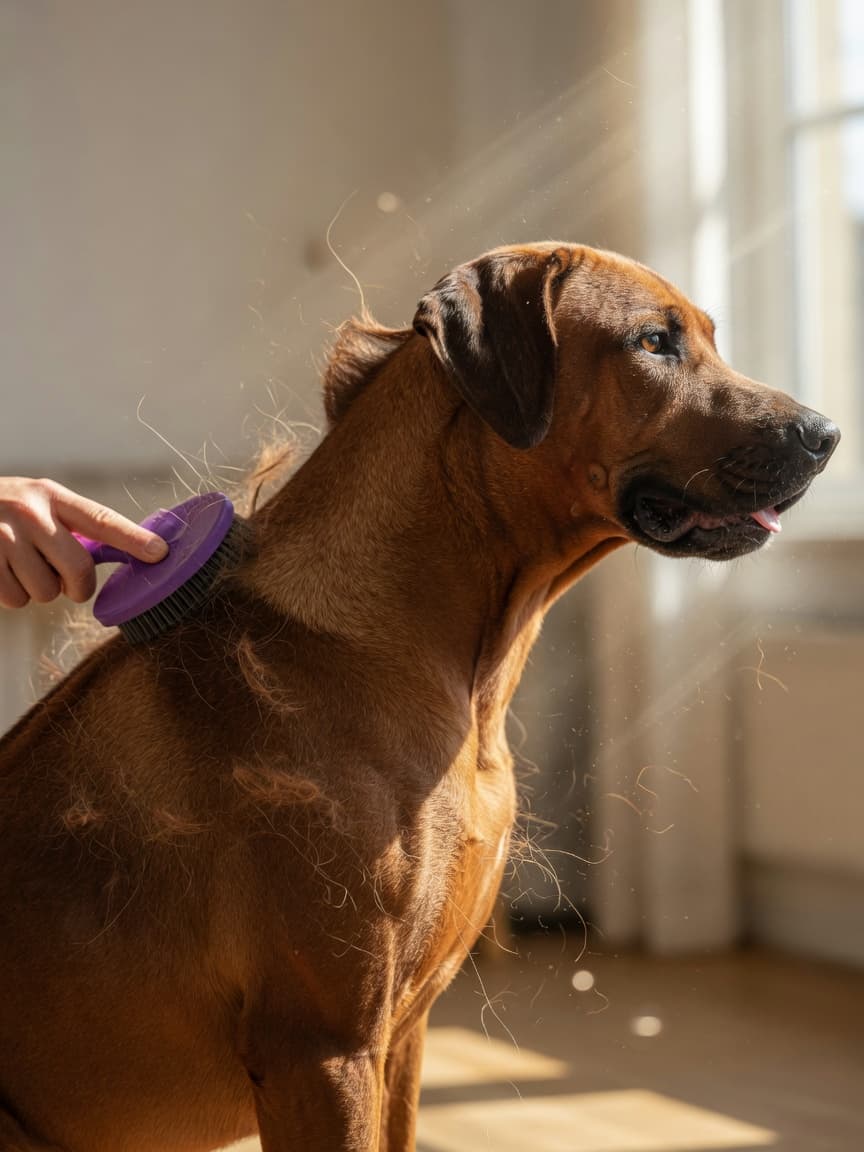
If you've fallen in love with the striking appearance of a Rhodesian Ridgeback, you may be wondering whether this powerful African breed is suitable for allergy sufferers. The straightforward answer is no—Rhodesian Ridgebacks are not hypoallergenic. In fact, they're moderate to heavy shedders, making them a challenging choice for people with dog allergies. Let's explore the facts about their shedding patterns and discover practical strategies to manage allergens in your home.
Understanding Hypoallergenic Dogs and Shedding
The term "hypoallergenic" is often misunderstood when discussing dog breeds. No dog is truly 100% hypoallergenic, as all dogs produce allergens through saliva, urine, and skin cells (dander). However, some breeds produce fewer allergens and shed minimally, making them more suitable for allergy sufferers.
Rhodesian Ridgebacks have short, dense coats that shed year-round, with significantly increased shedding during seasonal changes. Their coat type doesn't trap loose hair, meaning shed fur ends up on your furniture, clothing, and throughout your home—a major consideration for anyone sensitive to dog allergens.
The Shedding Cycle of Rhodesian Ridgebacks
- Year-round shedding: These dogs shed consistently throughout the year as part of their normal coat maintenance
- Seasonal "blowing": During spring and autumn, Ridgebacks experience heavier shedding periods when they shed their undercoat more profusely
- Coat characteristics: Their short, sleek coat lies flat against the body, offering no filtering effect for loose hairs
Interestingly, shedding intensity can vary between individual dogs based on genetics, nutrition, health status, and environmental factors. Some Ridgebacks may shed more heavily than others, so spending time with the specific dog before adoption is valuable.
Why Rhodesian Ridgebacks Aren't Ideal for Allergy Sufferers
Beyond shedding, several factors make this breed unsuitable for people with allergies:
- Dander production: The natural skin oils and dead skin cells they shed contain allergens regardless of coat type
- Saliva proteins: These dogs produce allergens through their saliva, which transfers to bedding and furniture
- Size and activity level: Their large size means they cover more ground in your home, spreading allergens more widely
- Exercise requirements: Their need for vigorous daily exercise often means more time spent in living spaces
Practical Strategies to Minimise Shedding and Allergens
If you're committed to having a Rhodesian Ridgeback despite allergies, these evidence-based strategies can help reduce allergen levels:
- Regular grooming: Brush your Ridgeback 3-4 times weekly during normal shedding, increasing to daily during seasonal blowing. This removes loose fur before it falls throughout your home
- Professional grooming: Consider monthly professional grooming sessions to manage shedding more effectively
- High-quality nutrition: A balanced diet rich in omega fatty acids supports healthy skin and coat, potentially reducing excessive shedding
- HEPA air filters: Install high-efficiency particulate air filters in your home to capture airborne dander
- Designated dog-free zones: Keep bedrooms and certain living areas off-limits to reduce allergen exposure whilst sleeping
- Washable furnishings: Use furniture covers and wash them regularly in hot water
- Regular cleaning: Vacuum with HEPA filters twice weekly and damp-mop hard floors to trap allergens
Key Takeaways
Rhodesian Ridgebacks are magnificent dogs, but they're genuinely not suitable for people with moderate to severe dog allergies. Their year-round shedding, combined with natural dander production, makes managing allergens difficult despite your best efforts.
If you're set on this breed, consult your allergy specialist and spend extended time with a Ridgeback before committing to adoption. For allergy sufferers seeking a canine companion, breeds like Poodles, Portuguese Water Dogs, or Bichon Frises are scientifically better choices due to their minimal shedding and lower dander production.
Whatever breed you choose, remember that consistent grooming, air filtration, and home maintenance are essential components of allergy management in any dog-owning household.
```