
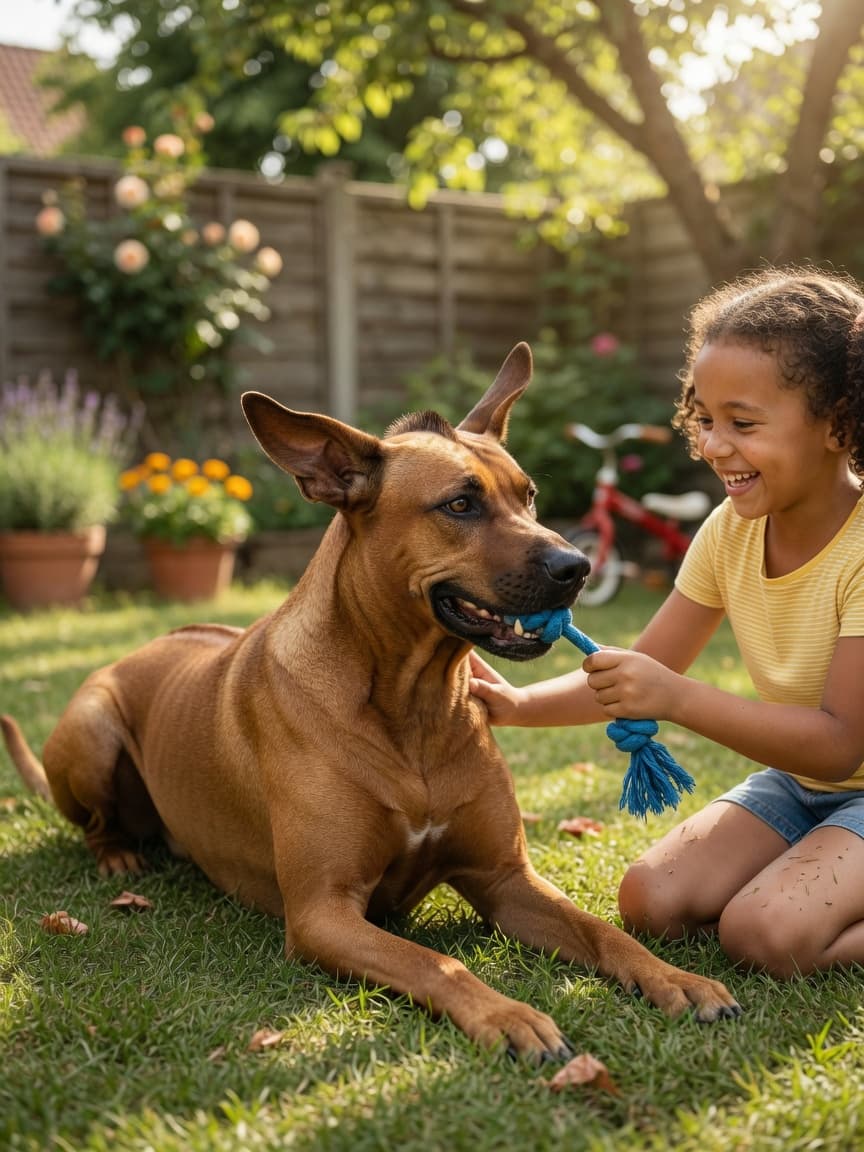
Rhodesian Ridgebacks are magnificent dogs with a proud history and striking appearance, but are they suitable for families with children? This question deserves careful consideration before bringing one of these powerful canines into your home. With proper understanding, training, and supervision, Rhodesian Ridgebacks can indeed be wonderful family companions. However, their independent nature and considerable size mean they're not ideal for every household. Let's explore what makes these African hunting dogs tick and how to determine if they're right for your family.
History and Temperament of Rhodesian Ridgebacks
Originally bred by farmers in Zimbabwe (formerly Rhodesia) to hunt lions and other large game, Rhodesian Ridgebacks were developed from indigenous African dogs crossed with European breeds. Their name comes from the distinctive ridge of hair running along their spine in the opposite direction from the rest of their coat.
These dogs are:
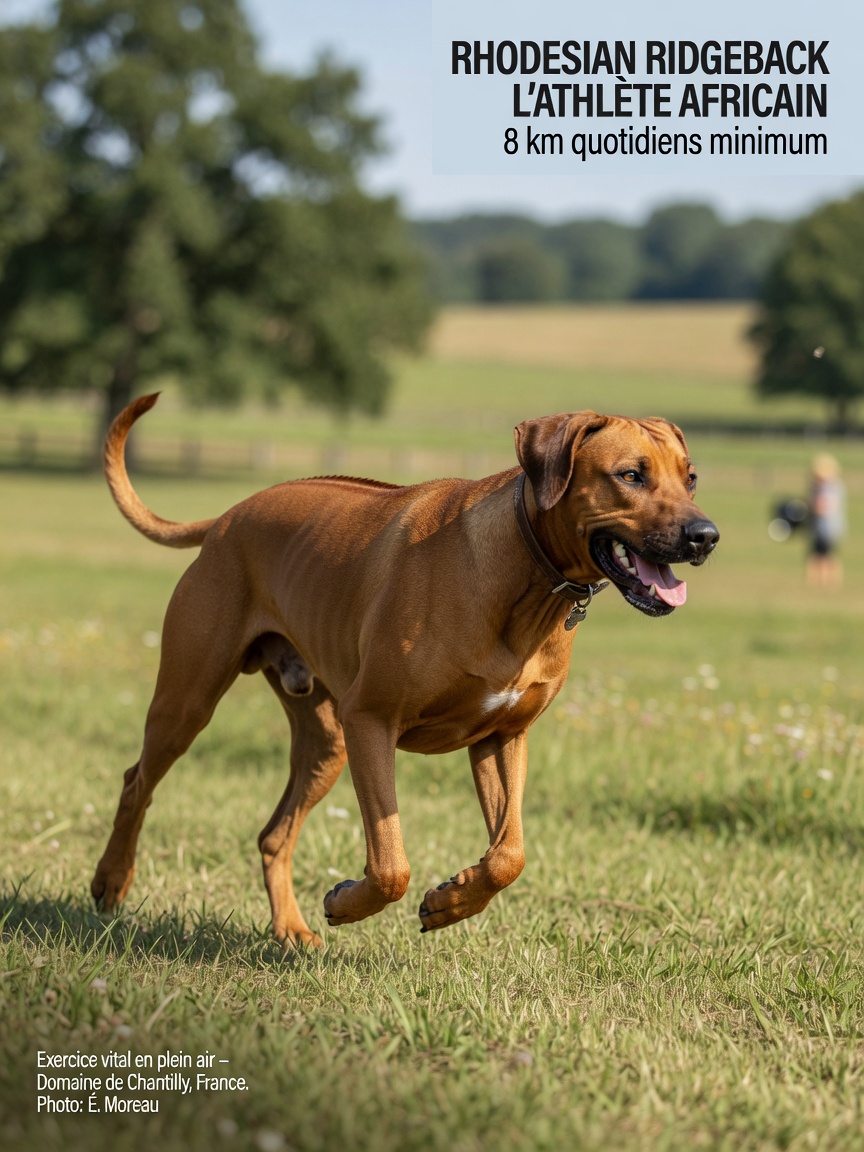
- Athletic and energetic, requiring significant daily exercise
- Intelligent but independent thinkers with a strong prey drive
- Loyal and affectionate towards their family members
- Naturally protective without being unnecessarily aggressive
- Weighing 30–36kg, making them medium to large-sized dogs
Understanding this heritage is crucial: Ridgebacks were bred to work independently and make decisions under pressure. This means they're not always naturally obedient like some breeds and can be stubborn during training.
Are They Good with Children?
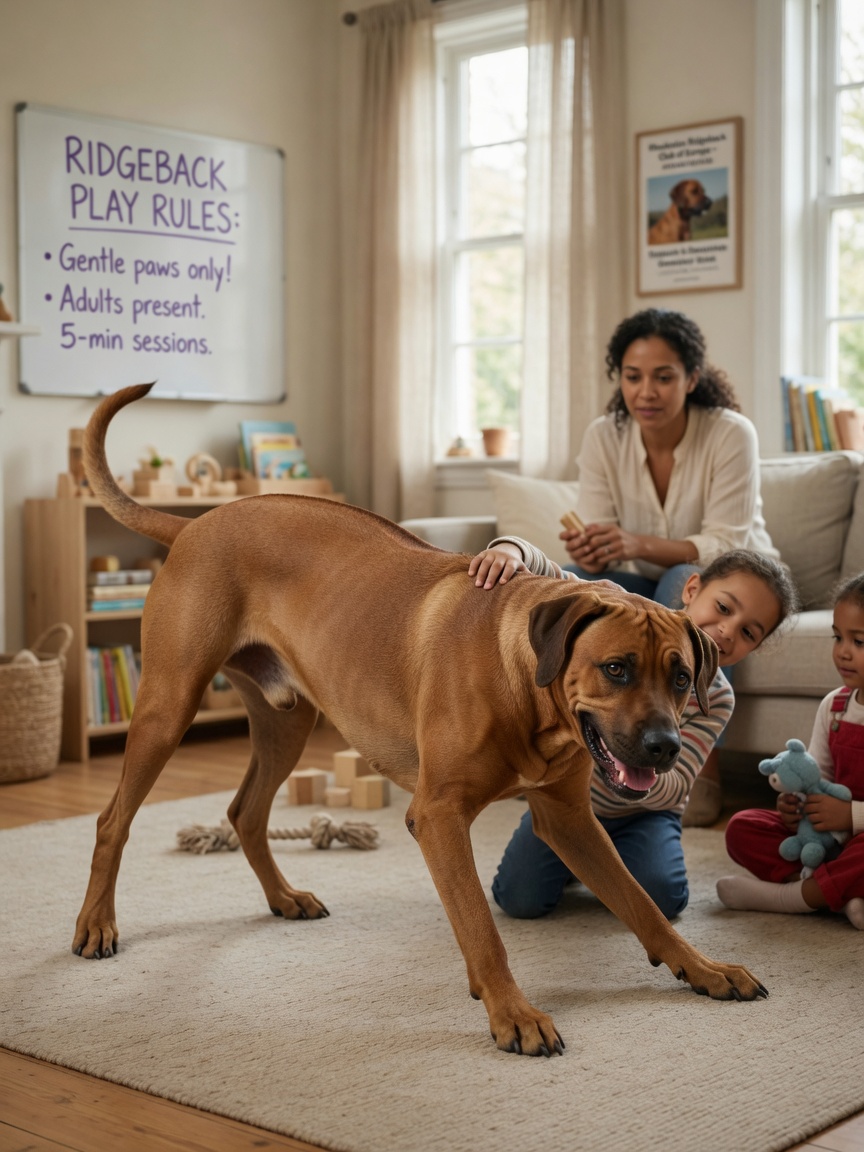
The honest answer is: it depends. Rhodesian Ridgebacks can be excellent with children when properly socialised from puppyhood and raised in a family environment. They're generally patient and tolerant, particularly with children they've grown up alongside.
However, several factors require careful consideration:
- Size and strength: An excited Ridgeback can accidentally knock over small children
- Energy levels: They need substantial daily exercise; bored Ridgebacks may become destructive
- Prey drive: Small, quick movements can trigger hunting instincts in unsocialised dogs
- Independence: They're less naturally obedient than breeds like Labradors or Golden Retrievers
Essential Tips for Families with Children
If you're considering a Rhodesian Ridgeback for your family, follow these practical guidelines:
- Early socialisation: Expose your puppy to children, other dogs, and various environments from eight weeks old
- Consistent training: Use positive reinforcement methods; these dogs respond poorly to harsh corrections
- Supervise interactions: Never leave a Ridgeback unsupervised with young children, especially during play
- Exercise daily: Aim for at least 90 minutes of exercise daily to prevent behavioural issues
- Teach children boundaries: Educate children on respectful dog handling—no tail pulling, ear grabbing, or food interference
- Establish rules: Create clear house rules about when and how children can interact with the dog
Age Considerations
The age of your children matters significantly. Ridgebacks generally work better with children aged 8 and older who can understand and follow instructions about dog handling. Families with toddlers may find this breed challenging due to their size and boisterous energy, particularly during the adolescent phase (6–18 months).
Frequently Asked Questions
Do Rhodesian Ridgebacks have high prey drive around small pets? Yes. Early socialisation with cats and small animals helps, but their hunting heritage means they're not ideal homes for rabbits, guinea pigs, or similar pets.
Are they aggressive dogs? Not inherently. However, they're naturally protective and require proper socialisation to distinguish between normal situations and genuine threats.
How trainable are they? Moderately trainable. They're intelligent but independent. Consistent, positive-based training works best; they quickly lose interest in repetitive or harsh instruction.
Key Takeaways
Rhodesian Ridgebacks can be wonderful family dogs for the right household. They excel in active families with older children, adequate space, and commitment to consistent training and exercise. They're not recommended for first-time dog owners or families with very young children. Before committing, honestly assess your family's lifestyle, experience with large dogs, and ability to provide the structure and activity this magnificent breed requires. With proper preparation and ongoing dedication, a Ridgeback can become a loyal, loving family member.