
Understanding What Your Pet Experiences in Theatre
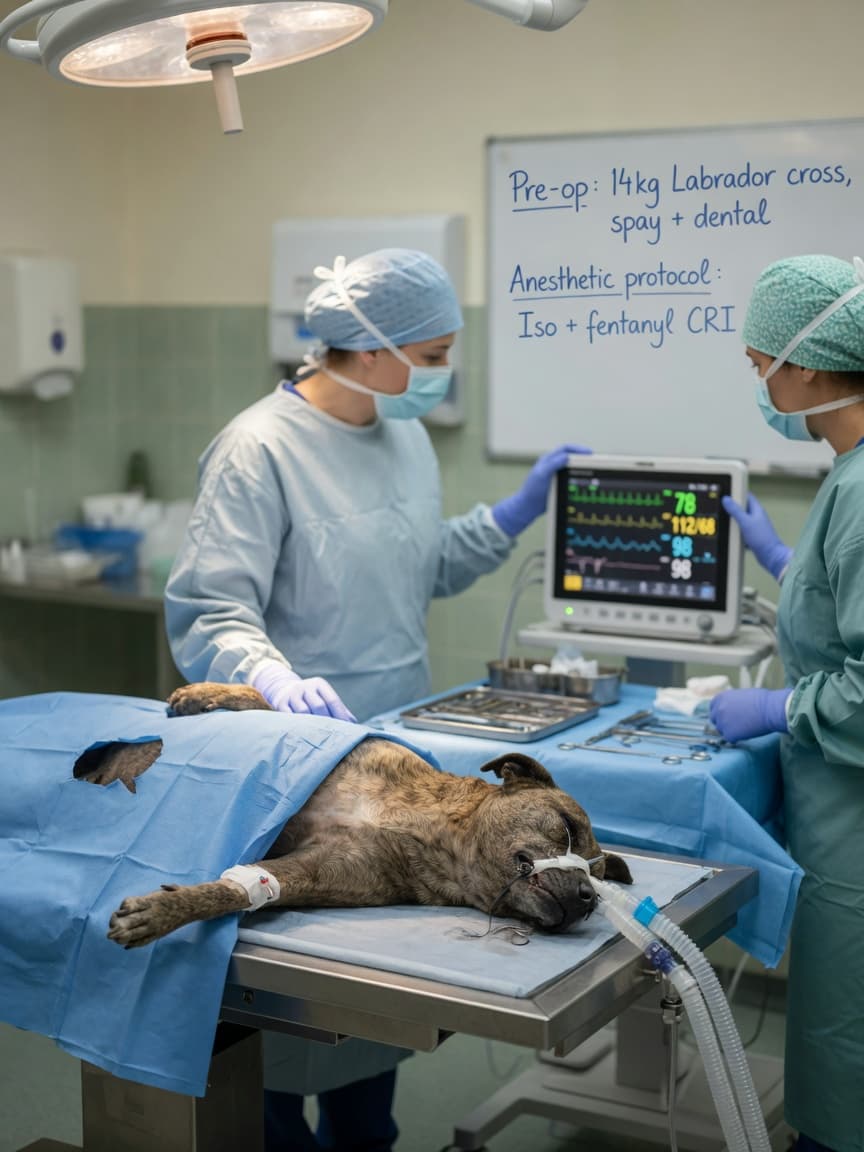
For many pet owners, handing their animal to a veterinary team and watching the door close behind them is one of the most anxious moments of pet ownership. Anaesthesia carries an element of genuine risk — but context matters enormously. In healthy animals undergoing routine procedures, the risk of a serious anaesthetic complication is estimated at less than one in two thousand. Understanding the process reduces fear and helps you prepare your pet effectively.
How Veterinary Anaesthesia Works
General anaesthesia in veterinary practice is a carefully managed state of unconsciousness that allows surgery to proceed without the patient experiencing pain or distress. It is achieved through a combination of agents that work at different points in the nervous system.
The three phases
- Pre-medication (pre-med): Sedative and analgesic drugs given before induction to calm the patient, reduce anxiety, provide baseline pain relief, and lower the doses of other agents required
- Induction: Usually administered intravenously; brings the animal to unconsciousness rapidly and allows placement of an endotracheal tube to maintain the airway
- Maintenance: Anaesthesia is sustained via inhalant gas delivered through the endotracheal tube, with a trained nurse or anaesthetist monitoring the patient continuously throughout
Monitoring during surgery includes heart rate, respiratory rate, blood pressure, oxygen saturation, and temperature. Modern veterinary anaesthesia is a sophisticated discipline — small animal practices routinely use the same monitoring equipment found in human surgical theatres.
Who Is at Higher Risk?
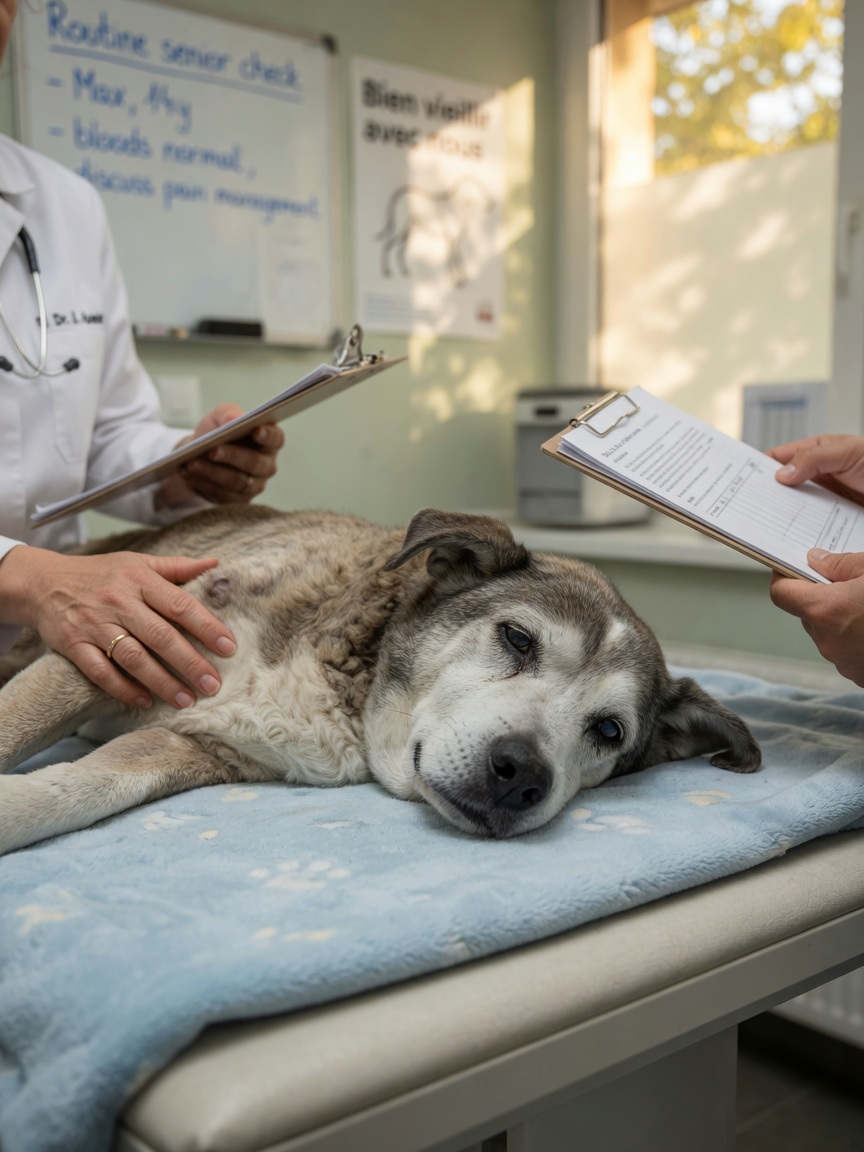
Anaesthetic risk is not uniform across all patients. Certain factors increase the likelihood of complications, and your vet will assess these during a pre-operative consultation.
Higher-risk categories
- Brachycephalic breeds (flat-faced dogs and cats such as Bulldogs, Pugs, Persian cats): Airway anatomy creates specific challenges before, during, and immediately after anaesthesia
- Elderly patients: Organ function — particularly hepatic and renal — affects how anaesthetic drugs are processed and cleared
- Animals with pre-existing conditions: Heart disease, liver or kidney disease, respiratory problems, and obesity all increase risk
- Very young patients: Neonatal and paediatric animals have reduced physiological reserves
- Emergency cases: Animals that are systemically unwell, shocked, or dehydrated face substantially higher risk than stable elective patients
For higher-risk patients, your vet may recommend pre-operative blood work, X-rays, or an echocardiogram to assess fitness for anaesthesia and tailor the protocol accordingly.
Pre-Operative Preparation: What You Need to Do
Your clinic will provide specific instructions ahead of your pet's procedure. Following these precisely is not optional — it directly affects safety.
Fasting
Fasting before anaesthesia prevents the aspiration of stomach contents into the lungs during induction, a potentially fatal complication. Standard guidance for adult dogs and cats is withholding food for eight to twelve hours prior to the procedure. Water is typically permitted until a shorter interval before admission. Puppies, kittens, and diabetic animals have different fasting requirements — your vet will advise specifically.
Medication management
Inform your vet of every medication, supplement, or herbal product your pet receives. Some interact with anaesthetic agents; others need to be continued on the morning of surgery. Never assume — always check.
On the day
- Keep your pet calm during transport; stress elevates heart rate and can affect how pre-medication acts
- Arrive at the time your clinic requests, not earlier or later
- Be honest during admission about any changes in your pet's health since the procedure was booked — a cough, loose stools, or reduced appetite can affect anaesthetic risk and should be disclosed
Recovery from Anaesthesia
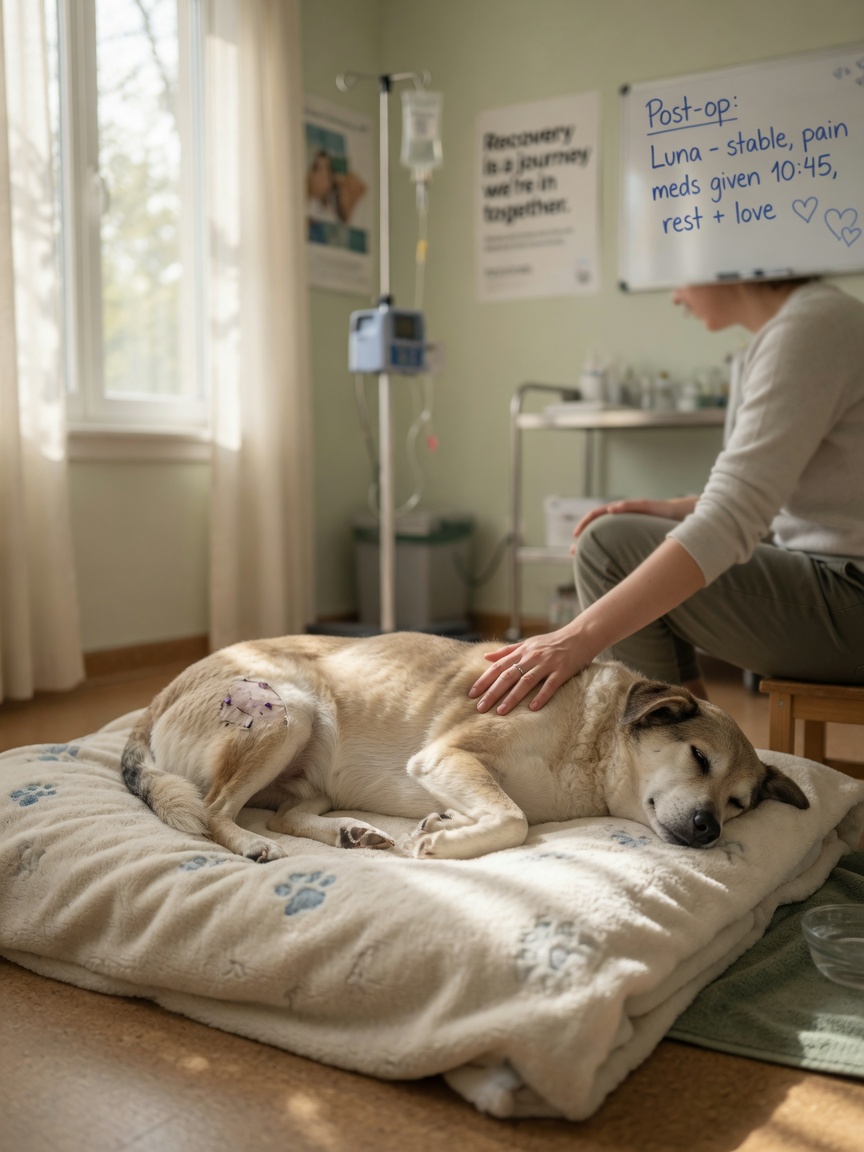
The period immediately following a procedure — as the maintenance gas is withdrawn and your pet returns to consciousness — is a monitored phase in the clinic. Animals are typically kept in recovery until they can maintain their own airway, swallow, and respond to stimulation.
At home, residual anaesthetic effects may persist for 12 to 24 hours. Mild incoordination, prolonged sleeping, reduced appetite, and occasional vocalisation are all within the expected range. A quiet, warm environment with limited stimulation supports smooth recovery.
Always follow your vet's discharge instructions regarding feeding, medication, and activity restriction, and contact the clinic if you have any concerns during the first 24 hours — most practices retain an emergency contact number for post-operative patients.
Questions Worth Asking Before Surgery
- Will a dedicated nurse monitor my pet throughout the procedure?
- What monitoring equipment is used during anaesthesia?
- Is pre-operative blood testing recommended for my pet specifically?
- What is the protocol if a complication arises during surgery?
- Who do I contact if I am concerned after taking my pet home?
Anaesthesia carries inherent risk, as any medical procedure does — but it is managed, monitored, and continually refined risk. A well-prepared patient, an informed owner, and a skilled veterinary team make elective procedures as safe as modern medicine allows.