
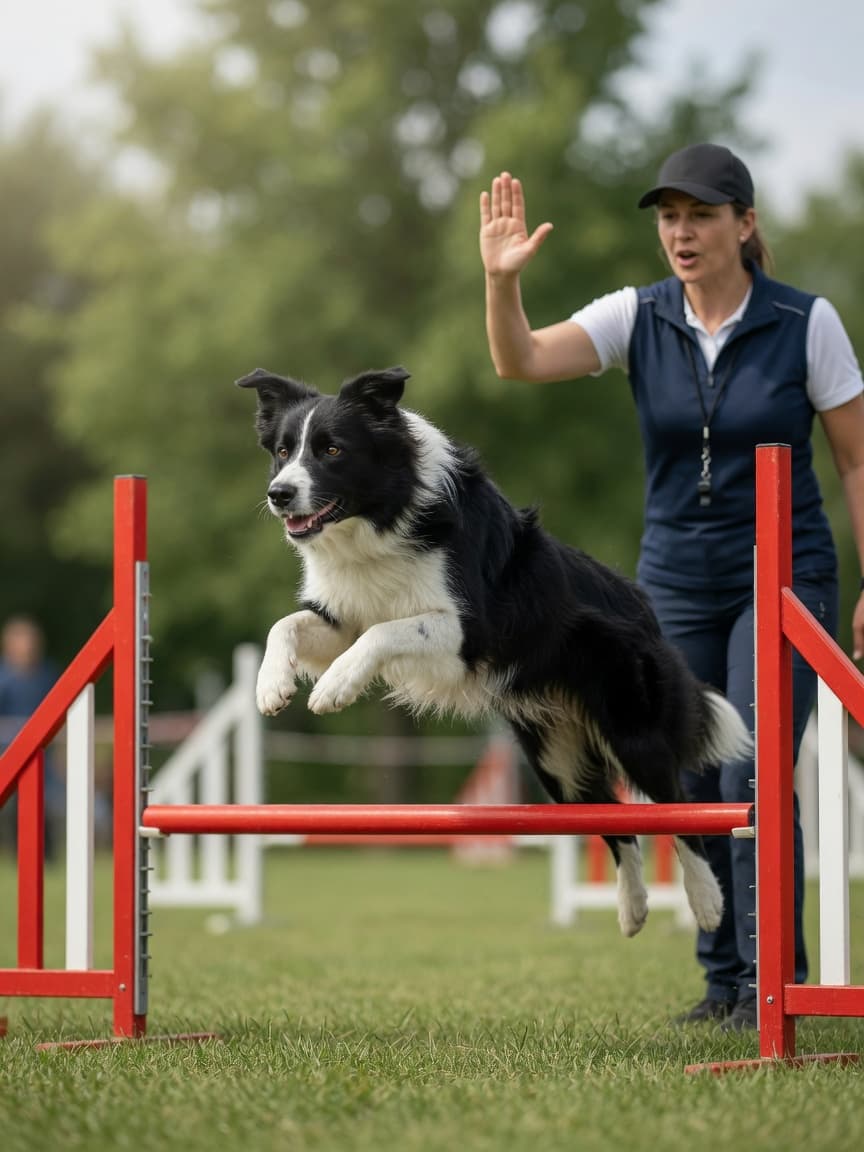
Why Agility Produces Remarkably Well-Rounded Dogs
Walk into any agility class and you will see dogs that are focused, responsive, and genuinely joyful in their work. Agility — navigating a timed obstacle course of jumps, tunnels, weave poles, contact equipment, and more — demands physical coordination, mental engagement, and a close working relationship between dog and handler. It is arguably the most complete canine activity available, and the benefits extend well beyond competition.
Health and Behavioural Benefits
Physical Conditioning
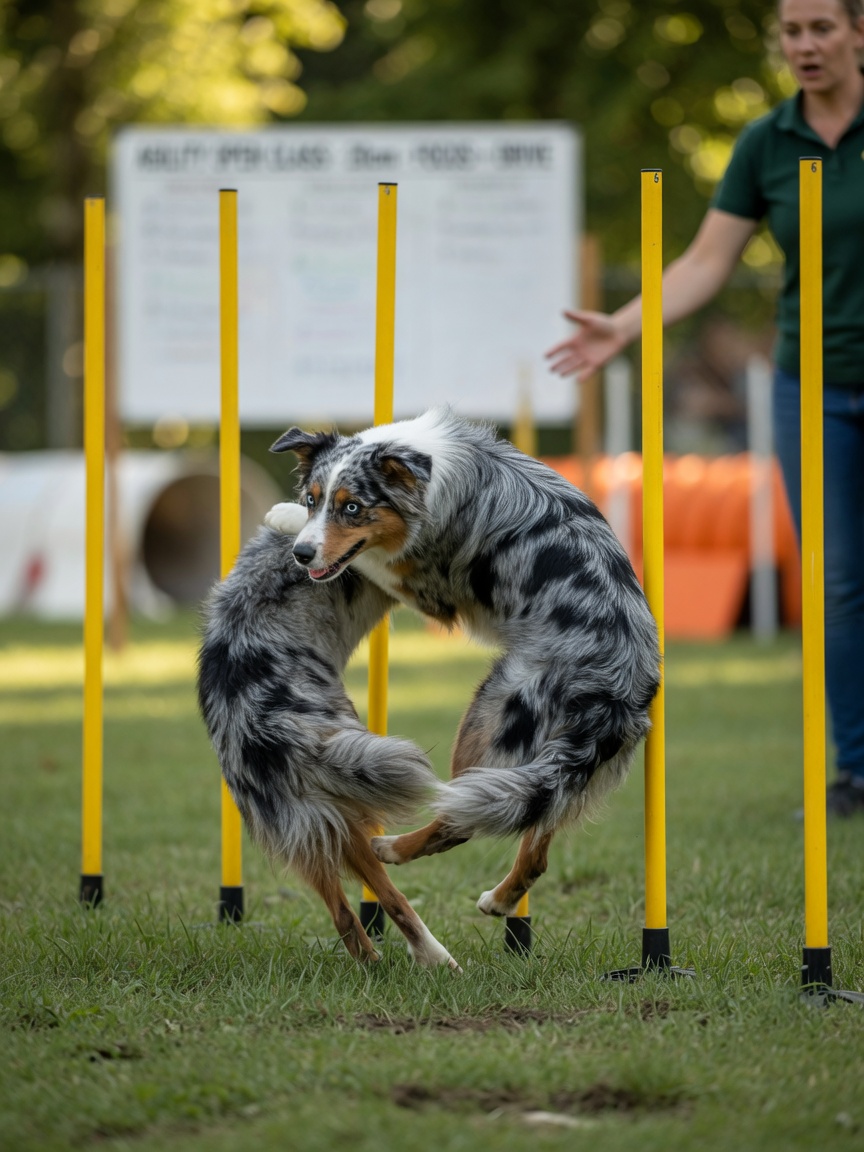
Agility works virtually every muscle group. The explosive acceleration required for jumps develops fast-twitch muscle fibres. Weave poles demand lateral flexibility and core stability. Contact equipment — A-frames, dog walks, and see-saws — requires controlled movement and proprioceptive awareness. Regular training produces lean, well-muscled dogs with excellent body awareness and balance, which also reduces the risk of everyday injury.
Mental Stimulation
Learning sequences of obstacles, responding to handler cues, and problem-solving in a novel environment taxes a dog cognitively in a way that few other activities match. Many owners report that an hour of agility training produces a dog that is calmer and more settled than after two hours of ordinary exercise. The mental component is at least as valuable as the physical.
Behavioural Improvement
Dogs with frustration, reactivity, or destructive tendencies frequently improve markedly through agility. The sport channels drive and energy constructively, builds confidence in anxious dogs, and strengthens the dog-handler relationship in a way that translates to better behaviour in general life. Focus and impulse control, both trained deliberately in agility, carry over into everyday contexts.
Which Breeds Suit Agility Best
Almost any dog of appropriate size and health can participate in agility at a recreational level. However, certain breeds have a natural aptitude and drive for the sport. Border Collies dominate competitive agility due to their extraordinary responsiveness, focus, and athleticism. Australian Shepherds, Shetland Sheepdogs, Belgian Malinois, and Jack Russell Terriers also excel. Spaniels, Poodles, and mixed-breed dogs frequently perform at a high level.
Larger breeds can participate successfully, though their jump heights are graded according to their withers height in most competitive frameworks, and the impact forces on their joints deserve careful management. Very heavy breeds, brachycephalic dogs (those with flat faces), and dogs with existing orthopaedic conditions require a more conservative approach — consult your vet before beginning. The sport is adaptable, and good coaches understand how to modify training for individual dogs.
Age Considerations
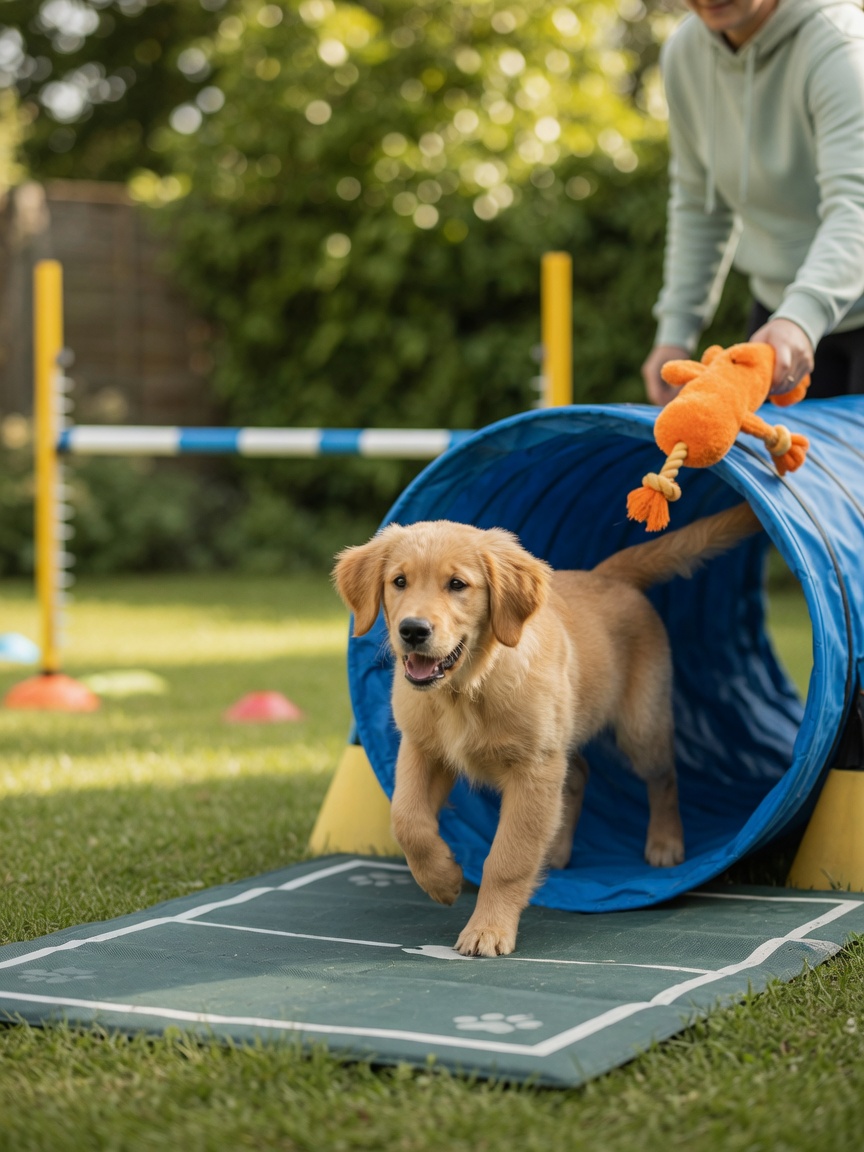
Puppies can begin foundation agility work — flatwork, targeting, tunnel introductions, and body awareness exercises — from a young age. However, full-height jumping and high-impact contact equipment should be delayed until growth plates have closed. This typically occurs between twelve and eighteen months of age, though larger breeds may need longer. Working on impact equipment with a young dog risks permanent joint damage that will limit the dog's athletic life.
Older dogs can continue in the sport with appropriate modifications: reduced jump heights, fewer repetitions, and extended warm-up time. A well-conditioned older dog that has trained throughout its life often remains competitive or enjoys recreational agility well into double figures.
Getting Started
Finding a Club or Class
The best entry point is a recognised agility club with experienced instructors. National kennel clubs in most countries maintain registers of affiliated clubs. Look for classes that emphasise positive reinforcement, allow dogs to progress at their own pace, and do not push full courses before foundation skills are solid. A good instructor will spend considerable time on flatwork and handler skills before introducing obstacles at all.
What to Expect Early On
Initial sessions focus on building drive for play and reward, body awareness exercises, and basic obstacle introductions at low heights and low speed. The weave poles, notoriously one of the most complex skills in agility, may take months to train properly. Patience in the foundation stage produces a dog that is far more reliable and confident on a full course than one rushed through early stages.
Equipment at Home
Practising at home between classes accelerates progress, and entry-level agility equipment is relatively affordable. A single tunnel, a jump with adjustable height, and a target mat are sufficient for productive home sessions. Avoid practising full sequences at home without instructor guidance in the early stages — reinforcing incorrect technique is counterproductive.
Injury Prevention and Physical Maintenance
Agility places demands on the musculoskeletal system, and responsible handlers manage this proactively. Always warm up before training — three to five minutes of brisk lead walking followed by gentle movement — and cool down afterwards. Learn to recognise the early signs of muscle soreness or reluctance to work: a dog that suddenly slows on the dog walk or drops bars consistently may be telling you something.
- Maintain a healthy bodyweight — excess weight increases impact forces on joints significantly.
- Train on appropriate surfaces — wet grass increases slip risk; hard surfaces increase impact.
- Take rest days — muscle repair and learning consolidation both happen during recovery.
- Consider periodic assessment by a veterinary physiotherapist, particularly for dogs training frequently or competing.
- Do not train through lameness or stiffness — consult your vet promptly rather than hoping it resolves.
Agility is a sport that rewards investment in a dog's overall physical condition. Dogs that are fit, flexible, and regularly assessed by a vet and physiotherapist not only perform better but enjoy longer athletic careers. Start properly, train patiently, and agility will reward both you and your dog for years to come.