
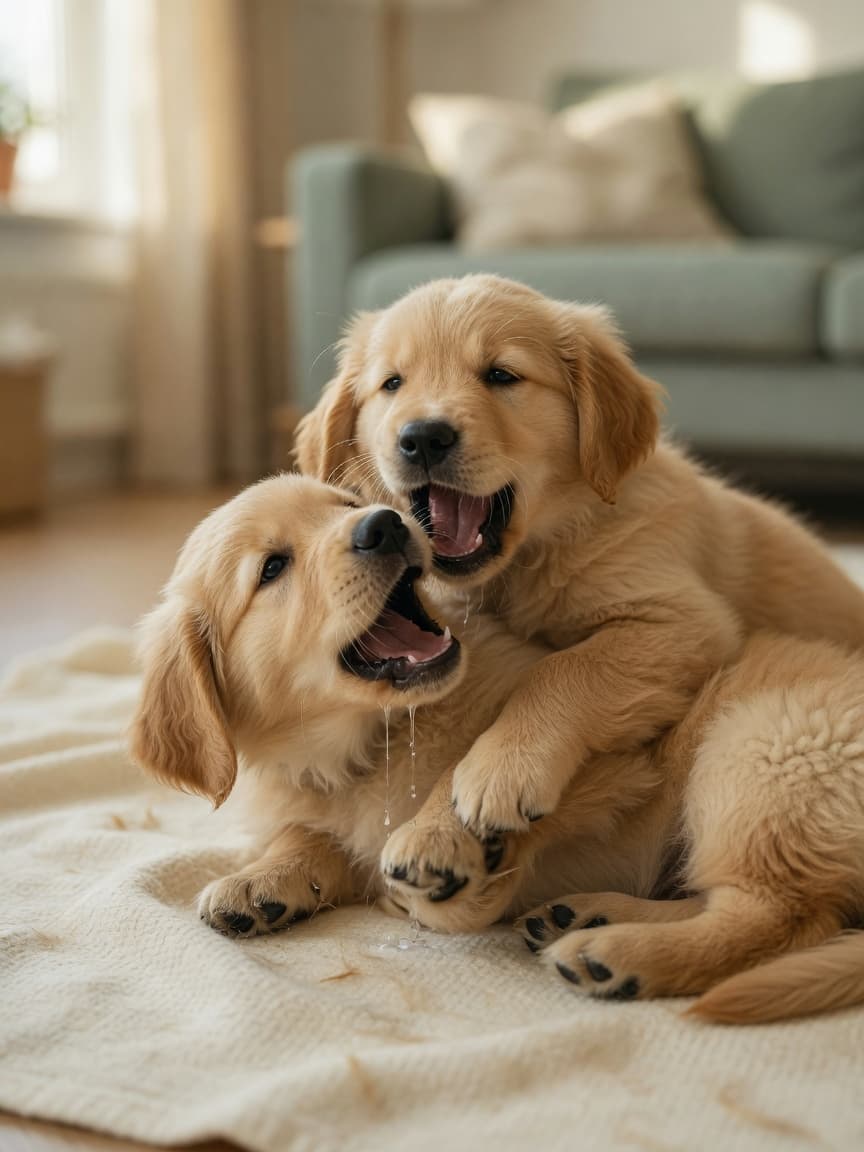
Watching your puppies nip, wrestle, and tumble together might seem like harmless fun, but understanding the difference between play-fighting and genuine aggression is crucial for their safety and development. Whilst some puppy roughhousing is perfectly normal—even beneficial—for their social development, it can quickly escalate into problematic behaviour if not properly managed. Whether you're raising littermates, introducing new puppies, or dealing with increasingly intense play sessions, this guide will help you recognise warning signs and implement effective strategies to maintain harmony in your home.
Understanding Normal Puppy Play Versus Aggression
Most puppies engage in play-fighting as part of their natural development. During these interactions, they learn bite inhibition, social boundaries, and communication skills. Normal play typically involves:
- Taking turns being "on top" during wrestling
- Frequent play bows (front legs stretched forward, bottom in the air)
- Self-imposed breaks to catch their breath
- Soft facial expressions and loose body movements
- Voluntary separation to play with toys or explore
Genuine aggression, however, shows stiff body posture, continuous growling, reluctance to stop, and yelping from one puppy. If you notice one puppy consistently backing away or avoiding the other, intervention is needed.
Early Intervention Techniques
Prevention is far more effective than correction. Start building positive associations between your puppies from day one:
- Separate and rotate: Don't allow constant unsupervised interaction. Puppies need individual attention, rest periods, and separate spaces to decompress.
- Redirect energy: When play becomes too rough, redirect to appropriate toys or activities before it escalates.
- Reward calm behaviour: Praise and treat puppies when they settle near each other peacefully.
- Manage resources: Feed puppies separately and remove high-value toys during group time to prevent resource guarding.
Creating a Structured Environment
Structure reduces conflict significantly. Establish a routine that includes designated play times, meal times, and rest periods. Puppies thrive on predictability, which naturally decreases stress and frustration-based fighting.
Provide adequate space for each puppy to retreat safely. Crate training offers secure individual dens where puppies can rest without fear of intrusion. During supervised play sessions, use controlled environments like gardens or playpen areas where you can intervene easily if needed.
Training and Socialisation
Proper training lays the foundation for good behaviour:
- Teach reliable "sit," "stay," and "leave it" commands to create obedience during tense moments
- Socialise each puppy individually with different dogs, people, and environments to build confidence
- Practice impulse control exercises like waiting for permission before eating or playing
- Consider professional puppy classes where trained instructors monitor interactions
When to Seek Professional Help
Consult a certified dog trainer or behaviourist if:
- Fighting becomes increasingly frequent or intense
- One puppy consistently exhibits fear or avoidance
- You notice signs of injury or excessive stress
- Aggression emerges around food, toys, or people
Early professional intervention can prevent serious behavioural problems from developing.
Key Takeaways
Stopping puppy fighting begins with distinguishing play from aggression. Implement consistent supervision, environmental management, and positive reinforcement while maintaining a structured routine. Remember that some play-fighting is developmentally appropriate—your goal is ensuring it remains safe and controlled. Through patience, training, and proper socialisation, your puppies will learn to interact respectfully and become well-adjusted, harmonious companions.