
3D-Printed Prosthetics for Animals: Where the Technology Is Now
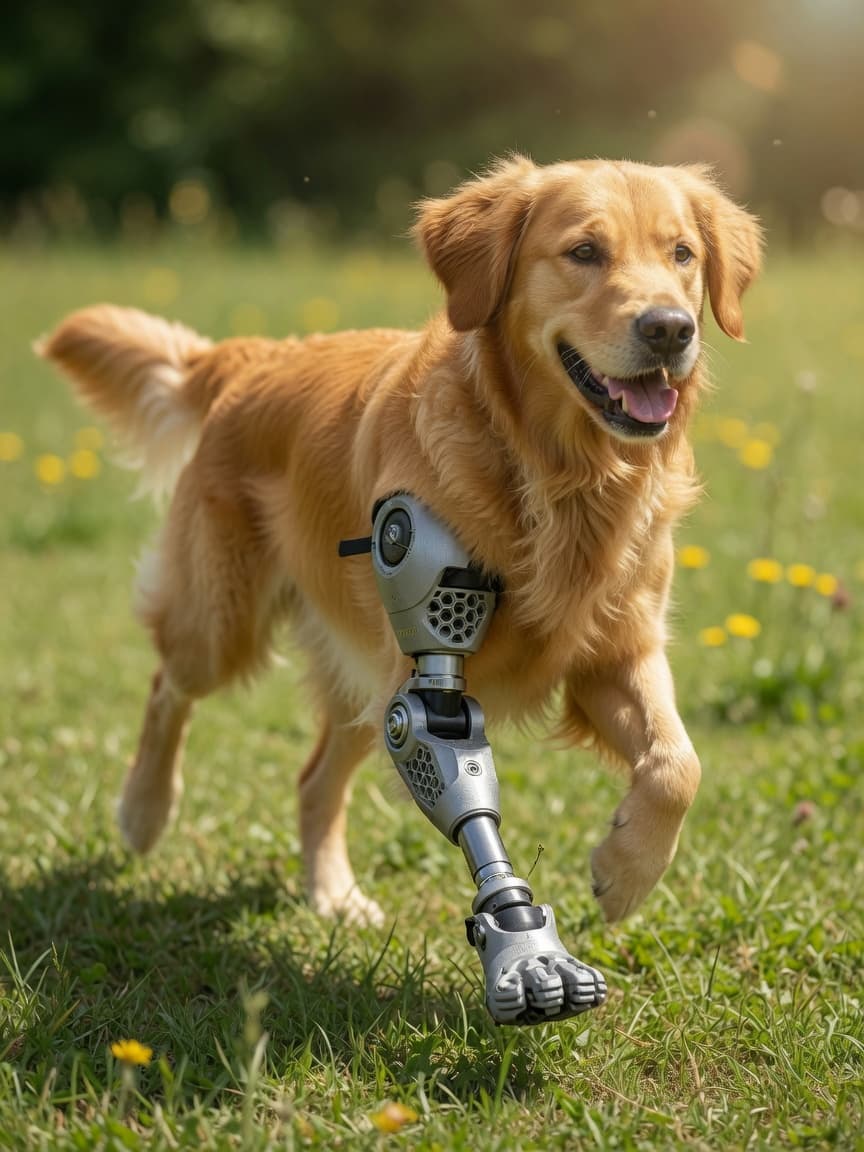
A dog running confidently on a printed titanium leg. A duck swimming with a custom-fitted beak. A tortoise navigating its enclosure on a wheeled replacement shell support. These are not hypothetical scenarios — they are documented cases from the past decade that have demonstrated what 3D printing technology can make possible for animals who have lost limbs or suffered severe anatomical damage. But moving from remarkable individual cases to reliable, accessible veterinary care is a more complex journey than the headlines often suggest.
Why 3D Printing Is Particularly Well-Suited to Prosthetics
Traditional prosthetic manufacturing requires skilled craftspeople, expensive moulds, and multiple fitting sessions. The process can take weeks and is not easily adapted if the animal's anatomy changes — which matters enormously in growing animals or those recovering from surgery where swelling alters limb shape.
3D printing offers several fundamental advantages in this context. Digital files can be adjusted rapidly between printing iterations, meaning a poorly fitting device can be modified and reprinted in hours rather than weeks. Materials can be varied to balance rigidity and flexibility precisely where needed. Costs per unit are lower than traditional manufacturing once a design is established. And critically, designs can be shared between facilities globally, meaning a solution developed for a Labrador in one country can be adapted for a similar dog elsewhere without starting from scratch.
Current Clinical Applications
Canine limb prosthetics represent the most clinically developed area. Dogs with below-the-knee amputations — typically following trauma, cancer removal, or severe infection — are the most successful candidates. The anatomy of the canine distal limb allows for a relatively stable residual limb that can bear weight through a fitted socket.
Devices are typically made from polylactic acid (PLA), nylon, or thermoplastic polyurethane, sometimes reinforced with carbon fibre. The fitting process usually involves a three-dimensional scan of the residual limb, computer-aided design of the prosthetic socket, printing, trial fitting, adjustment, and final fabrication — a process that may require two to four appointments spread over several weeks.
Above-the-knee amputations in dogs are significantly more challenging to fit with functional prosthetics due to the difficulty of controlling rotation at the hip, and wheelchairs or carts remain the more practical solution for many of these animals.
Cats present a different challenge. Their lighter body weight makes prosthetic fitting theoretically easier, but their tendency to groom prosthetic devices obsessively and their sensitivity to foreign objects on their bodies has made acceptance rates lower than in dogs. Research groups have experimented with osseointegrated implants — where the prosthetic is anchored directly into the bone — to improve stability and reduce the interface problems that arise with socket-based fittings.
Exotic and Farm Animals
Some of the most publicised cases of animal prosthetics have involved non-companion species, and these illustrate both the creativity and the limitations of the technology. Birds — particularly parrots, toucans, and raptors — have received printed beak prosthetics following injury, enabling them to feed independently. These cases are technically impressive but require intensive individual fitting and ongoing monitoring.
Marine animals, including sea turtles with damaged flippers, have been fitted with prosthetic devices in rescue and rehabilitation settings. The aquatic environment creates unique engineering challenges around buoyancy, drag, and material degradation, and most current designs are considered experimental rather than clinically established.
Farm animals, including cattle and goats with digit amputations, have received printed limb supports in agricultural settings where mobility is essential to animal welfare. The economic calculus is different from companion animal practice, but the underlying technology is the same.
Barriers to Wider Adoption
Despite the progress, printed prosthetics are not yet a routine part of veterinary care, and several real barriers explain why.
- Fitting expertise — designing and fitting a prosthetic requires skill that combines veterinary knowledge, biomechanics, and digital design. Few practitioners have all three, and there is currently no formal credentialing pathway in most countries
- Animal compliance — many animals do not tolerate prosthetics and will remove or damage them. Repeated retraining is time-consuming and not always successful
- Durability — printed materials degrade with use, particularly in active dogs. Devices may need replacing every few months, which affects the cost-benefit calculation
- Regulatory frameworks — in several jurisdictions, veterinary prosthetics occupy an unclear regulatory space, which can affect what practitioners are permitted to offer and whether insurers will cover the treatment
What the Research Pipeline Looks Like
Several academic veterinary programmes are working on improving prosthetic design through better biomechanical modelling, using motion capture technology to assess how animals compensate for limb loss and designing devices that address these compensatory patterns rather than simply replacing the missing structure.
Soft robotics — flexible, actuated devices that can move with the animal rather than acting as a rigid extension — represents a frontier area with potential for species where rigid prosthetics have failed. Integration of sensory feedback, allowing the animal to sense ground contact through the device, is being explored in experimental settings.
What This Means for Pet Owners
- If your pet has undergone amputation, ask your vet for a referral to a veterinary rehabilitation specialist who has experience with prosthetic fitting
- Manage expectations: a prosthetic is most likely to succeed in a young, otherwise healthy animal with a below-the-knee amputation who receives consistent rehabilitation support
- Check your pet insurance policy — some providers will cover prosthetic devices, but this varies widely
- Consider the full rehabilitation programme, not just the device itself — physiotherapy and behavioural conditioning are as important as the hardware
The technology for printing animal prosthetics exists today and is producing real improvements in quality of life for individual animals. The challenge for the coming decade is translating that capability into consistent, accessible clinical care — and that is as much a challenge of training, regulation, and integration as it is of engineering.