
Warum lahmt mein Hund? Ursachen & wann zum Tierarzt
Aktualisiert: Juni 2026
Den eigenen Hund lahmen zu sehen, bricht einem das Herz, und herauszufinden, warum, ist der erste Schritt, um ihm zu helfen. Die Ursache einer Lahmheit lässt sich häufig danach eingrenzen, welches Bein betroffen ist und wie sich die Lahmheit entwickelt hat – plötzlich nach einer Verletzung oder allmählich im Laufe der Zeit. Wenn Sie die häufigsten Ursachen kennen, können Sie im entscheidenden Moment schnell handeln und chronische Erkrankungen wirksam managen. Das sollten Sie wissen.
Vorderbein vs. Hinterbein: Warum das wichtig ist
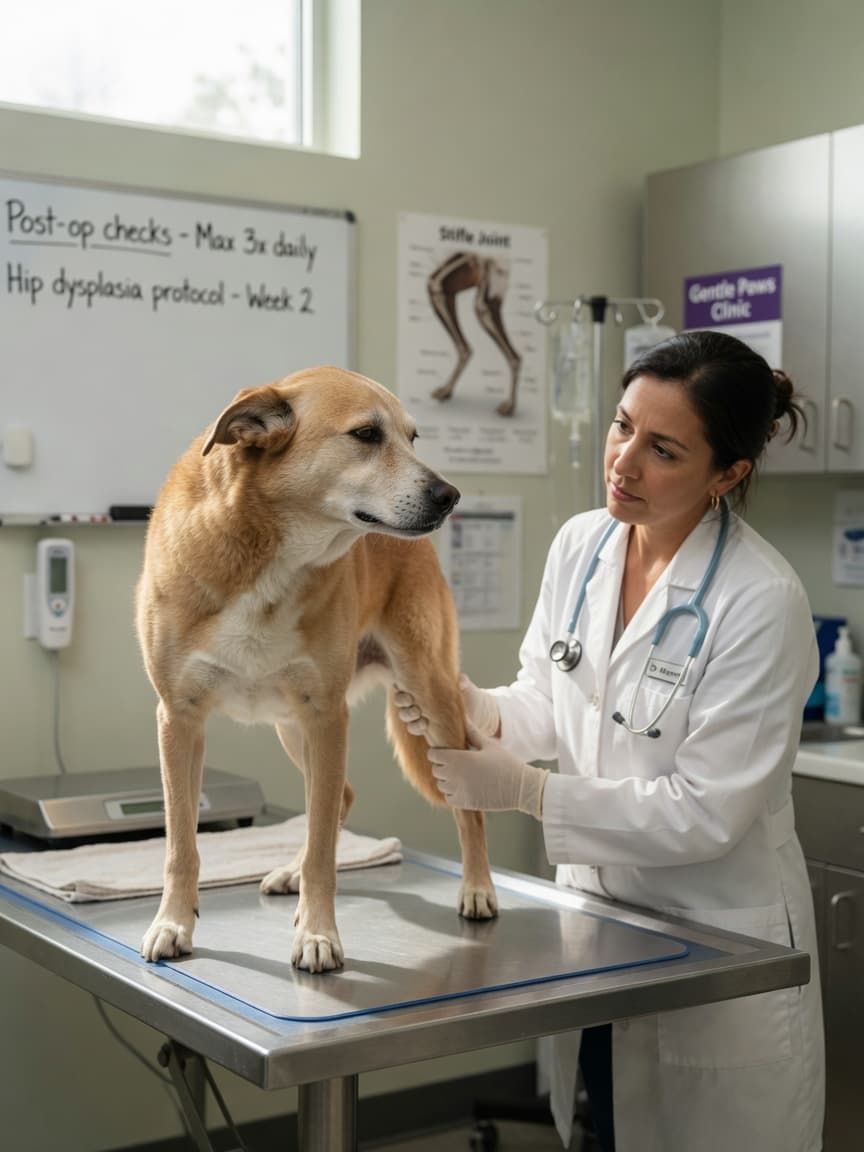
Die Lokalisation einer Lahmheit weist oft auf unterschiedliche Diagnosen hin. Eine Vorderbeinlahmheit bei jungen, großwüchsigen Hunden deutet häufig auf Entwicklungsstörungen wie Osteochondrosis dissecans (OCD) oder Panostitis hin. Eine Hinterbeinlahmheit bei mittelgroßen bis großen Rassen – besonders nach einem plötzlichen „Knacken“ beim Spielen – ist die klassische Präsentation eines Risses des vorderen Kreuzbands (Ligamentum cruciatum craniale). Die Hüftdysplasie betrifft vor allem die Hinterbeine, die Ellbogendysplasie die Vorderbeine. Ein Hund mit Hinterbeinschwäche, die sich beim Treppensteigen scheinbar verschlimmert, kann eher ein Problem an der Wirbelsäule als eine Beinverletzung haben. Notieren Sie sich immer, welches Bein oder welche Beine betroffen sind und wann die Lahmheit erstmals aufgetreten ist.
1. Pfotenverletzung oder Fremdkörper
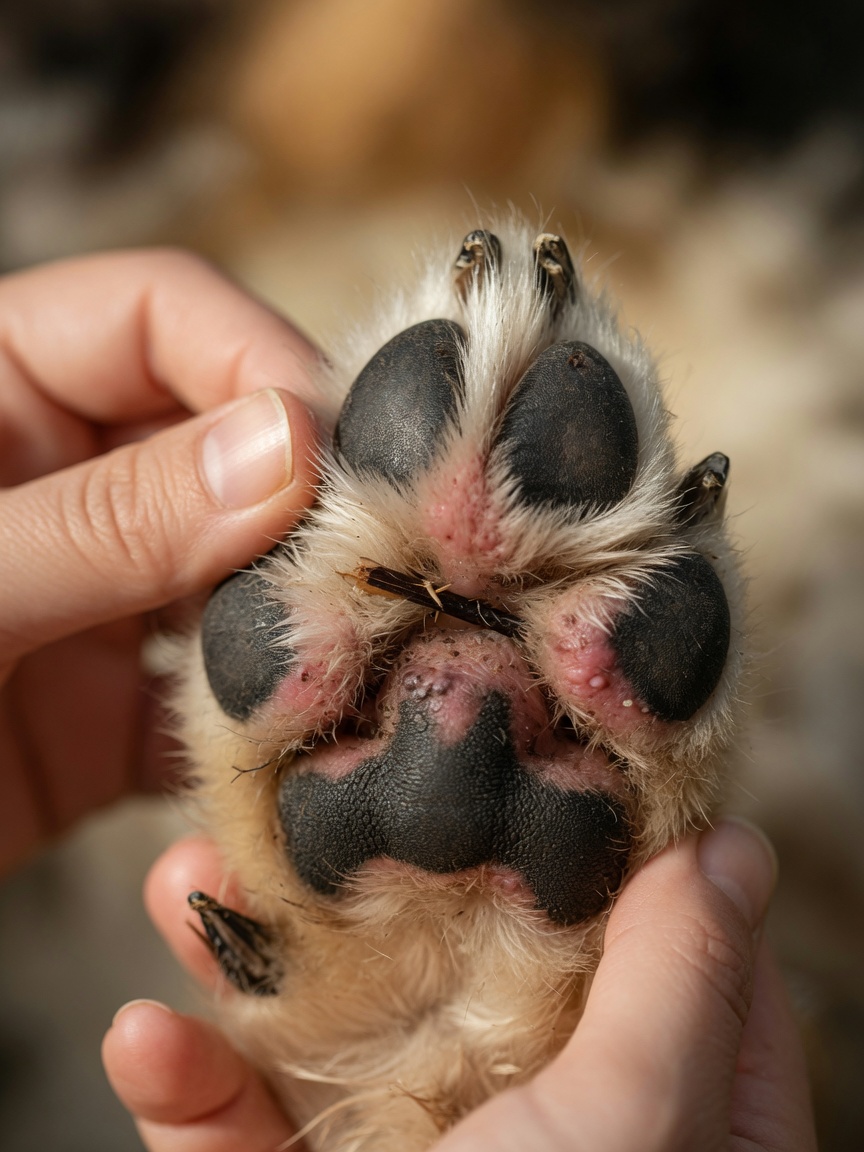
Die Pfote ist häufig die erste Stelle, die man überprüfen sollte, wenn ein Hund plötzlich anfängt zu lahmen. Glas, Dornen, Splitter und Kies können sich zwischen den Pfotenballen festsetzen oder in den Ballen selbst eindringen. Auch ohne Fremdkörper können Pfotenballen eingeschnitten sein, sich auf heißem Asphalt verbrennen oder durch Trockenheit einrissig werden. Geschwollene oder rote Zehen, übermäßiges Lecken der Pfote und ein Hund, der die Pfote nur ungern aufsetzt, sind alle Anzeichen für eine Beteiligung der Pfote. Untersuchen Sie die Pfote sorgfältig – teilen Sie dabei das Fell zwischen den Zehen – und prüfen Sie die Krallen auf Brüche oder abnorme Länge. Viele Pfotenverletzungen lassen sich zu Hause mit sanfter Reinigung versorgen, doch Risswunden, tief eingedrungene Objekte und Anzeichen einer Infektion (Schwellung, Eiter, Geruch) erfordern tierärztliche Behandlung.
2. Zerrung oder Verstauchung
Hunde können sich bei normaler Aktivität Bänder verstauchen oder Muskeln zerren – ein Fehltritt beim Laufen, ein Sprung vom Möbelstück oder das Spielen mit einem anderen Hund. Leichte Verstauchungen verursachen typischerweise eine Lahmheit, die direkt nach der Verletzung am stärksten ist und sich mit Ruhe über 24–48 Stunden verbessert. Hunde mit einer einfachen Verstauchung können das Bein meist noch etwas belasten und zeigen nach einem oder zwei Tagen mit eingeschränkter Aktivität eine Besserung. Allerdings gibt es erhebliche Überschneidungen zwischen „nur einer Verstauchung“ und schwerwiegenderen Verletzungen – ein Bandriss kann sich zunächst ähnlich darstellen. Wenn sich die Lahmheit nicht innerhalb von 24–48 Stunden Ruhe deutlich verbessert, ist eine tierärztliche Untersuchung erforderlich.
3. Arthrose (Osteoarthrose)

Arthrose ist die häufigste Ursache chronischer, fortschreitender Lahmheit bei Hunden im mittleren und höheren Alter. Bei der Osteoarthrose baut sich der Gelenkknorpel im Laufe der Zeit ab, was zu Knochen-auf-Knochen-Reibung, Entzündung und Schmerzen führt. Arthrosehunde lahmen typischerweise nach Ruhephasen am stärksten (Morgensteifigkeit), verbessern sich bei sanfter Bewegung etwas und verschlechtern sich nach starker Belastung. Kaltes, feuchtes Wetter verstärkt die Symptome meist. Arthrose tritt am häufigsten in Hüften, Ellbogen, Knien und der Wirbelsäule auf. Sie ist nicht heilbar, lässt sich aber mit einem multimodalen Ansatz sehr gut managen: Gewichtsmanagement, kontrollierte gelenkschonende Bewegung, Gelenkergänzungsmittel (Omega-3-Fettsäuren, Glucosamin, Chondroitin), Schmerzmedikamente und Physiotherapie.
4. Hüftdysplasie
Die Hüftdysplasie ist eine entwicklungsbedingte Fehlbildung des Hüftgelenks, bei der Gelenkkopf und Gelenkpfanne nicht richtig zusammenpassen, was zu Instabilität, Knorpelschäden und schließlich schwerer Arthrose führt. Sie ist überwiegend genetisch bedingt und am häufigsten bei großen und sehr großen Rassen – Deutsche Schäferhunde, Golden Retriever, Labrador Retriever und Rottweiler gehören zu den am stärksten betroffenen. Zu den Anzeichen gehören ein schwankender Gang, Bewegungsunlust, Schwierigkeiten beim Aufstehen und Hinterbeinlahmheit – häufig beginnend bei jungen Hunden (6 Monate bis 2 Jahre) oder später, wenn sich eine sekundäre Arthrose entwickelt. Für die Diagnose sind Röntgenaufnahmen unter Sedierung erforderlich. Die Behandlung reicht von konservativem Management (Schmerzkontrolle, Physiotherapie) bis zu chirurgischen Optionen einschließlich einer vollständigen Hüftgelenksprothese.
5. Patellaluxation
Eine Patellaluxation liegt vor, wenn die Kniescheibe (Patella) aus ihrer normalen Gleitrinne rutscht und sich ausklinkt. Sie tritt am häufigsten bei kleinen Rassen auf (Chihuahuas, Yorkshire Terrier, Zwergspitze, Französische Bulldoggen), kann aber bei jedem Hund vorkommen. Hunde mit Patellaluxation zeigen oft eine intermittierende, charakteristische „hüpfende“ Lahmheit – sie halten das Bein für ein paar Schritte hoch und laufen dann plötzlich wieder normal weiter, sobald die Patella zurück in ihre Position springt. Schwere oder anhaltende Fälle erfordern eine chirurgische Korrektur, um eine sekundäre Arthrose zu verhindern.
6. Riss des vorderen Kreuzbands (CCL)
Das vordere Kreuzband (entspricht dem ACL beim Menschen) stabilisiert das Kniegelenk. Kreuzbandrisse sind eine der häufigsten orthopädischen Verletzungen beim Hund, und anders als beim plötzlichen Sportverletzungsmuster beim Menschen entstehen sie oft durch einen allmählichen degenerativen Prozess – das heißt, das Band war über längere Zeit geschwächt, bevor es schließlich riss. Die klassische Präsentation ist ein Hund, der während oder nach Bewegung plötzlich ein Hinterbein nicht mehr belastet. Eine Kreuzbandverletzung wird durch ein spezielles Untersuchungsmanöver (Schubladentest oder Tibiakompressionstest) und Röntgenaufnahmen bestätigt. Für die meisten Hunde wird in der Regel eine chirurgische Korrektur empfohlen – die verschiedenen verfügbaren Techniken (TPLO, TTA, laterale Fadenzügelung) erzielen gute Ergebnisse, wenn sie von erfahrenen Chirurgen durchgeführt werden.
7. Lyme-Borreliose
Die Lyme-Borreliose, verursacht durch das Bakterium Borrelia burgdorferi und übertragen durch Zecken (Hirschzecken), ist in Endemiegebieten (Nordosten der USA, oberer Mittlerer Westen und Teile Europas) eine bedeutende Ursache episodischer Lahmheit bei Hunden. Die mit Borreliose verbundene Lahmheit ist charakteristisch „wechselnd“ – sie kann zu verschiedenen Zeiten verschiedene Beine betreffen und tritt oft plötzlich auf und verschwindet wieder. Begleitet wird sie von Fieber, Lethargie und Appetitverlust. Die Diagnose erfolgt über Bluttests (C6-Antikörpertest oder Western Blot), und die Erkrankung reagiert gut auf eine Antibiotikabehandlung (typischerweise Doxycyclin über 28–30 Tage). Zeckenschutz und die Borreliose-Impfung sind in Endemiegebieten hochwirksame Vorbeugemaßnahmen.
8. Knochenbruch
Eine Fraktur (Knochenbruch) verursacht eine plötzliche, schwere Lahmheit ohne Belastung des Beins, häufig mit sichtbarer Schwellung, abnormer Gliedmaßenstellung oder Krepitation (knirschendes Gefühl). Frakturen entstehen durch Traumata – ein Autounfall, ein Sturz aus der Höhe oder das Einklemmen einer Gliedmaße. Bei älteren Hunden können pathologische Frakturen durch geschwächten Knochen auch ohne größeres Trauma auftreten – dies ist besonders mit Knochenkrebs assoziiert. Jeder Hund, der nach einem Trauma plötzlich eine vollständig belastungsfreie Lahmheit zeigt, sollte unverzüglich tierärztlich untersucht und sehr vorsichtig gehandhabt werden, um die Verletzung nicht zu verschlimmern.
9. Osteosarkom (Knochenkrebs)
Das Osteosarkom ist der häufigste Knochentumor beim Hund und leider aggressiv. Es betrifft am häufigsten die Gliedmaßen großer und sehr großer Rassen – typischerweise im Bereich des Knies oder des Karpalgelenks. Die klassische Präsentation ist eine fortschreitend schlimmer werdende Lahmheit, die anfangs oft einer Verstauchung oder Arthrose zugeschrieben wird, in Kombination mit einer lokalen Knochenschwellung und Schmerzen beim Abtasten. Ein Osteosarkom ist extrem schmerzhaft. Wenn ein älterer Hund einer großen Rasse eine Lahmheit entwickelt, die nicht auf entzündungshemmende Medikamente anspricht, oder wenn über einem langen Knochen eine sichtbare Schwellung besteht, sind Röntgenaufnahmen unverzichtbar – frühe Bildgebung kann das charakteristische „Sonnenstrahlen“-Muster der Knochenzerstörung zeigen.
Wann Sie sofort zum Tierarzt müssen
- Vollständige Nichtbelastung einer Gliedmaße – der Hund setzt das Bein überhaupt nicht auf
- Jaulen, Aufschreien oder offensichtliche Schmerzen bei Berührung des Beins
- Sichtbare Knochenfehlstellung, Schwellung oder abnormer Winkel der Gliedmaße nach einem Trauma
- Lahmheit nach einem Autounfall oder einem Sturz aus der Höhe
- Schwellung über einem langen Knochen (Femur, Humerus, Radius/Ulna, Tibia) bei einem Hund einer großen Rasse
- Lahmheit in Kombination mit Fieber, Lethargie oder Appetitverlust
- Jede Lahmheit, die sich nicht innerhalb von 24–48 Stunden Ruhe verbessert
Das Wichtigste in Kürze
- Untersuchen Sie immer zuerst die Pfote – Fremdkörper und Ballenverletzungen sind häufig und werden leicht übersehen.
- Eine plötzliche Lahmheit ohne Belastung des Beins nach Bewegung bei einem Hund einer großen Rasse deutet oft auf einen Kreuzbandriss hin – eine chirurgisch zu behandelnde Erkrankung.
- Arthrose und Hüftdysplasie sind fortschreitend, lassen sich aber mit früher Intervention und Gewichtskontrolle sehr gut managen.
- Eine wechselnde Beinlahmheit in Zeckenendemiegebieten rechtfertigt einen Borreliose-Test.
- Eine fortschreitende Lahmheit mit Schwellung über einem langen Knochen bei einem Hund einer großen Rasse muss geröntgt werden, um ein Osteosarkom auszuschließen.
- Eine Lahmheit, die sich nicht innerhalb von 48 Stunden Ruhe verbessert, muss tierärztlich untersucht werden – warten Sie nicht unbegrenzt ab.
Quellen
- Innes JF. Arthritis. Vet Clin North Am Small Anim Pract. 2012;42(5):1087–1100. PMID: 22976833
- Boudrieau RJ. Tibial plateau leveling osteotomy or tibial tuberosity advancement? Vet Surg. 2009;38(1):1–22. PMID: 19152614