
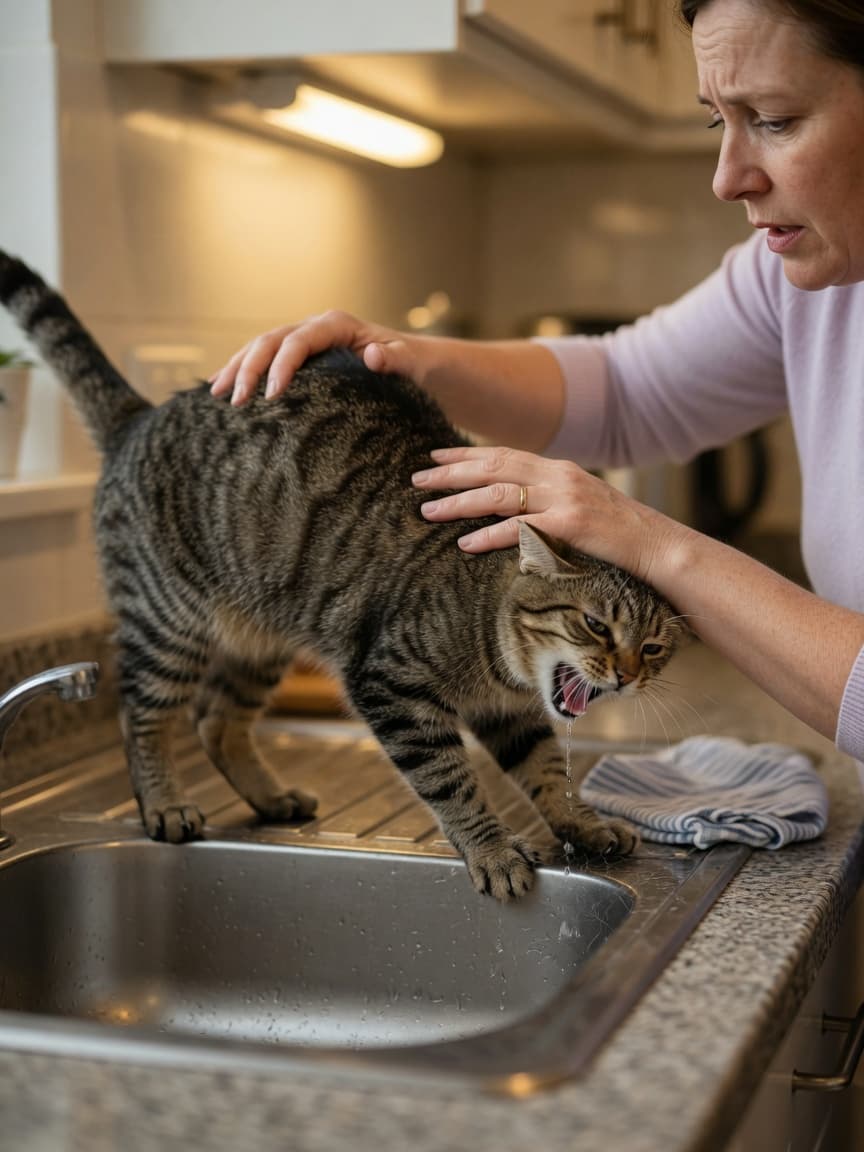
Warum erbricht meine Katze? Ursachen, Arten & Wann zum Tierarzt
Aktualisiert Juni 2026
- Erbrechen mehr als 3 Mal in 24 Stunden oder länger als 1 Stunde ununterbrochen
- Blut im Erbrochenen (rot oder dunkelbraun wie Kaffeesatz)
- Die Katze wirkt apathisch, hat einen aufgeblähten Bauch oder scheint Schmerzen zu haben
- Verdacht auf Aufnahme eines Giftstoffs, einer Pflanze oder eines Fremdkörpers
- Keine Urinausscheidung seit über 12 Stunden zusammen mit Erbrechen
Gelegentliches Erbrechen ist eine der häufigsten Beschwerden, die Katzenbesitzer zum Tierarzt bringen — und das aus gutem Grund. Während einiges Erbrechen bei Katzen völlig normal ist, können häufige oder schwere Episoden auf ernsthafte zugrunde liegende Erkrankungen hindeuten. Die Fähigkeit zu entwickeln, zwischen würgendem Haarballen und dem Erbrechen einer wirklich kranken Katze zu unterscheiden, ist eine der wertvollsten Fähigkeiten, die ein Katzenbesitzer entwickeln kann.
Normales vs. abnormales Erbrechen: Die wichtigste Unterscheidung
Erbrechen tritt auf, wenn Magen- oder Darminhalt mit Gewalt durch das Maul ausgestoßen wird. Regurgitation — oft mit Erbrechen verwechselt — ist passiv: Futter gleitet ohne Bauchmuskelanstrengung zurück nach oben, normalerweise kurz nach dem Essen, und kommt röhrenförmig und unverdaut heraus. Regurgitation signalisiert typischerweise ein Problem der Speiseröhre statt ein Magenproblem. Echtes Erbrechen beinhaltet aktives Würgen, Speicheln und Bauchkontraktionen. Häufigkeit und begleitende Symptome bestimmen, wie ernst die Episode ist.
1. Haarballen (Trichobezoare)
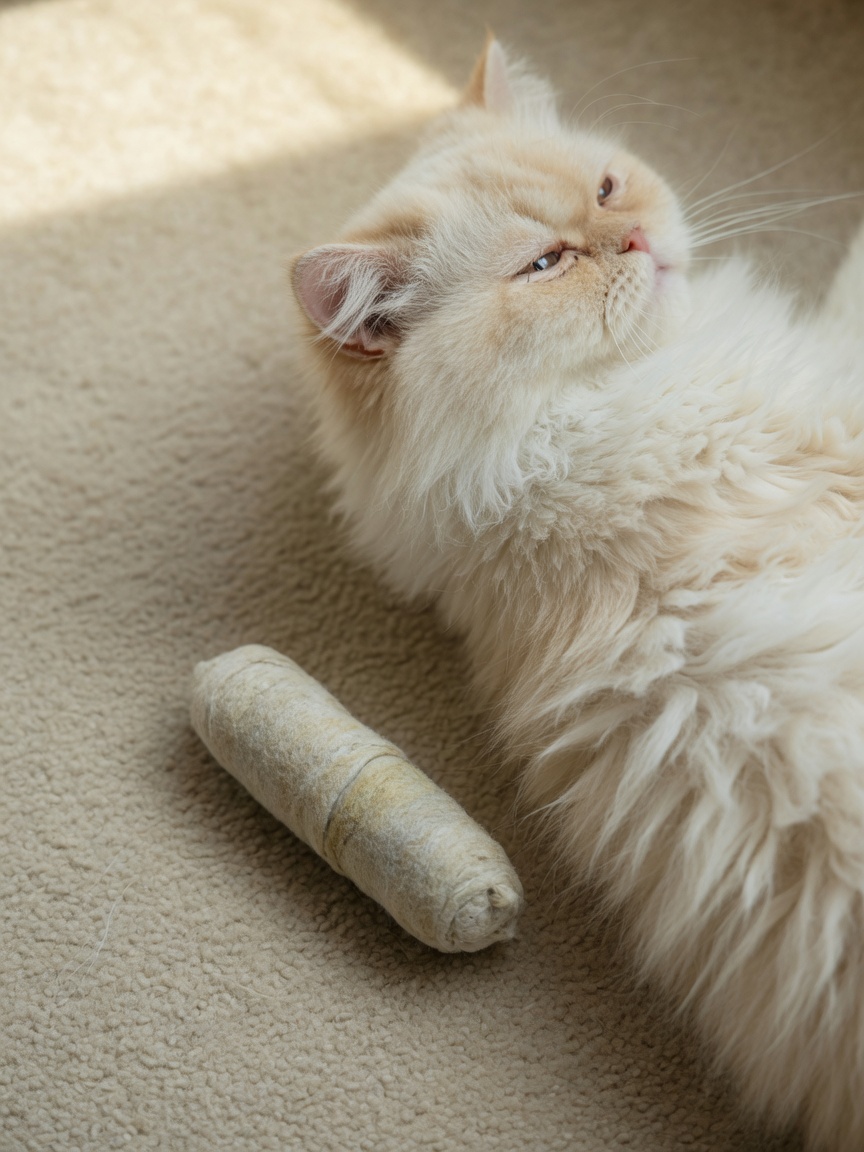
Die harmloseste und häufigste Ursache für Erbrechen bei Katzen, besonders bei langhaarigen Rassen. Wenn Katzen sich putzen, schlucken sie lose Haare. Die meisten passieren den Verdauungstrakt normal, aber einige sammeln sich im Magen an und werden schließlich als zylindrische Masse aus kompaktem Fell vermischt mit Galle erbrochen. Haarballerbrechen wird typischerweise durch charakteristische Würggeräusche eingeleitet und produziert einen unverkennbaren zigarrenförmigen Klumpen. Gelegentliche Haarballen (einmal im Monat oder weniger) gelten als normal; häufigere Episoden deuten auf übermäßiges Putzen, ein Hautproblem oder ein Problem mit der Magen-Darm-Motilität hin.
2. Zu schnelles Fressen oder Überfressen
Katzen, die ihr Futter hinunterschlingen — besonders in Mehrkatzen-Haushalten, in denen Konkurrenz herrscht — erbrechen oft teilweise verdautes Futter innerhalb von Minuten nach dem Essen. Dies ist eher Regurgitation als echtes Erbrechen. Lösungen sind Futterspiele, flache Leckmatte oder die Aufteilung der Mahlzeiten in kleinere, häufigere Portionen. Wenn eine Katze immer schnell frisst, kann eine Slow-Feeder-Schüssel dieses Problem vollständig lösen.
3. Unkontrollierter Speisewechsel oder Futterunverträglichkeit
Plötzliche Futterumstellungen, das Essen von verdorbenen Lebensmitteln oder die Reaktion auf einen Inhaltsstoff lösen akute Gastritis aus — Entzündung der Magenschleimhaut — die Erbrechen und manchmal Durchfall verursacht. Futterunverträglichkeit (nicht zu verwechseln mit echter Allergie) kann chronisches, niedriges Erbrechen verursachen, das verschwindet, wenn der problematische Inhaltsstoff entfernt wird. Häufige Verursacher sind künstliche Farbstoffe, bestimmte Proteinquellen und übermäßiges Fett. Das schrittweise Umstellen von Futter über 7–10 Tage verhindert Futterumstellungs-Erbrechen.
4. Parasiten
Darmparasiten — Spulwürmer, Bandwürmer und Hakenwürmer — sind eine häufige Ursache für chronisches Erbrechen, besonders bei Katzen mit Freigang oder solchen, die jagen. Spulwürmer können manchmal im Erbrochenen sichtbar sein. Ein Flotationsttest für Fäkalproben bei Ihrem Tierarzt kann Parasiten identifizieren, und die Behandlung ist einfach mit geeigneten Entwurmungsmitteln. Regelmäßige Parasitenprävention wird für alle Katzen dringend empfohlen.
5. Chronische Dünndarmerkrankung
Entzündliche Darmerkrankung (IBD) ist eine der häufigsten Ursachen für chronisches Erbrechen bei Katzen mittleren Alters und älteren Katzen. Die Darmschleimhaut wird chronisch entzündet, beeinträchtigt die Absorption und verursacht gelegentliches Erbrechen, Gewichtsverlust und Durchfall. IBD wird von intestinalem Lymphom (ein verwandter aber ernsthafterer Zustand) durch Biopsie unterschieden. Beide Zustände sind mit Medikamenten, Ernährungsumstellung und — für IBD — oft mit einer hypoallergenen oder hydrolisierten Proteindiät überschaubar.
6. Nierenkrankheit und andere systemische Erkrankungen

Chronische "/en/articles/kidney-disease-dogs-diet" title="Nierenkrankheit
```
Weiterlesen