
Labrador Retriever gehören zu den Rassen, die am häufigsten von Hüftdysplasie und Ellbogendysplasie betroffen sind, da ihr schnelles Wachstum, ihre starke Muskulatur und die vererbte Gelenkkonformation ungewöhnliche Belastungen auf sich entwickelnde Gelenke ausüben. Dies sind weitgehend vererbte Erkrankungen, doch Ernährung, Wachstumstempo und Bewegung während der Welpenzeit beeinflussen stark, ob und wie schwer sie auftreten. Das Wichtigste, das ein Besitzer tun kann, ist das Wachstum im ersten Lebensjahr sorgfältig zu steuern und früh auf Steifheit oder Lahmheit zu reagieren, da ein frühes Management einen echten Unterschied für langfristigen Komfort und Beweglichkeit macht.
Warum Labrador Retriever anfällig für Hüftdysplasie und Ellbogendysplasie sind
Hüftdysplasie und Ellbogendysplasie sind entwicklungsorthopädische Erkrankungen, bei denen sich die Gelenkflächen nicht richtig bilden oder beim Wachstum des Welpen nicht korrekt zusammenpassen. Bei einer gesunden Hüfte sitzt der Oberschenkelkopf eng in der Beckenpfanne; bei einer dysplastischen Hüfte ermöglicht Lockerheit oder schlechte Konformation abnormale Bewegungen, die zu Verschleiß, Entzündung und schließlich Arthritis führen. Ellbogendysplasie bezieht sich auf eine Gruppe von Entwicklungsanomalien im Ellbogengelenk, einschließlich Inkongruenz der drei Knochen, aus denen es besteht, was ähnlich zu abnormalem Knorpelverschleiß und Arthritis im Laufe der Zeit führt.
Labrador Retriever sind aus mehreren miteinander verbundenen Gründen prädisponiert. Sie sind eine große, schnell wachsende Rasse, und schnelles Knochenwachstum kombiniert mit erheblichem Körpergewicht übt erhebliche mechanische Belastungen auf unreife Gelenke aus. Genetik spielen auch eine wichtige Rolle: Hüft- und Ellbogenkonformation ist vererbbar, und Labrador Retriever als Rasse tragen eine bedeutende Häufigkeit von Genen auf, die Gelenklockerheit und -form beeinflussen, weshalb seriöse Züchter Zuchtbestände mit Hilfe von Hüft- und Ellbogenbewertungsschemata untersuchen. Übergewicht und schnelle Gewichtszunahme während der Welpenzeit verschärfen das zugrunde liegende genetische Risiko, ebenso wie Überbelastung junger, noch wachsender Gelenke. Diese Kombination aus rassentypischer Körpergröße, Wachstumstempo und vererbter Gelenkarchitektur ist der Grund, warum Dysplasie so häufig in Bezug auf diese Rasse diskutiert wird, wie in dem Labrador Retriever Rasseführer behandelt.
Hüftdysplasie im Detail
Hüftdysplasie beinhaltet Lockerheit in der Hüftgelenkkapsel und unterstützenden Strukturen, die es dem Oberschenkelkopf ermöglichen, sich abnormal in der Hüftpfanne zu bewegen. Im Laufe von Monaten und Jahren führt diese abnormale Bewegung zu Umgestaltung des Knochens, Verdickung der Gelenkkapsel und fortschreitender Arthritis. Der Schweregrad variiert enormn zwischen einzelnen Hunden, von milder, kaum beobachtbarer Lockerheit bis zu erheblicher Instabilität, die bereits in jungen Jahren Schmerzen verursacht.
Ellbogendysplasie im Detail
Ellbogendysplasie ist ein Sammelbegriff, der mehrere spezifische Entwicklungsprobleme umfasst, einschließlich fragmentierter Kronenfortsätze, nicht vereinigter Hackenknochen und Osteochondrose der Gelenkflächen. Diese Erkrankungen verursachen abnormale Druckverteilung über das Gelenk, Knorpelschaden und sekundäre Arthritis. Ellbogendysplasie kann ein oder beide Vorderbeine beeinflussen und ist eine häufige Ursache für Vorderbeinlahmheit bei jungen großen Rassen.
Frühe Anzeichen und Symptome, auf die Sie achten sollten
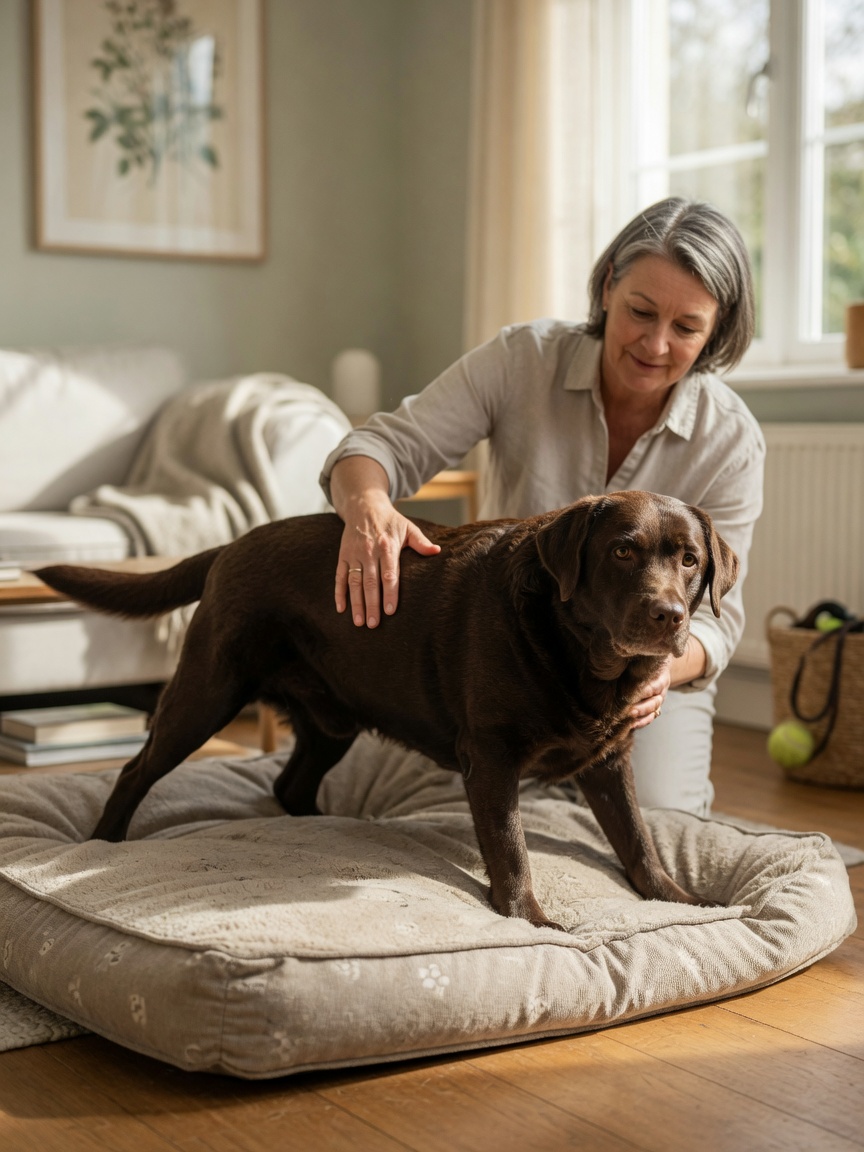
Symptome können bereits zwischen vier und zwölf Monaten auftreten oder werden möglicherweise erst im mittleren Alter offensichtlich, wenn sich Arthritis entwickelt hat. Da Labrador Retriever oft stoisch und futterorientiert sind, sind subtile Veränderungen leicht zu übersehen. Es lohnt sich, auf Folgendes zu achten:
- Steifheit nach Ruhe, besonders morgens oder nach einem Nickerchen
- Widerwille, ins Auto zu springen, Treppen zu steigen oder sich vom Liegen aufzurichten
- Ein „Hasensprung"-Gang beim Laufen, bei dem sich beide Hinterbeine zusammen bewegen
- Lahmheit in einem Vorderbein, besonders nach Bewegung, in Fällen von Ellbogendysplasie
- Reduzierte Begeisterung für Spaziergänge, Zurückbleiben oder verkürzte Bewegungstoleranz
- Muskelabbau über den Hinterbeinen oder Schultern auf einer oder beiden Seiten
- Eine schwankende oder „lockere" Hüftbewegung, manchmal als wackeliger Gang beschrieben
Einige Welpen zeigen Symptome während ihrer Hauptwachstumsphase und scheinen sich dann zu verbessern, wenn sie reifen, nur um später im Leben Steifheit zu entwickeln, wenn sich Arthritis entwickelt. Dies bedeutet nicht, dass das zugrunde liegende Gelenkproblem gelöst wurde.
Wann es ein Notfall ist
Hüftdysplasie und Ellbogendysplasie sind normalerweise chronische, allmählich fortschreitende Erkrankungen und keine plötzlichen Notfälle. Sie sollten jedoch noch am selben Tag einen Tierarzt aufsuchen, wenn Ihr Labrador plötzlich überhaupt kein Gewicht auf einem Bein tragen kann, vor Schmerz schreit, ein sichtbar geschwollenes oder heißes Gelenk hat, Anzeichen einer Luxation (Gelenkausrenkung) zeigt oder nach Bewegung oder einem Sturz plötzliche schwere Lahmheit entwickelt. Plötzliche, starke Schmerzen sind nicht typisch für unkomplizierte Dysplasieprogression und rechtfertigen eine prompte Bewertung, um Brüche, Bänderrisse oder andere akute Verletzungen auszuschließen.
Diagnose
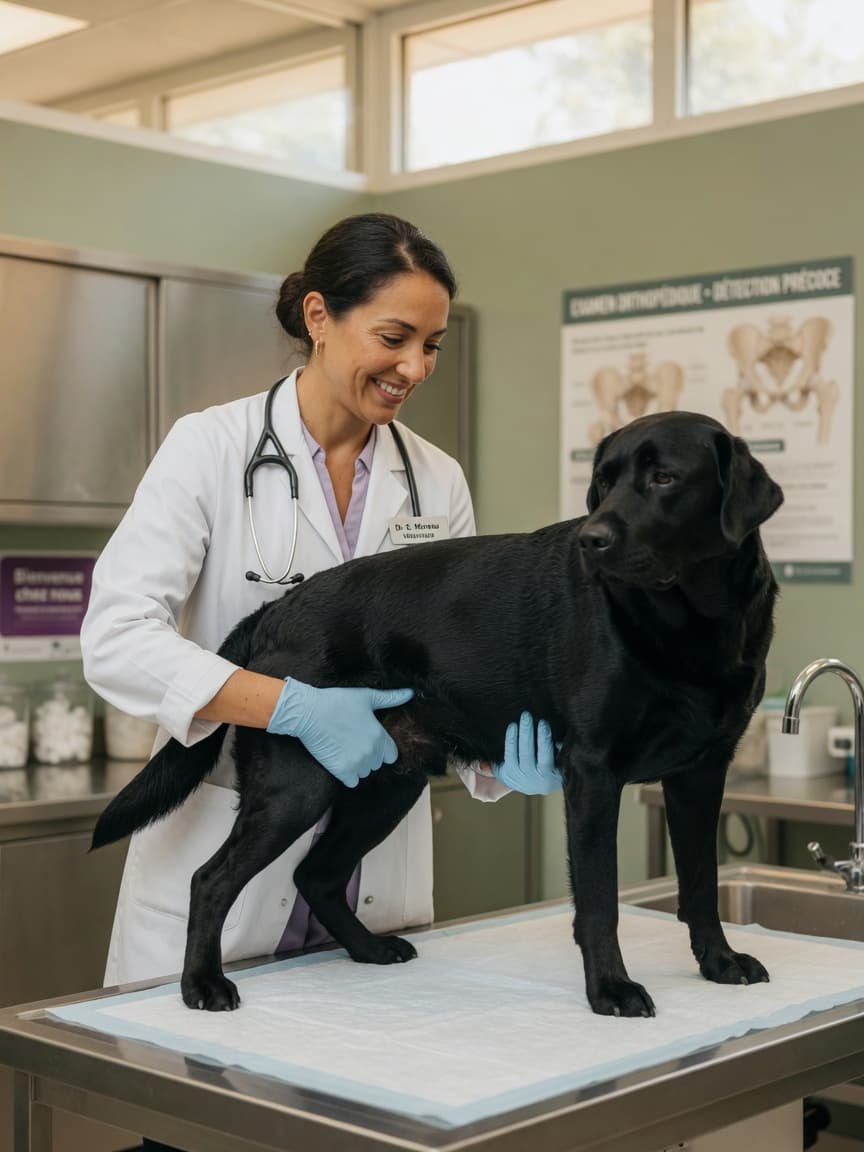
Die Diagnose beginnt mit einer gründlichen körperlichen Untersuchung, einschließlich Tastung der Hüften und Ellbogen, Bewertung des Bewegungsumfangs und Beobachtung des Gangs. Tierärzte führen oft spezifische Manipulationen durch, um Gelenklockerheit in den Hüften zu überprüfen. Die endgültige Diagnose beruht auf Radiographie (Röntgenaufnahmen), normalerweise unter Sedation oder Vollnarkose, um eine genaue Positionierung und eine schmerzfreie Untersuchung zu ermöglichen. Hüftröntgenaufnahmen werden oft mit formalen Schemata wie dem British Veterinary Association/Kennel Club Hüftschema bewertet, das mehrere spezifische Merkmale jedes Hüftgelenks bewertet. Ellbogenröntgenaufnahmen werden ähnlich bewertet, um Anzeichen von Dysplasie und sekundärer Arthritis zu bewerten. In einigen Fällen, besonders bei komplexen Ellbogenproblemen, bietet CT-Scanning detailliertere Bildgebung als Standard-Röntgenaufnahmen und wird möglicherweise von einem orthopädischen Spezialist empfohlen.
Management und Behandlungsmöglichkeiten
Die Behandlung wird auf das Alter des einzelnen Hundes, den Schweregrad der Gelenkveränderungen und den Grad des Unbehagens zugeschnitten. Optionen fallen im Allgemeinen in nicht-chirurgische und chirurgische Kategorien, und viele Hunde profitieren von einer kombinierten Herangehensweise über ihre Lebenszeit.
Nicht-chirurgisches Management
- Gewichtsmanagement – Das Halten Ihres Labrador schlank reduziert die Belastung der betroffenen Gelenke erheblich; dies ist eines der wirkungsvollsten Dinge, die ein Besitzer kontrollieren kann
- Kontrollierte Bewegung – Regelmäßige, gemäßigte, gelenkschonende Aktivität wie stetige Leinenspaziergänge statt hochbelastende Laufeinheiten oder wiederholte Sprünge
- Gelenkzusätze – Produkte, die Glucosamin, Chondroitin oder Omega-3-Fettsäuren enthalten