
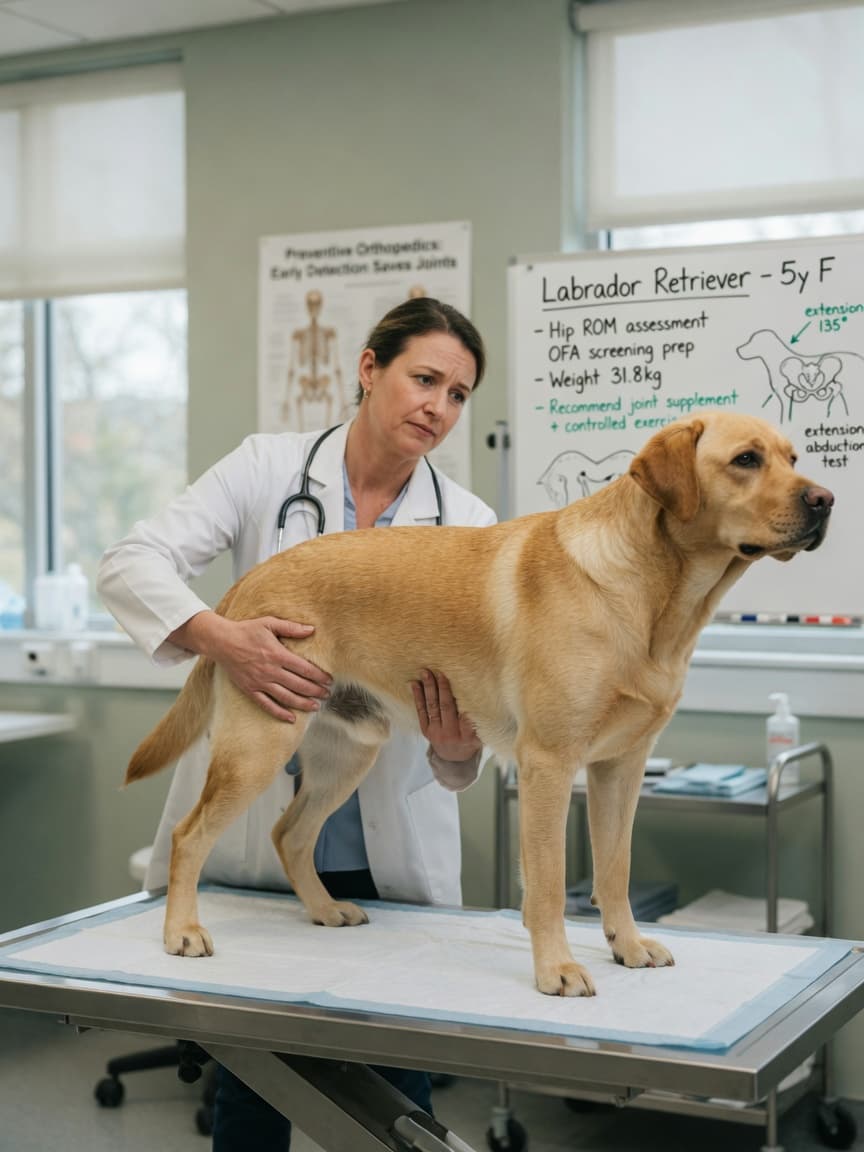
Labrador Retriever Gesundheit: Gewicht, Gelenke & häufige Erkrankungen
Aktualisiert Juni 2026
- Lebenserwartung: 10–12 Jahre
- Wichtigste Gesundheitsrisiken: Übergewicht, Hüft- und Ellbogendysplasie, belastungsinduzierter Kollaps, Centronukleäre Myopathie
- Empfohlene genetische Tests: OFA Hüfte/Ellbogen, EIC DNA-Test, CNM DNA-Test, PRA-prcd DNA-Test
Der Labrador Retriever ist seit Jahrzehnten die beliebteste Hunderasse in zahlreichen Ländern, und das ist leicht nachvollziehbar — sie sind freundlich, trainierbar und unendlich enthusiastisch. Aber dieser Enthusiasmus erstreckt sich oft auch auf Futter, was Labs zu einer der Rassen macht, die am meisten zu Übergewicht neigen. Kombiniert mit vererbten Gelenkproblemen und einer Handvoll rassenspezifischer genetischer Erkrankungen profitieren Labrador-Besitzer enorm davon, wenn sie die Gesundheitslandschaft verstehen, bevor Symptome auftreten.
Die häufigsten Gesundheitsprobleme beim Labrador Retriever
Übergewicht ist die größte Bedrohung für die Labrador-Gesundheit und Lebensqualität und verschärft fast alle anderen Erkrankungen auf dieser Liste. Hüft- und Ellbogendysplasie sind weit verbreitete orthopädische Probleme, während belastungsinduzierter Kollaps (EIC) einen bedeutenden Teil der Population betrifft. Progressive Retinadegeneration (PRA) kann zur Erblindung führen, und Centronukleäre Myopathie (CNM) verursacht generalisierte Muskelschwäche. Hautallergien, Ohrinfektionen aufgrund ihrer Schlappohren-Anatomie und Trikuspidalklappenfehlbildung vervollständigen die häufigen Bedenken.
Übergewicht und die POMC-Gen-Mutation

Labrador Retriever neigen aufgrund einer Deletionsmutation im POMC-Gen (Pro-Opiomelanocortin) einzigartig zu Gewichtszunahme, die die Fähigkeit des Gehirns beeinträchtigt, Sättigung zu registrieren. Forschungen, die in Cell Metabolism veröffentlicht wurden, zeigten, dass etwa 23% der Labrador Retriever als Haustiere und über 75% der Assistenzhunde mindestens eine Kopie dieser Mutation tragen. Hunde mit zwei Kopien sind durchschnittlich 1,9 kg schwerer als nicht betroffene Hunde. Für Besitzer bedeutet dies, dass der Standard-Ansatz „füttern bis zur Sättigung" nicht funktioniert — Labs benötigen sorgfältig abgemessene Portionen, zweimal täglich Fütterung und minimale Leckerlis. Bereits 10–15% Übergewicht beschleunigt den Knorpelabbau in dysplastischen Gelenken und erhöht das Diabetes- und Herzerkrankungsrisiko. Ein Body Condition Score von 4–5 von 9 sollte das Ziel sein.
Hüft- und Ellbogendysplasie
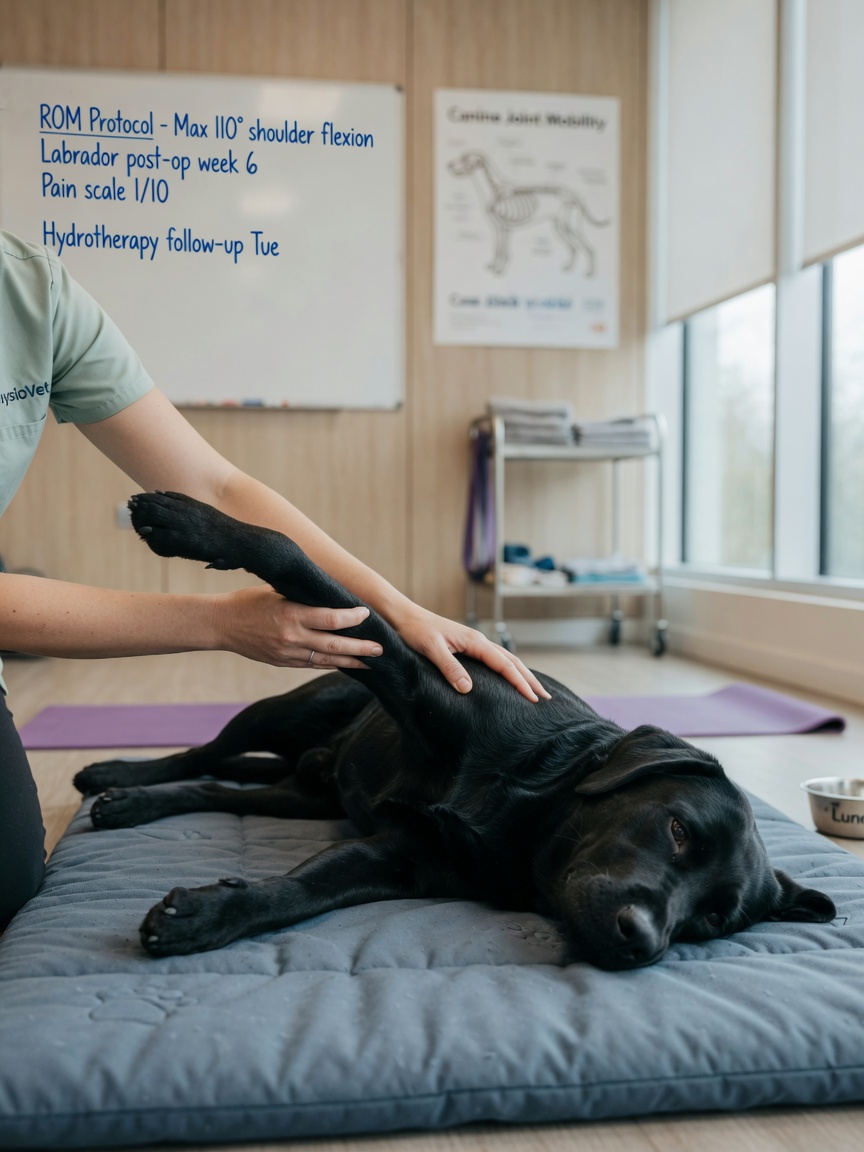
Labrador Retriever haben unter den großen Rassen eine der höchsten Raten an Hüftdysplasie. OFA-Statistiken zeigen konsistent, dass etwa 12–15% der untersuchten Labs dysplastische Hüften aufweisen. Ellbogendysplasie — einschließlich Erkrankungen wie fragmentierter Processus coronoideus und Osteochondrosis dissecans — ist gleichermaßen verbreitet. Beide Erkrankungen verursachen Schmerzen, verringerte Bewegungsfreiheit und progressive Arthritis. Da sie polygenisch sind, kann kein einzelner Gentest das Risiko eliminieren, aber OFA-zertifizierte Elterntiere reduzieren die Wahrscheinlichkeit erheblich. Welpen sollten in den ersten 12–18 Monaten, wenn die Wachstumsfugen offen sind, wiederholtes Treppen steigen und Springen vermeiden. Die Diagnose wird durch Röntgenaufnahmen bestätigt, und die Behandlung umfasst Gewichtskontrolle, Physiotherapie, nichtsteroidale Entzündungshemmer und in einigen Fällen Operationen wie Arthroskopie oder Femurkopfresektion.
Belastungsinduzierter Kollaps (EIC)
EIC ist ein autosomal rezessiver Zustand, der durch eine Mutation im DNM1-Gen verursacht wird und betroffene Hunde nach 5–25 Minuten intensiver Bewegung progressive Muskelschwäche und Kollaps entwickeln lässt. Episoden dauern typischerweise 5–25 Minuten und sind selten tödlich, können aber beängstigend und gefährlich sein, wenn der Hund in der Nähe von Wasser kollabiert. Ein DNA-Test identifiziert Träger (die klinisch normal sind) und betroffene Hunde. Das verantwortungsvolle Management beinhaltet die Vermeidung intensiver längerer Bewegung, besonders bei warmem Wetter, und die Gewährleistung, dass betroffene Hunde allmählich abkühlen. Betroffene Hunde können oft ein normales Leben mit angepasstem Bewegungsprogramm führen.
Progressive Retinadegeneration (PRA)
PRA-prcd ist die häufigste Form, die Labrador Retriever betrifft und verursacht progressive Degeneration der Photozeptorzellen der Netzhaut. Hunde verlieren zuerst das Nachtsehen, dann das periphere Sehen und werden schließlich blind, normalerweise zwischen vier und acht Jahren. Es gibt keine Behandlung, aber DNA-Tests ermöglichen es Züchtern, die Produktion betroffener Welpen zu vermeiden, indem sie sicherstellen, dass mindestens ein Elternteil klar ist. Blinde Hunde passen sich in konsistenten Hausumgebungen bemerkenswert gut an, und Besitzer können sie mit Duftmarkierungen, konsistenter Möbelplatzierung und verbalen Hinweisen während der Bewegung unterstützen.
Prävention und proaktive Pflege
Gewichtskontrolle ist der Grundstein der präventiven Labrador-Pflege. Verwenden Sie eine Küchenwaage zur Hundefutter-Dosierung, vermeiden Sie Speisereste und nutzen Sie kalorienarme Leckerlis wie Karottenstücke oder grüne Bohnen zum Training. Jährliche Tierarztbesuche sollten Körperkonditionsbewertung, Gelenkpalpation und eine Augenuntersuchung beinhalten. Ab dem sechsten Lebensjahr werden halbjährliche Untersuchungen empfohlen, angesichts der Herzerkrankungs- und Gelenkerkrankungslast der Rasse.