
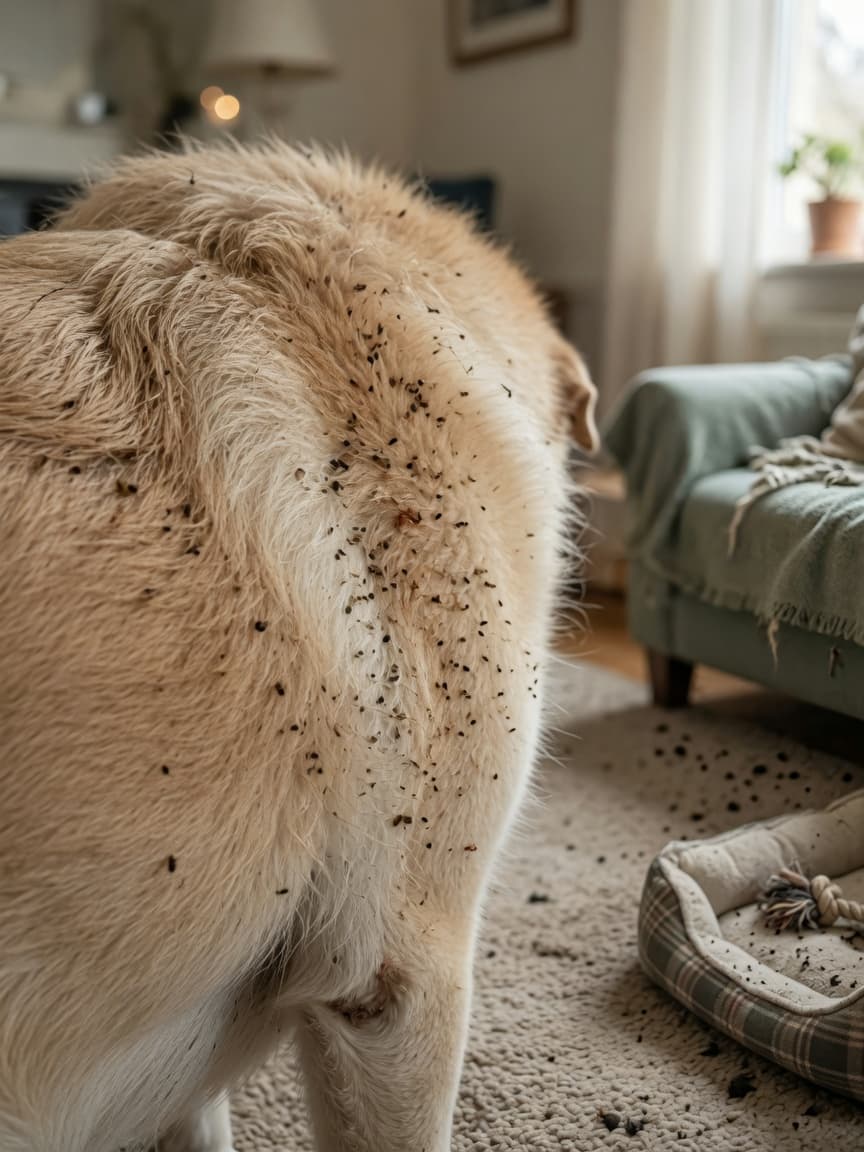
Flohbekämpfung: Warum Sie das Heim behandeln müssen, nicht nur das Haustier
Von Julia Wrenfield, Fachautorin für Haustiergesundheit
In einem flohbefallenen Heim leben zu jedem gegebenen Zeitpunkt nur etwa 5% der Flohpopulation auf Ihrem Haustier. Die anderen 95% — Eier, Larven und Puppen — sind in Ihren Teppichen, Möbeln, Bettwäsche und Bodenbelägen eingebettet. Die Behandlung Ihres Haustieres ohne Behandlung des Heims ist einer der häufigsten Gründe, warum Flohbefall trotz regelmäßiger Produktanwendung monatelang anhält.
Wenn Sie Ihrem Haustier jeden Monat Flohmittel auftragen und immer noch Flöhe finden, adressieren Sie mit Sicherheit nicht den Hauptteil des Befalls. Das Verständnis des Flohlebenszyklus ist das Wichtigste, das Sie tun können, um endlich den Kreislauf zu durchbrechen und dauerhafte Flohbekämpfung zu erreichen. Es erfordert einen umfassenderen Ansatz als die meisten Haustierbesitzer realisieren — aber sobald Sie die Biologie verstehen, wird die Strategie klar.
Der vierstufige Flohlebenszyklus
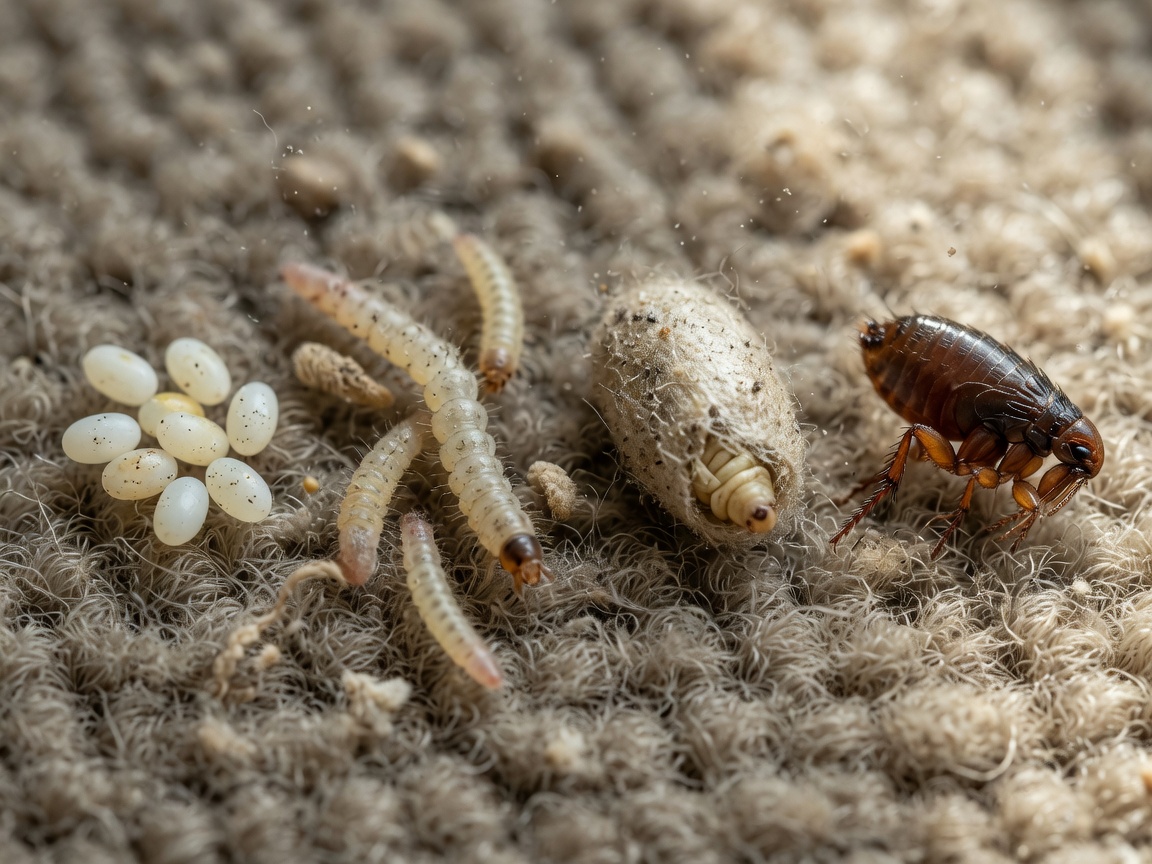
Der Katzenfloh — Ctenocephalides felis — ist für die überwiegende Mehrheit der Befallsfälle bei Hunden und Katzen verantwortlich. Er durchläuft vier unterschiedliche Lebensstadien, von denen jedes unterschiedliche Bedingungen benötigt und unterschiedlich auf Behandlung reagiert.
Stadium 1 — Eier. Nach dem Blutfressen beginnt ein befruchtetes weibliches Flohweibchen innerhalb von 24–48 Stunden mit der Eiablage. Sie kann bis zu 50 Eier pro Tag und bis zu 2.000 während ihres Lebens legen. Floheier sind winzig, weiß und nicht klebrig. Sie fallen überall dort ab, wo sich das Haustier aufhält — Betten, Sofas, Teppiche und Spalten in Bodenbelägen — und schlüpfen je nach Temperatur und Luftfeuchtigkeit innerhalb von zwei bis vierzehn Tagen. Wärmere, feuchteren Bedingungen beschleunigen das Schlüpfen; deshalb kulminieren Flohprobleme im späten Sommer und frühen Herbst.
Stadium 2 — Larven. Larven sind blind, beinlos und wurmartig. Sie vermeiden Licht und graben sich tief in Teppichfasern, Bettstoffe und Bodenspalten ein. Sie ernähren sich von organischen Stoffen, einschließlich — entscheidend — dem trockenen, blutreichen Kot adulter Flöhe (manchmal "Flohkot" genannt). Dies ist der Grund, warum sich Flohlarven in denselben Bereichen konzentrieren, in denen erwachsene Flöhe die meiste Zeit verbringen: überall dort, wo Ihr Haustier schläft und ruht. Larven häuten sich zweimal über ein bis zwei Wochen, bevor sie eine Kokons spinnen.
Stadium 3 — Puppen. Das Puppenstadium ist aus Kontrollperspektive die gefährlichste Phase. Puppen sind in einer klebrigen Kokons eingekapselt, die Teppichfasern, Staub und Ablagerungen aufgreift, was sie fast unmöglich macht, abzusaugen oder mit Insektiziden zu erreichen. Die Kokons sind bemerkenswert schützend — sie können die sich entwickelnde Floh vor Pestiziden, Temperaturextremen und Austrocknung abschirmen. Ein Floh kann fünf Tage bis über ein Jahr im Puppenstadium verbleiben und auf das richtige Signal zum Schlüpfen warten: Wärme, Vibration und Kohlendioxid — die Zeichen eines nahegelegenen Wirtes.
Dies erklärt das berüchtigte "leeres Haus"-Phänomen: Sie ziehen in ein zuvor flohbefallenes Heim ein, und innerhalb von Tagen werden Sie gebissen, obwohl keine Haustiere vorhanden sind. Ihre Schritte und Körperwärme lösen das Massen-Schlüpfen aus Puppen aus, die monatelang dormant waren.
Stadium 4 — Adulte. Nach dem Schlüpfen muss ein adulter Floh innerhalb weniger Tage Blut saugen. Er springt auf einen vorbeikommenden Wirt, beginnt sofort zu fressen und beginnt innerhalb von 24–48 Stunden mit der Fortpflanzung. Adulte machen nur etwa 5% der Gesamtflohpopulation in einer befallenen Umgebung aus. Dies ist die entscheidende Zahl: Wenn Sie Ihr Haustier behandeln, adressieren Sie nur 5% des Befalls.
Warum nur die Behandlung des Haustieres fehlschlägt
Wenn Sie ein topisches Spot-On-Mittel auftragen oder eine orale Flohtablette geben, töten Sie adulte Flöhe oder verhindern, dass sie sich auf Ihrem Haustier vermehren. Dies ist wichtig — aber Flöhe springen von sterbenden Haustieren ab, Puppen in der Umgebung entwickeln sich weiter, und alle vor der Behandlung gelegten Eier schlüpfen weiter. Ihr Haustier trifft immer wieder auf neu geschlüpfte Adulte aus dem Umweltreservoir, und der Kreislauf setzt sich fort. Die meisten Haustierbesitzer, die nach dem Auftragen eines Produkts anhaltende Flohaktivität sehen, nehmen an, dass das Produkt nicht funktioniert. In Wirklichkeit funktioniert das Produkt oft perfekt — aber das Heim wurde nicht behandelt.
Wie Sie das Heim effektiv behandeln
Der effektivste Ansatz kombiniert Insektizide für Adulte mit Insektenwachstumsregulatoren (IGRs). IGRs — Verbindungen wie (s)-Methoprene oder Pyriproxyfen — ahmen juvenile Insektenhormone nach und verhindern, dass Larven zu Adulten entwickeln. Sie töten Adulte oder Eier nicht direkt ab, aber sie unterbrechen den Kreislauf, indem sie die Vor-Adult-Stadien sterilisieren. Die Kombination eines Adultzids und eines IGR in einem Haushaltsspray bietet die umfassendste Abdeckung.
Vor dem Sprühen staubsaugen Sie alle Oberflächen, die Ihr Haustier nutzt — Teppiche, Teppichläufer, Sofas, unter Möbelkissen und entlang von Fußleisten. Das Staubsaugen stimuliert das Schlüpfen von Puppen und macht neu geschlüpfte Adulte anfällig für die nachfolgende Spraybehandlung. Versiegeln und entsorgen Sie den Staubsaugerbeutel sofort danach. Wenden Sie dann ein Haushaltsflohmittel an — folgen Sie den Anweisungen auf dem Etikett — auf alle Oberflächen, mit besonderem Fokus auf die Bereiche, in denen Ihr Haustier ruht. Lassen Sie es trocknen, bevor Sie Haustiere oder Kinder wieder in behandelte Bereiche lassen.
Flohmittel und Haushaltsflohabwehr finden