

Anzeichen einer Trächtigkeit bei Katzen: Leitfaden Woche für Woche
- Trächtigkeitsdauer: durchschnittlich 63–67 Tage
- „Rosafärbung“ der Zitzen: Zuverlässigstes frühes Anzeichen, tritt nach ca. 3 Wochen auf
- Ultraschallbestätigung: ab Tag 21
- Umstellung auf Kittenfutter: ab Woche 4–5 der Trächtigkeit
- Nestbauverhalten intensiviert sich: Wochen 7–9
Katzen sind bekanntermaßen in vielen Dingen subtil, und eine Trächtigkeit bildet da keine Ausnahme. In den ersten Wochen kann eine trächtige Kätzin fast keine offensichtlichen äußeren Anzeichen zeigen – sodass die Trächtigkeit leicht vollständig übersehen werden kann, bis der Bauch sichtbar rund wird. Wenn Sie jedoch wissen, worauf Sie in jeder Phase achten müssen, können Sie Ihrer Kätzin die richtige Ernährung, tierärztliche Betreuung und eine sichere Umgebung bieten, die sie während dieser bemerkenswerten neunwöchigen Reise braucht.
Frühe Anzeichen einer Trächtigkeit bei Katzen (Wochen 1–3)
Das erste Anzeichen, das viele Katzenbesitzer bemerken, ist das plötzliche Ausbleiben der Rolligkeit. Kätzinnen durchlaufen häufig Rolligkeitszyklen (alle 2–3 Wochen während der Zuchtsaison), sodass eine Trächtigkeit eine wahrscheinliche Ursache ist, wenn die Zyklen plötzlich aufhören – insbesondere wenn eine Paarung stattgefunden hat.
Um die 3. Woche (Tage 15–21) erscheint das zuverlässigste frühe Anzeichen einer felinen Trächtigkeit: die „Rosafärbung“ der Zitzen. Dies bezeichnet eine sichtbare Veränderung der Zitzenfarbe von blassrosa zu einem tieferen, leuchtenderen Rosa- oder Roséton, begleitet von einer leichten Vergrößerung und einer weicheren Textur. Bei Katzen mit hellfarbenem oder spärlichem Bauchfell ist dies unverkennbar. Es tritt auf, weil die Durchblutung des Milchdrüsengewebes sehr früh in der felinen Trächtigkeit zunimmt. Erstträchtigkeiten sind manchmal leichter zu erkennen, weil die Zitzen noch keine Veränderungen durch vorherige Würfe erfahren haben.
Einige Kätzinnen erleben in den Wochen 3–4 eine kurze Phase von Übelkeit oder Morgenübelkeit, die zu vermindertem Appetit und gelegentlichem Erbrechen führt. Dies ist in der Regel leicht und klingt innerhalb weniger Tage von selbst ab. Wenn das Erbrechen stark oder anhaltend ist, ist ein Tierarztbesuch angezeigt.
Verhaltensänderungen in der frühen Trächtigkeit umfassen oft gesteigerte Zuneigung – eine zuvor unabhängige Katze kann merklich verschmuster und lautstärker werden und mehr als üblich menschlichen Kontakt suchen. Diese Veränderung, kombiniert mit Zitzenveränderungen und ausgebliebener Rolligkeit, ist ein starkes frühes Indiz für eine Trächtigkeit.
Woche 4: Tierärztliche Bestätigung
Ultraschall ab Tag 21 kann eine Trächtigkeit bei Katzen bestätigen. Ab Tag 28 sind Herzschläge deutlich nachweisbar. Ihr Tierarzt kann zwischen Tag 21 und 35 möglicherweise auch deutlich flüssigkeitsgefüllte Fruchtsäcke palpieren (ertasten) – ein enges Zeitfenster, das eine geübte Hand erfordert, da diese Technik bei adipösen Kätzinnen oder solchen mit wenigen Kitten unzuverlässig sein kann.
Dies ist auch der ideale Zeitpunkt, um einen Gesundheitscheck zu vereinbaren, Entwurmung und Flohbehandlung zu besprechen (verwenden Sie nur Produkte, die für trächtige Katzen sicher sind – niemals Permethrin) und die Ernährungsumstellung zu planen. Ein Bluttest kann die Trächtigkeit über den Nachweis des Hormons Relaxin ab etwa Tag 30 bestätigen.
Wochen 5–6: Sichtbares Bauchwachstum
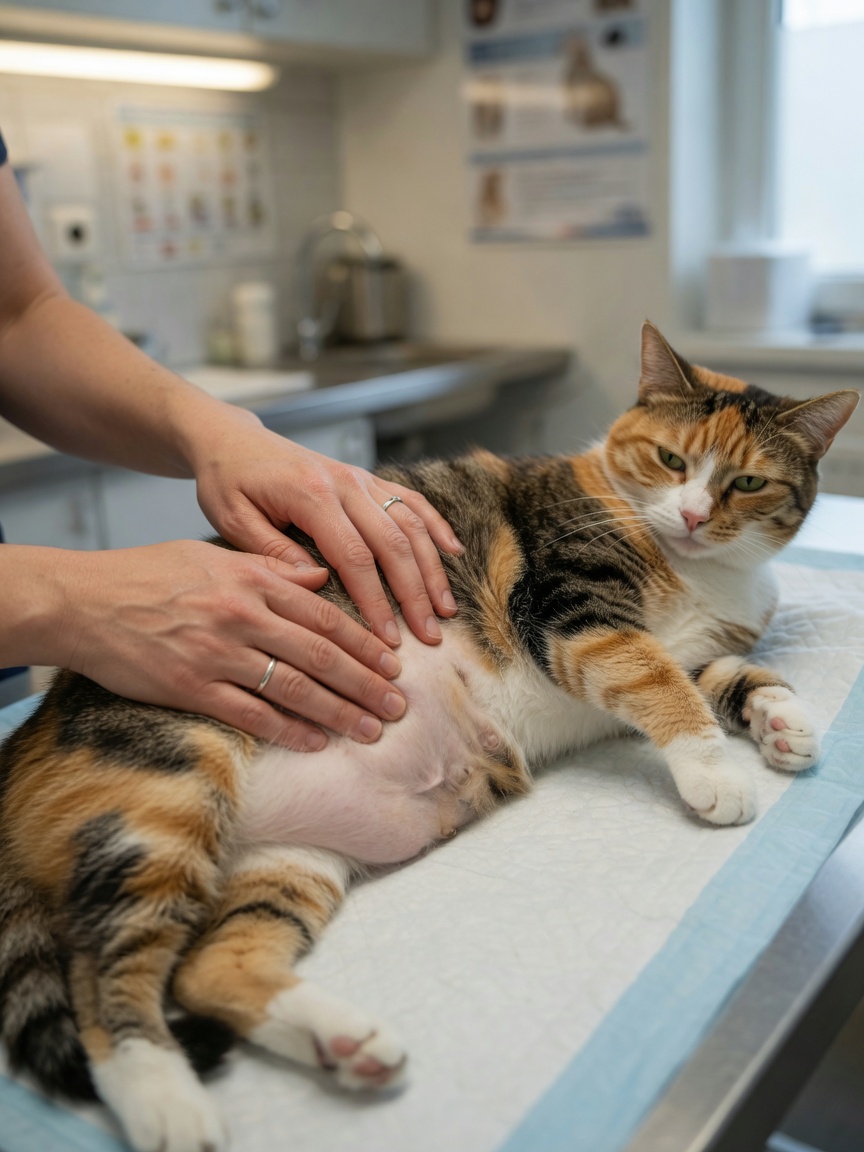
Ab der fünften Woche beginnt der Bauch der Kätzin sichtbar zu wachsen, da die Kitten rasch wachsen. Die klassische „Eselform“ – ein sanft gerundeter Bauch, der in der Mitte breiter ist – wird von oben betrachtet sichtbar. Die Gewichtszunahme wird messbar.
Der Appetit steigt in diesem Zeitraum merklich. Die Kätzin sollte nun fressen – ein hochwertiges Kittenfutter, das das erhöhte Protein, Fett, DHA (für die fetale Gehirnentwicklung) und die Kalorien liefert, die für die zweite Hälfte der Trächtigkeit benötigt werden. Kittenfutter liefert typischerweise 30–35 % mehr Kalorien pro Tasse als Erhaltungsfutter für ausgewachsene Tiere – genau das, was ein wachsender Wurf verlangt.
Füttern Sie über den Tag verteilt mehrere kleine Mahlzeiten statt einer oder zwei großen Mahlzeiten. Da die Kitten wachsen und mehr Platz im Bauch einnehmen, werden große Mahlzeiten unbequem und können Erbrechen verursachen.
Wochen 7–8: Nestbau und Vorbereitung auf die Geburt
Die Verhaltensänderung, die die letzten Wochen der Trächtigkeit signalisiert, ist unverkennbar: Nestbauverhalten. Die Kätzin beginnt, nach einem privaten, geschlossenen, dunklen Ort zu suchen, um ihre Kitten zur Welt zu bringen. Sie kann Schränke, die Rückseiten von Kleiderschränken, den Bereich unter Betten oder das Innere von Kartons untersuchen. Sich selbst überlassen, wählt sie möglicherweise einen unpraktischen oder unsicheren Ort.
Dies ist der Zeitpunkt, um eine vorbereitete Nestbox einzuführen. Verwenden Sie einen Karton oder eine handelsübliche Geburtsbox, polstern Sie sie mit sauberer, weicher Unterlage aus und stellen Sie sie an einen ruhigen, warmen Ort mit wenig Durchgangsverkehr. Zeigen Sie der Kätzin die Box und ermutigen Sie sie zur Nutzung, indem Sie ein getragenes Kleidungsstück von Ihnen hineinlegen. Einige Kätzinnen nehmen sie begeistert an; andere bevorzugen unabhängig davon ihre eigene Wahl. Versuchen Sie, sie sanft zur vorbereiteten Box umzuleiten, indem Sie den Zugang zu unsicheren Orten versperren.
Der Bauch ist nun merklich groß. Bewegungen der Kitten können gespürt werden, wenn die Kätzin ruht, und sichtbare Bewegungen können über die Bauchoberfläche hinweg zu sehen sein. Die Milchdrüsen vergrößern sich und können in den letzten Tagen beginnen, eine kleine Menge Kolostrum zu produzieren.
Woche 9: Die letzten Tage vor der Geburt
In den letzten Tagen der Trächtigkeit kann die Kätzin sehr wenig fressen oder das Futter vollständig verweigern. Unruhe, vermehrte Lautäußerungen, das Putzen der Genitalien und wiederholte Besuche der Nestbox sind alles normale Verhaltensweisen vor der Geburt. Sie kann sehr anhänglich werden oder umgekehrt völlige Zurückgezogenheit suchen.
Wie bei Hunden überwachen Sie nach Möglichkeit die rektale Temperatur. Ein Temperaturabfall signalisiert die Geburt innerhalb von 12–24 Stunden. Bereiten Sie einen sauberen, warmen Platz vor, stellen Sie Utensilien bereit (saubere Handtücher, Schere, Jodlösung zur Nabelpflege) und haben Sie die Notfallnummer Ihres Tierarztes zur Hand.
Nährstoffbedarf während der gesamten Trächtigkeit
Die feline Trächtigkeit ist nährstofftechnisch anspruchsvoll. Stellen Sie in Woche 4–5 von Erhaltungsfutter für ausgewachsene Tiere auf Kittenfutter um und setzen Sie dies über die gesamte Laktationsperiode fort (etwa 7–8 Wochen Säugezeit). Füttern Sie im letzten Trimester frei (ad libitum) statt die Mahlzeiten einzuschränken – eine Kätzin kann und sollte fressen, wann immer sie Hunger hat. Zum Höhepunkt der Laktation kann sie das 2- bis 3-Fache ihrer normalen Kalorienaufnahme benötigen, um einen großen Wurf zu versorgen.
Ergänzen Sie während der Trächtigkeit niemals eigenständig Kalzium, da dies eine lebensbedrohliche Eklampsie verursachen kann. Stellen Sie sicher, dass das von Ihnen gewählte Kittenfutter gemäß den AAFCO- oder FEDIAF-Standards für Reproduktion und Wachstum vollständig und ausgewogen ist.
Wählen Sie ein Premium-Kittenfutter, um Ihre trächtige Kätzin und ihren heranwachsenden Wurf zu unterstützen. Kittenfutter auf Zooplus kaufen →
Wichtige Erkenntnisse
- Die „Rosafärbung“ der Zitzen um die 3. Woche ist das zuverlässigste frühe Anzeichen einer Trächtigkeit bei Katzen.
- Ultraschall ab Tag 21 bestätigt die Trächtigkeit; Herzschläge sind ab Tag 28 nachweisbar.
- Stellen Sie ab den Wochen 4–5 auf Kittenfutter um und füttern Sie ad libitum während der Laktation.
- Nestbauverhalten in den Wochen 7–9 signalisiert, dass die Kätzin sich auf die Geburt vorbereitet – stellen Sie eine sichere Nestbox bereit.
- Konsultieren Sie stets Ihren Tierarzt: Symptome wie Scheinschwangerschaft, Pyometra und abdominale Tumoren können eine Trächtigkeit bei Katzen nachahmen.
Quellen
- Lawler DF. (2008). Neonatale und pädiatrische Versorgung von Welpen und Kitten. Theriogenology. PMID: 18538835
- Verstegen JP, Onclin K, Silva LD, Wouters-Ballman P. (1993). Regulation von Progesteron während der Trächtigkeit bei der Katze. Journal of Reproduction and Fertility Supplement. PMID: 8229926