
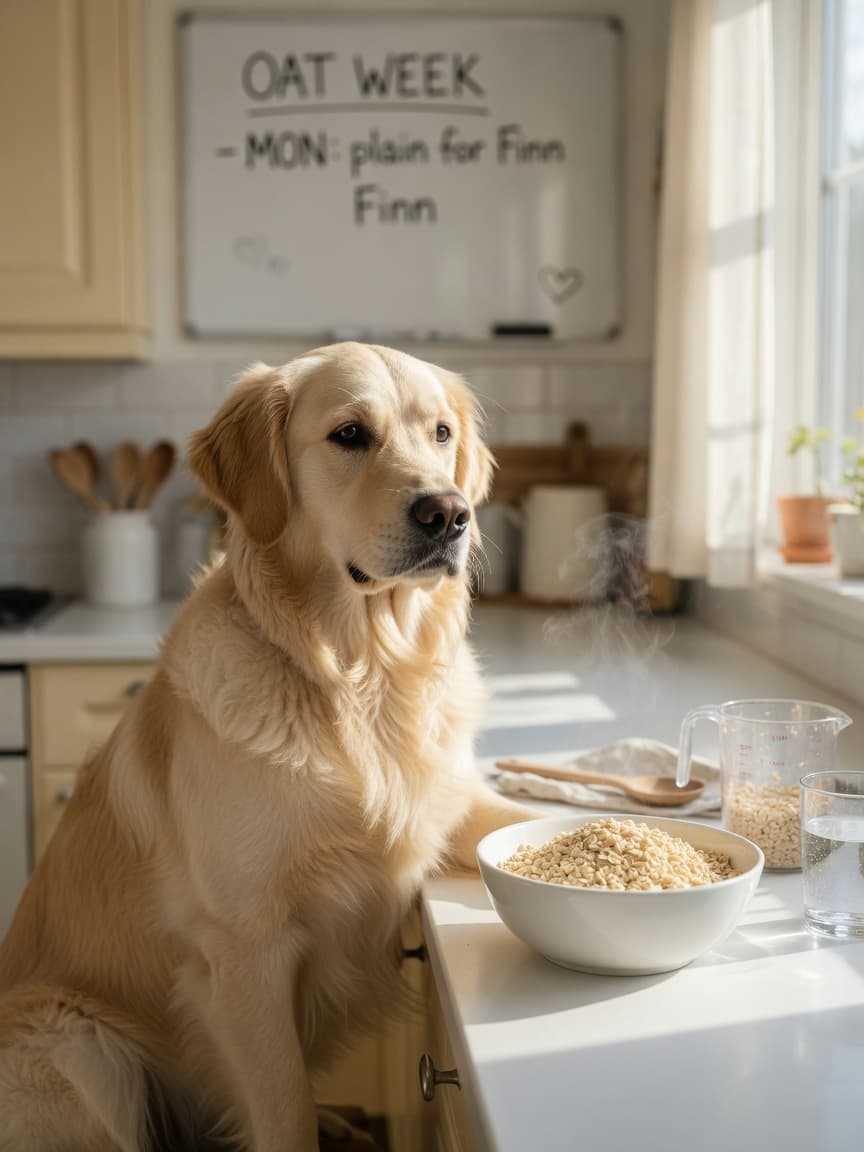
Können Hunde Haferflöckchen essen? Warum plain gekochter Hafer ein Ernährungsgewinn ist
Von Julia Wrenfield, Fachautorin für Haustiergesundheit — Juni 2025
Plain, gekochte Haferflöckchen sind ein sicheres und wirklich nahrhaftes Futter für die meisten Hunde. Reich an löslichen Ballaststoffen, B-Vitaminen und wichtigen Mineralstoffen, macht Hafer eine ausgezeichnete Ergänzung zu einer ausgewogenen Hundeernährung. Die Grundregel: immer kochen, immer pur halten und niemals aromatisierte Instant-Varianten verwenden.
Ist Haferflocken für Hunde sicher?
Hafer ist seit Jahrzehnten ein bewährtes Getreide in der Hundeernährung, und das aus gutem Grund. Plain gekochter Hafer ist nicht nur sicher für Hunde — er bietet aussagekräftige ernährungsphysiologische Vorteile, die ihn wirklich wert sind, ihn als gelegentliche Ergänzung in die Ernährung Ihres Hundes aufzunehmen. Viele kommerzielle Hundefutter enthalten bereits Hafer als primären Getreidebestandteil, was auf sein etabliertes Sicherheits- und Verdaulichkeitsprofil in der Hundeernährung hindeutet.
Die Sicherheit von Hafer für Hunde kommt mit einer wichtigen Einschränkung, die nicht genug betont werden kann: Der Hafer muss plain sein, in Wasser gekocht und völlig frei von Zusatzstoffen. Die abgepackten aromatisierten Instant-Haferprodukte, die für den menschlichen Verzehr konzipiert sind — Apfel-Zimt, Ahorn- und Rohrzucker, Honig und Mandel, und ihre vielen Variationen — sind absolut nicht für Hunde geeignet. Diese Produkte enthalten hohe Mengen an zugesetztem Zucker, künstlichen Aromen und manchmal Xylitol (ein Süßstoff, das extrem giftig für Hunde ist), zusammen mit anderen Zusatzstoffen, die der Hundegesundheit schaden.
Halten Sie sich an plain Haferflöckchen oder altmodischen Hafer, gekocht in Wasser ohne Zusätze, und Sie haben ein sicheres, nahrhaftes Futter, das die meisten Hunde gerne fressen und davon profitieren werden.
Ist Haferbrei für Hunde sicher?
Hunde können Hafer gut verarbeiten, da Hafer ein relativ einfaches Getreide mit einem guten Verdaulichkeitsprofil ist. Anders als Weizen, der Überempfindlichkeitsreaktionen bei einer Teilmenge von Hunden verursacht, wird Hafer generell sehr gut über alle Rassen und Größen hinweg vertragen. Dies macht Hafer zu einer ausgezeichneten Getreidealternative für Hunde mit Weizen- oder Glutenempfindlichkeit — Hafer ist von Natur aus glutenfrei, obwohl eine Kreuzkontamination in Einrichtungen möglich ist, die auch Weizen verarbeiten. Suchen Sie nach zertifiziertem glutenfreiem Hafer, wenn Ihr Hund eine bestätigte Glutenunverträglichkeit hat.
Hafer passt auch gut in das Ernährungsschema eines Hundes als komplexes Kohlenhydrat und bietet eine gleichmäßige Energiefreisetzung, anstatt des schnellen Blutzuckerspitzenwerts, der mit einfachen Zuckern verbunden ist. Dies macht ihn zu einer klügeren Energiequelle für aktive Hunde im Vergleich zu vielen hochglykämischen Alternativen.
Ernährungsvorteile von Hafer für Hunde
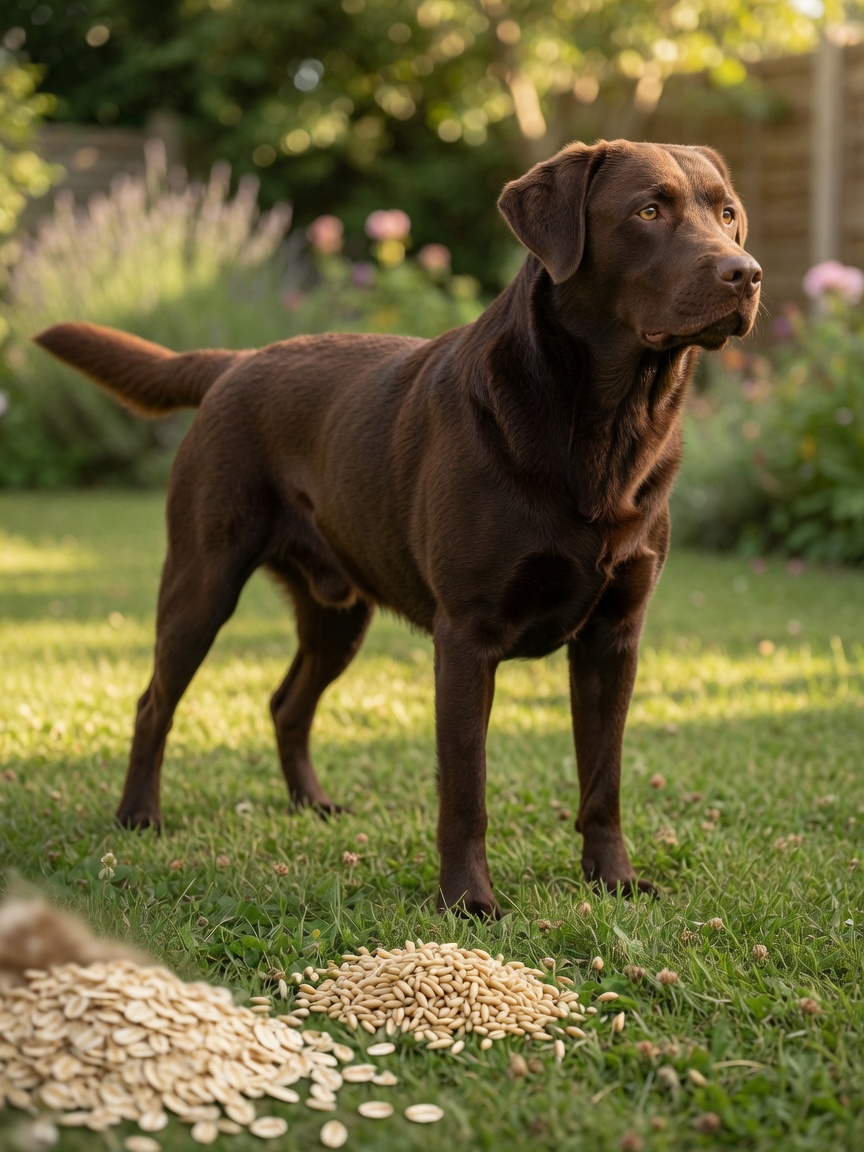
Hafer ist eines der ernährungsphysiologisch vollständigsten Getreide, die es gibt, und seine Vorteile übersetzen sich sinnvoll in die Hundegesundheit:
- Beta-Glucan (lösliche Ballaststoffe) — Hafer ist unter den reichsten Nahrungsquellen für Beta-Glucan, ein löslicher Ballaststoff mit gut dokumentierten Vorteilen für Herzgesundheit, Immunfunktion und Darmgesundheit. Beta-Glucan bildet eine gelartike Substanz im Verdauungstrakt, die die Verdauung verlangsamt und ein gesundes Darm-Mikrobiom unterstützt.
- Vitamin B5 (Pantothensäure) — essentiell für den Energiestoffwechsel und die Synthese von Coenzym A, das in fast jedem Stoffwechselweg im Körper beteiligt ist.
- Vitamin B9 (Folat) — entscheidend für Zellteilung, DNA-Synthese und Proteinmetabolismus. Besonders wichtig für trächtige oder stillende Hunde.
- Eisen — essentiell für die Hämoglobinproduktion und den Sauerstofftransport im ganzen Körper.
- Zink — unterstützt Immunfunktion, Wundheilung und gesunde Haut und Fell.
- Mangan — beteiligt an Knochenentwicklung, Knorpelbildung und Enzymaktivierung.
- Phosphor — essentiell für Knochen- und Zahnstruktur sowie Energiestoffwechsel.
- Linolsäure — eine Omega-6-Fettsäure, die einen gesunden Haut- und Feltzustand unterstützt.
- Antioxidantien — einschließlich Avenanthramide, einzigartig für Hafer, die anti-entzündliche Eigenschaften haben.
Hafer für Hunde mit Weizenempfindlichkeit
Hundeweizen-Empfindlichkeit, obwohl weniger häufig als oft in Hundefutter-Marketingmaterialien behauptet, betrifft tatsächlich einige Hunde — besonders bestimmte Rassen mit bekannten Veranlagungen zu Nahrungsmittelüberempfindlichkeiten wie Labrador Retriever, Deutsche Schäferhunde und West Highland White Terrier. Für Hunde, die durch Ausschlussdiät-Versuche als weizenempfindlich bestätigt wurden, bietet Hafer eine ausgezeichnete alternative Getreideart, die einen ähnlichen Nährwert bietet, ohne die problematischen Proteine.
Wenn Sie eine Ausschlussdiät testen, um die Nahrungsmittelüberempfindlichkeiten Ihres Hundes zu identifizieren, konsultieren Sie einen Tierernährungsberaterin, bevor Sie Hafer einführen, da eine Kreuzkontamination mit Weizen in Produktionseinrichtungen die Ergebnisse für Hunde mit echter Glutenunverträglichkeit verfälschen kann. Sobald Überempfindlichkeiten identifiziert sind und die Ernährung stabil ist, kann Hafer aus zertifizierten glutenfreien Quellen sicher aufgenommen werden.
Wie man Hafer sicher für Ihren Hund zubereitet
- Wählen Sie den richtigen Hafer. Haferflöckchen (altmodischer Hafer) sind die beste Option. Stahlgeschnittener Hafer ist ebenfalls angemessen, erfordert aber längeres Kochen. Vermeiden Sie Instant-Hafer — sie haben einen höheren glykämischen
```
Weiterlesen
Quellen & weiterführende Literatur
Dieser Artikel basiert auf begutachteter tiermedizinischer Forschung und seriösen Quellen. Entdecken Sie die Wissenschaft in unserer Forschungsbibliothek.
Related articles
Die 19 besten Tierheime in den Niederlanden (2026)
the Netherlands's animal shelters, rescue associations and refuges save thousands of dogs, cats and other animals every year, almost always on tiny budgets and volunteer power. To build the most objective ranking possible, we analysed public Google reviews across more than 56 registered animal-prote…
Read more →Die 48 besten Tierheime in Deutschland (2026)
Germany's animal shelters, rescue associations and refuges save thousands of dogs, cats and other animals every year, almost always on tiny budgets and volunteer power. To build the most objective ranking possible, we analysed public Google reviews across more than 152 registered animal-protection o…
Read more →Die 25 besten Tierheime in Italien (2026)
Italy's animal shelters, rescue associations and refuges save thousands of dogs, cats and other animals every year, almost always on tiny budgets and volunteer power. To build the most objective ranking possible, we analysed public Google reviews across more than 121 registered animal-protection org…
Read more →Die 32 besten Tierheime in Frankreich (2026)
France's animal shelters, rescue associations and refuges save thousands of dogs, cats and other animals every year, almost always on tiny budgets and volunteer power. To build the most objective ranking possible, we analysed public Google reviews across more than 89 registered animal-protection org…
Read more →Die 8 besten Tierheime in Portugal (2026)
Portugal's animal shelters, rescue associations and municipal centros de recolha save thousands of dogs, cats and other animals every year, almost always on tiny budgets and volunteer power. To build the most objective ranking possible, we analysed public Google reviews across more than 86 registere…
Read more →Yorkshire Terrier Kollabierender Luftröhre: Ursachen, Symptome & Pflege
Yorkshire Terrier gehören zu den Rassen, die am häufigsten von einer kollabierenden Luftröhre betroffen sind, hauptsächlich weil ihr Luftröhrensknorpel von Natur aus weicher und anfälliger für Schwächung ist als bei größeren Hunden. Dies bedeutet, dass sich die Knorpelringe, die die Atemwege offen halten, während des Atmens abflachen können und einen charakteristischen trockenen, heiseren Husten verursachen.
Read more →