
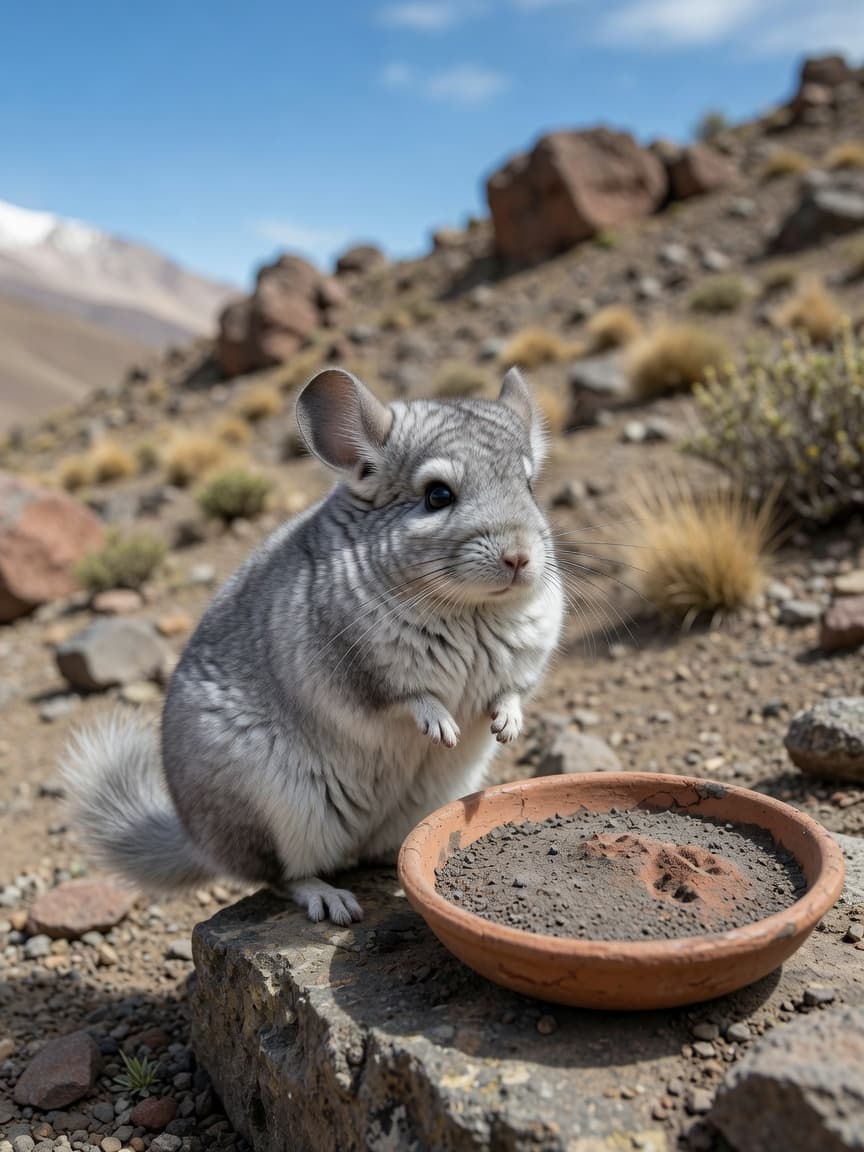
Se é proprietário de uma chinchila, provavelmente já se perguntou qual é a relação do seu animal de estimação com a água. Ao contrário de muitos outros pequenos mamíferos, as chinchilas têm uma abordagem fascinante e bastante única para se manterem limpas—e molhá-las pode realmente ser prejudicial à sua saúde. Compreender por que água e chinchilas não combinam é essencial para proporcionar cuidados adequados e manter o bem-estar do seu animal de estimação.
Por que as chinchilas não podem ficar molhadas
As chinchilas evoluíram nas montanhas de grande altitude dos Andes, na América do Sul, onde a água é escassa e os níveis de humidade são extremamente baixos. A sua pelagem adaptou-se notavelmente a este ambiente—cada folículo piloso produz aproximadamente 60 pelos individuais, criando um casaco incrivelmente denso. Esta espessura torna quase impossível que a água evapore corretamente da sua pele depois de ficarem molhadas.
Quando a água penetra na pelagem de uma chinchila, pode ficar presa contra a sua pele, criando o ambiente perfeito para infecções fúngicas, crescimento bacteriano e doenças de pele. Além disso, se uma chinchila molhada ficar com frio, pode sofrer de hipotermia, pois a sua pelagem densa perde as suas propriedades de isolamento quando saturada.
Os riscos de molhar a sua chinchila
- Infecções fúngicas: A humidade presa na sua pelagem encoraja o crescimento de bolor e fungos, levando a condições graves de pele
- Infecções bacterianas: Os ambientes húmidos promovem a colonização bacteriana na pele
- Hipotermia: A pelagem molhada perde a sua capacidade de regulação térmica, causando potencialmente quedas perigosas de temperatura
- Stress: Ficar molhada causa stress significativo às chinchilas, afectando a sua saúde geral e comportamento
- Dificuldade em secar: O seu casaco denso demora um tempo extremamente longo para secar completamente
Como as chinchilas se mantêm limpas
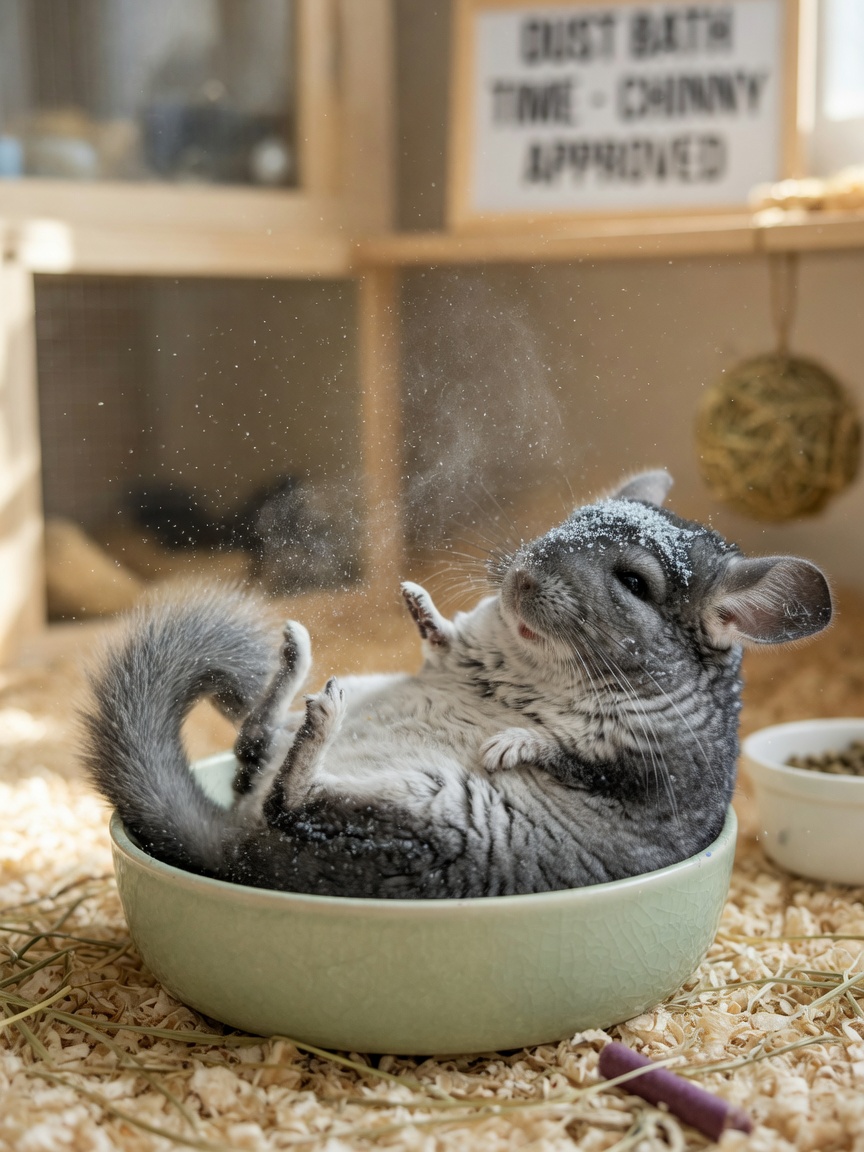
A natureza proporcionou às chinchilas uma solução elegante: banhos de pó. Em vez de água, as chinchilas limpam-se a si mesmas usando pó vulcânico fino ou pó de chinchila especialmente formulado. Este método remove óleos, sujidade e detritos da sua pelagem sem introduzir humidade.
As chinchilas normalmente gastam 15-30 minutos a rolar em pó, o que absorve os óleos em excesso e mantém o seu casaco em condição imaculada. Deve proporcionar à sua chinchila um banho de pó 2-3 vezes por semana. Um prato de cerâmica raso ou um contentor de banho de pó especialmente concebido funciona perfeitamente—preencha-o com pó de chinchila e deixe o seu animal de estimação desfrutar deste comportamento de limpeza natural.
Quando a molhadura acidental acontece
Se a sua chinchila acidentalmente ficar molhada, tome medidas imediatas:
- Remova suavemente o excesso de água usando uma toalha macia e absorvente—evite esfregar vigorosamente
- Coloque a sua chinchila num ambiente quente e seco (cerca de 18-24°C)
- Considere usar um secador de cabelo na configuração mais baixa e fresca, mantendo uma distância segura
- Proporcione um banho de pó assim que estiverem completamente secas para ajudar a restaurar a condição do seu casaco
- Monitore sinais de doença nos dias seguintes
Se a sua chinchila mostrar sinais de problemas respiratórios, letargia ou problemas de pele após ficar molhada, contacte o seu veterinário imediatamente.
Manutenção da humidade e ambiente adequados
Uma vez que as chinchilas são sensíveis à humidade, mantenha o habitat do seu animal de estimação a 40-60% de humidade. Evite ambientes húmidos e garanta ventilação adequada na sua jaula. Nunca banhe a sua chinchila com água em nenhuma circunstância, pois isto representa um risco grave para a saúde.
Pontos-chave
As chinchilas não toleram água devido às suas adaptações evolutivas únicas. A sua pelagem impossível e densa prende a humidade, levando a infecções e complicações de saúde. Em vez de banhos de água, proporcione banhos de pó regulares usando pó de chinchila apropriado. Mantenha o ambiente do seu animal de estimação seco e bem ventilado, e se a molhadura acidental ocorrer, seque-o completamente e monitore a sua saúde cuidadosamente. Ao respeitar as necessidades naturais da sua chinchila, garantirá um animal de estimação saudável e feliz por muitos anos.
```