
Axolotl Care Guide for European Keepers
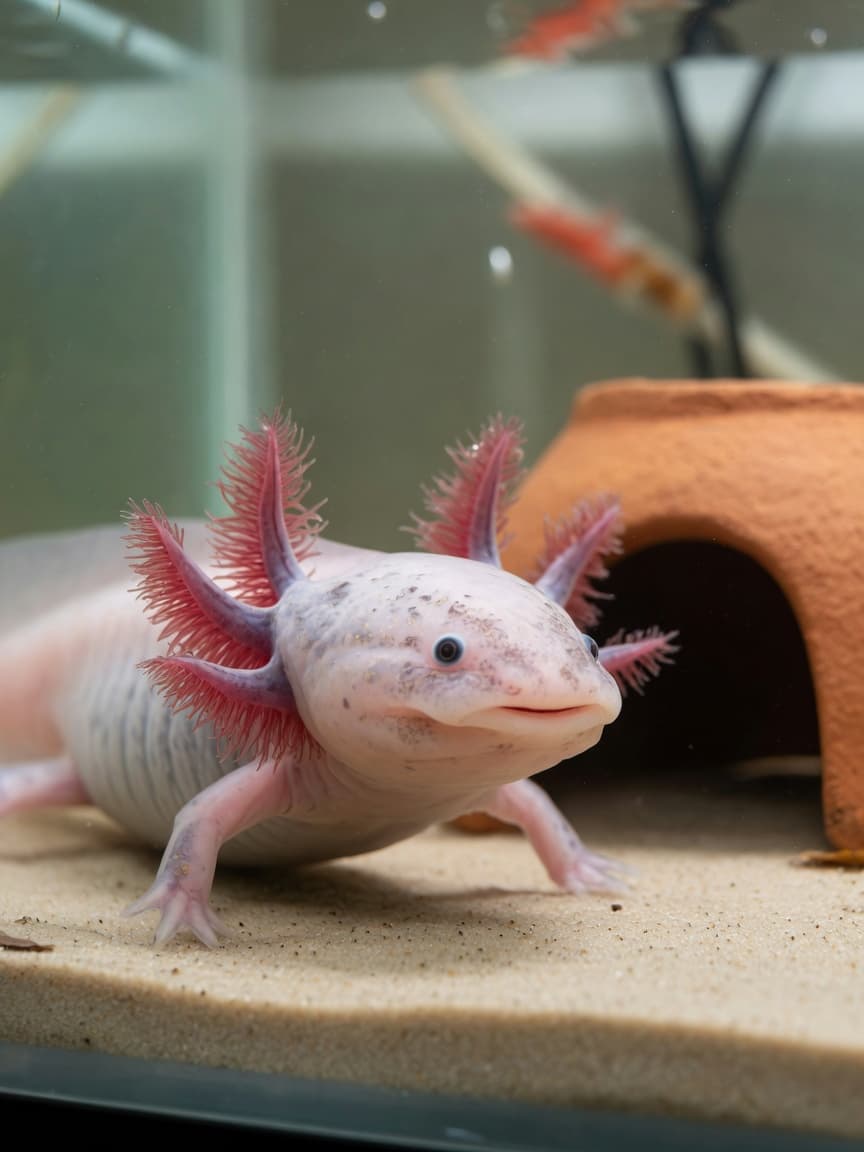
The axolotl (Ambystoma mexicanum) is one of the most extraordinary animals kept as a pet in Europe. A permanently aquatic salamander that retains its larval features throughout its life — a phenomenon known as neoteny — the axolotl is celebrated for its feathery external gills, its calm temperament, and its remarkable ability to regenerate lost limbs, gills, and even portions of its heart and brain. For European keepers, axolotls are a fascinating and manageable exotic pet, provided you understand their specific care requirements and the legal framework surrounding their ownership.
CITES Status and EU Legal Framework
Axolotls (Ambystoma mexicanum) are listed on CITES Appendix II, which means that international trade in wild-caught specimens is regulated and requires documentation. In the wild, axolotls are found only in the Xochimilco lake system near Mexico City, where they are classified as critically endangered due to habitat loss, water pollution, and invasive species. However, the axolotl has been captive-bred in large numbers in Europe for decades, and captive-bred specimens do not require CITES permits for domestic sale and ownership in most EU member states.
That said, national regulations vary. Some German federal states (Länder) require a permit to keep Ambystoma mexicanum, and keepers in France should check with local authorities, as exotic amphibian regulations have tightened in recent years. Before purchasing an axolotl, verify your local rules with your national environment or wildlife authority. Always purchase from a reputable captive breeder or pet shop that can provide documentation of captive-bred origin — never buy wild-caught animals, and never release axolotls or their tank water into local waterways.
Tank Setup: Size and Design
Axolotls are large, active animals that require considerably more space than their somewhat sedentary demeanour might suggest. A single adult axolotl needs a minimum of 80 litres, and a pair should have at least 120–150 litres. Tanks should be long rather than tall — axolotls are bottom-dwellers and prioritise floor space over height. A 100 x 40 cm footprint is ideal for one or two adults.
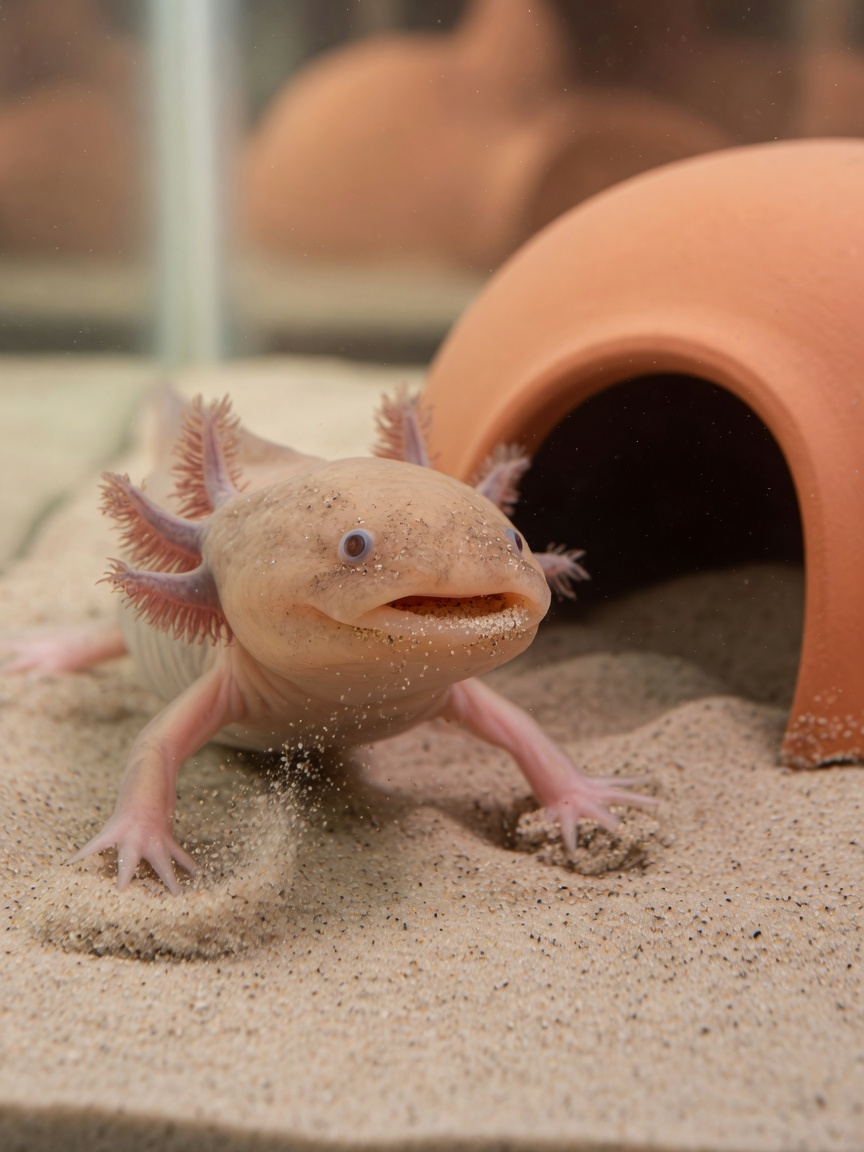
Substrate choice is critical. Axolotls readily ingest loose substrate while feeding, and gravel is the most common cause of fatal gut impaction — a blockage of the digestive tract that is often lethal. Use only fine sand (grain size 1–2 mm) or a bare-bottom setup. Coarse sand, gravel, or decorative stones must be avoided. Provide several hides — terracotta caves, PVC pipe sections, and smooth ceramic decorations all work well. Axolotls feel safest when they can conceal themselves fully, and exposed animals are chronically stressed.
Water Temperature: The Critical Factor
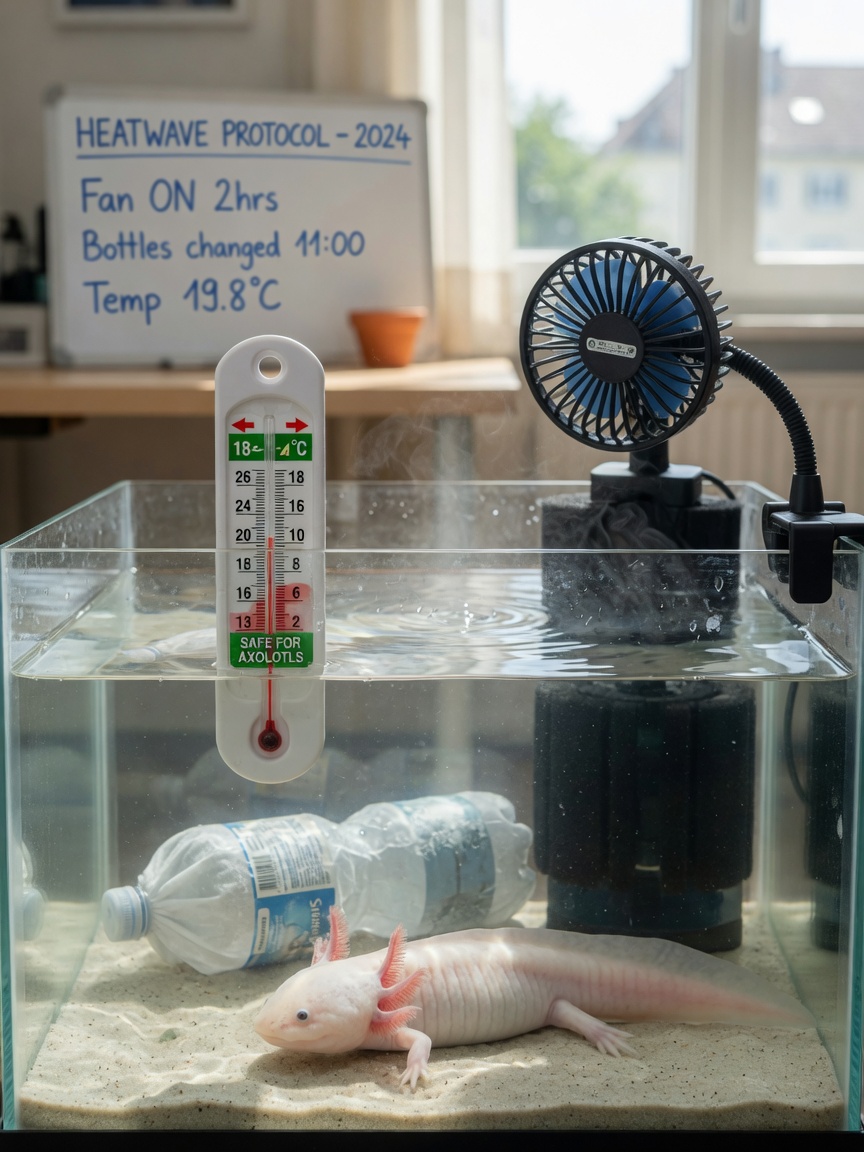
Temperature is the single most important environmental variable for axolotl health, and it is where most European keepers struggle. Axolotls are cold-water animals that require temperatures between 14 and 18°C. They can tolerate 12°C for short periods and can survive up to 20°C briefly, but sustained temperatures above 22°C cause fatal heat stress. In most of northern Europe, unheated indoor rooms during winter will maintain suitable temperatures naturally. However, during summer heatwaves — increasingly common across Europe — you will need active cooling.
Options include aquarium chillers (available from Zooplus and specialist retailers), clip-on desk fans directed at the water surface to promote evaporative cooling, frozen water bottles placed in the sump or next to the filter outflow, or keeping the tank in the coolest room of your home. A reliable thermometer should be checked daily during summer. Never use a tank heater in an axolotl setup.
Water Parameters and Filtration
Axolotls are sensitive to water quality and produce significant waste relative to their size. Target the following parameters:
- Temperature: 14–18°C
- pH: 7.0–8.0
- Ammonia: 0 ppm
- Nitrite: 0 ppm
- Nitrate: below 20 ppm (axolotls are sensitive to elevated nitrate)
- GH: 7–14 dGH
Filtration is essential but must produce gentle flow — axolotls dislike strong currents, which stress them and can disrupt their delicate gills. Sponge filters, canister filters with a spray-bar output turned toward the glass, or HOB (hang-on-back) filters fitted with a baffle all work well. Perform weekly water changes of 20–25%, using dechlorinated water matched to the tank temperature. Cycle the tank fully before adding your axolotl.
Feeding Your Axolotl
Axolotls are carnivores with a strong feeding response. The best dietary staple for adult axolotls is earthworms (Lumbricus terrestris) — they are nutritionally complete, easily sourced from garden centres or online, and eagerly accepted. Supplement with axolotl-specific pellets, frozen bloodworm, and occasional blackworm. Avoid feeder fish, which can introduce disease and parasites. Feed adults every 2–3 days, offering an amount they can consume in 3–5 minutes, and remove uneaten food promptly to maintain water quality. Juveniles should be fed daily with smaller prey items such as micro-worms and daphnia before graduating to small earthworm pieces.
The Regenerative Biology of Axolotls
One of the most remarkable aspects of axolotl biology is their extraordinary capacity for regeneration. Axolotls can regrow entire limbs, portions of the spinal cord, heart muscle, and even parts of the brain — a capability that has made them the subject of significant biomedical research. In a healthy, unstressed axolotl kept at appropriate temperatures, minor injuries such as small gill damage or superficial wounds heal rapidly. This regenerative ability is not a justification for careless handling — it does not make axolotls immune to serious injury or disease — but it is a biologically fascinating aspect of caring for these animals.
Common Health Problems
The most frequently encountered health issues in pet axolotls include:
- Fungal infections: White fluffy growths on gills or skin, typically caused by Saprolegnia or related fungi. Often secondary to poor water quality, injury, or stress. Mild cases can be treated with short salt baths (use non-iodised salt at 2–3 g/litre for 10–15 minutes) but severe infections require veterinary antifungal medication.
- Bacterial infections: Red streaking, ulcers, or lethargy caused by bacteria such as Aeromonas. Require antibiotic treatment prescribed by a vet.
- Rectal or cloacal prolapse: Tissue protruding from the vent, often linked to constipation, parasites, or bacterial infection. Requires urgent veterinary attention.
- Gut impaction: Caused by ingestion of gravel or coarse substrate. Symptoms include anorexia, swelling, and lethargy. Prevention (fine sand or bare bottom) is critical — treatment is surgical and often unsuccessful.
For any health concern, consult a veterinarian with ECZM (European College of Zoological Medicine) certification or recognised experience with exotic amphibians. General practice vets are rarely equipped to diagnose or treat axolotl conditions. Many European cities with veterinary schools have exotic animal clinics with relevant expertise.
Where to Buy in the EU
Purchase axolotls only from reputable captive breeders or specialist aquatic shops that can demonstrate the captive-bred origin of their animals. Axolotl breeding communities are active across Germany, the Netherlands, France, and Spain, and breeders can often be found through national herpetological societies or online fishkeeping forums. Zooplus and similar retailers supply the equipment you will need — tanks, filters, and water treatment products — though axolotls themselves are best sourced directly from breeders who can provide health history and lineage information.