
Waterparameters voor tropische vissen: De complete gids voor EU-houders
Waterchemie is de onzichtbare basis van elk succesvol aquarium. Vissen kunnen hun eigen interne chemie niet reguleren zoals zoogdieren dat doen — zij zijn volledig afhankelijk van het water om hen heen voor gasuitwisseling, osmoregulatie en immuunfunctie. Het begrijpen en handhaven van juiste waterparameters is daarom de meest belangrijke vaardigheid die een tropische viskweker kan ontwikkelen. Deze gids behandelt alle belangrijke parameters voor veelgebruikte EU-aquariumvissen, hoe je ze betrouwbaar test en hoe je onbalansen corrigeert.
Temperatuur
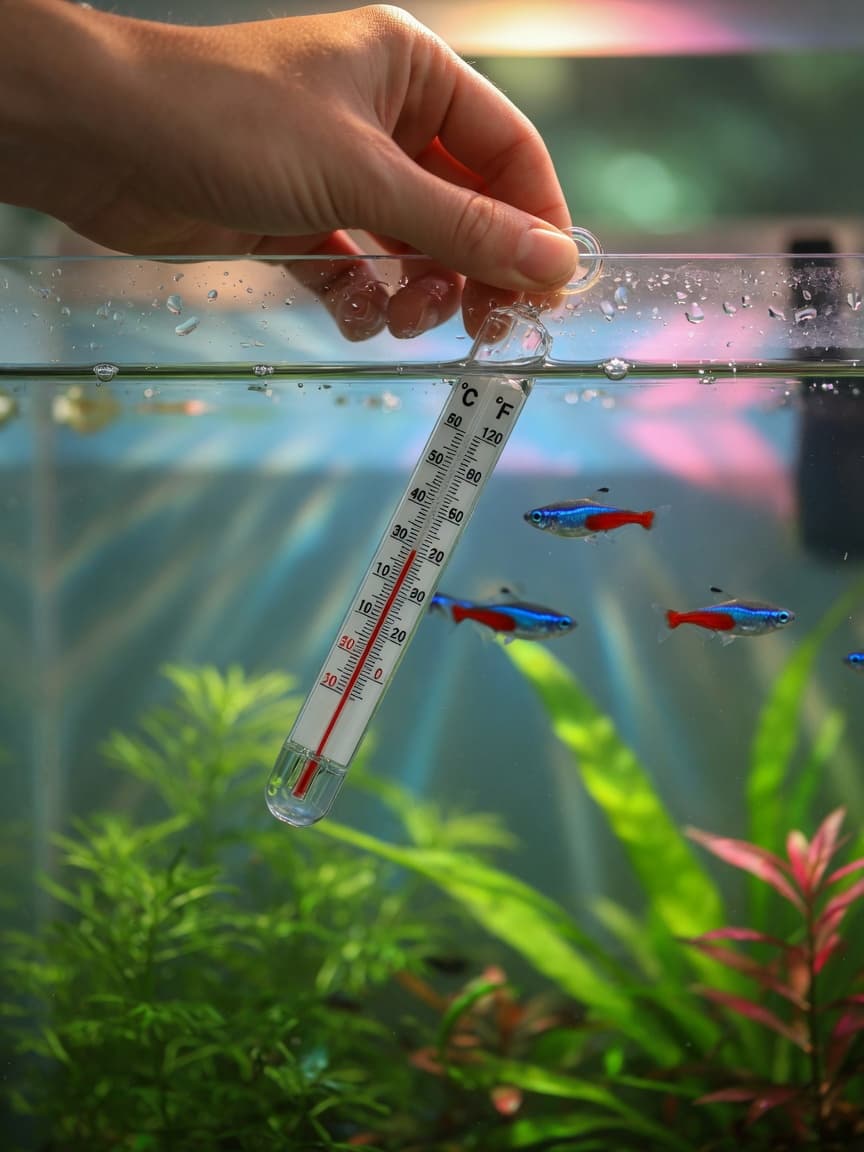
De meeste tropische vissen zijn ectotherm en vereisen stabiele, soortspecifieke temperaturen. Plotselinge temperatuurschommelingen van zelfs 2–3°C kunnen immunosuppressie en ziekteuitbraken veroorzaken. De volgende bereiken gelden voor veelgebruikte EU-aquariumsoorten:
- Tetras (neon, kardinaal, rommelneus): 22–28°C
- Cichliden (Afrikaanse Rift-meermeren): 25–30°C
- Corydoras-meerval: 22–26°C
- Guppies en levendbarende vissen: 22–28°C
- Discusvis: 28–31°C (specialistische vissen die constant hoge temperaturen vereisen)
- Rasbora's en danio's: 22–26°C
Gebruik een kwaliteitsverwarmer met thermostaat en controleer de waarden met een aparte thermometer — verwarmersthermostaten kunnen in de loop van de tijd verschuiven. Digitale zelfklevende thermometers zijn betaalbaar en nauwkeurig.
pH: zuurgraad en alkaliniteit
pH meet de zuurgraad of alkaliniteit van water op een schaal van 0 tot 14, met 7,0 als neutraal. De meeste tropische communityvis gedijt tussen pH 6,8 en 7,6, maar soortspecifieke vereisten verschillen aanzienlijk:
- Zuid-Amerikaanse tetras en cichliden (bijvoorbeeld discusvis, apistogramma): pH 5,5–7,0 (zacht, zuur water)
- Afrikaanse Rift-meermeren cichliden (malawi, tanganyika): pH 7,8–8,5 (hard, alkalisch water)
- Corydoras: pH 6,5–7,5
- De meeste communityvis: pH 6,8–7,5
EU-kraanwater pH verschilt aanzienlijk per regio. Water in Noord-Europa is meestal zachter en licht zuur, terwijl water in kalksteen gebieden van Zuid-Europa behoorlijk hard en alkalisch kan zijn. Zorg dat je je lokale kraanwater parameters kent voordat je vissen aankoopt — het proberen houden van discusvissen in water met pH 8,2 zonder behandeling veroorzaakt chronische stress.
Algemene hardheid (GH) en carbonaathardheid (KH)
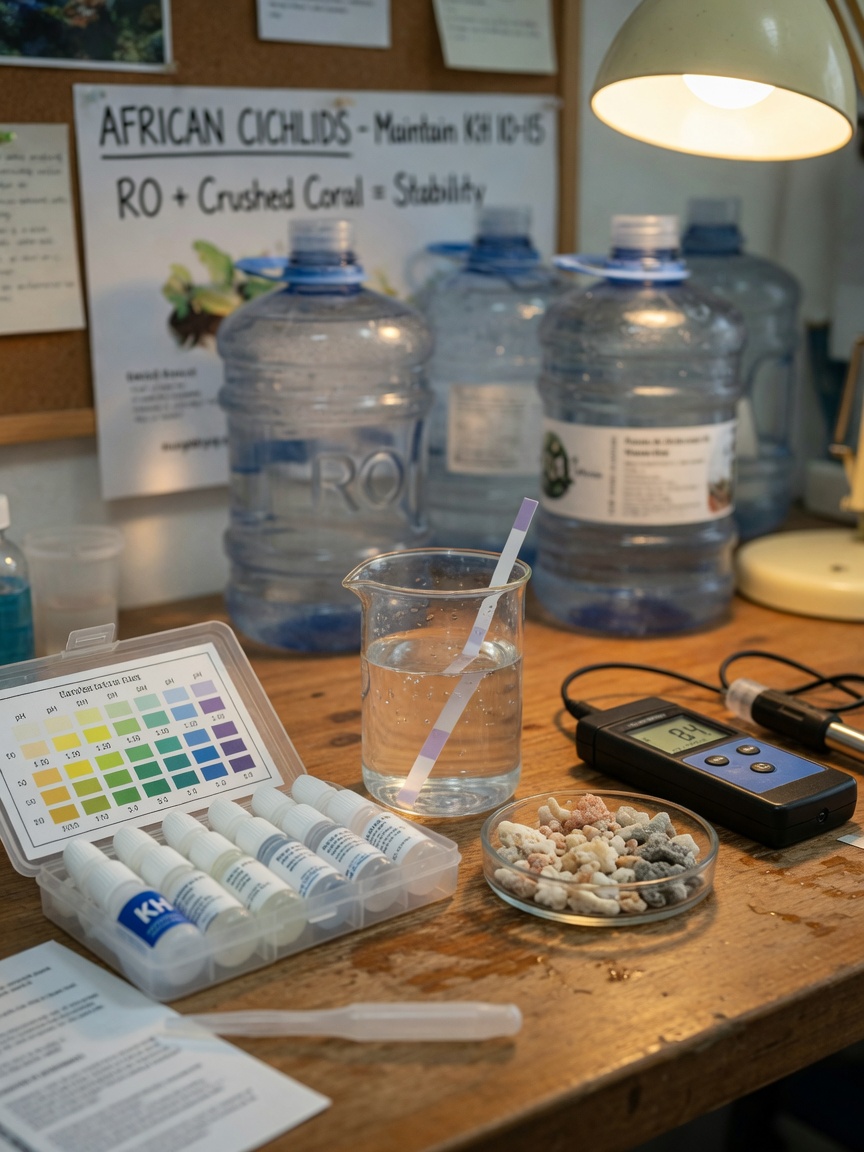
GH meet de concentratie van opgeloste calcium- en magnesiumionen. KH (carbonaathardheid of alkaliteit) meet het buffervermogen van het water — het vermogen om pH-schommelingen tegen te gaan. Deze worden gemeten in graden Duitse hardheid (dGH) of deeltjes per miljoen (ppm).
- Zacht watervissen (tetras, discusvissen, meeste Zuid-Amerikaanse soorten): GH 1–8 dGH, KH 1–4 dGH
- Hard watervissen (levendbarende vissen, Afrikaanse cichliden): GH 10–20 dGH, KH 8–15 dGH
- Algemene communityvis: GH 5–12 dGH
Lage KH leidt tot pH-crashes — gevaarlijke, plotselinge dalingen in zuurgraad die een tank in één nacht kunnen doden. Als je KH onder 3 dGH ligt, voeg je verwuste koraal of natriumbicarbonaat toe om het te verhogen. Omgekeerd, om water te verzachten voor gevoelige soorten, meng je omgekeerde osmose (RO) water met kraanwater om de gewenste parameters te bereiken.
De stikstofcyclus: ammoniak, nitriet en nitraat
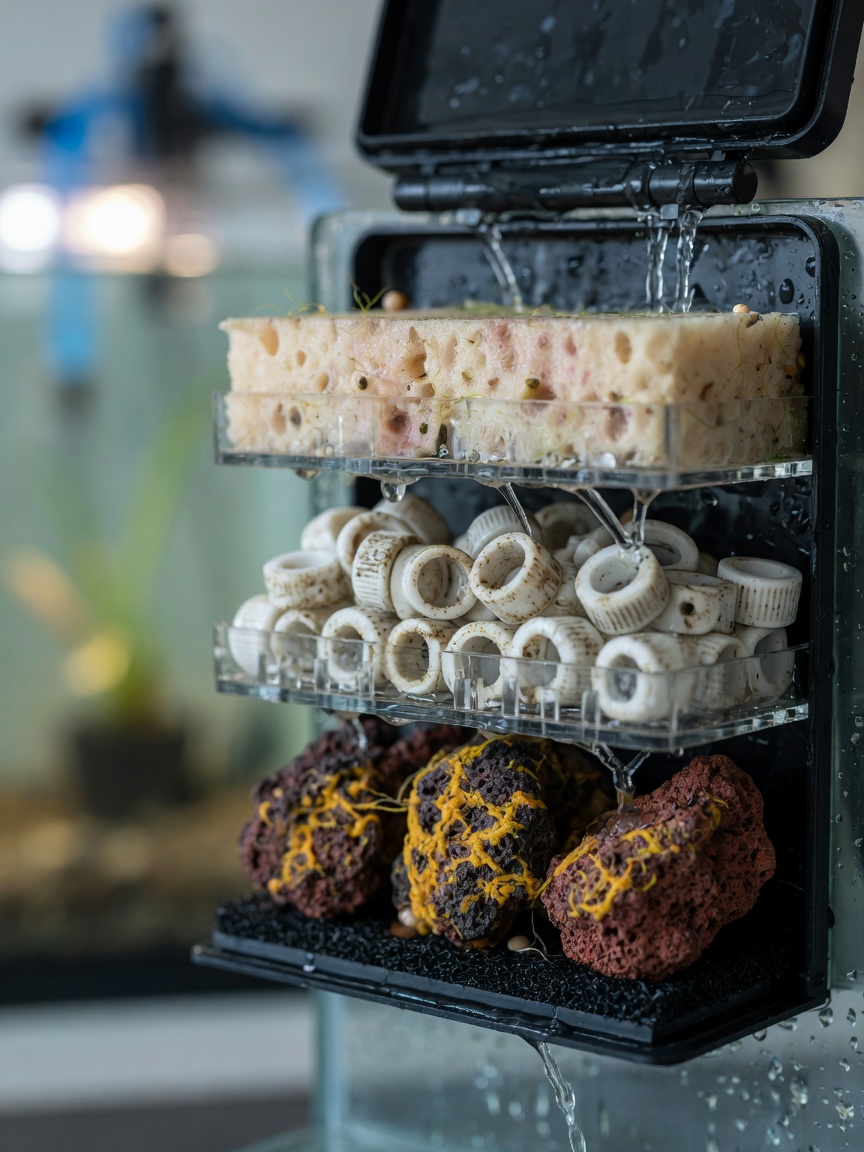
De stikstofcyclus is het biologische proces dat aquariumhouderij mogelijk maakt. Nuttige bacteriën in je filter breken vissenafval en verrottend materiaal in twee stappen af: ammoniak wordt door Nitrosomonas-bacteriën omgezet in nitriet, en nitriet wordt vervolgens door Nitrobacter-bacteriën omgezet in het veel minder giftige nitraat. Streefwaarden zijn:
- Ammoniak (NH3/NH4+): 0 ppm te allen tijde
- Nitriet (NO2-): 0 ppm te allen tijde
- Nitraat (NO3-): onder de 20 ppm voor gevoelige soorten; onder de 40 ppm voor robuuste vissen
Detecteerbare ammoniak of nitriet duidt op een probleem — ofwel een ongecycleerde tank, een overvolle systeem, een filterstoring of een plotseling uitsterven van bacteriën (veroorzaakt door behandeling met medicijnen zonder filtermedia te verwijderen). Voer onmiddellijk een waterwissel van 30–50% uit als een van beide hoger dan 0 ppm is.
Chloor- en chloramineverwijdering
EU-kraanwater wordt behandeld met chloor of, in toenemende mate, chloramine (een chloor-ammoniak verbinding) om het veilig voor menselijke consumptie te maken. Beide zijn giftig voor vissen en voor de nuttige bacteriën in je filter. Gebruik altijd een dechlorinator voordat je kraanwater aan je aquarium toevoegt. Producten zoals Seachem Prime, Tetra AquaSafe of JBL Biotopol neutraliseren chloor en chloramine onmiddellijk en zijn beschikbaar bij Zooplus en de meeste EU-aquariumwinkels. Prime heeft het extra voordeel dat het laag ammoniak en nitriet tijdelijk onschadelijk maakt, wat nuttig kan zijn tijdens de tank-cyclisering.
Watertests: vloeibare kits versus teststrips
Nauwkeurige tests zijn onmisbaar. Papieren teststrips zijn handig maar notoir onnauwkeurig, vooral voor pH- en KH-aflezingen. Vloeibare testkits, hoewel iets meer moeite, zijn veel betrouwbaarder. De API Freshwater Master Test Kit behandelt pH, ammoniak, nitriet en nitraat en wordt algemeen beschouwd als de gouden standaard voor thuisaquariumtesting. JBL ProAquaTest sets bieden vergelijkbare kwaliteit en zijn populair in heel Europa. Voor GH en KH produceren JBL en Salifert speciale hardnessttests. Test je water minstens eenmaal per week, en test altijd na het medicijngebruik, na het toevoegen van nieuwe vissen of na elk apparatuurfalen.
Waterwisselfrequentie en volume
Regelmatige gedeeltelijke waterwissels zijn het meest effectieve hulpmiddel voor het behouden van goede waterkwaliteit. Voor de meeste communitytropen tanks is een wekelijkse wissel van 15–25% van het tankvolume passend. Zwaar gestockte tanks of tanks met grote, smerige vissen (cichliden, goudvissen) kunnen 30–40% wisselingen tweemaal per week vereisen. Zorg bij waterwissels dat de temperatuur van het vervangingswater binnen 1–2°C van de tank ligt om thermische schok te voorkomen. Gebruik een grindvacuüm om mulm van het substraat af te zuigen tijdens waterwissels — dit verwijdert een belangrijke bron van ammoniak voordat het in de waterkolom terecht komt.
EU-regelgeving: sla nooit tankwater of vissen uit
Dit punt kan niet genoeg worden benadrukt. Onder EU-regelgeving voor biodiversiteit en invasieve soorten — inclusief EU-Verordening 1143/2014 voor invasieve uitheemse soorten — is het vrijlaten van aquariumvissen, planten of tankwater in lokale waterafvoeren illegaal en ecologisch verwoestend. Soorten zoals roodoor-waterschildpadden, goudvissen en verschillende tropische vissen hebben al wilde populaties in delen van Zuid-Europa gevestigd vanwege onverantwoorde loslatingen. Als je een vis niet langer wilt houden, neem je contact op met je lokale aquariumclub, plaats je het via viskwekeriesfora of vraag je je aquatische winkelier of ze het zullen aannemen. Giet tankwater nooit in afvoeren die met waterafvoeren zijn verbonden.
Praktische tips voor EU-houders
- Onderzoek je lokale kraanwaterparameters voordat je vissen koopt — neem contact op met je waterbedrijf of gebruik onlinehulpmiddelen van je gemeente
- Houd een waterwijssellog bij om parametertrends in de loop van de tijd bij te houden
- Zorg ervoor dat je testkits, waterverzachters en back-uphervarmers van Zooplus of een lokale aquariumwinkel hebt voordat je ze nodig hebt
- Zet nieuwe vissen 4–6 weken in quarantaine voordat je ze aan een ingeburgerde tank toevoegt
- Zet vissen af op je water in plaats van te proberen je water radicaal aan de vissen aan te passen
Consistent waterkwaliteitsbeheer is wat florerende aquaria van falende aquaria onderscheidt. Investeer in een goede testkit, begrijp je kraanwater en zet je in voor een regelmatig onderhoudsschema — je vissen zullen je belonen met lange, gezonde levens en levendige kleuren.