
Perzische katten hebben een verhoogde kans op polycysteuze nieraandoening (PKD) door een goed gedocumenteerde erfelijke genetische mutatie die ervoor zorgt dat er vanaf de geboorte met vocht gevulde cysten in het nierweefsel ontstaan, die in de loop der jaren geleidelijk groter worden. Het allerbelangrijkste om te begrijpen is dat PKD progressief en op dit moment ongeneeslijk is, maar dat veel aangedane katten met genetisch onderzoek, vroege opsporing en zorgvuldige, levenslange begeleiding nog jarenlang comfortabel leven voordat de nierfunctie duidelijk achteruitgaat.
Waarom Perzische katten gevoelig zijn voor PKD
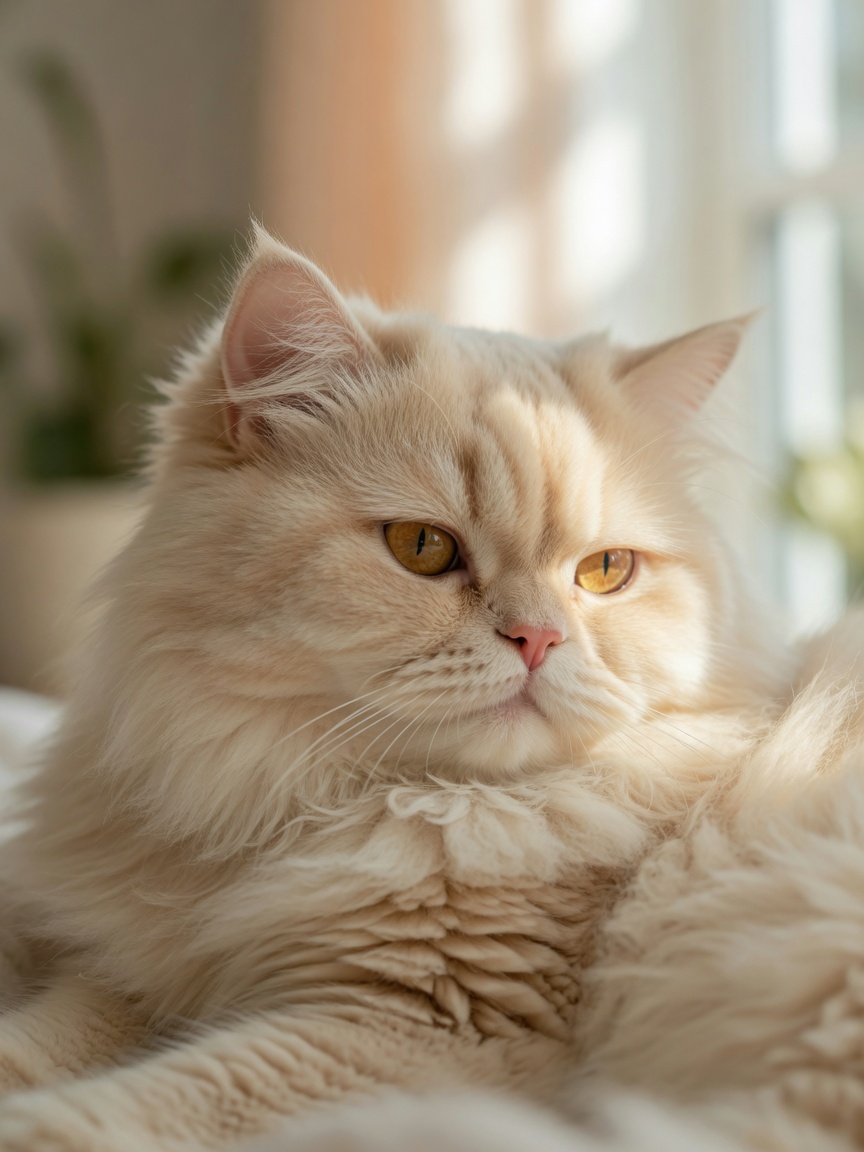
Polycysteuze nieraandoening bij Perzen wordt veroorzaakt door een autosomaal dominante genetische mutatie, wat betekent dat een kat maar één exemplaar van het defecte gen van een van beide ouders hoeft te erven om de ziekte te ontwikkelen. Deze mutatie kwam vroeger wijdverbreid voor binnen het Perzische ras en is door historische kruisingen ook terechtgekomen in verwante rassen zoals de Exotic Shorthair en sommige Britse Korthaarkatten. Omdat de mutatie dominant is, zullen katten die zelfs maar één exemplaar dragen bijna altijd cysten ontwikkelen, in tegenstelling tot recessieve aandoeningen waarbij twee exemplaren nodig zijn.
De cysten zelf zijn kleine, met vocht gevulde holtes die ontstaan in de nefronen, de microscopisch kleine filtereenheden van de nier. Kittens worden doorgaans geboren met een klein aantal piepkleine cysten die zonder beeldvorming niet op te sporen zijn. In de loop van maanden en jaren nemen deze cysten langzaam toe in grootte en aantal, waarbij gezond nierweefsel geleidelijk wordt vervangen door niet-functioneel cysteus materiaal. Omdat Perzen als ras een hogere genetische frequentie van deze mutatie hebben dan de algemene kattenpopulatie, zijn verantwoorde fokpraktijken en genetische screening bijzonder relevant als je je verdiept in de rasgids voor de Perzische kat voordat je een kitten uitkiest.
Het is goed om te weten dat niet elke Perz PKD heeft; de ziekte hangt volledig af van de vraag of een individuele kat het gemuteerde gen heeft geërfd. Betrouwbare fokkers testen hun fokkatten nu standaard en streven ernaar aangedane dieren uit hun programma te halen, wat de prevalentie in veel goed beheerde lijnen heeft verlaagd.
Vroege signalen en symptomen om op te letten

PKD verloopt notoir langzaam en veel katten laten jarenlang geen uiterlijke symptomen zien terwijl de cysten in stilte groter worden. Daardoor is oplettendheid belangrijk, zelfs bij katten die volkomen gezond lijken. Verschijnselen treden meestal pas op zodra een aanzienlijk deel van het nierweefsel is aangetast, wat vaak op middelbare leeftijd is, hoewel soms ook eerder.
- Meer dorst en meer urineren — een van de vroegste en meest consistente signalen, doordat de nieren hun concentrerend vermogen verliezen.
- Gewichtsverlies ondanks een normale of in sommige gevallen zelfs toegenomen eetlust.
- Verminderde eetlust of in het algemeen kieskeurig zijn met eten doordat afvalstoffen zich in het bloed opbouwen.
- Lusteloosheid of minder poetsen, soms merkbaar als een dovere, minder goed verzorgde vacht.
- Braken, met name periodiek braken dat niet te maken heeft met haarballen of voerwisselingen.
- Slechte adem met een chemische of ammoniakachtige geur, een teken van opbouwende afvalstoffen.
- Slechte vachtconditie en zichtbaar gewichtsverlies langs de rug en heupen in verder gevorderde stadia.
Omdat deze verschijnselen sterk overlappen met nierziekte door welke oorzaak dan ook, en ook kunnen lijken op hyperthyreoïdie of gebitsproblemen, worden ze gemakkelijk afgedaan als "gewoon ouder worden". Elke Perz die een combinatie van deze signalen laat zien, verdient een goed veterinair onderzoek in plaats van een afwachtende houding.
Wanneer PKD een noodgeval wordt
De meeste PKD verloopt geleidelijk, maar er zijn situaties die diezelfde dag nog veterinaire aandacht vereisen in plaats van een gewone afspraak. Grote cysten kunnen af en toe scheuren of bloeden, en bij ernstig nierfalen kunnen bovenop de chronische ziekte acute complicaties ontstaan.
- Plotseling instorten of extreme lusteloosheid — dit kan wijzen op acuut nierfalen bovenop chronische ziekte.
- Herhaald braken en water niet binnen kunnen houden, met risico op gevaarlijke uitdroging.
- Volledig verlies van eetlust gedurende meer dan 24 uur, met name in combinatie met lusteloosheid.
- Zichtbaar bloed in de urine
- Toevallen of desoriëntatie, wat kan optreden bij ernstige uremie (opbouw van afvalstoffen) of gevaarlijk hoge bloeddruk, beide mogelijke complicaties van gevorderde nierziekte.
Als je een van deze zaken opmerkt, wacht dan niet op een gewone afspraak — dit vraagt om dringende veterinaire beoordeling.
Diagnose
Het goede nieuws is dat PKD een van de eenvoudiger op te sporen erfelijke aandoeningen is, en dat de diagnose al lang voordat symptomen verschijnen gesteld kan worden. Er worden twee hoofdbenaderingen gebruikt, vaak in combinatie.
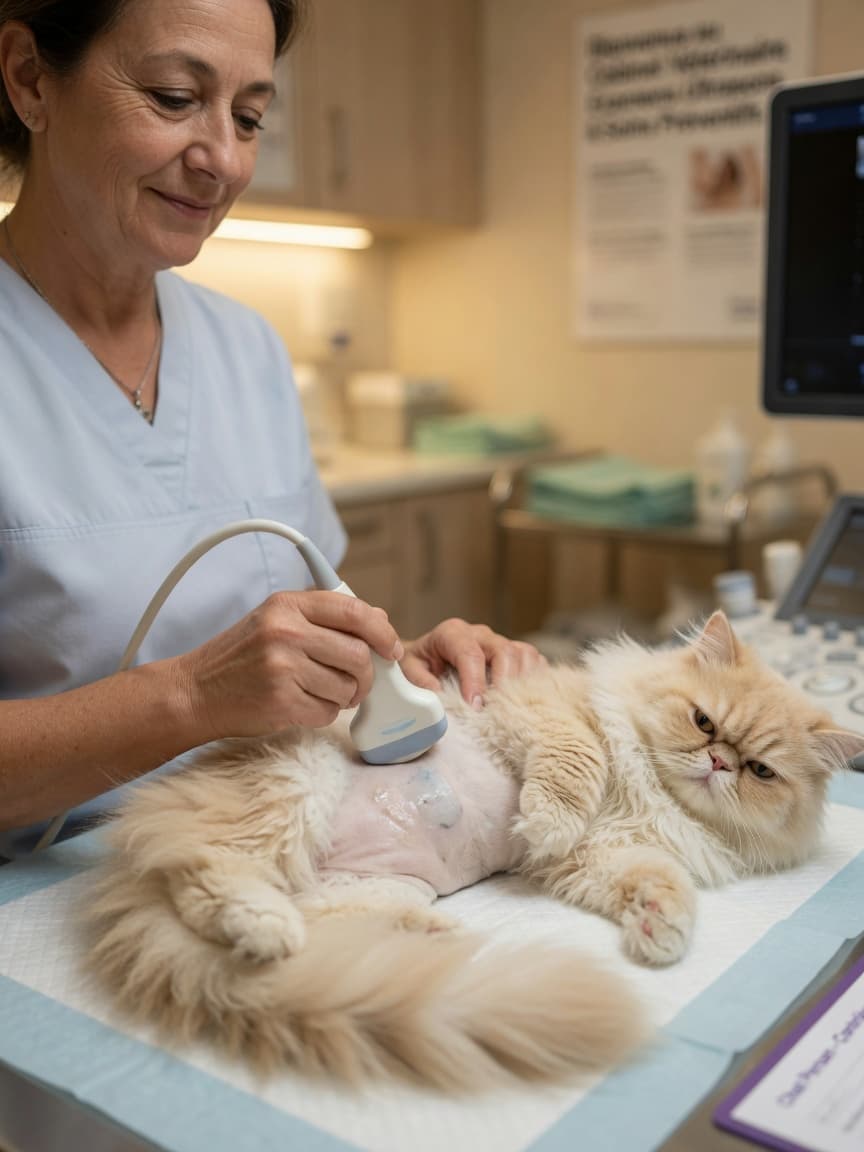
Echografie is het diagnostische hulpmiddel van de gouden standaard. Een ervaren onderzoeker kan kenmerkende cysten meestal al bij kittens van tien maanden oud herkennen, en op volwassen leeftijd is echografie zeer betrouwbaar om de ziekte aan te tonen of uit te sluiten. Cysten zijn te zien als duidelijke, met vocht gevulde cirkels in de nier, te onderscheiden van de normale nieropbouw.
Genetisch (DNA-)onderzoek is mogelijk via een eenvoudige wanguitstrijk of bloedmonster en spoort direct het gemuteerde gen op dat verantwoordelijk is voor de klassieke vorm van PKD bij katten zoals die bij Perzen voorkomt. Deze test kan bij kittens van elke leeftijd worden uitgevoerd, zelfs voordat cysten op de echo zichtbaar zijn, en is bijzonder waardevol voor fokkers die katten screenen voor de dekking.
Naast het bevestigen van PKD zelf zal je dierenarts waarschijnlijk ondersteunend bloedonderzoek doen (nierwaarden zoals ureum, creatinine en SDMA) en een urineonderzoek om te beoordelen hoe goed de nieren op dat moment functioneren, plus een bloeddrukmeting, omdat hypertensie vaak samengaat met chronische nierziekte.
Begeleiding en behandelmogelijkheden
Er is geen genezing voor PKD en er is geen manier om de cysten zelf te verkleinen of te verwijderen. De begeleiding richt zich in plaats daarvan op het ondersteunen van de nierfunctie, het vertragen van de progressie en het zo lang mogelijk comfortabel houden van je kat — een aanpak die sterk lijkt op die van chronische nierziekte door welke oorzaak dan ook.
- Nierondersteunende diëten met een lager fosforgehalte en aangepaste eiwitniveaus kunnen de belasting van beschadigde nieren verlichten en worden meestal geïntroduceerd zodra bloedonderzoek een afnemende functie laat zien.
- Bloeddrukmedicatie als hypertensie wordt vastgesteld, omdat ongecontroleerde hoge bloeddruk de nierschade kan versnellen en de ogen kan beschadigen.
- Fosfaatbinders om verhoogde fosforwaarden in verder gevorderde ziekte te helpen beheersen.
- Vochttherapie, hetzij als af en toe subcutaan vocht bij de dierenarts, hetzij in gevorderde gevallen aangeleerd aan eigenaren om thuis toe te dienen, om de hydratatie en het afvoeren van afvalstoffen te ondersteunen.
- Medicatie tegen misselijkheid en eetlustopwekkers tijdens opflakkeringen om je kat aan het eten en comfortabel te houden.
- Regelmatige controle met herhaald bloed- en urineonderzoek elke paar maanden (of zoals je dierenarts adviseert) om de progressie te volgen en de behandeling daarop aan te passen.
De behandeling wordt afgestemd op het ziektestadium — een kat die vroeg wordt gediagnosticeerd met kleine cysten en normale bloedwaarden heeft misschien jarenlang niets meer nodig dan controle, terwijl een kat met nierfalen in een later stadium intensievere ondersteunende zorg vraagt.
Preventie en dagelijkse zorg
Omdat PKD genetisch is, kan het niet worden voorkomen zodra een kat de mutatie heeft geërfd — maar verantwoord fokken is op populatieniveau het werkelijke preventiemiddel. Als je een Perzisch kitten aanschaft, vraag fokkers dan of de ouderdieren via DNA zijn getest of met echografie vrij zijn bevonden van PKD.
Voor katten die al met de diagnose leven, richt de dagelijkse zorg zich op een niervriendelijke leefstijl:
- Zorg altijd voor vers, goed toegankelijk water en overweeg een drinkfontein om het drinken te stimuleren.
- Geef een consistent, door de dierenarts goedgekeurd dieet dat past bij het nierstadium.
- Houd stress laag, want stress en uitdroging samen kunnen de belasting van de nieren verergeren.
- Houd regelmatige controles bij de dierenarts aan, ook als je kat er goed uitziet, om veranderingen vroeg op te sporen.
- Let thuis tussen de dierenartsbezoeken goed op gewicht en eetlust.
Realistisch over kosten en prognose
Het is belangrijk om eerlijk te zijn over wat leven met een PKD-diagnose inhoudt. Diagnostisch onderzoek (echografie en genetisch onderzoek) is een bescheiden eenmalige kostenpost, maar de doorlopende begeleiding — dieetvoeding op recept, herhaald bloedonderzoek, bloeddrukcontroles en medicatie — vormt een levenslange financiële en tijdsinvestering die toeneemt naarmate de ziekte vordert. Gevorderde gevallen kunnen vaker dierenartsbezoeken, vochttherapie thuis en opname tijdens opflakkeringen vereisen.
De prognose varieert enorm, afhankelijk van hoeveel nierweefsel is aangetast en hoe vroeg de ziekte wordt ontdekt. Sommige Perzen met een kleine cystenlast leven een volledig, grotendeels normaal leven met minimale interventie, terwijl andere met uitgebreidere cysteuze aantasting eerder naar nierfalen toe gaan. Vroege diagnose, consequente controle en proactieve begeleiding maken echt een wezenlijk verschil voor de kwaliteit van leven en de levensduur, ook al kan de onderliggende ziekte niet worden teruggedraaid.
Veelgestelde vragen
Kunnen twee Perzische ouderdieren die beide PKD-vrij zijn, toch een aangedaan kitten voortbrengen?
Nee — omdat de mutatie dominant is en er slechts één defect exemplaar nodig is om de ziekte te veroorzaken, kunnen twee daadwerkelijk via DNA getest vrije ouders via deze specifieke mutatie geen aangedaan kitten voortbrengen. Daarom is genetisch onderzoek van fokkatten zo effectief in het terugdringen van PKD in toekomstige nestjes.
Bij mijn Perz zijn een paar kleine cysten vastgesteld, maar hij lijkt volkomen gezond — moet ik nu iets doen?
Mogelijk heel weinig, behalve controleren. Veel katten leven jarenlang comfortabel met kleine, langzaam groeiende cysten. Je dierenarts zal waarschijnlijk periodiek bloed- en urineonderzoek aanraden om de nierfunctie in de tijd te volgen, zodat de behandeling direct kan beginnen als er veranderingen optreden.
Is PKD pijnlijk voor katten?
In de meeste gevallen is PKD zelf niet uitgesproken pijnlijk, hoewel zeer grote cysten af en toe ongemak kunnen veroorzaken of, zelden, kunnen scheuren. Ongemak komt vaker voort uit de secundaire effecten van de afnemende nierfunctie, zoals misselijkheid, en daarom is symptoombestrijding een belangrijk onderdeel van de zorg.
Dit artikel is uitsluitend bedoeld ter informatie en vormt geen vervanging van professioneel veterinair advies. Raadpleeg je dierenarts voor een juiste diagnose en een behandeling die is afgestemd op jouw kat.