
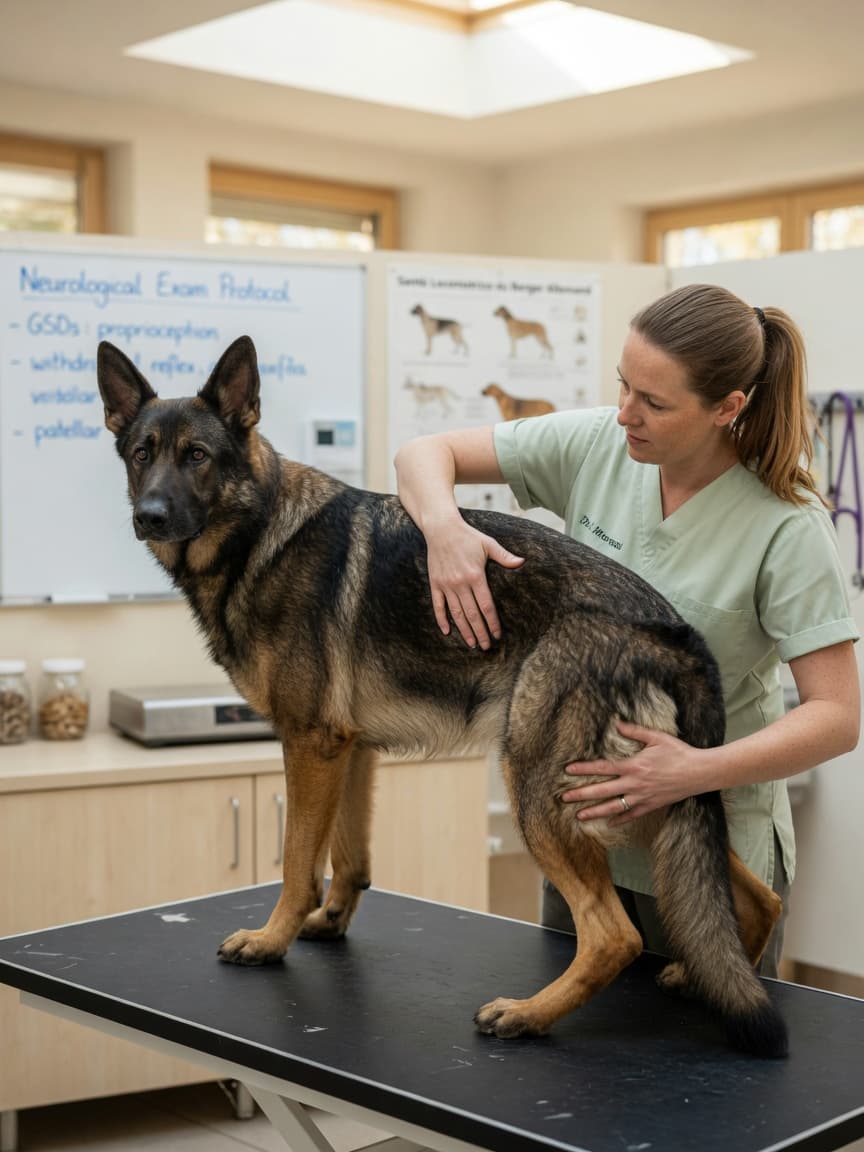
Duitse herders hebben een van de hoogst bekende risico's op degeneratieve myelopathie (DM), door een genetische mutatie (SOD1) die onevenredig vaak voorkomt binnen het ras en die een langzame, pijnloze achteruitgang van het ruggenmerg veroorzaakt die in de beginfase lijkt op veroudering of heupproblemen. Het allerbelangrijkste om te weten is dat DM niet te genezen is en met geen enkele bewezen medische behandeling kan worden vertraagd. Een vroege, nauwkeurige diagnose is dus vooral van belang om behandelbare aandoeningen die erop lijken uit te sluiten en om realistische, zorgzame begeleiding te plannen, in plaats van te zoeken naar een oplossing.
Waarom Duitse herders gevoelig zijn voor degeneratieve myelopathie
Degeneratieve myelopathie is een progressieve aandoening van het ruggenmerg, die meestal in verband wordt gebracht met een mutatie in het SOD1-gen. Deze mutatie is bij Duitse herders in aanzienlijk hogere mate vastgesteld dan bij veel andere rassen. Daarom beschouwen dierenartsen en neurologen dit ras als een klassieke kandidaat wanneer een oudere hond langzaam verergerende zwakte in het achterlijf ontwikkelt. Het bezitten van het gemuteerde gen betekent niet automatisch dat een hond klinische DM zal ontwikkelen, maar het verhoogt wel de kans in vergelijking met rassen waarbij de mutatie zeldzaam is of niet voorkomt.
De ziekte tast de witte stof van het ruggenmerg aan, met name in het thoracale gebied (midden van de rug), waardoor de zenuwsignalen die de achterpoten besturen geleidelijk worden verstoord. Het wordt niet veroorzaakt door een hernia, trauma of een infectie — het is een langzaam, degeneratief, niet-inflammatoir proces, wat mede verklaart waarom het in de eerste weken zo gemakkelijk over het hoofd wordt gezien.
De grootte en bouw van Duitse herders spelen ook een rol in hoe de ziekte zich uit. Omdat het een groter, zwaarder ras is, wordt subtiele zwakte in de achterpoten in het begin vaak toegeschreven aan de heupen, de knieën of gewoon aan veroudering in plaats van aan het ruggenmerg, wat de herkenning kan vertragen. Wilt u een breder beeld van de algemene gezondheidsneigingen van dit ras, dan geeft de rasgids van de Duitse herder de bredere context naast deze specifieke aandoening.
Vroege verschijnselen en symptomen om op te letten
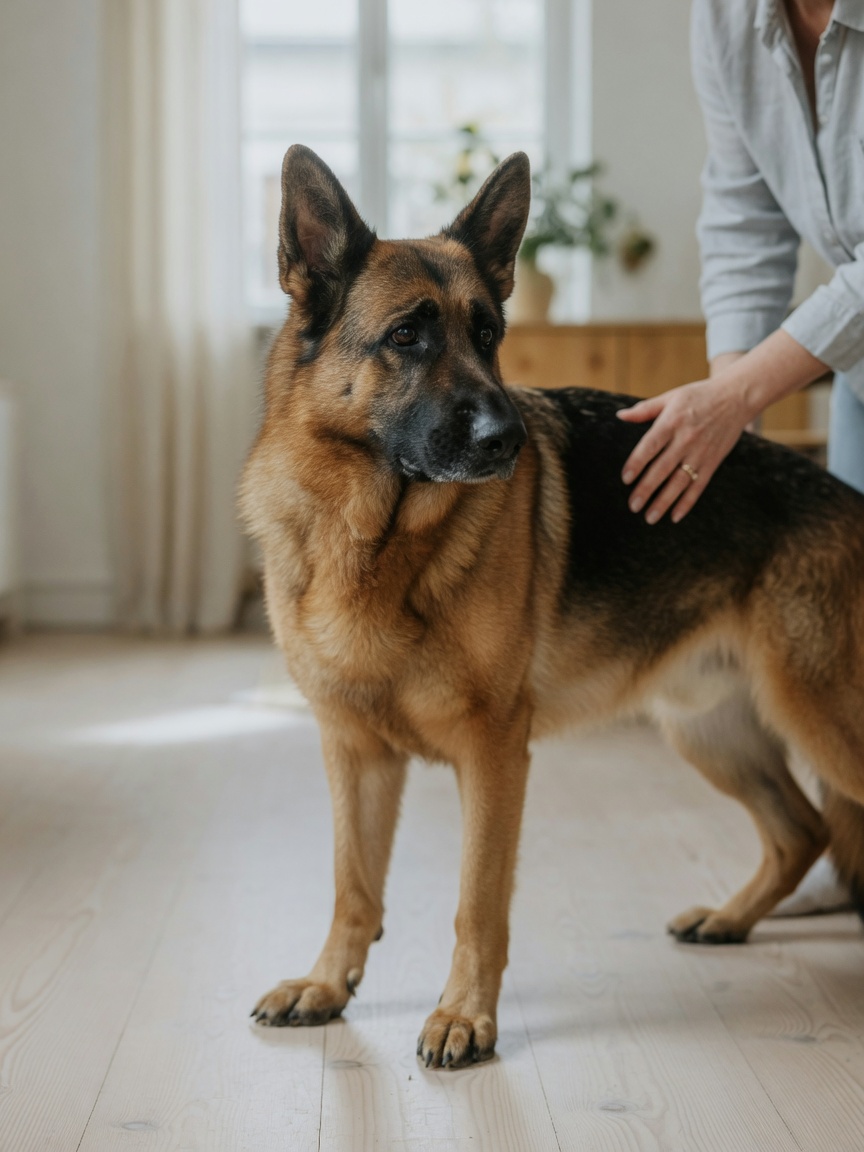
DM begint doorgaans bij honden van middelbare tot oudere leeftijd en verloopt geleidelijk over maanden. Omdat het begin zo subtiel is, wijten veel eigenaren de eerste verschijnselen in eerste instantie aan "gewoon ouder worden".
- Milde, af en toe optredende zwakte of wankelheid in één of beide achterpoten
- Slepen of schuren met de tenen van een achterpoot, soms met afgesleten nagels aan één poot
- Moeite met opstaan uit liggende positie, vooral op gladde of glibberige vloeren
- Een subtiel zwaaien of "dronken" uiterlijk van het achterlijf, vooral opvallend bij het maken van bochten
- Het kruisen van de achterpoten tijdens het lopen, of het doorzakken van de achterpoten
- Spieratrofie over het achterlijf naarmate de zwakte toeneemt
- Latere stadia: verlies van de functie van de achterpoten, en uiteindelijk zwakte die zich uitbreidt naar voren en de continentie aantast
Een belangrijk kenmerk waarmee DM van veel pijnlijke aandoeningen van de rug of het skelet kan worden onderscheiden, is dat het in zichzelf meestal niet pijnlijk is. Als uw hond angstig of ongemakkelijk lijkt, jankt of zich tegen beweging verzet, wijst dit eerder op een ander probleem, zoals een hernia, artrose of een andere oorzaak van pijn, en moet dit met spoed worden beoordeeld.
Wanneer het een noodgeval is
DM zelf verloopt langzaam en is op zichzelf zelden een noodgeval, maar plotselinge veranderingen bij een hond met vermoede of vastgestelde DM moeten altijd snel worden nagekeken. Zoek dringend veterinaire hulp als u het volgende opmerkt:
- Plotseling, snel verlies van de functie van de achterpoten binnen uren in plaats van weken of maanden
- Tekenen van pijn — janken, een gebogen houding, onwil om te bewegen of een gespannen buik
- Plotseling verlies van controle over blaas of darmen
- Instorten, moeite met ademen of volledig niet meer kunnen staan
- Nieuwe zwakte in de voorpoten die plotseling ontstaat
Deze verschijnselen wijzen op iets anders dan, of iets naast, de klassieke langzaam beginnende DM — zoals een uitstulping van een tussenwervelschijf, een tumor of een andere acute neurologische gebeurtenis — en vereisen een snelle diagnose, omdat sommige van deze aandoeningen behandelbaar zijn of zelfs chirurgische noodgevallen vormen.
Hoe degeneratieve myelopathie wordt vastgesteld
Er bestaat geen enkele bloedtest die DM bij een levende hond bevestigt. De diagnose is in plaats daarvan een proces van zorgvuldige uitsluiting, gecombineerd met genetisch onderzoek als ondersteunend bewijs.
- Neurologisch onderzoek: Uw dierenarts beoordeelt de reflexen, de proprioceptie (of uw hond weet waar zijn poten zich bevinden) en het gangbeeld om het probleem in het ruggenmerg te localiseren.
- Genetisch onderzoek naar de SOD1-mutatie: Een wanguitstrijkje of bloedtest kan aantonen of uw hond nul, één of twee kopieën van de mutatie draagt. Twee kopieën vergroten de kans dat DM de oorzaak van de symptomen is, maar bevestigen de ziekte niet op zichzelf, aangezien sommige honden met twee kopieën nooit klinische verschijnselen ontwikkelen.
- Geavanceerde beeldvorming (MRI of CT): Wordt gebruikt om andere, vaak behandelbare oorzaken van zwakte in de achterpoten uit te sluiten, zoals tussenwervelschijfaandoeningen, tumoren in het ruggenmerg of fibrocartilagineuze embolie. MRI wordt beschouwd als de gouden standaard voor het uitsluiten van deze aandoeningen die erop lijken.
- Uitsluiten van orthopedische aandoeningen: Omdat heupdysplasie en artrose ook vaak voorkomen bij dit ras en vergelijkbare zwakte in het achterlijf kunnen veroorzaken, kan uw dierenarts naast het neurologische onderzoek röntgenfoto's maken of de gewrichten op een andere manier beoordelen.
In werkelijkheid kan een definitieve DM-diagnose alleen worden gesteld bij post-mortem onderzoek van ruggenmergweefsel. Bij leven werken dierenartsen met een "vermoedelijke" diagnose op basis van ras, leeftijd, het typische verloop, genetische uitslagen en het uitsluiten van andere oorzaken.
Behandel- en begeleidingsmogelijkheden
Er bestaat momenteel geen medische of chirurgische behandeling die degeneratieve myelopathie stopt of omkeert. De begeleiding is volledig ondersteunend en gericht op het zo lang mogelijk behouden van mobiliteit, comfort en kwaliteit van leven.
- Fysiotherapie en hydrotherapie: Regelmatige, gestructureerde beweging onder professionele begeleiding kan helpen om spiermassa en mobiliteit langer te behouden, en veel eigenaren merken dat het de conditie en het zelfvertrouwen van hun hond van dag tot dag verbetert.
- Hulpmiddelen voor mobiliteit: Ondersteunende tuigjes, karretjes met achterwielen (hondenrolstoelen) en antislipvloeren of kleden kunnen honden helpen actief en veilig te blijven naarmate de zwakte in de achterpoten toeneemt.
- Gewichtsbeheersing: Uw hond slank houden vermindert de belasting van de toch al aangetaste achterpoten en maakt geholpen bewegen gemakkelijker voor zowel hond als eigenaar.
- Verpleegkundige zorg: Naarmate de ziekte vordert, worden aandacht voor de gezondheid van de huid (om doorligwonden te voorkomen), blaasmanagement en hygiëne steeds belangrijker.
- Pijnstilling waar nodig: Hoewel DM zelf doorgaans niet pijnlijk is, kunnen secundaire problemen zoals spierverrekkingen of compensatie door de gewrichten baat hebben bij door de dierenarts voorgeschreven pijnbestrijding.
Beslissingen over kwaliteit van leven en uiteindelijk over euthanasie zijn zeer persoonlijk en moeten worden begeleid door uw dierenarts, die u kan helpen te herkennen wanneer ondersteunende zorg het comfort niet langer in stand houdt.
Preventie en dagelijkse zorg
Omdat DM een sterke genetische basis heeft, is er geen gegarandeerde manier om het te voorkomen bij een hond die de mutatie draagt. Toch maken verantwoord fokken en zorgvuldige dagelijkse zorg een echt verschil, zowel op het niveau van de populatie als van het individu.
- Genetisch onderzoek van fokdieren op de SOD1-mutatie, waarbij combinaties worden vermeden die pups met twee kopieën van het gen opleveren
- Het hele leven een gezond lichaamsgewicht behouden om de belasting van gewrichten en wervelkolom te verminderen
- Regelmatige, matige beweging om spiertonus en algemene fitheid te ondersteunen
- Routinematige controles bij de dierenarts bijhouden, zodat vroege veranderingen in de achterpoten snel worden opgemerkt en onderzocht
- Zorgen voor goede grip in huis (kleden, loopplanken) als algemene voorzorgsmaatregel voor een verouderend groot ras, ongeacht het DM-risico
Kosten en prognose: een realistisch beeld
Diagnostische kosten kunnen oplopen, vooral als een MRI nodig is om andere aandoeningen uit te sluiten, naast genetisch onderzoek en consulten bij de neuroloog. De doorlopende kosten verschuiven doorgaans naar fysiotherapie, hulpmiddelen voor mobiliteit zoals karretjes en tuigjes, en aanpassingen in huis, in plaats van naar medicatie, omdat geen enkel geneesmiddel het verloop van de ziekte verandert.
De prognose is helaas die van een geleidelijke maar onverbiddelijke achteruitgang. De meeste aangedane honden verliezen binnen ongeveer zes maanden tot een jaar na de eerste duidelijke symptomen het vermogen om zonder hulp te lopen, hoewel het tempo sterk verschilt per individu. Met toegewijde fysiotherapie, ondersteuning van de mobiliteit en verpleegkundige zorg behouden veel honden nog een aanzienlijke periode na de diagnose een goede kwaliteit van leven. Open, eerlijke gesprekken met uw dierenarts over doelen, grenzen en timing helpen u de meest liefdevolle beslissingen te nemen naarmate de ziekte vordert.
Veelgestelde vragen
Is degeneratieve myelopathie pijnlijk voor mijn hond?
Over het algemeen niet — DM wordt op zichzelf niet als een pijnlijke aandoening beschouwd, omdat het de zenuwgeleiding aantast en geen ontsteking of weefselschade veroorzaakt die pijn doet. Ongemak bij aangedane honden komt vaker voort uit secundaire problemen, zoals spierverrekkingen door het compenseren van zwakke poten. Laat tekenen van pijn dus altijd door uw dierenarts nakijken in plaats van aan te nemen dat ze bij DM horen.
Moet ik mijn Duitse herder genetisch laten testen, ook als hij gezond lijkt?
Veel eigenaren kiezen ervoor om te testen, vooral als ze van plan zijn te fokken of simpelweg vroeg informatie willen. Een test die twee kopieën van de SOD1-mutatie aantoont, vergroot de statistische kans op DM in de toekomst, maar garandeert niet dat uw hond symptomen zal ontwikkelen. Beschouw het dus het beste als één onderdeel van het totaalbeeld en niet als een definitieve voorspelling.
Kan beweging degeneratieve myelopathie verergeren?
Passende, matige beweging en fysiotherapie worden over het algemeen aangemoedigd, omdat ze helpen spierkracht en mobiliteit te behouden in plaats van de achteruitgang te versnellen. Beweging moet echter worden afgestemd op de veranderende mogelijkheden van uw hond, onder begeleiding van een dierenarts of fysiotherapeut, aangezien overbelasting of activiteiten met veel impact het risico op valincidenten of overbelasting kunnen vergroten naarmate de zwakte toeneemt.
Dit artikel is uitsluitend bedoeld voor algemene informatieve doeleinden en vormt geen vervanging van professioneel veterinair advies. Raadpleeg uw dierenarts voor een nauwkeurige diagnose en een behandeling die is afgestemd op de individuele behoeften van uw hond.