
Dashonden behoren tot de rassen die het meest gevoelig zijn voor gewichtstoename, vooral omdat hun lange rug en korte poten betekenen dat zelfs een bescheiden overschot aan vet ernstige belasting op de wervelkolom veroorzaakt. Hun kleine omvang, voedselliefde en vaak bescheiden bewegingsbehoefte maken het gemakkelijk voor extra gewicht om onopgemerkt toe te nemen. Het belangrijkste wat je moet weten, is dat je Dashhond slank houden niet alleen een kwestie van uiterlijk is—het vermindert rechtstreeks het risico op pijnlijke, mogelijk invaliderende rugaandoeningen, dus gewichtsbeheer moet worden behandeld als een kernonderdeel van wervelkolom-gezondheid, niet als iets optioneel.
Waarom Dashonden Vooral Gevoelig Zijn voor Obesitas
Dashonden werden gefokt om ondergronds te werken, graven dassen en andere graafdieren na, wat hun karakteristieke lange lichaam en korte poten vormde (een vorm van dwergroei genaamd chondrodystrofie). Dit lichaamsvorm is niet zomaar een cosmetisch bijzonderheid—het verandert hoe gewicht de hond beïnvloedt. Extra vet voegt belasting toe aan een wervelkolom die al minder structurele ondersteuning heeft dan een evenredig gebouwde hond, wat de druk op de schijven tussen de wervels verhoogt.
Verschillende factoren samen maken gewichtstoename veel voorkomen in dit ras:
- Klein formaat, grote eetlust: Dashonden staan erom bekend erg voedselgemotiveerd te zijn, en eigenaren onderschatten vaak hoeveel calorieën een kleine hond eigenlijk nodig heeft.
- Lage bewegingstolerantie bij sommige individuen: Korte poten betekenen dat een "lange wandeling" voor een Dashhond minder afstand aflegt dan voor een groter ras, dus calorieverbrandingkan lager zijn dan eigenaren aannemen.
- Castratie: Zoals de meeste rassen hebben Dashonden na castratie typisch minder calorieën nodig vanwege langzamer metabolisme, en porties worden vaak niet dienovereenkomstig aangepast.
- Genetische predispositie voor chondrodystrofie: Dit beïnvloedt niet alleen beenlengte maar ook schijfgezondheid, wat betekent dat de gevolgen van het dragen van extra gewicht ernstiger zijn dan bij veel andere rassen.
Voor een breder overzicht van de kenmerken en zorgbehoeften van het ras, zie de Dashhond rassenguide.
Vroege Tekenen en Symptomen om op Letten
Gewichtstoename bij Dashonden kan aanvankelijk subtiel zijn, vooral gezien hun lange vacht (in rauw- en langhaar variëteiten) of natuurlijk stevig postuur. Tekenen om op te letten zijn onder meer:
- Ribben die moeilijk voelbaar zijn zonder stevig in te drukken
- Verlies van een zichtbare taille wanneer van bovenaf bekeken
- De onderbuik trekt niet meer op achter de ribbekast wanneer van opzij bekeken
- Tegenzin om op meubels te springen, of langzamer opstaan na rust
- Verminderd uithoudingsvermogen op wandelingen, of achterblijven
- Verhoogd hijgen in rust of bij lichte activiteit
- Zichtbare vetophopingen over de heupen, basis van de staart, of nek
Deze vroege fysieke veranderingen worden vaak afgedaan als "gewoon een stevig gebouwde hond," maar bij Dashonden is dit exact het patroon dat extra belasting op een kwetsbare wervelkolom veroorzaakt.
Wanneer Gewicht een Noodgeval Wordt
Obesitas zelf is zelden een noodgeval, maar het verhoogt significant het risico op plotselinge, ernstige problemen—vooral intervertebrale schijfziekte (IVDD), die al veel voorkomt bij dit ras vanwege hun chondrodystrofische bouw. Zoek onmiddellijke veterinaire hulp als je Dashhond het volgende vertoont:
- Plotselinge tegenzin tegen beweging, piepen, of een ineengekromde houding
- Wankelgang, slepen van de achterpoten, of knokkelstand van de poten
- Verlies van blaasen darmbeheer
- Plotselinge ineenstorting of onvermogen om te staan
- Moeizame of snelle ademhaling niet gekoppeld aan warmte of opwinding
Deze symptomen kunnen aangeven dat een schijf is verschoven of gerept, of dat de ademhaling wordt beperkt door excess buikvet dat het middenrif beperkt—beide zijn noodsituaties die dezelfde dag veterinaire zorg vereisen.
Hoe Dierenartsen Obesitas en Haar Effecten Diagnosticeren
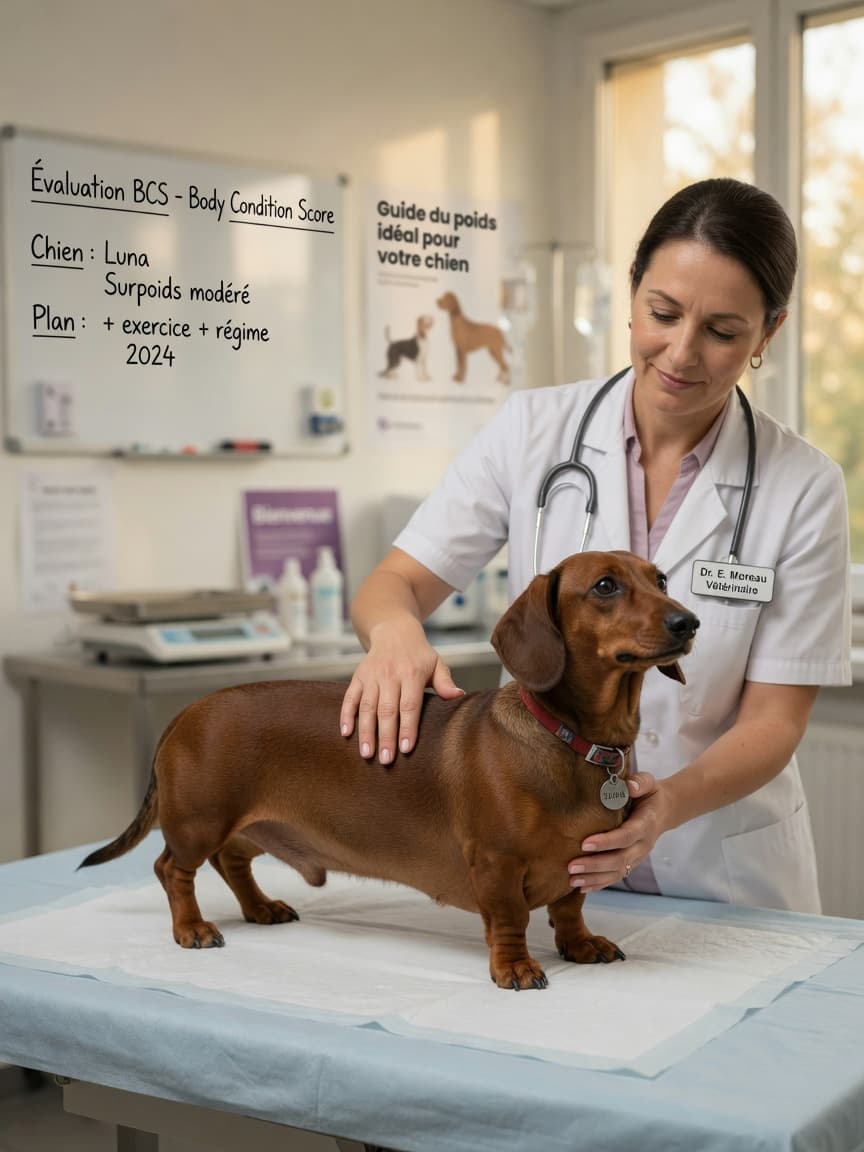
Het diagnosticeren van obesitas zelf is meestal eenvoudig en vereist geen speciale testen. Je dierenarts zal typisch:
- Lichaamscondititoscore (BCS) beoordelen door de ribben, taille, en buiktoevoeging te voelen—een praktische methode betrouwbaarder dan gewicht alleen, omdat ideaal gewicht tussen individuele honden varieert
- Je hond regelmatig wegen en trends bijhouden in de tijd
- Dieet, tussendoortjes, en bewegingsgeschiedenis in detail bespreken
- Op onderliggende oorzaken controleren als gewichtstoename onevenredig met dieet lijkt, zoals hypothyreoïdie, die soms gewichtstoename bij honden kan veroorzaken
Als je hond neurologische of mobiliteitssymptomen vertoont, kunnen verdere diagnostische tests zoals röntgenfoto's, CT of MRI worden aanbevolen om de wervelkolom te beoordelen, omdat obesitas een bekende verslechterende factor voor IVDD is in plaats van de directe oorzaak.
Beheer- en Behandelopties
Gewichtsbeheer bij Dashonden is haalbaar met een consistente, gestructureerde benadering. Opties die je dierenarts kan suggereren zijn:
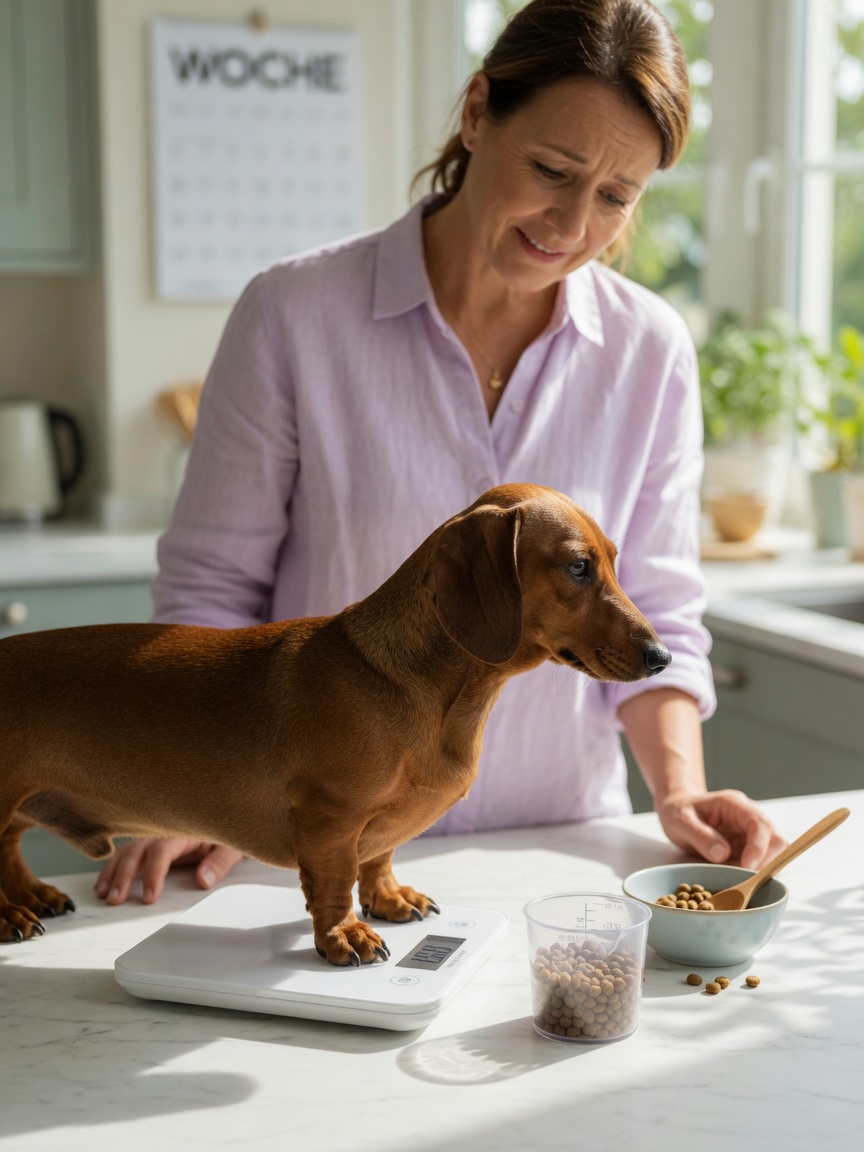
- Caloriegecontroleerde voeding: Het meten van voer op gewicht (met keukenweegschalen) in plaats van schatten met een beker is veel nauwkeuriger en onthult vaak dat eigenaren onbewust te veel hebben gevoerd.
- Veterinaire gewichtsverliesdiëten: Deze zijn geformuleerd om caloriearm te zijn terwijl ze toch bevredigend en voedingskundig volledig blijven, wat helpt voorkomen dat de voortdurende honger diëten ondermijnt.
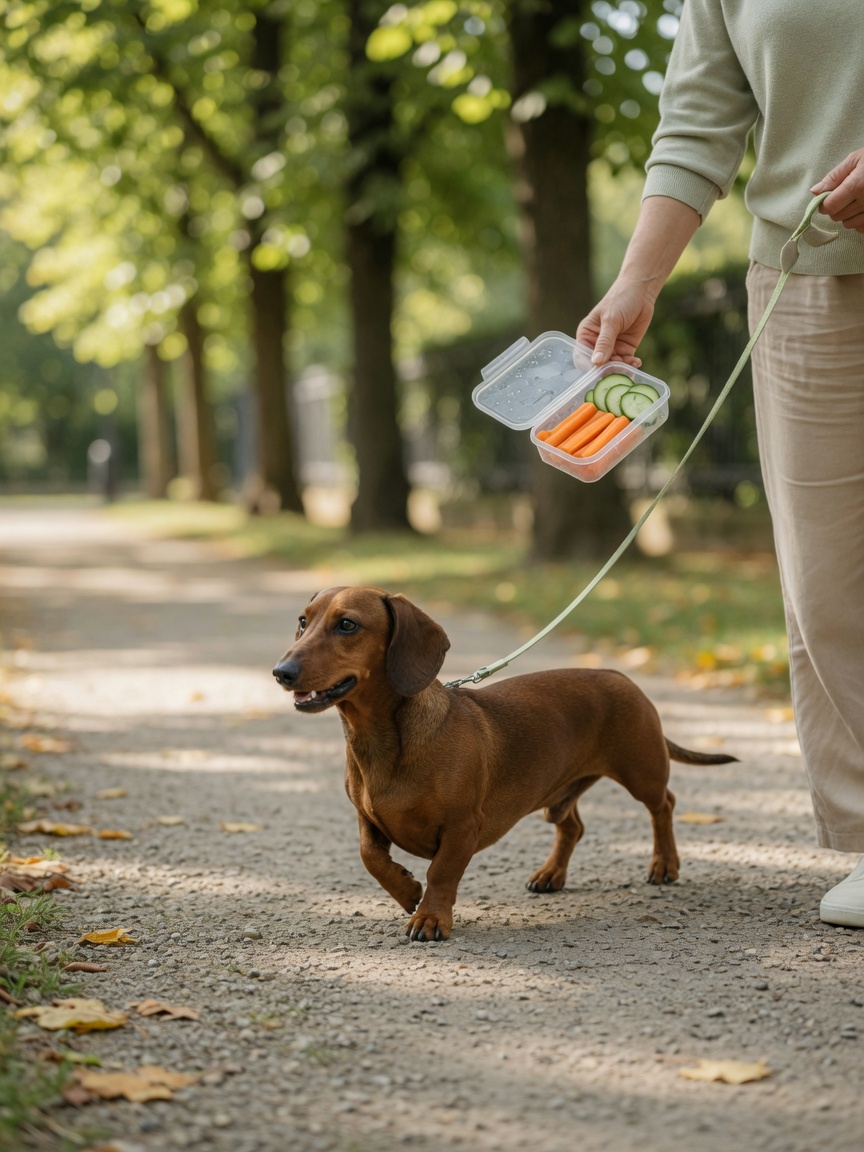
- Tussendoortjesbeheer: Het vervangen van calorierijke tussendoortjes door kleine porties groente (zoals wortel of komkommer) of een deel van de dagelijkse voedingstoeslaag voor trainingsbeloninen.
- Geleidelijke, gewrichten- en rugvriendelijke beweging: Regelmatige, zachte wandelingen helpen calorieën te verbranden zonder buitensporig springen, draaien, of high-impact activiteit die de rug zou kunnen belasten.
- Regelmatige weegtijdstippen: Maandelijkse gewichtscontroles (of vaker tijdens actief gewichtsverlies) helpen voortgang bij te houden en porties naar behoefte aan te passen.
- Onderliggende medische oorzaken aanpakken: Als een aandoening zoals hypothyreoïdie wordt geïdentificeerd, is het behandelen ervan een essentieel onderdeel van succesvol gewichtsbeheer.
Gewichtsverlies moet geleidelijk en onder veterinair toezicht plaatsvinden—snelle crash diëten zijn niet geschikt voor honden en kunnen andere