
Door Julia Wrenfield, Onderzoeker & Schrijver Dierenwelzijn
Katten zijn opmerkelijk stoïcijns en verbergen vaak zowel verwondingen als pijn. Een wond die klein lijkt — of die je pas dagen later ontdekt — kan al geïnfecteerd zijn op het moment dat je het ontdekt. In tegenstelling tot honden zijn katten zindelijke groomers en schonen wonden zelf frequent, wat eigenaren kan misleiden in het denken dat de verwonding geneest terwijl infectie eigenlijk onder het oppervlak toeslaat. Deze gids behandelt wat je veilig thuis kunt beheren en wat dierenartsenij vereist, samen met een stap-voor-stap zorgprotocol.
Het Verborgen Gevaar van Kattenbeetwonden
Kattenbeten behoren tot de meest infectieuze wonden in de veterinaire geneeskunde. De hoektanden van een kat zijn naaldscherp en ontworpen om diep door te dringen met minimale oppervlakteverstoring. Katten herbergen Pasteurella multocida, Bartonella soorten en talrijke anaërobe bacteriën in hun mond. Wanneer deze bacteriën diep in subcutaan weefsel worden gedreven — waar er weinig zuurstof is en de bloeddoorstroming slecht is — vermenigvuldigen zij zich snel. De kleine punctuureengang verzegelt zich binnen enkele uren, wat bacteriën insluit en een gesloten, warm, vochtig milieu creëert dat perfect is voor abcesvorming.
Kattenbeetabcessen zijn extreem veel voorkomend, vooral bij buitenkatten en niet-gesteriliseerde mannetjes die in territoriale gevechten betrokken zijn. Ze veroorzaken aanzienlijke pijn, koorts en kunnen tot sepsis leiden als ze onbehandeld blijven.
Soorten Kattenwonden
- Bitwonden: Kleine, bedrieglijk diepe puncturen — hoog infectierisico.
- Snijwonden: Lineaire sneden van klauwen, glas, draad of hekwerk — variabele diepte.
- Schaafwonden: Oppervlakkige schrammen die de bovenste huidlaag verwijderen — genezen meestal goed met basisverzorging.
- Abcessen: Al geïnfecteerde wonden — vaste of fluctuatieachtige zwelling, vaak heet en pijnlijk, soms met een riekende uitvloeiing wanneer ze barsten.
- Degloving-letsel: Huid die losgeraakt van onderliggend weefsel, vaak van verkeersongevallen — vereist altijd spoedeisende dierenartsenij.
Wanneer Thuis Behandelen vs. Wanneer naar de Dierenarts
Thuiszorg Is Geschikt Voor:
- Kleine, oppervlakkige schaafwonden — alleen huidoppervlak, geen diep weefsel zichtbaar
- Kleine, schone snijwonden korter dan 1 cm die niet gapen
- Wonden waar bloeding gestopt is en de kat niet in nood verkeert
Ga Vandaag naar de Dierenarts Als:
- Elke bitwond — geen uitzonderingen. De diepte kan visueel niet worden beoordeeld.
- Wonden in de buurt van gezicht, ogen, borst of buik
- Snijwonden die gapen, diep zijn of langer dan 1–2 cm
- Wonden op ledematen die de loopvermogen van de kat belemmeren
- Elke wond op een kitten, oudere kat of immuungecompromitteerde kat
- Wonden die al roodheid, zwelling, warmte of uitvloeiing vertonen
- De kat heeft koorts, is lethargisch of eet niet
- Een abces — gebarsten of intact
Stap-voor-Stap Thuiswondverzorging voor Kleine Verwondingen
Stap 1 — Bereid Veilig Voor
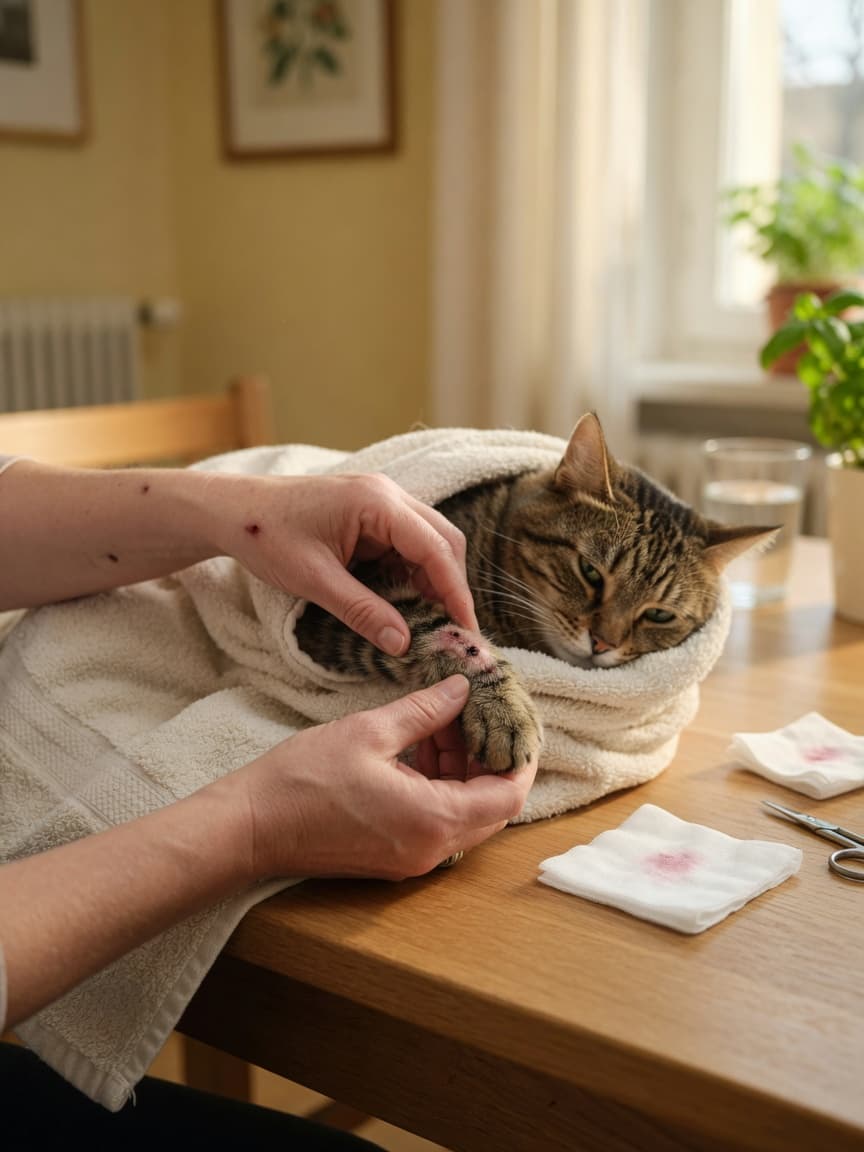
Zelfs de meest liefhebbende kat zal krabben of bijten als pijnlijk. Wikkel je kat losjes in een dikke handdoek (de "purrito" techniek), waarbij alleen het wondgebied blootgesteld is. Heb indien mogelijk iemand om te helpen. Als de kat te angstig is om veilig te hanteren, bel je dierenarts in plaats van het risico op verwonding voor jezelf te nemen.
Stap 2 — Controleer Bloeding
Oefen zachte, stevige druk uit met schone gaas of een schone doek gedurende 3–5 minuten. Kattenhuid is dun en aderen liggen dicht aan het oppervlak — de meeste kleine wonden stoppen snel met bloeden onder druk. Als bloeding niet stopt binnen 10 minuten, ga naar de dierenarts.
Stap 3 — Knip het Haar Rond de Wond
Gebruik schaar met stompe punten of clippers om voorzichtig de vacht rond de wond te verwijderen. Dit voorkomt dat haar de wond verontreinigt, stelt je in staat het volledige omvang van het letsel te zien en maakt bandagekleving gemakkelijker. Breng eerst een kleine hoeveelheid waterbasis glijmiddel in de wond aan om geknipt haar op te vangen voordat je het uitgespoeld.
Stap 4 — Spoel Grondig
Irrigatie is de belangrijkste stap in de wondverzorging. Gebruik een 10 ml of 20 ml spuit (zonder naald) gevuld met warm steriel zoutwater of schoon lauwwarm water. Spoel de wond uit met zachte maar aanhoudende druk gedurende 2–3 minuten. Gebruik geen hydr
```