
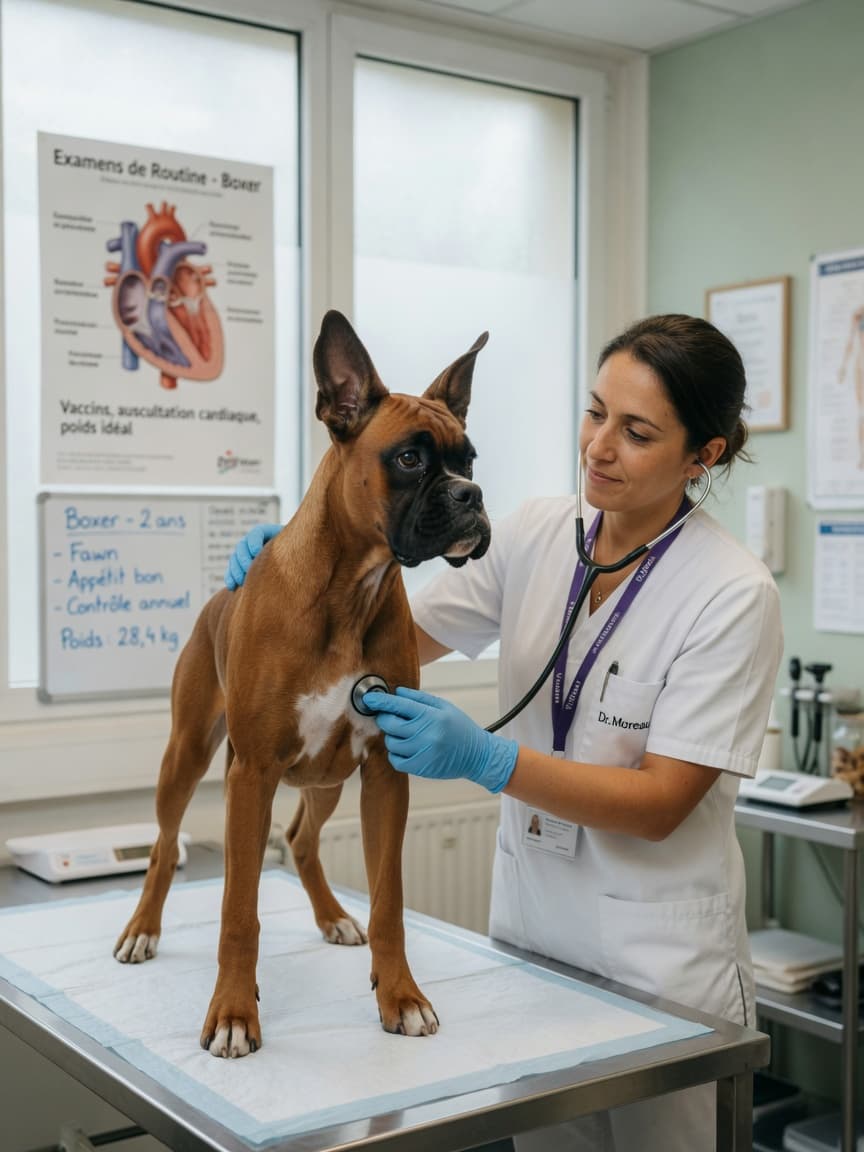
Boxers behoren tot de rasgroepen die het sterkst in verband worden gebracht met een erfelijke hartaandoening genaamd arrhythmogene rechterventrikelcardiomyopathie (ARVC), vaak "boxer-cardiomyopathie" genoemd, die abnormale hartritmes veroorzaakt en, bij sommige honden, plotselinge collaps of de dood. Het allerbelangrijkste dat een eigenaar moet weten, is dat deze ziekte jarenlang stil kan blijven, dus regelmatige veterinaire hartcontroles (niet alleen wachten op symptomen) zijn de beste manier om het vroeg op te sporen en veilig te behandelen.
Waarom boxers specifiek vatbaar zijn voor hartziekte
ARVC bij boxers is een genetisch overerfbare aandoening die is gekoppeld aan een mutatie in het striatin-gen, die de structuur van hartspiercellen aantast, met name in de rechterventrikel. Na verloop van tijd wordt gezonde hartspier geleidelijk vervangen door vet- en vezelig weefsel. Dit verzwakt het hart niet alleen mechanisch — het verstoort de elektrische banen die de hartslag regelmatig houden, wat leidt tot abnormale ritmes die ventriculaire aritmieën worden genoemd. Omdat de ziekte in de genetica van het ras is geworteld, kan ze voorkomen bij honden uit elke gerenommeerde lijn, hoewel verantwoorde fokprogramma's die erop screenen ernaar streven de prevalentie te verminderen.
Boxers kunnen ook last hebben van andere hartproblemen die bij dit ras vaker voorkomen dan bij de algemene hondenpopulatie, waaronder subvalvulaire aortastenose (een vernauwing onder de aortaklep die vanaf de geboorte aanwezig is) en, minder specifiek, gedilateerde cardiomyopathie bij sommige individuen. ARVC is echter de aandoening die het nauwst met het ras is verbonden en waarvan eigenaren het meest op de hoogte moeten zijn. Als je het ras als geheel nog aan het onderzoeken bent, is de rasgids van de boxer een nuttig startpunt om het bredere gezondheidsbeeld te begrijpen.
Vroege tekenen en symptomen om op te letten

Een van de lastigste aspecten van ARVC is dat veel getroffen boxers in de vroege stadia helemaal geen uiterlijke symptomen vertonen — het abnormale ritme is mogelijk alleen detecteerbaar bij specifiek onderzoek. Wanneer er wel tekenen optreden, kunnen ze subtiel zijn en gemakkelijk worden afgedaan als vermoeidheid of een "raar moment". Eigenaren moeten letten op:
- Periodes van zwakte of wankelheid, vooral tijdens of vlak na inspanning of opwinding
- Kort flauwvallen of collaps (syncope), soms gevolgd door een snel, ogenschijnlijk normaal herstel
- Verminderd uithoudingsvermogen of minder zin om net zoveel te bewegen als gewoonlijk
- Een onregelmatige of ongewoon snelle hartslag die je opmerkt wanneer je hand op de borstkas rust
- Hoesten, moeizame ademhaling of een opgezwollen buik, wat erop kan wijzen dat het hart begint te worstelen om efficiënt te pompen
Omdat deze episodes kort en weinig frequent kunnen zijn, is het de moeite waard om een eenvoudig dagboek bij te houden van eventuele vreemde collapsen of "wankelmomenten", waarbij je noteert wat de hond op dat moment aan het doen was, omdat dit patroon voor je dierenarts echt nuttig kan zijn.
Wanneer het een noodgeval is
Sommige uitingen van boxer-cardiomyopathie vereisen onmiddellijke veterinaire aandacht in plaats van een routineafspraak. Behandel het volgende als noodgevallen:
- Plotselinge collaps die niet binnen enkele seconden overgaat, of herhaalde collapsen in korte tijd
- Bleek of blauwachtig tandvlees
- Moeizame, snelle of met open bek ademhaling in rust
- Een opgezette buik in combinatie met zwakte of benauwdheid
- Elke collaps gevolgd door desoriëntatie, zwakte of braken
Plotselinge hartdood kan voorkomen bij honden met ernstige ARVC, soms als het eerste merkbare teken van de ziekte. Dit is begrijpelijkerwijs beangstigend om te lezen, maar het is precies daarom dat proactieve screening bij boxers zoveel meer van belang is dan bij rassen zonder deze aanleg.
Hoe boxer-cardiomyopathie wordt gediagnosticeerd
De diagnose omvat meestal een combinatie van tests, omdat geen enkele test het hele verhaal vertelt:
- Lichamelijk onderzoek: je dierenarts luistert naar geruis, onregelmatige ritmes of een razendsnelle hartslag.
- Holtermonitor (24-uurs-ECG): een kleine draagbare recorder die je hond een hele dag (of langer) draagt om het aantal en het patroon van abnormale slagen vast te leggen, wat momenteel een van de betrouwbaarste manieren is om ARVC op te sporen en te graderen.
- Standaard-ECG: nuttig voor een momentopname, maar kan intermitterende aritmieën die toevallig niet tijdens de korte opname optreden, gemakkelijk missen.
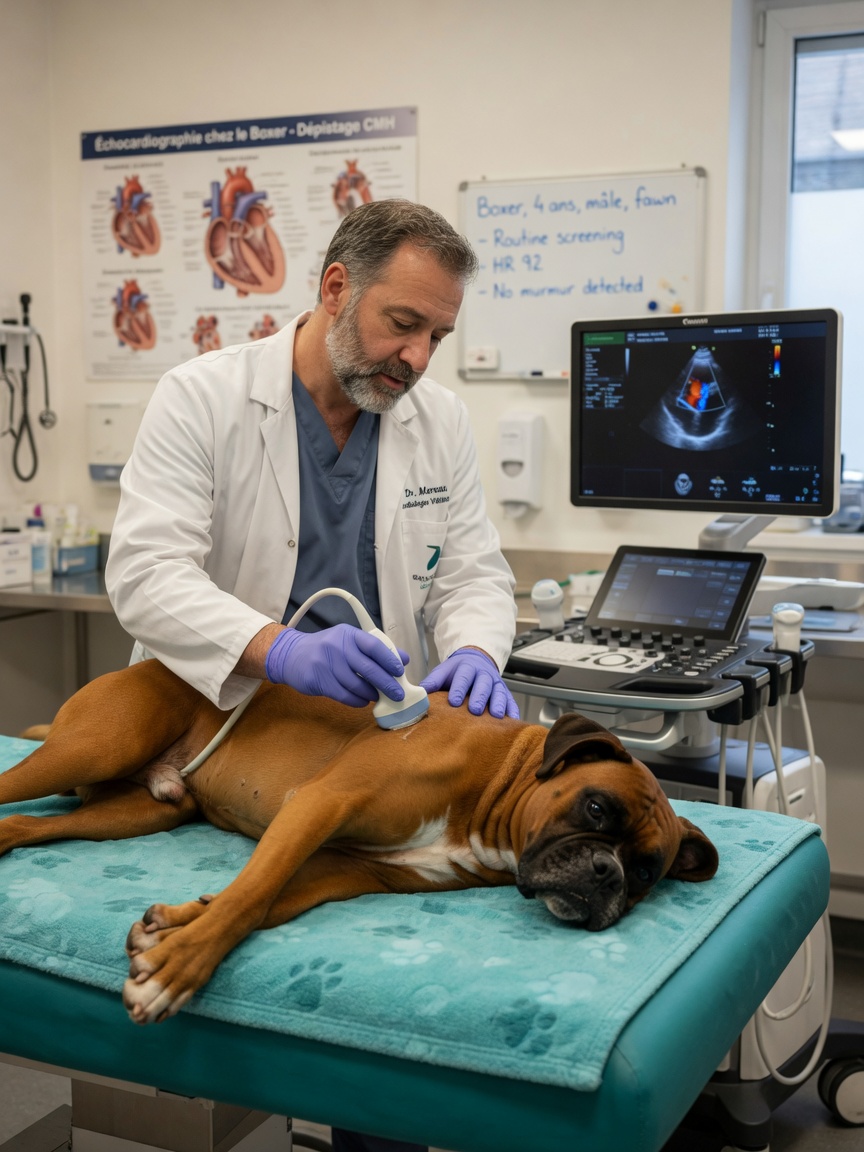
- Echocardiogram (hartecho): beoordeelt de structuur en functie van het hart en helpt andere problemen zoals aortastenose of gedilateerde cardiomyopathie uit te sluiten of vast te stellen.
- Genetisch onderzoek: een bloedtest of wanguitstrijkje kan de mutatie in het striatin-gen identificeren die met ARVC wordt geassocieerd. Het is een nuttig puzzelstukje, met name voor fokbeslissingen, maar een positief resultaat bevestigt geen actieve ziekte en een negatief resultaat sluit het niet volledig uit, omdat niet alle gevallen aan deze ene mutatie zijn gekoppeld.
- Bloedonderzoek (biomarkers): bepaalde cardiale biomarkers kunnen een diagnose ondersteunen of helpen het ziekteverloop te volgen naast beeldvorming.
Veel cardiologen raden een Holter en echocardiogram als uitgangswaarde aan voor boxers vanaf de vroege volwassenheid, met vervolgscreening met tussenpozen gedurende het hele leven, omdat dit een progressieve aandoening is die met de leeftijd kan verergeren.
Aanpak en behandelopties
Er is geen genezing voor ARVC, maar het is zeer vaak beheersbaar, en veel getroffen boxers leven geruime tijd comfortabel met passende behandeling en monitoring. De aanpak hangt doorgaans af van hoe de ziekte zich bij die individuele hond gedraagt:
- Anti-aritmische medicatie: geneesmiddelen zoals sotalol of mexiletine (soms samen gebruikt) worden vaak voorgeschreven om de frequentie en ernst van abnormale slagen te verminderen.
- Medicatie bij hartfalen: als de hartspier zelf is verzwakt (voortschrijdend naar een beeld dat lijkt op gedilateerde cardiomyopathie), kunnen extra geneesmiddelen nodig zijn om de hartfunctie te ondersteunen en vochtophoping te beheersen.
- Regelmatige monitoring: herhaalde Holtermonitoring wordt gebruikt om te controleren of de medicatie werkt en om doseringen in de loop van de tijd aan te passen, omdat de ziekte kan voortschrijden.
- Aanpassing van de activiteit: je dierenarts kan adviseren zware inspanning of opwinding te matigen bij honden met bevestigde significante aritmieën, om het risico op een gevaarlijk voorval te verkleinen.
- Voedingsondersteuning: in sommige gevallen, met name wanneer hartfalen ontstaat, kan een hartondersteunend dieet worden aanbevolen.
Behandelplannen zijn individueel — een hond met incidentele extra slagen van lage graad kan een heel andere aanpak nodig hebben dan een hond met frequente, complexe aritmieën of tekenen van verzwakking van de hartspier. Daarom is voortdurende inbreng van de veterinaire cardiologie, in plaats van een eenmalige diagnose, zo waardevol.
Preventie en dagelijkse zorg
Omdat ARVC genetisch is, kan het bij een individuele hond niet volledig worden voorkomen zodra het is overgeërfd, maar eigenaren kunnen veel doen om de hartgezondheid van hun boxer te ondersteunen en problemen vroeg op te sporen:
- Kies een fokker die het fokmateriaal screent met Holtermonitoring, echocardiografie en genetisch onderzoek waar beschikbaar
- Maak minstens jaarlijks een afspraak voor routinecontroles bij de dierenarts en overweeg cardiale screening als uitgangswaarde vanaf de vroege volwassenheid, zelfs als je hond er perfect gezond uitziet
- Houd je hond op een gezond gewicht, omdat overgewicht extra belasting legt op het hart en de longen
- Houd een consistente, matige bewegingsroutine aan in plaats van incidentele uitbarstingen van intense activiteit
- Leer thuis de rusthartslag en ademhalingsfrequentie van je hond te controleren, zodat je veranderingen snel opmerkt
- Meld elke episode van collaps, hoe kort ook, direct aan je dierenarts in plaats van te wachten om te "kijken of het nog een keer gebeurt"
Kosten en prognose: een realistisch beeld
Cardiale screening en voortdurende behandeling van boxer-cardiomyopathie vormen een echte, doorlopende financiële en emotionele verplichting. Holtermonitoring, echocardiogrammen, verwijzing naar de cardioloog en langdurige medicatie lopen over het leven van een hond bij elkaar op, en de kosten variëren aanzienlijk afhankelijk van je locatie en kliniek. Een huisdierenverzekering die erfelijke en aangeboren aandoeningen dekt, afgesloten terwijl je hond jong is en vóór enige diagnose, kan een groot verschil maken in wat haalbaar is.
De prognose is echt variabel. Sommige boxers met milde, goed onder controle gehouden aritmieën leven lang en actief met alleen routinematige monitoring. Andere met een verder gevorderde ziekte, met name wanneer de hartspierfunctie is begonnen af te nemen, staan voor een voorzichtiger vooruitzicht en een hoger risico op plotselinge voorvallen. Eerlijke, voortdurende gesprekken met je dierenarts of een veterinair cardioloog over de testresultaten van jouw individuele hond zijn veel nuttiger dan algemene statistieken, omdat deze ziekte zich van de ene hond tot de andere zo verschillend gedraagt.
Veelgestelde vragen
Kan een boxer met een hartgeruis of aritmie nog een normaal leven leiden?
Veel boxers kunnen dat, vooral met vroege opsporing, passende medicatie en regelmatige monitoring. Het belangrijkste is milde tekenen niet te negeren, omdat het opsporen van aritmieën voordat ze ernstig worden over het algemeen de beste kans geeft op een goede levenskwaliteit voor langere tijd.
Moet ik mijn puppy laten testen, ook als die er perfect gezond uitziet?
Ja, het is de moeite waard om cardiale screening als uitgangswaarde met je dierenarts te bespreken, zelfs voor een springerige puppy zonder symptomen. ARVC ontwikkelt zich vaak geruisloos, en honden kunnen er volkomen normaal uitzien terwijl de onderliggende ritmestoornis al aanwezig is.
Is het veilig om mijn boxer normaal te laten spelen en bewegen?
Voor de meeste boxers zonder gediagnosticeerde hartaandoening is normale beweging prima en goed voor de algehele gezondheid. Als bij je hond significante aritmieën zijn vastgesteld, vraag je dierenarts om advies op maat, omdat sommige honden wordt aangeraden bijzonder zware of zeer opwindende activiteit te vermijden.
Dit artikel is uitsluitend bedoeld voor algemene informatieve doeleinden en vervangt geen professioneel veterinair advies. Raadpleeg altijd je dierenarts voor een nauwkeurige diagnose en een behandelplan dat is afgestemd op jouw hond.